Pine Plains High School’s boys basketball team crossed the state line Tuesday, Dec. 9, to play a scrimmage against Housatonic Valley Regional High School. The non-league preseason game gave both sides an opportunity to run the court ahead of the 2025-26 varsity season. Pine Plains got off to a slow start against HVRHS but found a rhythm toward the end. The momentum came too little too late and ultimately HVRHS won 60-22. The first regular season game for the Bombers was scheduled against Millbrook High School Friday, Dec. 12.
Latest News
Time for harvest
Graham Corrigan
Oct 20, 2026
Throngs of visitors crowd Amenia’s Main Street on Saturday, Oct. 17, for the town’s second annual Harvest Festival. The event filled downtown Amenia with vendors selling food, jewelry, trinkets, decor, books and art — and a stage on each end of the street filled the air with music.
Photo by Graham Corrigan

Throngs of visitors crowd Amenia’s Main Street on Saturday, Oct. 17, for the town’s second annual Harvest Festival. The event filled downtown Amenia with vendors selling food, jewelry, trinkets, decor, books and art — and a stage on each end of the street filled the air with music.

Keep ReadingShow less
Copake solar farm permit denied by state energy officials
John Coston
Oct 20, 2026
The hamlet of Craryville in the Town of Copake, New York, will no longer be the home of a 42-megawatt solar farm following New York’s Office of Renewable Energy Siting denying a permit for the facility to Chicago-based Hecate Energy LLC.
Photo by Nathan Miller
COPAKE — New York State denied Hecate Energy LLC’s application for a more than 700-acre Shepherd’s Run solar project, pointing to two factors: floodplain and community protection issues and identification of and protection of wetland resources in this rural hamlet.
Jason Zehr, interim executive director of the Office of Renewable Energy Siting and Electric Transmission,issued the decision on Wednesday, Oct. 14, five days before the clock was to run out for the state to approve or deny the Chicago-based company’s application.
“My analysis on each of these separate issues leads me to conclude that I am not able to affirmatively certify and determine that the project application satisfies the criteria for a permit,” Zehr wrote in his 31-page decision.
The denial caps years of protest from local residents and steadfast efforts on Hecate’s part to advance the 42-megawatt project, which initially was proposed as a 60-megawatt project before it had to be downscaled after the company lost control of some of the targeted project land.
Shepherd’s Run was slated to be built near the intersection of Routes 7 and 23 in Craryville. The company first envisioned Shepherd’s Run in 2017 and has faced opposition from residents, state legislators and local politicians. In February, 2024 the company’s first application for what has been dubbed “Shepherd’s Run I” was dismissed by the state. The company then followed up with the current application in late December, 2024.
“Hecate strongly disagrees with this disappointing decision and is evaluating all available legal avenues to challenge it,” said Matt Levine, a Hecate vice president who has worked on the Shepherd’s Run project for years.
“Hecate Energy followed ORES’ rules and regulations, and ORES staff twice recommended permit approval. Yet this decision appears to elevate political pressure and misinformation over a fair, established permitting process. It sends a troubling message to developers and raises serious questions about New York’s commitment to its clean energy goals,” Levine added.
The Town of Copake has been a consistent opponent from the beginning.
“We are gratified that the long saga of Shepherd’s Run has concluded with a formal decision denying a permit,” said Richard Wolf, Copake supervisor, who has chronicled the project’s progress in periodic ‘Solar Update’ reports to the town’s residents. He counted up 79 separate updates over the years, he said.
Sensible Solar for Rural New York, a citizens group that has fought the project, wrote in a press release: “This brings an end, at least for now, to a David and Goliath battle between the small town of Copake, N.Y., and Hecate Energy, a large Chicago-based corporation.
“This has been a decade-long struggle, one where we kept raising the numerous reasons why this project should not be built,” Sensible Solar added.
The state received 1,166 individual verbal and written comments from members of the public. Of those 751 were opposed to Shepherd’s Run, 409 were in favor and six were neutral. The issues raised by the public focused on several areas: compliance with local laws; whether the Municipal Home Rule Law was being violated; impacts on agriculture, community character and visual impacts; and public health and safety. Concern also was raised about Hecate’s financial viability, raising questions about what would happen if the company couldn’t meet project obligations. There also were concerns expressed about the impact to wildlife, including loss of habitat, and to wetlands and flood risk.
Those who supported the project noted its contribution to renewable energy goals, including combating climate change.Supporters also endorsed reducing dependence on fossil fuels and decreasing air pollution along with economic benefits to the community.
But as time passed, scrutiny of Shepherd’s Run intensified. Last month, two administrative law judges held an adjudicatory hearing in Copake’s town hall that was attended by more than 100 residents, with few expressing favor for Shepherd’s Run. The hearing ran from 10 a.m. to 8p.m. and was geared to obtaining testimony aimed at establishing a fact-based record. On Oct. 5, those judges, Maureen F. Leary and Dawn MacKillop-Soller, administrative law judges at the New York State Department of Public Service’s ORES office, recommended denying Hecate a permit “based upon Hecate’s failure to demonstrate compliance with applicable wetlands laws and regulations.”
That left the final say up to Zehr, who wrote: “In summary, the evidence required to demonstrate compliance is absent in the topic areas of identifying base flood elevations, establishing the reliability of inputs for [Hecate’s] hydrology modeling, the ability of facility components to avoid being inundated by flooding, the reliability of the design and operation of measures intended to control panel operation during a flood event, and the avoidance of siting of facility components near or within a floodway.”
Keep ReadingShow less
Dutchess County towns explore regional EMS coverage model
Graham Corrigan
Oct 20, 2026
Four northeastern Dutchess County communities are exploring a shared ambulance service that officials say could improve emergency coverage and reduce municipal costs.The proposed EMS network would include resources from Dutchess County, Empress Ambulance and Northwell Health, as well as local emergency services.
Under the proposal, ambulances would be allowed to move throughout the participating communities as calls come in, replacing an arrangement in which towns contract for dedicated coverage.
“We are looking at the feasibility of eliminating every town having a designated ambulance,” Amenia Supervisor Rosanna Hamm said, “and have a more fluid solution.”
Hamm discussed the proposal at an Amenia Town Board meeting last Thursday, Oct. 15, where County Legislator Chris Drago outlined an initiative involving North East, Amenia, Stanford and the Millbrook area. Drago and county Public Safety Committee Chair Eric Alexander have helped bring the communities together to explore the approach.
“Our ultimate goal is to have the county play more of a role,” Drago said. “Where we wouldn’t have to be so reliant on private companies.”
For the time being, however, Drago emphasized that towns working together and pooling emergency resources was a good place to start. Other town supervisors have also expressed support for the initiative.
“Getting four towns to agree on a new, collaborative system is not easy,” said Town of North East Supervisor Chris Kennan. “But the Supervisors of our four towns and the Mayors of our two Villages (Millerton and Millbrook) have been working very hard to see if by sharing this service, we can reduce the burden on our taxpayers.”
“We want our EMTs to provide high quality care, and to do that, they need to be busy,” Kennan added. “At a time when the cost of everything seems to have been going up, up and up, this could actually bring our EMS cost down.”
Stanford Town Supervisor Julia Descoteaux echoed Kennan’s comments, calling attention to the low call volume across rural northeast Dutchess County.
“In a given month, we have between 15 and 30 ambulance calls,” Descoteaux said. “Sometimes our ambulances are sitting there for three or four days without a call. We’re paying for that, and the EMS personnel are not getting any experience during that time. That’s not what they signed up for, they want to be able to improve and cultivate their skills.”
The four participating towns currently have their own separate contracts with Empress. Millerton spent $696,000 this year on EMS, and is set to pay $746,000 in 2027. Stanford paid $768,000 this year. That number will rise to $860,000 next year after automatic contractual increases. Descoteaux estimates the proposed shared service model could save about 20% in EMS costs.
“It’s less about the cost savings,” Descoteaux said. “And more about using the system more efficiently.”
Currently, each town has its own dedicated ambulance that often isn’t in use. The more an ambulance is in use, the less expensive it is for the township. Empress gets paid through insurance reimbursements. Lower call volume means higher costs for the town.
Costs are high for North East and surrounding rural towns, Kennan explained, because municipalities have to cover the cost of EMT’s idle time. In larger communities and cities, the burden to municipalities is much lower because EMS providers collect more revenue from patients and insurance companies.
Under the proposed new model, the towns would share three ambulances that would move through the region throughout the day, filling gaps where they emerge as calls come in.
“We’re not trying to replace perfect,” said County Legislator Eric Alexander. “There’s nothing perfect about the current system. I campaigned on this because it just seems that the county government is cowed by the complexity of this issue. But you’ve got to take on the difficult issues and deal with them proactively.”
“It would be more of a readiness model, rather than a dedicated service model,” Drago said. “The goal is not just to reduce costs, but improve service.”
Drago noted that Empress has offered to include a fourth, supplemental ambulance in case of larger emergencies. That fourth ambulance would not be included in the towns’ joint contract, but rather act as an insurance of coverage.
Specific details of the plan are scant, and there’s much work yet to be done. Supervisors from the four towns will meet with fire departments and volunteer services in the coming weeks, and the level of county support is unclear. Drago said Dutchess County’s EMS Commissioner, William Beale, has been supportive of the initiative, but that county-sponsored supplemental support.
Keep ReadingShow less

Want more of our stories on Google? Click here to make us a Preferred Source.
State legislators allocate $400,000 toward North East’s new Town Hall
Graham Corrigan
Oct 20, 2026
State Sen. Michelle Hinchey, left, Assemblymember Didi Barrett, center, and North East Town Supervisor Chris Kennan enjoy the scenes of fall south of Millerton on Tuesday, Oct. 13, at the site of the new North East Town Hall.
Photo by Nathan Miller
MILLERTON — State Senator Michelle Hinchey and Assemblymember Didi Barrett have directed $400,000 in state funding to North East’s plan for a new Town Hall.
The money covers about 28% of the $1.44 million renovation estimate that will transform the former Kingdom Hall of Jehovah’s Witnesses on Route 22 into municipal offices.
The funding comes as construction is set to begin this winter. In September, the Town Board authorized the remodel of the building at 5603 Route 22. It also approved the $1.44 million cost estimate prepared by LAN, the engineering firm overseeing the project.
On Tuesday, Oct. 13, Hinchey and Barrett gathered with North East Supervisor Chris Kennan to tour the facilities.
The state moneyis split down the middle: $200,000 each is coming from Assemblymember Barrett and State Senator Hinchey’s offices.
The new town hallbuilding will consist of 4,513 square feet of floor space, nearly twice that of the current Town Hall at 19 N. Maple Ave. Plans call for separate offices for most employees and departments, extra room for town records and a meeting room, also used as the town court, for up to 40 people. The single-story building has no basement, so all town operations will be on one floor.
The mostly empty building is barely recognizable as a former house of worship. Two defining features remain: a stage at the front of the meeting room and a glass wall at the rear overlooking several small rooms.
Those rooms will become offices when the building is converted. Construction is expected to be completed next fall.
“Our small town infrastructure was built for a previous time,” Hinchey said. “And has not been upgraded with the needs that exist today.
“It’s really important that a town building is a welcoming space, that people know how to contact their local representatives and be involved in what makes the town run.”
Barrett added that town employees “are largely either volunteer or not very well paid community members, who are putting in their time to help our communities thrive…so we’re happy to be able to put state resources here.”
Both legislators credited Supervisor Kennan with helping move the project forward.
The new town hall will replace the Maple Avenue building, which Kennan has described as inadequate. “There are no elevators, and the stairs are steep,” he said in late 2024.
The building will be fully compliant with the Americans With Disabilities Act. The former Jehovah’s Witness hall is a single-story structure.
Keep ReadingShow less
Dutchess County to cover Flock cameras despite Serino’s objections
Graham Corrigan
Oct 20, 2026
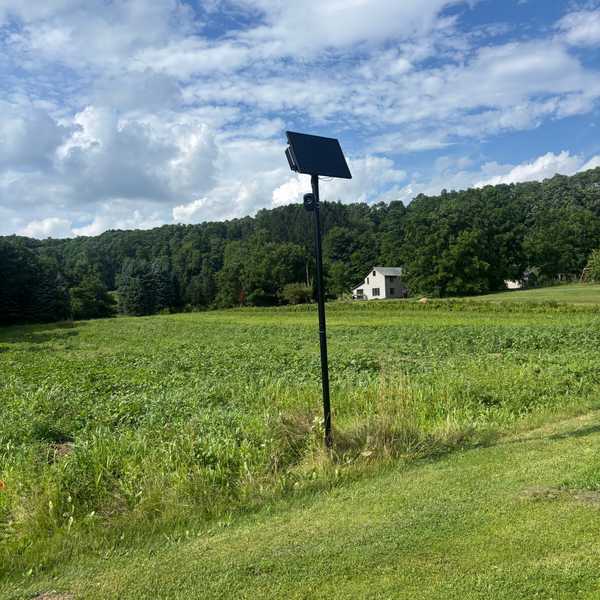
POUGHKEEPSIE — A resolution to cover Dutchess County’s Flock Safety cameras will still go into effect, despite County Executive Sue Serino’s decision not to sign the measure. The resolution, which passed unanimously in the legislature, directs county personnel to cover any remaining license plate readers with opaque, non-damaging materials, so residents know the devices are no longer recording.
Serino argued that the resolution is unnecessary and could expose the county to liability if equipment is damaged. A formal demand was issued to Flock on Sept. 30 to remove its equipment by Oct. 30. If Flock misses that deadline, Serino said, the county will work with the district attorney and sheriff to take further steps.
District 19 Legislator Chris Drago introduced the resolution on Tuesday, Oct. 13, to cover the cameras in the event that those deadlines are not met.
Serino’s decision not to sign the measure delays its implementation. Under the county charter, an executive who objects to a resolution has 10 days to return it to the Legislature with written objections.
“It’s disappointing that the County Executive is more worried about potential damage to Flock cameras than protecting her constituents’ privacy,” Drago said. “Rather than sign the resolution, the County Executive chose to delay it.”
County Legislator Eric Alexander, the Chair of the Public Safety Committee, said the resolution “simply calls for the county to do what they’ve agreed to. They said the cameras were going to come down within a certain time frame, and that’s all this resolution says.”
“There was nothing unclear about the direction provided by the people at the Flock forum,” Alexander said. “it’s our responsibility to act on what they’ve already agreed to.”
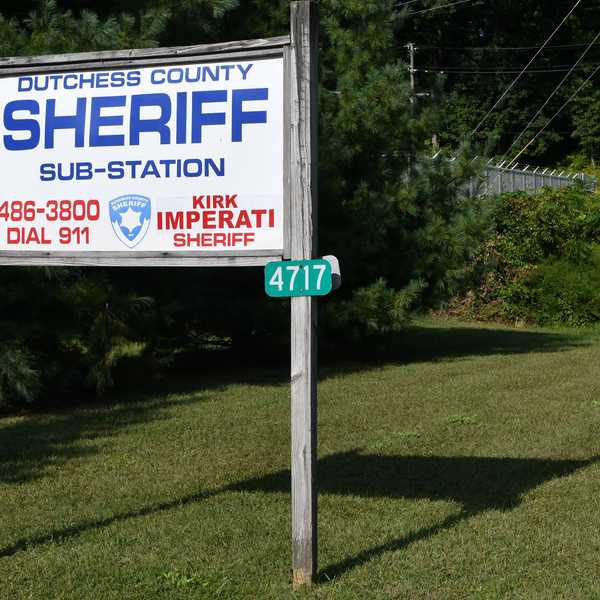
The dispute follows months of public concern over surveillance. Residents pressed officials at a September public forum hosted by Legislator Eric Alexander, with District Attorney Anthony Parisi and Sheriff Kirk Imperati attending. Flock cameras had been placed in every county municipality, in some cases on private property under agreements with the Sheriff’s Office. Parisi and Imperati said they deactivated the county’s cameras on Sept. 25, after residents demanded it at the forum.
Parisi has said the county must still address the investigative gap left by losing the technology. Imperati has said further steps beyond deactivation are unnecessary.
Keep ReadingShow less
Millbrook Library receives money for roof repairs
Graham Corrigan
Oct 20, 2026
From left, state legislators Didi Barrett and Michelle Hinchey visit the library with library board member Vicky Contino, library director Courtney Tsahalis, and board member Dann Kenefick. The library recently won $300,000 in state grants to help repair the building’s roof and update its HVAC system.
Photo by Graham Corrigan

MILLBROOK — The Millbrook Library has been awarded$300,000 in state capital grants to help fund roof repairs and heating and cooling upgrades expected to cost at least $2 million.
The grants, announced last week, were the result of advocacy by the offices of state Sen. Michelle Hinchey and Assemblymember Didi Barrett.
The 15,000-square-foot library on Franklin Avenue has struggled in recent years with a leaking roof and an aging heating and cooling system. Buckets placed beneath leaks in the common area have become a familiar sight for patrons and staff.
The $300,000 came from two $150,000 grants: one through the Local Community Assistance Program (LoCAP), secured with Hinchey’s support, and another through the Community Resiliency, Economic Sustainability, and Technology Program (CREST), secured with Barrett’s backing.
In addition to the $300,000, the library received $325,000 in separate grant funding toward the $2 million project. The balance will come from the library’s trust, with those funding requests approved in June. Construction is scheduled to begin in early 2027.
Library Director Courtney Tsahalis was quick to point out that the repair funds are not part of the library’s request for increased operating funds, which is on the ballot this November.
The library is requesting a 2027 budget of $399,000, a $50,000 increase, to “close the persistent deficit that has been funded by savings and a generous but inconsistent flow of donations,” according to a library statement.
During their visit to the library, state legislators Hinchey and Barrett praised the library’s resilience and role as a centerpiece of the community. “Libraries are the most democratic of our institutions,” Barrett said. “Everybody is welcome, and it’s one of the most important things that our money goes to.”
Hinchey added that “as everything is getting more expensive, it’s wonderful to have a place like a community library.” She noted its importance as a heating and cooling center in months of extreme weather, and the library’s ability to draw residents of all ages in for quiet, education, and Wi-Fi. Millbrook’s library is one of the area’s biggest and oldest, having been established in 1901.
Keep ReadingShow less

Want more of our stories on Google? Click here to make us a Preferred Source.
loading