The passion, drama and energy of Beethoven will fill Katherine M. Elfers Hall at The Hotchkiss School on Oct. 4, when world-renowned violinist Pinchas Zukerman is joined by pianist Shai Wosner for a special recital.
The 4:30 p.m. program at the Esther Eastman Music Center will feature three of Beethoven’s celebrated violin sonatas: Violin Sonata No. 4 in A minor, Op. 23; Violin Sonata No. 5 in F major, Op. 24, “Spring”; and Violin Sonata No. 7 in C minor, Op. 30.
Beethoven’s Violin Sonata No. 4 in A minor, Op. 23, is a three-movement chamber work marked by stark emotional contrasts and dramatic energy. Its three movements take the listener on quite a journey.
The first, a Presto in A minor in an unusual 6/8 meter, is propelled by an urgent, relentless, tarantella-like rhythm. Intensely minor and austere, it creates tension and sets the mood for what follows.
Next, an Andante scherzoso, più allegretto in A major serves as both a slow movement and a playful, subtle scherzo. It features intricate, delicate fugal textures and a trilling second theme. The third movement is an Allegro molto, back in A minor. An anxious, turbulent rondo finale, it features middle sections in which Beethoven playfully misaligns the timing of the violin and piano, creating a tense, out-of-sync dialogue that eventually collapses into a quiet, gloomy conclusion.
Violin Sonata No. 5 in F major, Op. 24, “Spring,” was Beethoven’s first violin sonata to depart from the traditional three-movement Classical format by adding a brief scherzo. Its four distinct movements will give Zukerman and Wosner ample opportunity to display their technique and musical interplay.
Driven by a soaring, lyrical opening theme shared between violin and piano, the first movement is an Allegro in F major. Next comes an Adagio molto espressivo in B-flat major, a deeply sentimental, songlike dialogue that builds on gentle variations.
The third movement, Scherzo: Allegro molto, is a brief, comic interlude featuring rhythmic playfulness as the two instruments purposefully fall out of sync. The fourth movement, Rondo: Allegro ma non troppo, is a grand finale written in a pleasant, courtly style with contrasting dramatic shifts.
Beethoven’s Violin Sonata No. 7 in C minor, Op. 30, begins with an Allegro con brio featuring a dramatic and tense opening movement. It is the first of Beethoven’s sonata-allegro movements to break with tradition by omitting the exposition repeat.
Next comes an Adagio cantabile in A-flat major. Serene, deeply lyrical and comforting, it contrasts with the intensity of the first movement, flowing like an expressive song and offering a momentary emotional respite.
The third movement, Scherzo: Allegro, is short, playful and sharply rhythmic, contrasting with the overall somber gravity of the sonata. The finale, Allegro: Presto, returns to C minor. Restless, suspenseful and driving, it builds immense tension before exploding into a furious Presto coda. Beethoven ends the work with a sizzle.
Zukerman and Wosner perform Sunday, Oct. 4, at 4:30 p.m. at The Hotchkiss School in Lakeville. Admission is free and first-come, first-served.





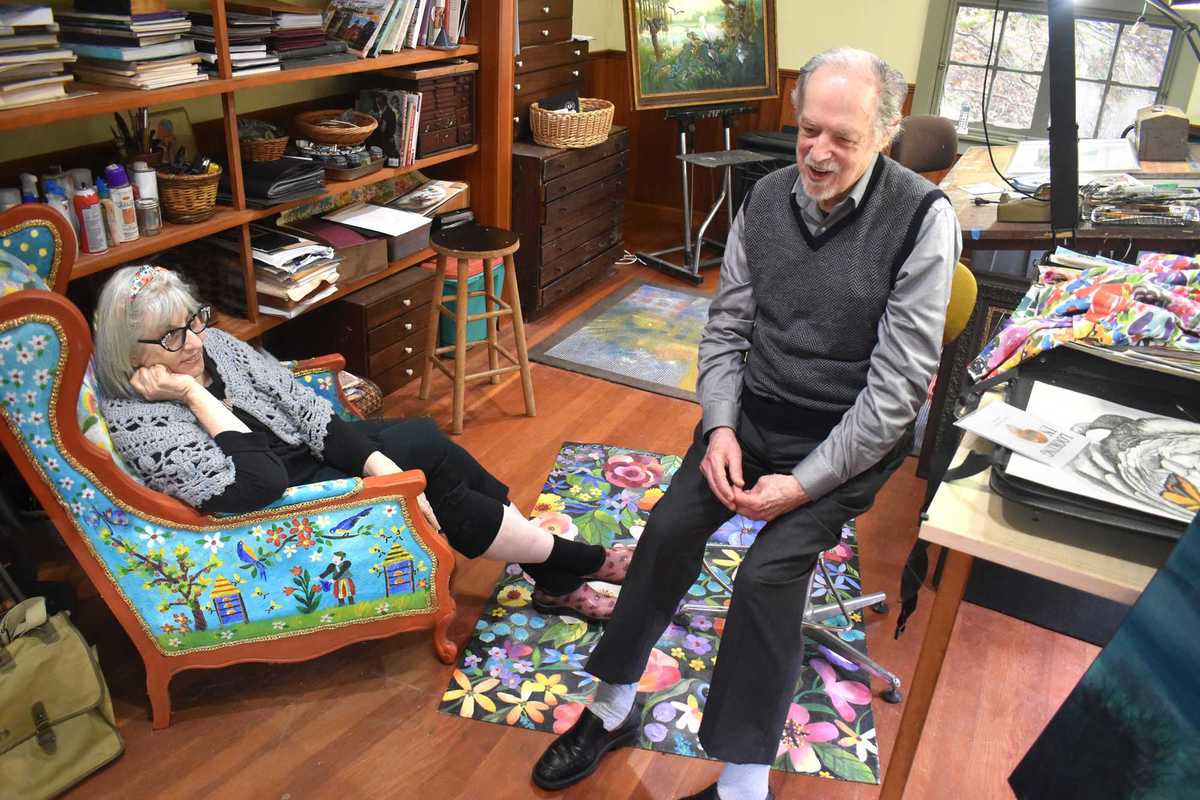
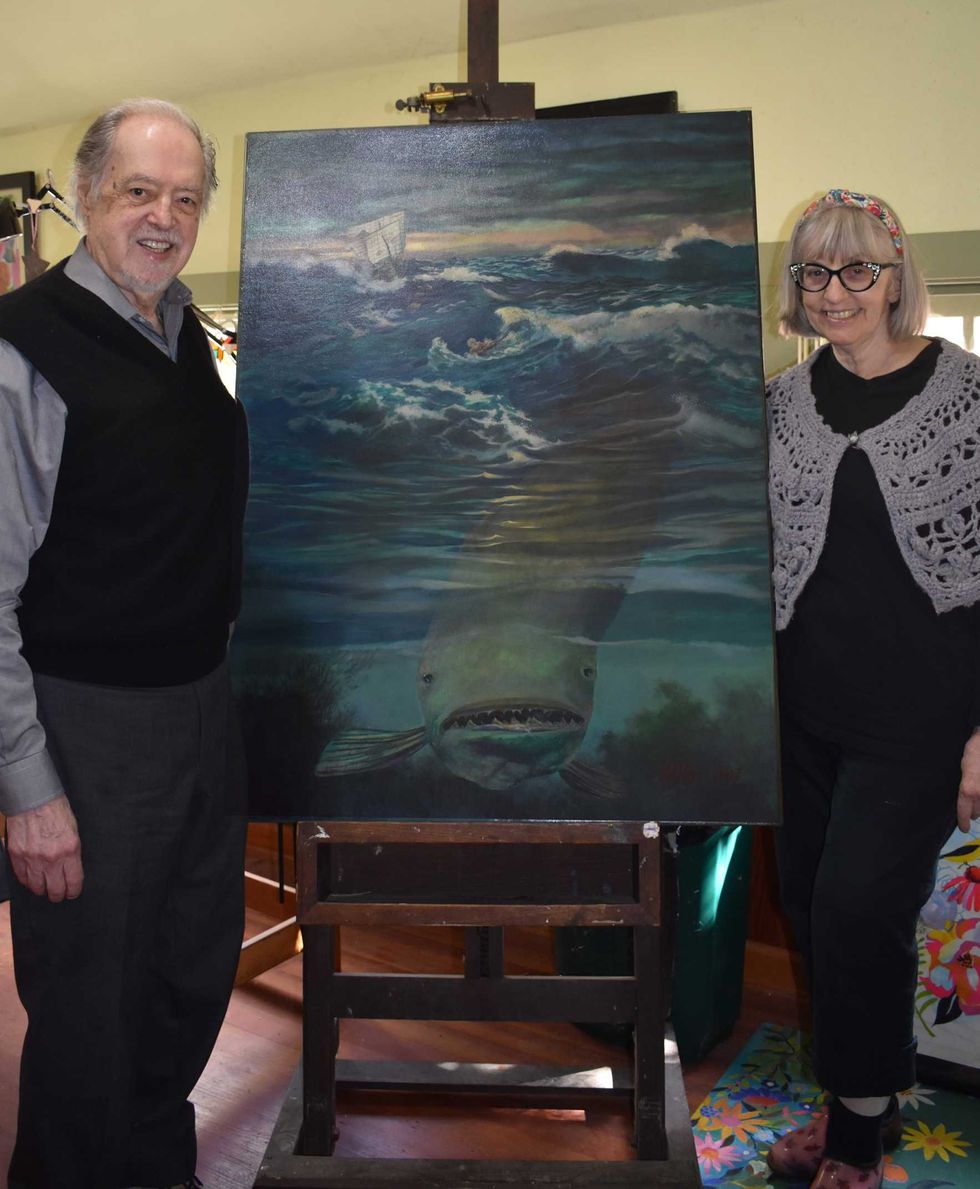 Justine and Victor Valla in their studio with a painting of Victor’s,”Jonah and the Whale.” Robin Roraback