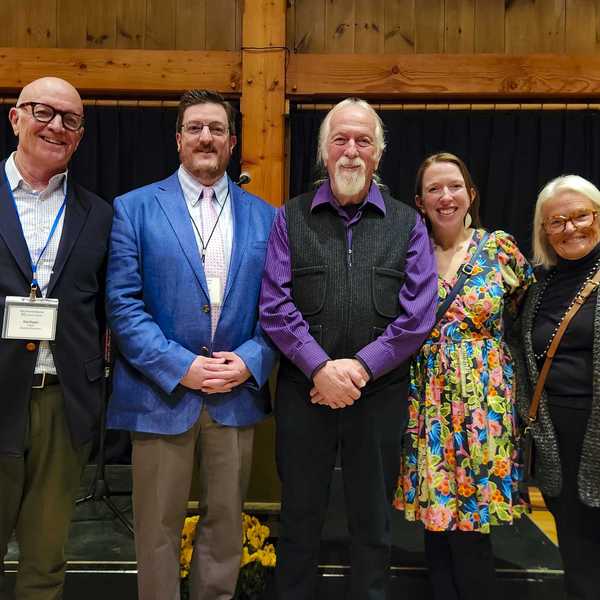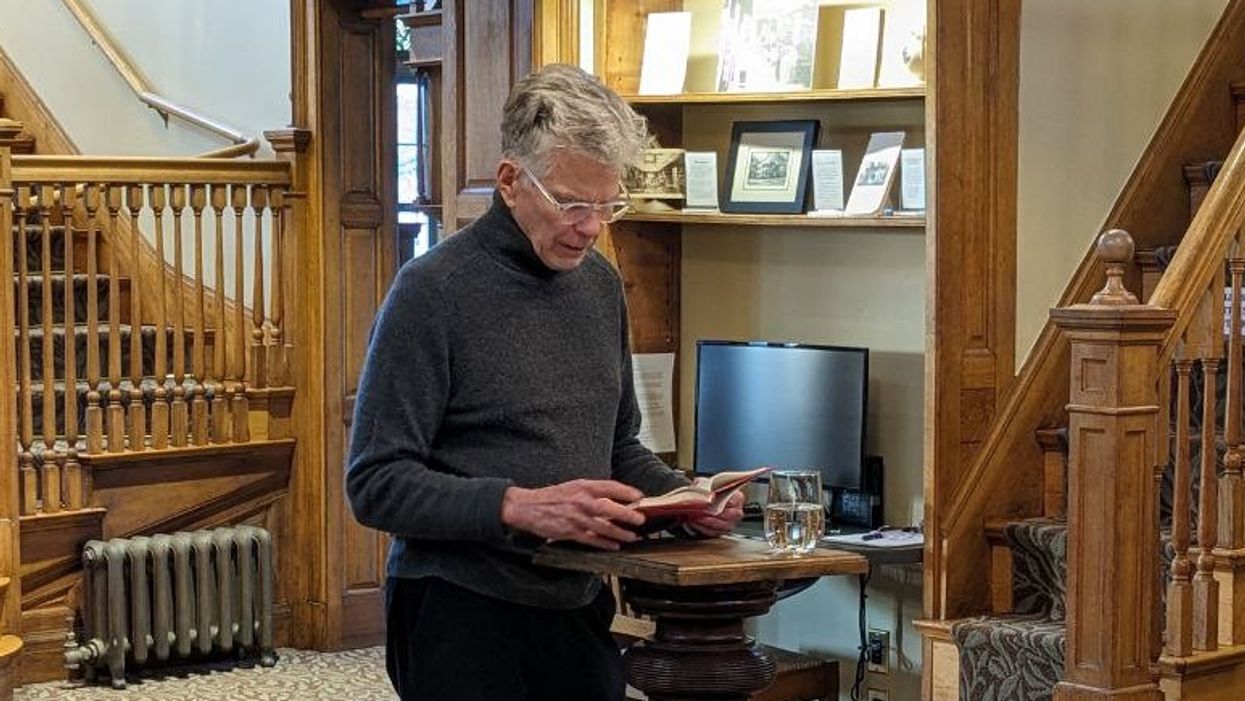
On Sunday, Jan. 14, author, cartoonist for The New Yorker and for The Lakeville Journal, and Sharon resident Peter Steiner gave a preview and signing of his new book “The New Detective” at the Hotchkiss Library.
The book is the fourth in Steiner’s series featuring German detective Willi Geismeier, and is a prequel to the previous three novels that goes into Geismeier’s origin as a veteran of World War I.
Steiner addressed a small crowd and opened with a section of the book. The section detailed the protagonist’s stay in a hospital after being injured in the war, damaging his eyesight. The opening description of the state of the hospital filled with patients hurt due to the war was gripping and vivid, painting an immediate grim reality. Geismeier slowly regained part of his eyesight before being unceremoniously sent home via train after being dismissed from the army due to injury. Steiner ended his excerpt there, stating the book will go on to deal with topics such as the Spanish flu and the rise of Hitler.
Steiner, the son of Austrian immigrants who studied German literature at a college graduate level, said that the series was inspired in 2015 with the political appearance of Donald Trump. Fearing for the political state of the country, Steiner created the story as a direct critique and comparison with 1920s Germany.
“The only thing I really knew to do about it was cartoons and writing,” Steiner said.
After that initial book, “The Good Cop”, Steiner continued the series due to a love of the characters he had created. Despite the novels being set in such a difficult time and place in world history, Steiner said the books are ultimately about hope and good people doing the right thing in the face of bad circumstances.
Despite being marketed as “A Willi Geismeier Thriller,” Steiner believes the book doesn’t really conform to the genres of thriller or mystery. Although there is a crime and mystery to solve, Steiner believes the novel and series is more of a character study. According to him, the payoff of the book rests more in how the protagonist pieces the mystery together and the steps he takes to reach his conclusions rather than the mystery itself.
Steiner described himself as a writer who very much just went with the flow of his writing, planning very few things in advance. As an example, Steiner offered the fact that in his first book, Geismeier was not even a planned character, and the soon-to-be protagonist was introduced about 40 pages into the book. In his words, the hard part of writing is not creating the story, but bringing it to life.
After fielding a few more questions, Steiner thanked everyone for coming and the group mingled over some refreshments.
Copies of the book were available to be purchased and signed.






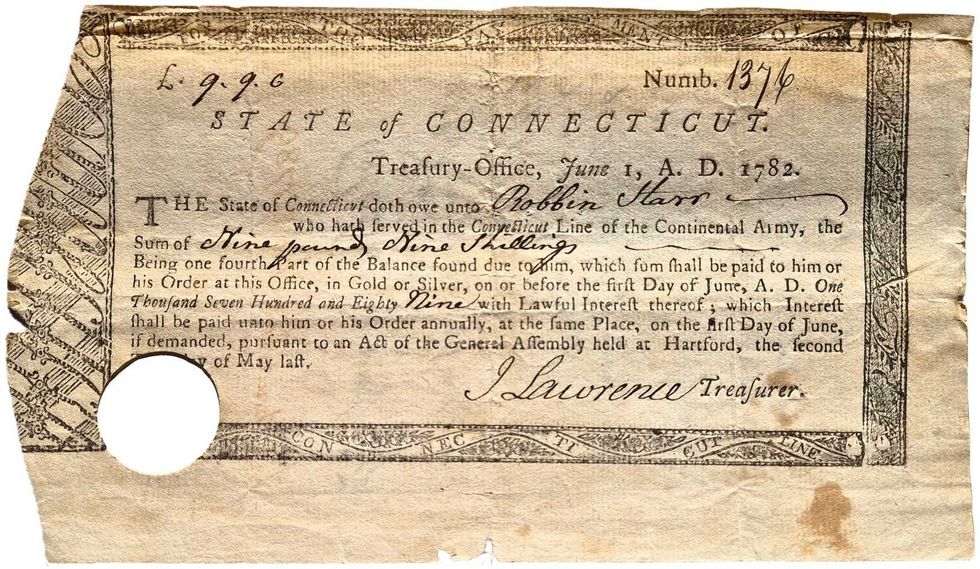 Pay Bill for Robin Starr’s service in the Continental Army.Courtesy the Alex Breanne Corporation
 John Mills speaking at Quinnipiac University.Courtesy the Alex Breanne Corporation

 Stephanie Saetta,with her rescue dog George and Blue (left), a shepherd mix awaiting his forever home.Madi Long