PINE PLAINS — Patchin’s Mill, a historic grist mill that played an important role in the region’s agricultural history, is undergoing its first major round of restoration work in years as preservationists work to stabilize the deteriorating structure and eventually return it to operation.
Restorative work to the foundation began last week under the supervision of Keith Sisco, Bill Hedges, and other members of the historic preservation association Friends of Stissing Landmarks.
“We would love to be able to restart the mill,” said Sisco, a FOSL board member, who said it stopped operating decades ago but still has what’s needed to get it up and running again. “The belts are still on the pulleys.”
The mill, however, still needs repairs from the ground up. FOSL took the first big step in 2023 by clearing out the debris and overgrown plant life that had surrounded Patchin’s Mill just north of downtown Pine Plains at the intersection of North Main Street and Silvernail Road.
The next phase started this month. The mill has twice been hit by vehicles, and one side of the foundation is badly damaged as a result. FOSL spent the first week stabilizing the structure and hauling out the collapsed foundation wall.
The project has been made possible by fundraising, and the non-profit FOSL raised the capital to hire a mason, Robert Koch. Koch has been overseeing the restoration and is building a bi-level foundation of stone and brick. After the mortar sets, a team from Syracuse will come to Pine Plains to replace the interior timber beams that have decayed over time.
FOSL is hoping to raise $150,000 for this first phase of the project, which will include the adjacent and over-stuffed mill house across the street. The previous owner used the space for storage, according to Bill Hedges, one of the FOSL members leading the restoration. “We want to return the mill to its former glory,” he said.
Patchin’s Mill’s origins date back to the 1740s, when surveyor Charles Clinton made a note in his field book about the Shekomeko Creek waterfall a half-mile north of Pine Plains. But it took 60 years for a mill to actually go up, and back then it was called Hoffman’s Mill. The Hoffmans bought the land from the Grahams (of Graham-Brush House fame), and built a grist mill. In turn, Mark Patchin bought the land — and the mill — from Hoffman’s grandson in 1873.
The grist mill is a simple yet ingenious device. Using the weight and force behind the water’s fall, two stones rise and fall to crush raw grain into usable flour. Wheat, rye, cornmeal, and buckwheat were some of the grains processed at the mill during the 19th century. The current structure was built in 1917 and known as Shekomeko Stream Mill. At one point, a second mill on the opposite bank — a sawmill — was also in operation.
But grain production moved elsewhere, and the mill ceased operating in 1945. Many of their relics and belongings are still onsite, and Sisco says they’ve hired a historian to catalogue the documents and photographs unearthed during renovations.
“We hope to have it resemble how it was when it was a working mill,” said Sisco.






 Tiffany Lemelin, shelter manager, brushing Marsala upon arrival.Provided
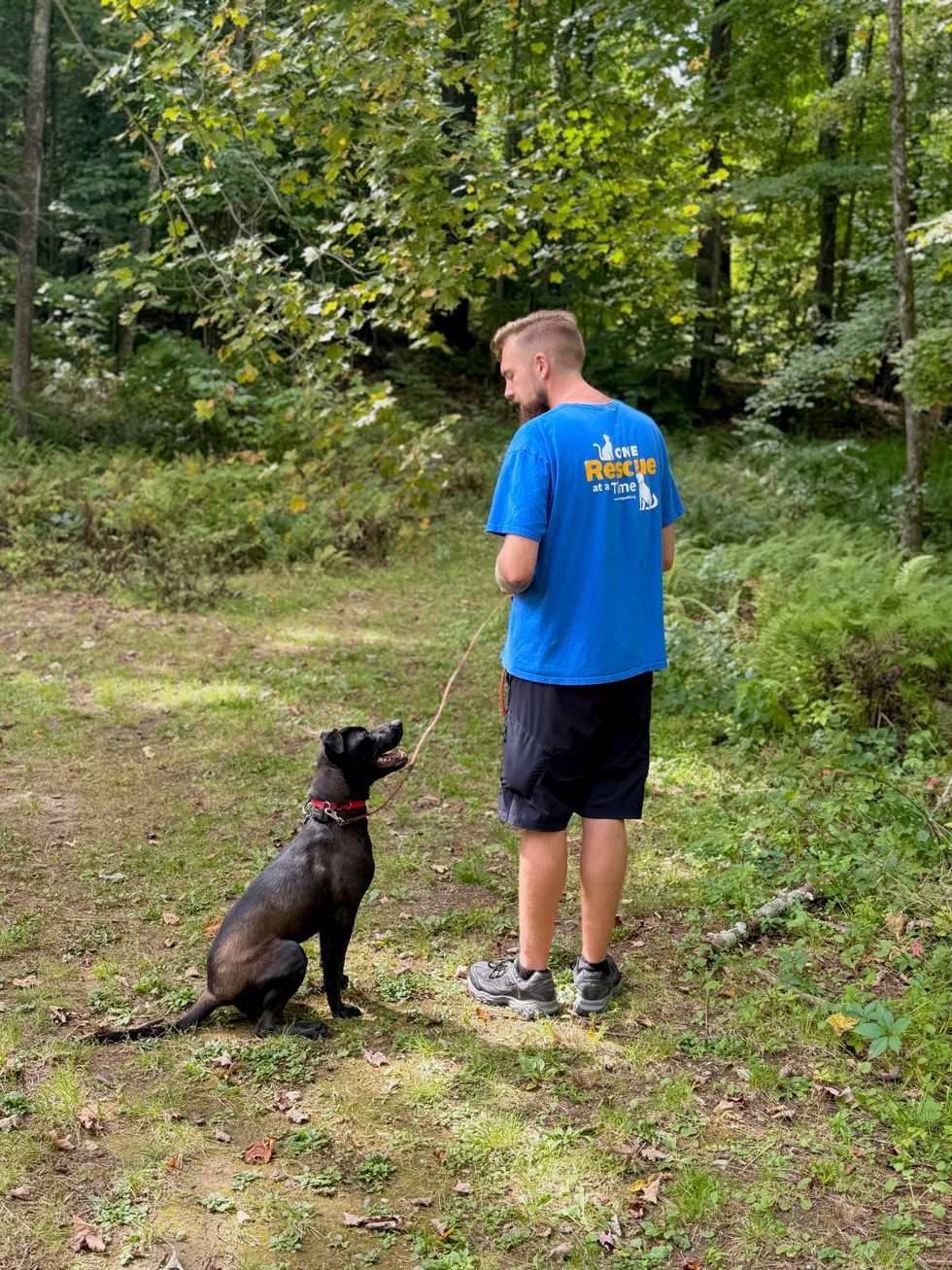 Michael DeBarba, certified dog trainer working with Marsala.Jennifer Almquist
 Marsala wins a heart.Jennifer Almquist
 Sadie, center, a Carolina dog, plays with her friend Negra, a terrier mix. Bella Linda, the small poodle, has since been adopted.L. Tomaino
 Wesley, a young, exuberant mix, is looking for an active home.L. Tomaino
 Bonnie and Clyde, an affectionate terrier pair.L. Tomaino