



Village reviews ‘irons in the fire’ in terms of grants, funding

MILLERTON — The Village Board’s June workshop meeting held on Monday, June 1, was live streamed to the “Village of Millerton VOM” Facebook page due to the COVID-19 pandemic, with the entire board in attendance as well as Village Clerk Kelly Kilmer and Village Treasurer Stephany Eisermann. 

“I think the reason we’re actually holding this meeting is to kind of go over what irons we have in the fire, all the grants that we have,” Mayor Debbie Middlebrook said.

Eddie Collins Memorial Park Revitalization Committee member Jeanne Vanecko and Village Trustee Alicia Sartori detailed available grant opportunities. Middlebrook praised a worksheet they distributed as a great resource, with all of the information in one place. She added that Sartori had additional updates for the board.

“I want to make sure that everybody is really aware of all the grants we’ve got going, of all the moving parts, all the things that we have going on right now and what our obligations are, what our time frame is,” Middlebrook said.

Middlebrook said Eisermann would talk about the cash flow as well as invoices and reimbursements. On top of Sartori creating a spreadsheet of grant opportunities, the mayor acknowledged the rest of the board’s work to stay updated on local projects and grants. Additionally, she recently spoke with Tighe & Bond Senior Project Manager Erin Moore regarding the wastewater project and has been working with Village Engineer Ray Jurkowski on the sidewalk project.

Eisermann reported that she sent out an email with an overview of some grants in progress; which portion of those grants would come from matching funds; and the village’s contributions to each grant. She said she also sent out a spreadsheet with that information plus a tab for loan payment estimates. 

The treasurer explained that she put in a $400,000 loan amount since that would be the village’s portion of the Water Infrastructure Improvement Act (WIIA) grant (if it contributes some of what it has in its fund balance). Totaling $675,600, the village received the WIIA grant from the state’s Department of Health (DOH) to repaint the interior and exterior of its water tower; set up a temporary water tank; install shut off valves on all of its fire hydrants; and install water meters in the village. Right now, Eisermann said Millerton has to take out about $450,000, which doesn’t include anything that wasn’t built into the grant, such as the issue the village is having with its cell towers.

With the $400,000 loan amount at 3% interest, Eisermann said, at 10 years, there would be a monthly payment of $3,862.43, which translates to a yearly payment of $46,349.16.

“We just want to be mindful,” she said. “I know the longer you extend it out, obviously, the lower it is, but we don’t want to get into the situation where we’re locking up money for so long that here we are, this needs to be done again and we’re still paying on the last round — $46,000 is a very big impact to our budget right now.

“With all the moving parts — I know we talked about maybe lines of credit and other things because we might run into cash flow issues — these are pretty big numbers in a budget that’s already, I think, as tight as it’s going to get,” she added. 

Eisermann next explained that the amount the village has committed to expend and be reimbursed for all of the grants it’s pursuing is $1.5 million. It’s a little complicated, she added, because the village is trying to execute all of the grants at the same time. 

In total, Eisermann said the village has five grants it’s hoping to executing at the same time. If the village were to only expend 15% of the total amount for all the grants at the same time, it would come to $230,000.

Village Trustee Jennifer Najdek pointed out the ways the grants differentiate from one another and how they might impact the village’s cash flow. She also noted unknown factors involved in acquiring the grants and completing the projects. 

“I’m not saying it solves all the problems — I’m saying it’s a different way to look at it,” Najdek said. “I know it’s a lot of money, but we’re not looking to shell out $1.5 million over the next year.”

As part of its discussion, the board talked about how the cash flow may be impacted by what’s going on with the state and other related factors.

“I’m not saying we shouldn’t come up with a plan,” Eisermann said. “I’m telling you this is what has already been committed to. This is not, ‘let’s not do any of these things,’ this is, ‘I think you should be mindful of what else you take on while all this is happening.’”

Some of the projects may take longer than others, Eisermann said, adding once things get rolling, it will get harder to stop in the middle to wait for a status payment. Additionally, she said the board might want to see which projects it wants to see through and which ones it can get extensions for, so it can plan accordingly.

Middlebrook said the village has a little money in its fund balance, some of which has been earmarked to complete the full sidewalk replacement project on the south side of Main Street. However, she said she didn’t think the village should take out a line of credit for any more than what it might be able to accommodate with its fund balance.

Sartori noted the information being discussed should be included in the spreadsheet, particularly the schedules and time lines for each project.

Should it get approval from the state Department of Transportation (DOT), Middlebrook said the village hopes to start the sidewalk replacement project the third or fourth week in August in order to finish by the end of October. 

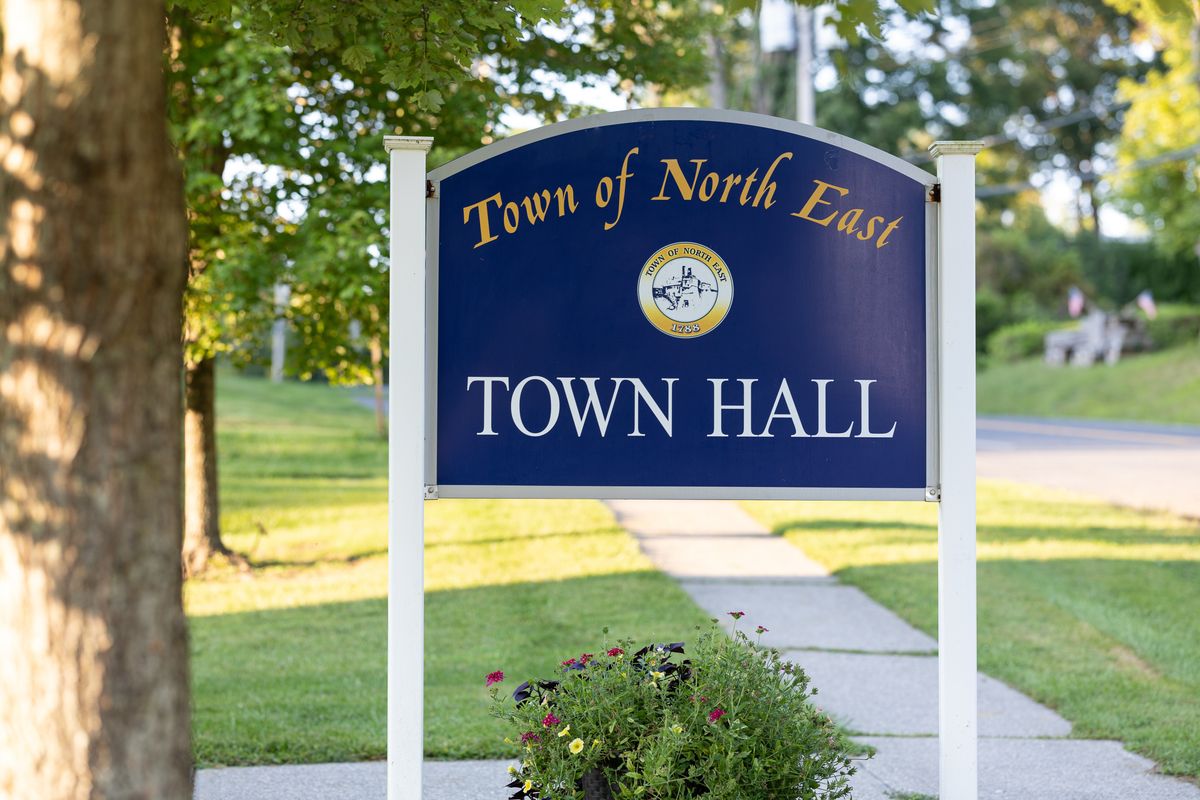
Regarding the WIIA grant, seeing as the water tower won’t be painted until next year, she said whatever expenses the village can expect for this project will go toward paint testing and making arrangements to move its cell towers. She reported the village can’t access the funds for Americans with Disabilities Act (ADA) modifications to the Village Hall building until the town of North East completes its ADA modifications to the North East Town Hall.

Latest News

A new life for Barrington Hall

A new life for Barrington Hall

Dan Baker, left, and Daniel Latzman at Barrington Hall in Great Barrington.

Provided

Barrington Hall in Great Barrington has hosted generations of weddings, proms and community gatherings. When Dan Baker and Daniel Latzman took over the venue last summer, they stepped into that history with a plan not just to preserve it, but to reshape how the space serves the community today.

Barrington Hall is designed for gathering, for shared experience, for the simple act of being together. At a time when connection is often filtered through screens and distraction, their vision is grounded in something simple and increasingly rare: real human connection.

Keep ReadingShow less
Paley’s Farm Market opens season, signaling start of spring

Paley’s Farm Market, located near the New York–Connecticut border on Amenia Road in Sharon, Conn.

Photo by Aly Morrissey

SHARON, Conn. — For many local residents, spring doesn’t truly begin until Paley’s Farm Market opens its doors, and customers turned out in force for its 44th season opening on Saturday, March 28.

Located on Amenia Road in Sharon, Paley’s is a seasonal destination for residents of New York and Connecticut and, over the past four decades, has evolved from a locally grown produce center into a full-scale garden center, farm market and fine food market.

Keep ReadingShow less

Gail Rothschild’s threads of time

Gail Rothschild’s threads of time

Gail Rothschild with her painting “Dead Sea Linen III (73 x 58 inches, 2024, acrylic on canvas.

Natalia Zukerman

There is a moment, looking at a painting by Gail Rothschild, when you realize you are not looking at a painting so much as a map of time. Threads become brushstrokes; fragments become fields of color; something once held in the hand becomes something you stand in front of, both still and in a constant process of changing.

“Textiles connect people,” Rothschild said. “Textiles are something that we’re all intimately involved with, but we take it for granted.”

Keep ReadingShow less
google preferred source

Want more of our stories on Google? Click here to make us a Preferred Source.

Four Brothers Drive-In kicks off season with lower prices, expanded offerings

The Four Brothers Drive-In on Route 44 in Amenia.

Photo by Aly Morrissey

AMENIA — The Four Brothers Drive-In quietly opened its 2026 season with a “soft launch,” offering a family-friendly double feature on Friday, March 27 and Saturday, March 28, while signaling a broader push to keep the experience affordable amid economic uncertainty.

Though the towering movie screen was back in action last weekend, casting a glow over downtown Amenia, the full property — including The Shack, mini golf, and the Hotel Caravana airstreams— will officially open April 17.

Keep ReadingShow less

Sherman Players celebrate a century of community theater

Sherman Players celebrate a century of community theater

Cast of “Laughter on the 23rd Floor” from left to right. Tara Vega, Steve Zerilli, Bob Cady (Standing) Seated at the table: Andrew Blanchard, Jon Barker, Colin McLoone, Chris Bird, Rebecca Annalise, Adam Battlestein

Provided

For a century, the Sherman Players have turned a former 19th-century church into a stage where neighbors become castmates, volunteers power productions and community is the main attraction. The company marks its 100th season with a lineup that blends classic works, new writing and homegrown talent.

New England has a long history of community theater and its role in strengthening civic life. The Sherman Players remain a vital example, mounting intimate, noncommercial productions that draw on local participation and speak to the current cultural moment.

Keep ReadingShow less
Millbrook, Millerton police chiefs represent rural voice in county leadership

Millerton Police Chief Joe Olenik, left, and Millbrook Police Chief Keith Dworkin at the Dutchess County Association of Chiefs of Police in Poughkeepsie, New York.

Photo Provided

MILLBROOK — Millbrook Police Chief Keith Dworkin has been elected president of the Dutchess County Association of Police Chiefs, placing a rural voice in a key county leadership role at a time when smaller departments are grappling with staffing and resource challenges.

Dworkin, who has been a member of the association for five years, said the role offers an opportunity to strengthen collaboration among law enforcement leaders across the county.

Keep ReadingShow less
google preferred source

Want more of our stories on Google? Click here to make us a Preferred Source.

google preferred source

Want more of our stories on Google? Click here to make us a Preferred Source.