Taxes — how much do poor people pay?

Poor people probably pay about 25% or more of their earning in tax. In America, and most of Europe, the lowest 10% of the population pay disproportionately more tax than the richest 90%, family by family, taxpayer by taxpayer. How is that possible I can hear you ask?

You see, there’s direct tax and indirect tax and, sometimes, hidden tax burdens on the poorest people. Let’s take those one step at a time. Let’s assume that of a single poorer person’s annual wage at $9/hour (if they are lucky), they make — before tax — $18,000 a year plus or minus overtime, deductions, etc. Let’s just use that number. Oops, take out $2,400 in tax for New York State residents. So now you have $15,520 to spend.

Direct tax is relatively simple: If you earn a salary or wage, tax is either deducted before you get your portion or tax is paid later when you fill out your taxes. The rate seems low but… remember to buy a car, let’s say $10,000 even with cash, you probably had to earn $12,000 or more to afford it. Other direct tax is when you buy, for example, a pair of shoes (a necessity for most Americans) and you are charged state and local tax on the purchase. So that $50 pair of shoes actually costs you, for example, maybe $56.

Let’s assume you buy tax-free food and spend, on a NYS average, $1,900 a year per person. Now you have $13,620 left. Now let’s assume you have essentials like electricity bills, gas (or oil) bills, house or apartment rent, transportation (gas, insurance, payments)… all taxable at 4% per purchase. The average New Yorker spends on these essentials 75% of their lower wage gross incomes, or $11,640 for which you will also pay $465 in collected tax, so your remainder is down to $3,415 before you even think of buying that pair of shoes. Oh, and did I mention home insurance or medical insurance? Even with the ACA (another $100 or so a month per person), you’re getting down there.

But what’s not revealed in the above is that you’ve actually paid even more indirect tax. It works like this… Let’s say you rent an apartment. The landlord has to pay all the local taxes, school, property, insurance. He doesn’t simply divide that up as part of your monthly rent that is due, he has to finance it, so he marks up his outgoings by the rate he gets charged by the bank or credit cards. 

So, while you may not be paying tax on the rental cost of the apartment, you are paying maybe 10% more for the property tax and school tax that the owner has to finance. Doesn’t sound like much? Maybe it could be as much as $10 in every $100 you pay for in rent. And that happens with the car you buy on time, and the ATM fee you are charged and even the food you buy because the supermarket pays all sorts of property tax… what? You thought lettuce was completely tax free?

And then there’s even more hidden tax. A company wants to make a car. They have to buy components from various companies. All those companies pay tax. All those companies buy raw materials from other companies that also pay tax. 

Then there’s the transportation of all the ingredients (diesel fuel, heavily taxed) and the companies that run those transport companies (taxed), delivering to warehouses (property taxes), and so on. An estimate from the OMB in 2017 showed that as much as 22% of the final cost of manufactured goods was related to these taxes — financing these taxes included — passed along and then taxed and taxed again. 

Look, if I add $1 in tax for something I sell, the next person up the chain has to refund me, yes, and then finance that payment and also charges the next guy sales tax on the aggregate of what he’s had to cost his product for.

Want proof? Why is wholesale always cheaper? Why is buying direct from the manufacturer cheaper? Less mouths to feed — including the taxman.


Writer Peter Riva, a former resident of Amenia Union, now lives and pays his taxes in New Mexico.


The views expressed here are not necessarily those of The Millerton News and The News does not support or oppose candidates for public office.

Latest News

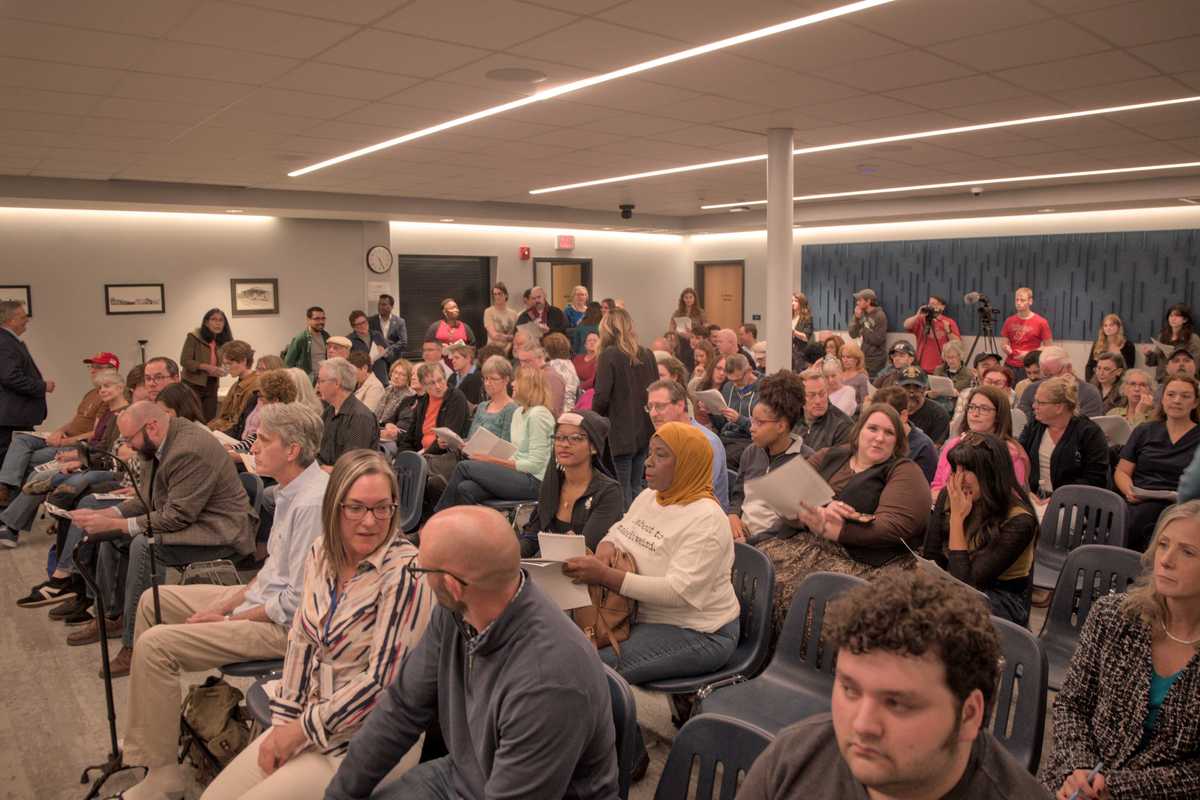
Millbrook residents back Thorne Building renovation plans, seek details on lighting and accessibility

Architect Michael Sloan of Millbrook-based firm Sloan architects describes plans for the proposed Thorne Building renovation to the public for the first time at a public hearing of the Millbrook village Planning Board on Monday, March 16, at the Millbrook Firehouse on Front Street.

Photo by Nathan Miller

MILLBROOK — Community members had a chance to weigh in on plans to renovate the Thorne Building on Franklin Avenue into a state-of-the-art event and community center.

Architect Michael Sloan of Millbrook-based Sloan Architects outlined a proposal that includes a rear addition to expand the stage, an enlarged parking lot, new exterior lighting, a front garden and the removal of the portico on the building’s east side. Sloan said the building, originally constructed as a K-12 school, would be transformed into a space for the community to gather and create.

Keep ReadingShow less
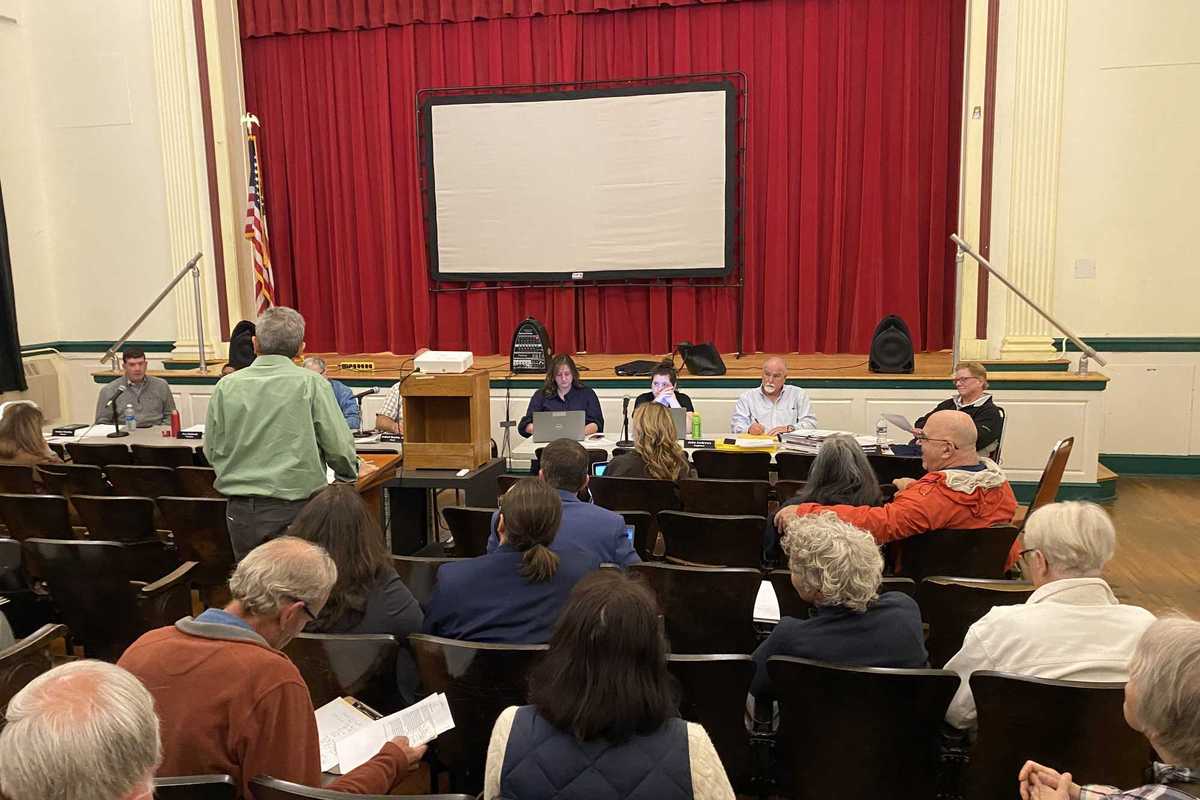
Officials divided on allowing restaurants along Route 22

The Irondale district, currently known as Highway Business District III, is comprised of just six parcels along Route 22 that are currently occupied by light industrial businesses.

Photo by Nathan Miller

MILLERTON — Though the Irondale District lies just outside of the Village of Millerton, it has become the center of a divisive conversation as the Town of North East continues to review a significant overhaul of its commercial zoning code.

Irondale, officially known as the Highway Business district under current town code, is a small stretch along Route 22 south of the village that some officials and residents believe could support additional businesses, while others argue development there could undermine efforts to boost Millerton’s existing downtown.

Keep ReadingShow less
google preferred source

Want more of our stories on Google? Click here to make us a Preferred Source.

Robin Wall Kimmerer urges gratitude, reciprocity in talk at Cary Institute

Robin Wall Kimmerer inspired the audience with her grassroots initiative “Plant, Baby, Plant,” encouraging restoration, native planting and care for ecosystems.

Aly Morrissey

Robin Wall Kimmerer, the bestselling author of “Braiding Sweetgrass” and a member of the Citizen Potawatomi Nation, urged a sold-out audience at the Cary Institute of Ecosystem Studies on Friday, March 13, to rethink humanity’s relationship with the natural world through gratitude, reciprocity and responsibility.

Introduced by Cary Institute President Joshua Ginsberg, Kimmerer opened the evening by greeting the audience in Potawatomi, the native language of her ancestors, and grounding the talk in a practice of gratitude.

Keep ReadingShow less

Melissa Gamwell’s handmade touch

Melissa Gamwell’s handmade touch
Melissa Gamwell, hand lettering with precision and care.
Kevin Greenberg
"There is no better feeling than working through something with your own brain and your own hands." —Melissa Gamwell

In an age of automation, Melissa Gamwell is keeping the human hand alive.

The Cornwall, Connecticut-based calligrapher is practicing an art form that’s been under attack by machines for nearly 400 years, and people are noticing. For proof, look no further than the line leading to her candle-lit table at the Stissing House Craft Feast each winter. In her first year there, she scribed around 1,200 gift tags, cards, and hand drawn ornaments.

Keep ReadingShow less
Regional 7 students bring ‘The Addams Family’ to the stage

The cast of “The Addams Family” from Northwest Regional School District No. 7 with Principal Kelly Carroll from Ann Antolini Elementary School in New Hartford.

Monique Jaramillo

Nearly 50 students from across the region are helping bring the delightfully macabre world of “The Addams Family” to life in Northwestern Regional School District No. 7’s upcoming production. The student cast and crew, representing the towns of Barkhamsted, Colebrook, New Hartford and Norfolk, will stage the musical March 27 and 28 at 7 p.m., with a 2 p.m. matinee on March 29 in the school’s auditorium in Winsted.

Based on the iconic characters created by Charles Addams, the musical follows Wednesday Addams, who shocks her famously eccentric family by falling in love with a perfectly “normal” young man. When his parents come to dinner at the Addams’ mansion, two very different families collide, leading to an evening of secrets, surprises and unexpected revelations about love and belonging.

Keep ReadingShow less
google preferred source

Want more of our stories on Google? Click here to make us a Preferred Source.

google preferred source

Want more of our stories on Google? Click here to make us a Preferred Source.