Thank you!
Your support is sustaining the future of local news in our communities.

Agnes Martin at Dia:Beacon

Agnes Martin at Dia:Beacon

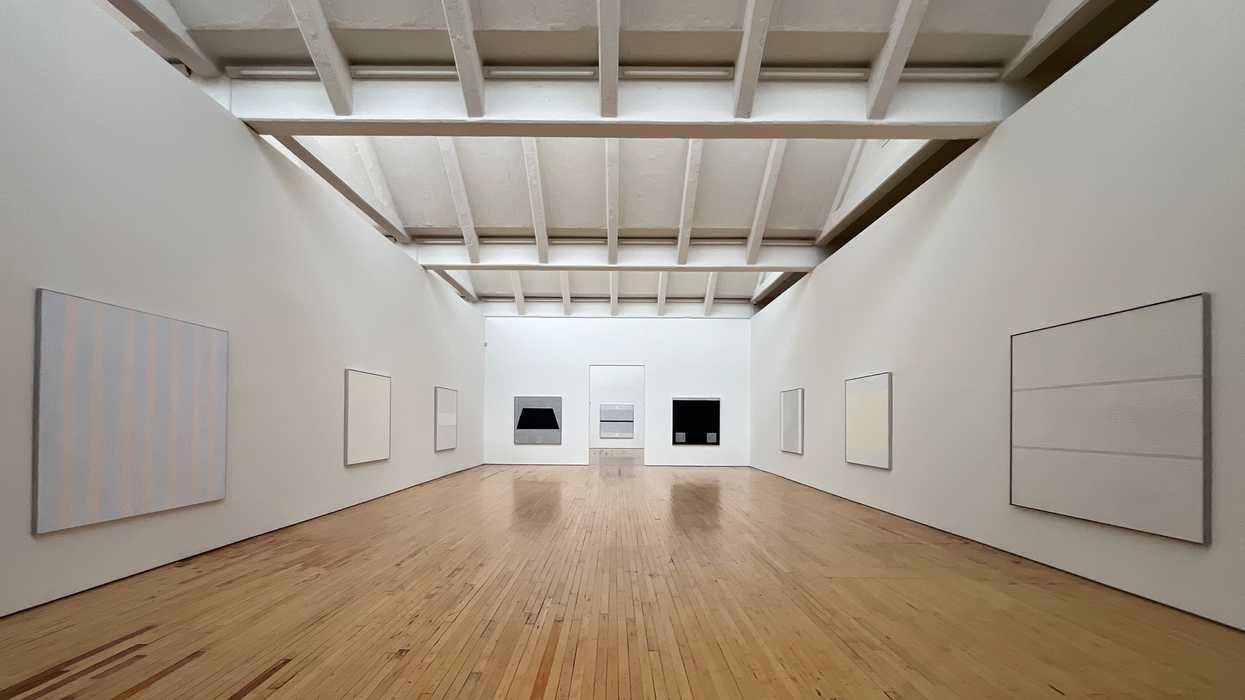
Minimalist works by Agnes Martin on display at Dia:Beacon.

D.H. Callahan

At Dia:Beacon, simplicity commands attention.

On Saturday, April 4, the venerated modern art museum — located at 3 Beekman St. in Beacon, NY — opened an exhibition of works by the middle- to late-20th-century minimalist artist Agnes Martin.

Martin, the Canadian-born New York and New Mexico resident who died in 2004, made the kind of ambiguous abstract art that inspires countless imitators and interpreters.

At first glance, most of the pieces in the new show, “Painting Is Not the Act of Painting,” (on display until June 22) are variations on simple lines and grids painstakingly applied by the artist’s own hand using paint and pencil.

Despite their relative simplicity, it took Martin years of rejecting her own artwork to reach this level of pure abstraction. She would often take knives to paintings she didn’t like, literally slashing work that didn’t live up to her expectations. It wasn’t until she was in her 50s that she began making the work she would become known for.

That evolution is reflected in the exhibition’s 24 works.

Dia:Beacon seems like a perfect place for them. The museum is a monument to simplicity. Even the most complicated pieces are abstractions in their own ways. A straight, unpainted plywood wall with diagonal backing by Donald Judd suggests a room under construction. Michael Heizer’s singular ovoid boulder embedded into a gallery wall strikes unease into visitors.

Subtle grids and softly layered lines by Agnes Martin draw the eye at Dia:BeaconD.H. Callahan

Martin’s pieces feel at home here. In the context of such visual, if not conceptual, simplicity, her art seems louder than it might in almost any other setting. Faint blue and peach stripes gain vibrancy when compared with the all-white canvases of Robert Ryman or the large gray mirrors of Gerhard Richter, both a few rooms away. By comparison, the visibly human-drawn lines of pencil or etched-out paint seem almost complicated, and technically masterful.

It’s enough to make you ponder the name of the exhibition, “Painting Is Not the Act of Painting,” pulled from a quote by Martin: “Painting is not making paintings; it is a development of awareness. And with this awareness, your work changes, but very slowly.”

In a world where studio assistants and fabricators contribute to the output of many artists, Martin relished the act of painting. She painted nearly every day of her adult life. For her, the process was an integral part of the work, and it’s hard to look at these pieces without appreciating her hand.

This repetitive study is also demonstrated across the hall in a gallery dedicated to a single work by Andy Warhol. The piece, “Shadows,” is a study of variations on a single subject. Warhol took photos of shadows in his office and, using a silkscreen process, painted them 102 times on identically sized canvases.

Walking into the room, it may seem like the same image repeated. On closer inspection, the canvases vary widely in color and composition. The work suggests that repetition can produce unexpected forms.

Agnes Martin has become enshrined as one of the leaders of the minimalist movement of the 1960s and ’70s. Her work and artistic philosophies have inspired countless admirers. This exhibition displays a selection of important pieces from nearly 50 years of practice.
Latest News

Baseball, wine and jazz at Millbrook Winery

Bernie Williams and his Band of Friends at Millbrook Winery in 2025.

Provided

Throughout the history of Major League Baseball, precious few greats have been considered five-tool players. New York Yankee Bernie Williams was one of them.

To be considered a five tool player, one must show exceptional proficiency in five categories: hitting for average, hitting for power, running bases, fielding and arm strength. But there’s another tool Williams possesses that didn’t make it to the back of his baseball card: his mastery of jazz guitar.

Keep ReadingShow less
google preferred source

Want more of our stories on Google? Click here to make us a Preferred Source.

Lucky Orphans offers sanctuary for horses and healing for people
If horses could speak, Hearn believes they would offer just one piece of advice: “They’d tell us to slow down.”

From feeding retired racehorses before sunrise to guiding veterans, grieving parents and troubled teenagers through equine-assisted therapy sessions, Deanna Hearn rarely has a quiet day. As founder of Lucky Orphans Horse Rescue in Dover Plains, she oversees the care of more than 40 sanctuary horses while leading a nonprofit whose mission extends far beyond animal rescue.

What began as a childhood love of horses has evolved into a place where healing runs in both directions — for horses and for people. By the time you leave Lucky Orphans, it becomes clear that this place isn’t really about horses. The horses are simply how it begins. For Hearn, every rescued horse represents something much larger: hope, resilience, healing and second chances. The organization’s mission, she says, is simple: “People helping horses heal people.”

Keep ReadingShow less
Weekend in Norfolk returns for four days of art, music and community

A brass quintet at the Yale Music Shed at Weekend in Norfolk 2025.

Jennifer Almquist

Norfolk bursts with activity in midsummer with Weekend in Norfolk (WIN). An all-volunteer committee transforms the town with free public events for all ages. WIN 2026 begins Thursday, July 30, and runs through Sunday, Aug. 2.

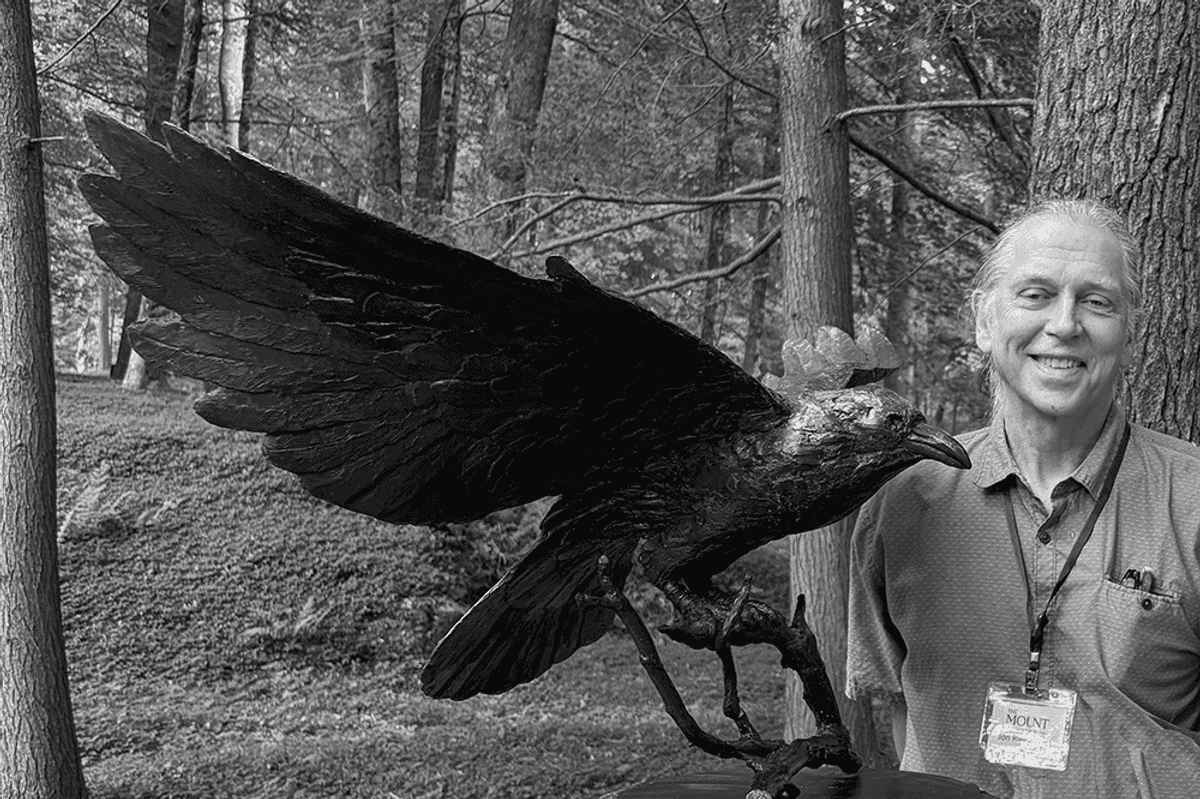
Norfolk sculptor Jon Riedeman, the new head of Norfolk Artists and Friends (NAF), organized the group’s 19th annual art exhibition, featuring paintings, sculpture, photography and jewelry by area artists in the Art Barn on the grounds of the Norfolk Chamber Music Festival. Riedeman expanded the show this year by inviting artists from New Marlborough, Massachusetts, to participate. The exhibit opens with a reception Thursday, July 30, from 5 to 7 p.m.

Keep ReadingShow less
Abbey’s open-air theater returns with “Babette’s Feast”
Jen Gleason, director of “Babette’s Feast,” poses before a natural setting on the stage of The Gary-The Olivia Theater in Bethlehem.
Jack Sheedy

Jen Gleason stood on the stage of The Gary-The Olivia Theater and gestured toward the upstage wall—which wasn’t there. Like the so-called fourth wall separating audience from actors, all walls in this theater are invisible.

“That’s just God’s creation,” Gleason said, pointing to woods and rocks and grass and sky where you might expect a brick wall. “You cannot copy that. That’s the best backdrop you could possibly have.”

Keep ReadingShow less
google preferred source

Want more of our stories on Google? Click here to make us a Preferred Source.

google preferred source

Want more of our stories on Google? Click here to make us a Preferred Source.