Thank you!
Your support is sustaining the future of local news in our communities.

Operation Warp Speed

Nope, it’s not a “Star Wars” movie about Luke Skywalker defending us from the Galactic Empire, but rather the story of a modern-day hero who organized and assembled a precise and what I consider successful offensive to destroy a brutal invading virus unleashed by a foreign land. The story of former President Donald Trump as that modern day hero, wisely giving responsibility to the U.S. military to quickly and accurately distribute supplies. 

I know, many of you illogically hate this comparison. Those of you honest enough and possessing a moderate amount of common sense should be able to admit no politician in government today could have achieved this amazing feat in such record-breaking time. I can recognize real leadership, whether I like the leader or not, and Trump provided that. Good-bye, 2020, you won’t be missed by many. The coronavirus dealt the world a devastating blow. No one knew what its effects or consequences would be and we are still uncertain. 

The Centers for Disease Control and Prevention (CDC) has flip-flopped on recommended procedures for how to best deal with the virus for months. Monday morning quarterbacks and pundits seemed to blame everything negative on Trump. 

That brought out the best and the worst in state and federal leadership. None of the best can be claimed by the speaker of the house and her cronies. Political elites didn’t follow their own directives or convoluted rules. Double standards? Local governments fared far better through having direct contact with their constituents. 

Many patriots, though, stepped up to the plate to make a positive difference, financially and psychologically, while I believe most federal and state leaders could have cared less about humans and businesses suffering. They had their own mansions, security details, staff, salaries and pensions — courtesy of U.S. taxpayers — to keep them occupied. 

Stimulus relief was cruelly withheld by politicians to avoid the appearance of a Trump victory. Inhumane politics took priority over people’s lives and livelihoods, all while our dedicated and fearless scientists and health care workers toiled tirelessly to provide desperately needed care. 

Concerned citizens provided help to overworked individuals. Patriots stepped up to fund food kitchens, oversee the needs of seniors and do continuous good deeds. Celebrations, reunions and holiday festivities were severely curtailed or canceled. For example: We Rounders this year cautioned on the side of safety and did not erect our 16-foot by 32-foot squad tent for our annual gathering at Deer Camp on the border of North East and Ancram. (It’s the first time we’ve canceled since forming the Rounders Club in 1954.) Instead of our regular camp we improvised. We had predawn gatherings at the platform and evening post hunt discussions. We had outdoor prepared meals. It was a bit uncomfortable, but still enjoyable and memorable. These times are uncomfortable and uncertain, mentally and psychologically challenging. But I survived a 10-month tour in the Western Pacific enduring severe conditions and tragedy, and throughout it all I prayed and counted the days till I could make it home again. And I did make it home again. 

Just like we will make it through now. Let’s have a little less complaining and blaming each other for what’s gone wrong. It’s counterproductive. Let’s be thankful. This time next year a new day will dawn. God bless you, patriotic readers, and your families. Here’s to better times ahead.  

Millerton resident Larry Conklin is a Vietnam War veteran who is a member of the Millerton American Legion Post 178 and the Couch-Pipa VFW Post 6851 in Canaan, Conn.

The views expressed here are not necessarily those of The Millerton News and The News does not support or oppose candidates for public office.

Latest News

Wassaic Project co-founder Eve Biddle presents her “Field Notes”

Artist Eve Biddle and Tremaine Gallery Director Terri Moore.

D.H. Callahan

On Wednesday, Sept. 2, the Tremaine Gallery at the Hotchkiss School in Lakeville opened its new show, “Field Notes,” with works by multidisciplinary artist Eve Biddle.

Biddle is best known in the area as one of the founders of the iconic Wassaic Project in the hamlet of Wassaic, New York. The project, which is part art incubator, part gallery, part studio and a whole lot of community, is housed in an old converted grain elevator right next to the Metro North train tracks. It’s credited by many as the spark that revitalized the hamlet, which now boasts a craft bakery, a curated wine and liquor store, a pizza hot spot, the Lantern.

Keep ReadingShow less

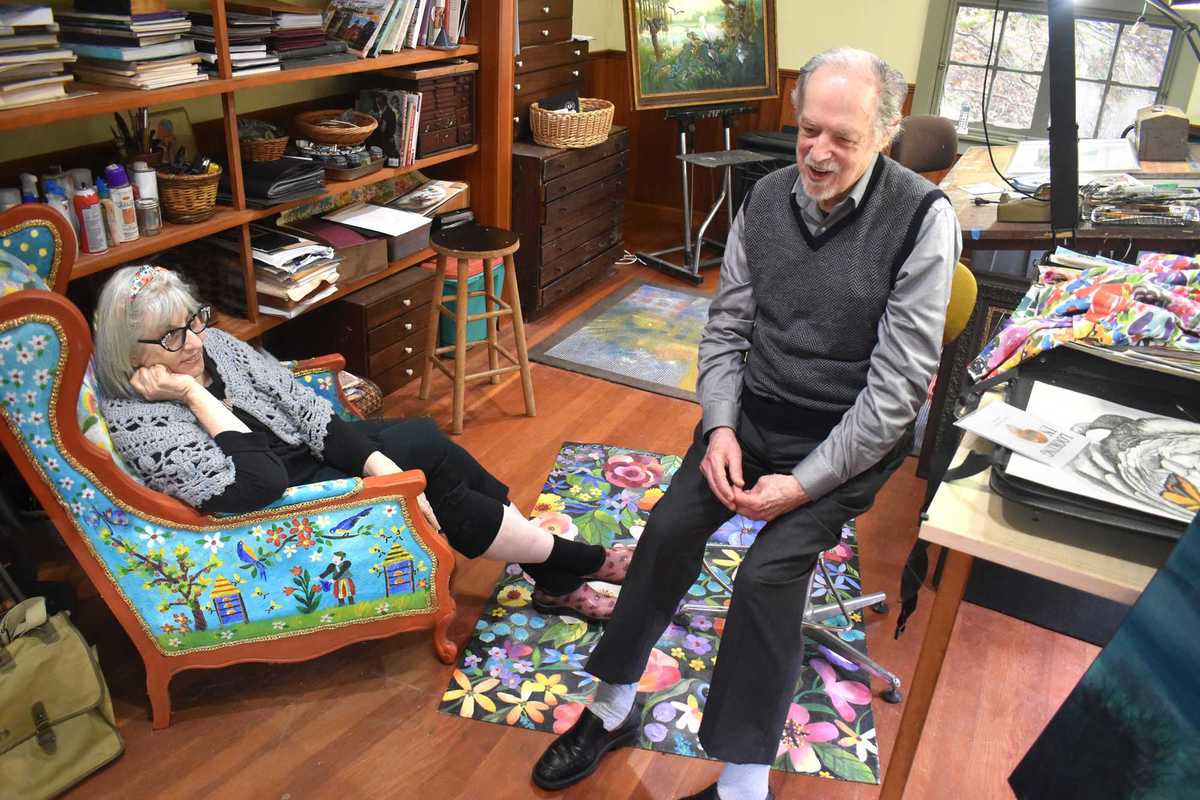
Victor Cella is painting his own path

Victor Cella is painting his own path

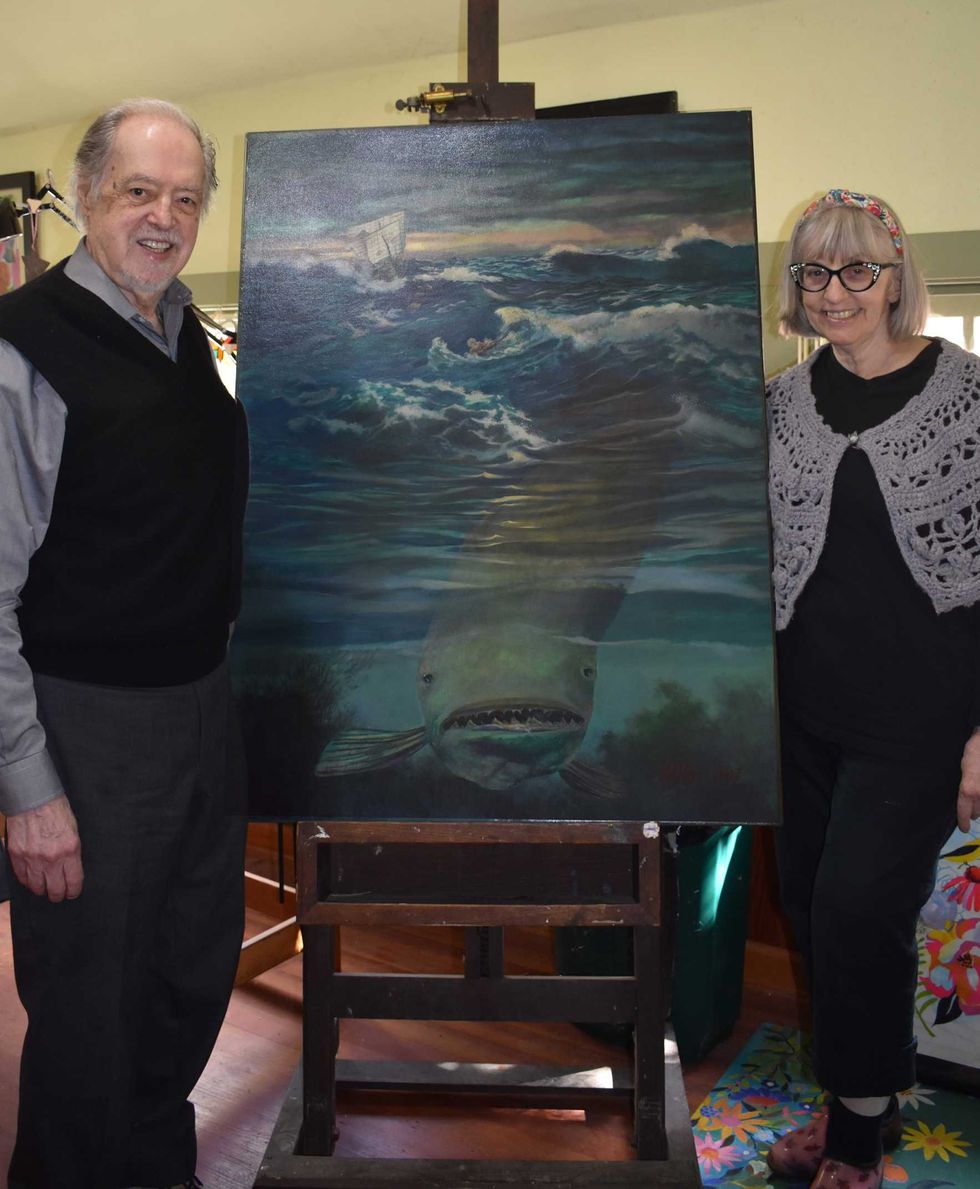
Artist Victor Cella with his recent painting “White Dog” in his studio and shop, Little Store Antiques in Great Barrington.

L. Tomaino
If I taught art, I’d teach it in a different way. I could teach it as an awareness — how to free yourself up.
— Victor Cella

Paintings by Victor Cella of a blue dog, a flower still life and a colorful abstract greet visitors as they mount the steps to The Little Store, an antique shop he runs with his husband, John Ortisi, at 88 Main St. in Great Barrington, Mass.

The shop is filled not only with antiques but also with Cella’s paintings. People stop by to see what Cella is currently painting and to talk with him. He is known for his amiability as well as his paintings.

Keep ReadingShow less
google preferred source

Want more of our stories on Google? Click here to make us a Preferred Source.

Fear and Loathing in the Woodland

Fear and Loathing in the Woodland

Fear and Loathing in the Woodland Japanese barberry, an invasive shrub with thorny branches, provides shelter for mice and can contribute to conditions that allow tick populations to thrive.

Provided

I am tempting tick-bite fate by writing this, even from the safety of my office.

Eight people emailed me with a link to the New York Times article on ticks that ran in the Aug. 20 magazine section.My Instagram algorithm made sure that I saw the same story several times over.The article, “The Summer the Ticks Took Over,” by Benjamin Wallace reads like a horror story, engendering a kind of paranoia that sidewalk-hugging New Yorkers can easily fall prey to.The reader comments enhance the author’s terror and fall into key categories: readers who are living proof of the sometimes harrowing, life-altering consequences of a tick bite; readers’ instructive life hacks against ticks (“permethrin is your friend”); readers’ collective chant to kill the deer; and, finally, readers who question why anyone would ever go in the woods again.

Keep ReadingShow less
“Come From Away,” a story of kindness at Sharon Playhouse
“Come From Away” cast in rehearsal. (Back Row L to R): Jeffrey Konowitch, Meagan Lewis-Michelson, Max Bennett-Parker, Michael F. McGuirk, Tracy Liz Miller, Ricky Oliver, Cherish Love, Willie Marte (Front Row L to R) Cameron Sirian, Chelsie Nectow, Erin Lindsay Krom, Sophie Nassiri
Lynette Shy

Twenty-five years after the events of Sept. 11, 2001, the Sharon Playhouse is staging a musical about what happened in the aftermath — and about an extraordinary act of kindness in a small Newfoundland town.

“Come From Away,” the Tony Award-winning musical by Irene Sankoff and David Hein, runs Sept. 11 through 27 and concludes the Playhouse’s 2026 MainStage season. Directed by Hunter Foster, with choreography by Krystyna Resavy and music direction by Eric Thomas Johnson, the production tells the true story of the thousands of airline passengers who suddenly found themselves stranded in Gander, Newfoundland, after U.S. airspace was closed following the terrorist attacks.

Keep ReadingShow less
A local escape at Cornwall Bridge Coffee

John Zeiser and Jane Carlen at their Diedrich IR-3 coffee roasting machine.

D.H. Callahn

In the shadows of the historic Cornwall Bridge, something tasty is brewing. It’s the morning pot that roaster John Zeiser is preparing for his wife, Jane Carlen. They’re the owners of Cornwall Bridge Coffee.

Upon first hearing the name, the covered bridge in West Cornwall might spring to mind, but that’s not actually the Cornwall Bridge. Hundreds of people drive over the Cornwall Bridge on Route 7 every day, but few know what lies beneath it. The top of the bridge is so featureless that casual drivers could miss the fact that they’re even driving on a bridge at all. But from the river, there’s a whole other scene. The underside of the bridge is quite remarkable, leading to its addition to the National Register of Historic Places in 2004

Keep ReadingShow less
google preferred source

Want more of our stories on Google? Click here to make us a Preferred Source.

google preferred source

Want more of our stories on Google? Click here to make us a Preferred Source.