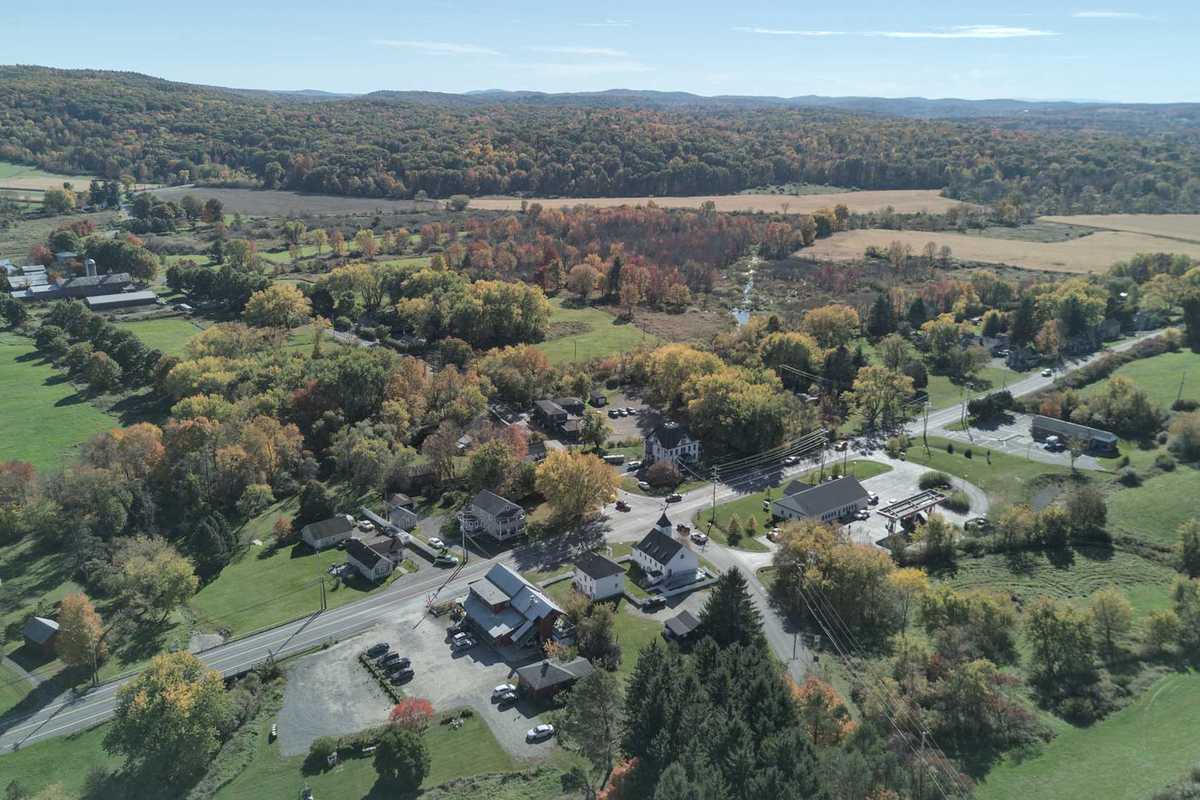
There are many synonyms for the word evolution: development, advancement; growth, progress, expansion — and the northeastern Dutchess County village of Millerton has definitely evolved during its 146-year history. The perspective of that evolution may vary depending on whom one speaks to — longtime local, new resident or merchant. The Millerton News has been running a multi-part series on its front page during the past three weeks about the changes that have taken place over time, specifically along Main Street.
In the 146 years since the village was incorporated in 1875 many things have changed in the business district. There are no longer stores that once stood for generations. Gone are shops like Terni’s, which amazingly lasted for a century after opening in 1919 and being run by three generations of the Terni family; the store closed in 2020.
Also gone is Saperstein’s, which after operating at the corner of Main Street and Dutchess Avenue for 70 years shut its doors when owner Lew Saperstein announced his retirement in 2017.
Many residents surely also remember Delson’s, the Main Street department store that stood for nearly 40 years and even survived a major fire in 1955. Delson’s, which offered everything from furniture to clothing, toys to school supplies, dishes to bedding, finally closed in 1987.
Back in the day, according to those villagers who have been here so long they jokingly call themselves “old-timers,” there wasn’t much you couldn’t buy in Millerton. From clothing to cars, shoes to school supplies, furniture to food, jewelry to junk — the village was essentially self-sufficient. There were even multiple supermarkets and automobile showrooms in Millerton at one time — a village with a population of barely 1,000 — but it drew shoppers from around the entire Tri-state region.
That’s different from the village of today, which while it remains vibrant and offers a vast array of charming small shops with unique and artistic items is still looking for a grocery store for the community after the Millerton Fresh Market closed in 2019.
Many of the merchants who are in the business district also have somewhat different relationships with their customers than merchants did in years past, as times have changed during the past century and a half. Yet that doesn’t mean those connections aren’t valuable or worth celebrating.
Sure, customers might not have the same bonds with their shopkeepers like they did with the late Phil Terni, who would chat for hours at the marble soda fountain counter at the old Terni’s store. That’s where Phil would recount his days as a young boy selling newspapers by the train station or tell his famous stories about old World War II airplanes in battle.
Today, however, one might pop into the new and wonderful Candy-O’s at 28 Main St. for a hard ice-cream cone or a box of Belgian chocolates. There they can get deep into conversation with owner Gillian Osnato about her love of all things sweet or perhaps get a tip about her favorite hike on the nearby Harlem Valley Rail Trail.
Even though Osnato only just opened for business on March 19, she excitedly shared with this newspaper that she already has regular customers and knows some of their orders on sight — certainly a throwback to the way shopkeepers did business in the days of yore and a practice the young entrepreneur intends to continue as her trade grows.
So yes, the types of stores on Millerton’s Main Street are different today then they were 146 ago. They’re different even then they were 10 years ago, perhaps with the exception of the beloved and long-standing Oblong Books & Music, which just celebrated its 45th anniversary last October.
The businesses are more trendy, some more expensive, maybe more exclusive and some even less practical for everyday needs (a handful serving the more eclectic and high-end), depending on what those needs are. Yet there’s no denying they are delightful, inviting, stylish and oh-so-appealing (in a time when merchandise is more frequently purchased via the internet) — clearly why Millerton continues to draw national attention from publications like The New York Times, Arthur Frommer’s Budget Travel magazine and so many others.
But as Oblong co-owner Dick Hermans himself said so pragmatically, “Things do change; you can’t hold back time.”
He’s right. Things do change, they evolve, as Main Street has and will continue to do. Yet the basic core of what Millerton is about — its continued focus on interpersonal relationships and on community in an age when the rest of the world is moving toward the cold, sterile and robotic practice of online shopping, disconnecting from society — is what continues to remain constant, even in our little corner of the world. It’s also why people will keep flocking to this wonderful village, and why those who live and work here tend to want to remain.
To read the full series on the evolution of Millerton’s Main Street, go to www.tricornernews.com.


 Photo by Graham Corrigan