It’s official!

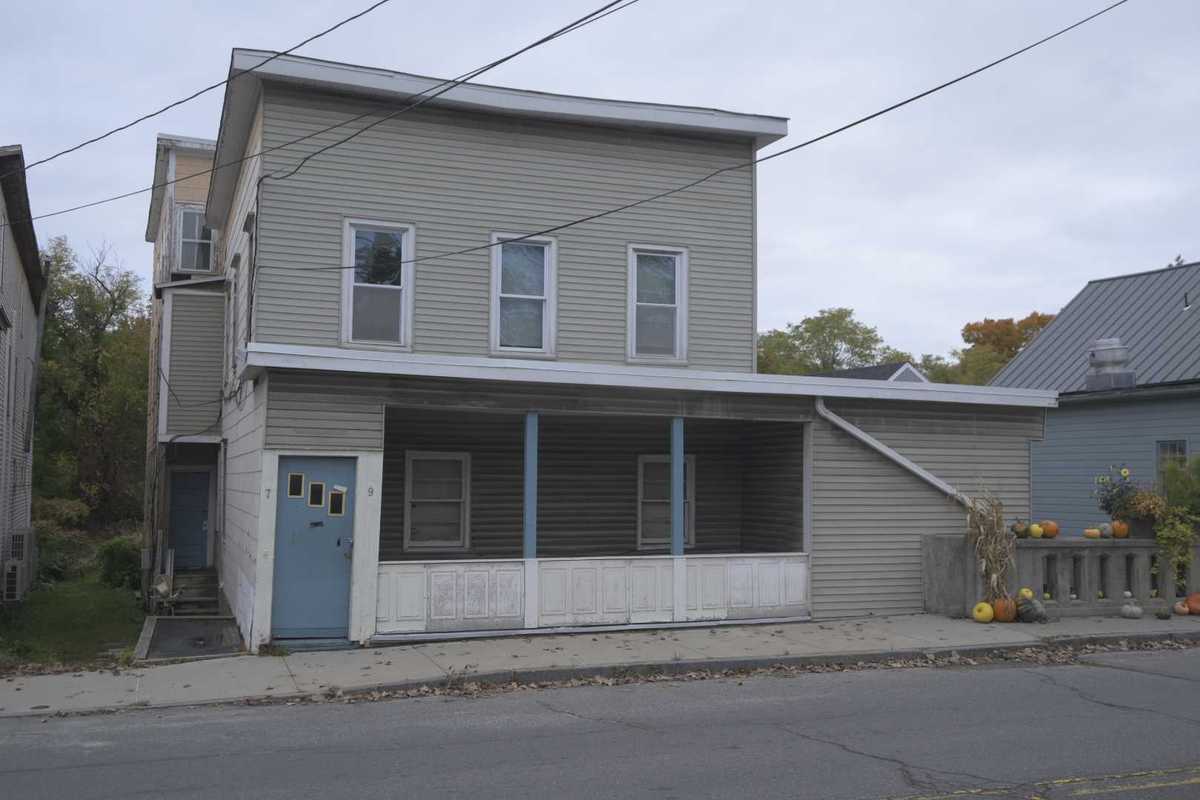
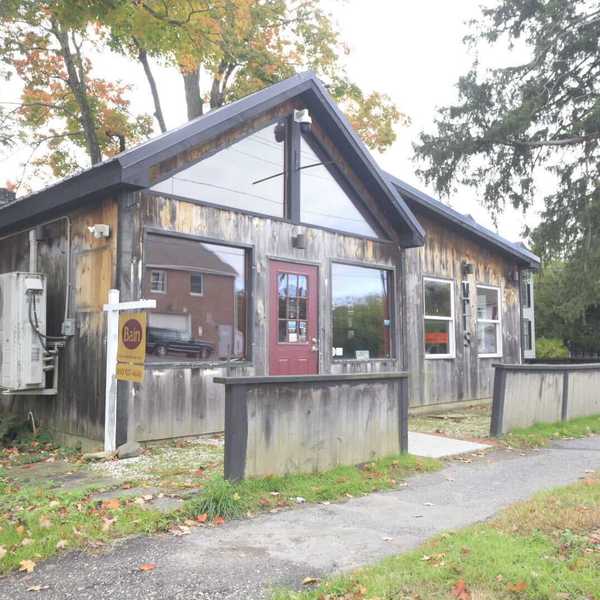
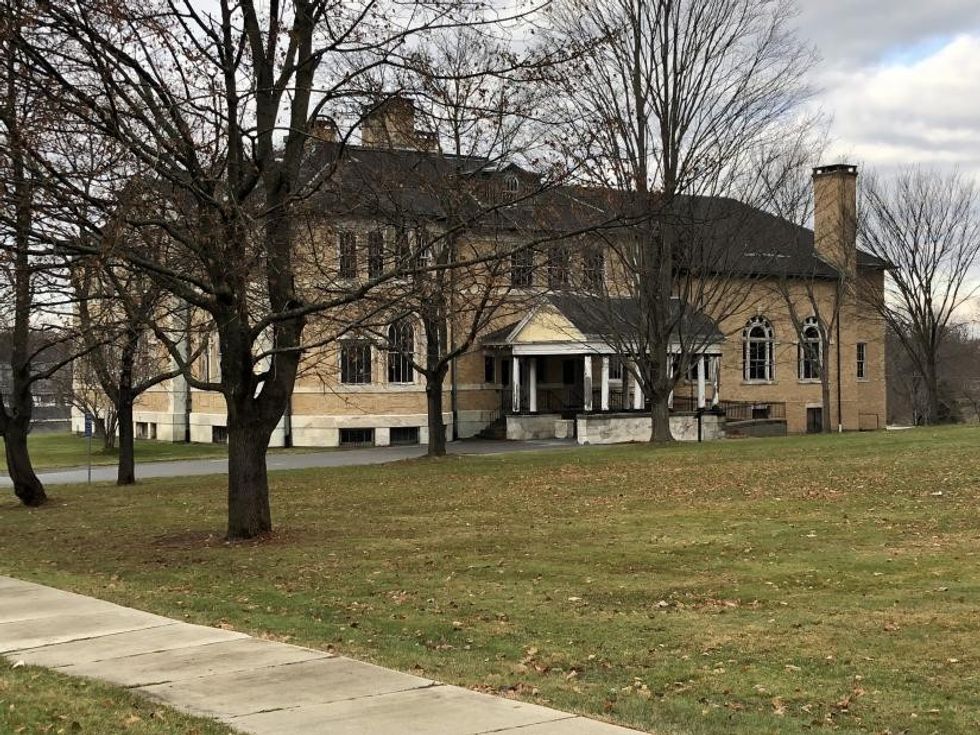
The Thorne Building is located on Franklin Avenue and will soon be converted into a multi-purposecommunity center. Photo submitted


After more than 125 years, the Thorne Memorial Building no longer belongs to the Village of Millbrook. Following many years of pondering what should become of the historic building, numerous public hearings and countless informational sessions, the one-time public high school is now part of the Millbrook Community Partnership 501(C)3. It will soon be transformed into a community center for the both the village and town to enjoy. It is part of a joint project with the former Bennett College property, part of which is being transformed into a public park.
Millbrook Mayor Tim Collopy described what it was like to formally sign the title of the building over to the nonprofit on Tuesday, Aug. 17, after so many years of waiting.
“I am very excited that we have achieved this important milestone so that the Millbrook Community Partnership can begin converting the abandoned Thorne Memorial School Building into the Thorne Building Community Center.”
The title was transferred quietly and privately, but many, the mayor predicted, will be happy to hear that the historic moment was finally reached.
— Judith O’Hara Balfe
Jack Sheedy
The flood of 1955 was more than a natural disaster for Winsted, Connecticut. It was a defining event that changed the town forever, according to historian Hamish Lutris, who discussed the flood and its aftermath during a presentation Aug. 7 at the American Mural Project.
“For Winsted, this is really the operative event in their post-World War II history,” Lutris said. “Winsted, for better or worse, has never really been the same since that flood. Half of Main Street got kind of wiped out.”
Lutris’ presentation, “Inundated: Connecticut’s Great Flood of 1955,” was part of the American Mural Project’s “History After Hours” series. The program included sections of the PBS documentary “The Flood of ’55,” narrated by Charlie Bagley, a PowerPoint presentation created by Lutris and photo displays of the flood in Winsted, Unionville, Barkhamsted, New Hartford, Torrington and Canton.
About 75 people attended the event. When people attend a presentation about the flood of 1955, you might expect some of them to talk about how they survived it. But even some people whose homes were not flooded had stories about how it affected their lives.
New Hartford resident Corinne Rebillard said she grew up atop Highland Avenue in Torrington. On Aug. 19, 1955, she and her family were high above the flood, while fellow townspeople in the Naugatuck River Valley below felt its full fury.
“We had no destruction whatsoever,” Rebillard said. “But we lost power, and we had to go to the spring over by Wright’s barn (on Route 4), because we had no running water. I took a bath in a big tub on the patio.”
Of the 200 businesses on Main Street, 170 were destroyed, Lutris said. Contemporary accounts estimated the damage totaled more than $27 million in 1955 dollars, not including public and private utilities. Of the 87 people who died in Connecticut, seven were from Winsted.
It was a one-two punch by hurricanes Connie and Diane, which produced a total of 35 inches of rain, he said. To add insult to injury, Hurricane Ione in October, though lacking the force of Connie or Diane, caused another $20 million in damage and took 17 more lives in the state, he said.
Connecticut’s river systems are beneficial to farming and industry, but they also make the state susceptible to flooding, Lutris said. “We’ve got a lot of water, right? This, of course, is also what created the industrial state of Connecticut, and that is water power, right? And so what happens is, in the 1800s, we’re going to start taking advantage of all of this flowing water that’s going from the north, basically to the south, and that’s where we’re going to start putting factories,” he said.
But the flip side is the risk of flooding. The rains of Connie and Diane brought floods that wiped out 17 major bridges in Connecticut and even caused Winsted’s Highland Lake to overflow, carrying new and used cars from a dealership to float down onto Main Street, he said.
Lutris lives in Winchester and has taught history in several community colleges in Connecticut. He said he lectures on a variety of historical topics at libraries and historical societies and tries to bring history to life for his listeners. Dates of wars and deaths of kings are only the skeleton of history, he said. “You know when the Civil War was, but if you really want to know what it was like, read letters from soldiers,” he said.
Attending the event was Edward Bachman, who said he did not live in the area in 1955 but in 1963 bought a house in Pleasant Valley that had been through the flood. “Water came to the first floor and filled the crawl space with silt,” he said, based on stories he’d heard.
Paul Hart, a member of the Barkhamsted Historical Society, said he learned of a family who became trapped overnight on a bridge in Pleasant Valley. “Trees were coming down and slamming into the bridge,” he said. “They tried to cross to get out of Pleasant Valley, and it was washed out on the east side, and they came back to the west side, and it just washed out, trapping them on the bridge.”
In the December 2024 issue of “Squire’s Tavern Quarterly,” the newsletter of the Barkhamsted Historical Society, Hart writes, “Standing on the bridge, the water was up to their shins. The family was terrified before being rescued by boat the next day.”
AMP’s special photo exhibit, “Inundated: Connecticut’s Great Flood of 1955,” will be available for viewing with regular AMP admission Fridays and Saturdays 10 a.m. to 5 p.m. and Sundays noon to 5 p.m. through Aug. 29. The next “History After Hours” event will be Sept. 11, a live performance of “The Guys,” a one-act play presented by Herstory Theater.
American Mural Project is at 90 Whiting St., Winsted. For more information, visit americanmuralproject.org or call 860-379-3006.
Robin Roraback
Poet, composer and librettist David Proskauer.
Originally from Westbury, Long Island, but a resident of The Berkshires for over 30 years, poet David Proskauer said, “I don’t know when I got the bug about writing. It just happened.”
“I am inspired by nature, people, places, family and my imagination,” he explained. “Partly, my writing has been a way to clarify my mind, heart, body and soul and as a cleansing for any bipolar irritations,” for which Proskauer says he has found success with treatments.
Proskauer recalls an uncle, Melville Crane, whom he met when he was young whom he considers “an unconscious inspiration” to begin writing.
He mentioned another inspiration: “I once met a professor at the University of Pennsylvania, Gary Schmidgall, who wrote ‘Literature As Opera’ which my father gave to me and which has been a big inspiration in my life.”
Proskauer has published three books of poetry, “The Hearth Waits,” “The Oakdale Community” and “Indian Summer,” of which US Review of Books says, “His notable collection, ‘Indian Summer,’ captures the essence of fall and its impending winter.”
Besides writing poetry, Proskauer also composes music and writes lyrics. He began playing piano as a child, while his two brothers played the cello. He recalled, “ When I was very young, me, my brothers and friends put on a Gian Carl Menotti Christmas opera, ‘Amal and the Night Visitors,’ in our attic.”
He muses that it was “maybe an early exploration of things to come,” explaining, “I am in the middle of writing two librettos. One based on my group home,” where he has lived for more than 25 years, “and the other about Madalyn Murray O’Hair, the famous atheist who was considered in her time to be the most hated woman in America, which would make a very good opera.”
“I love setting poems to music.” One of his choral works, “A Quaker Cantata,” was performed and recorded by the world-renowned Gregg Smith Singers.
Proskauer offered an invitation: “Any serious composer who might want to collaborate with me, please get in touch.”
“I also write some prose with an autobiographical, journalistic flavor.” He has written the booklets, “Vineyard Vacation” and “The Empire State.”
For Proskauer, his poetry and music are the perfect answer to expressing his creativity. “Many years ago, I was really into drama. Writing and composing give me another outlet, one that is more individual and expresses the drama in my life.”
The distinction between his two creative worlds comes through in his poem “A Writer’s Almanac,” in which he considers the emotional nature of poetry alongside the more abstract quality of music:
A Writer’s Almanac
by David Proskauer
And each
Poetic verse
Moody and terse
Comes from
Feeling, emotion
And a light
And heavy
Nerve to
Be tested
And nursed
But my music
Non-verbal and
Abstract is
Full of objective
Fact
For Proskauer, the two forms may speak different languages, but both offer a way to make sense of the world — and of himself.
To contact Proskauer about his books or to collaborate, email davidproskauer@gmail.com.
Bobby Graham & Matthew Marden
The smash burger done right.
Each month, Dugazon owners Bobby Graham and Matthew Marden share a recipe inspired by the traditions, stories and sense of welcome at the heart of their shop in Sharon, Connecticut. Visit Dugazon at 19 W. Main St. Wednesday-Sunday, 11 a.m. to 5 p.m. and online at dugazonshop.com.
Sometimes the simplest meals are the ones we crave most. For us, it’s the smash burger — a crispy-edged, juicy classic that practically screams summertime. Easy to make, endlessly satisfying and always a crowd-pleaser.
The secret? Start with great ground beef, season generously with salt, freshly cracked black pepper and a dash of Tony Chachere’s Original Creole Seasoning, available at DUGAZON. Cook on a screaming-hot grill or cast-iron skillet with a little butter to create those irresistible caramelized edges.
From there, it’s all about the layers: toasted potato buns, melted American cheese, crisp iceberg lettuce, thinly sliced onion, ripe tomato, crunchy pickles and your favorite condiments. Simple ingredients, done exceptionally well.
Like so many of our favorite meals, the smash burger reminds us that everyday cooking can be something special. Gather family or friends, set the table — even if it’s just on the porch — and enjoy the moment. Good food has a wonderful way of bringing people together.
Ingredients
•1½ pounds ground beef, 80% or 85% lean
•Salted butter, for griddle and buns
•American cheese, such as Kraft Singles
•Kosher salt
•Freshly ground black pepper
•Tony Chachere’s Original Creole Seasoning
•8 potato buns
•1 large tomato, thinly sliced
•1 large yellow or purple onion, thinly sliced
•Sliced pickles
•Iceberg lettuce
•Favorite condiments, such as ketchup, mustard, mayonnaise or other sauces
•Divide the ground beef into eight loosely packed balls, about 3 ounces each.
Equipment
•Cast-iron or flat-top griddle (we like the Lodge brand)
•Burger press
•Sturdy spatula
•Gas grill
Instructions
1. Preheat the grill.
Heat the gas grill on high for 10 to 15 minutes. Place the cast-iron griddle over the burners. You want the surface to reach about 500 to 550 degrees.
2. Toast the buns.
Butter the cut sides of the potato buns. Place them on the hot griddle and toast for 30 to 60 seconds, until golden. Remove and set aside.
3. Smash the burgers.
Place four beef balls on the hot griddle with a little butter. Depending on the size of your griddle, you may need to cook them in batches. Don’t overcrowd the griddle; the burgers need room. Wait about 10 seconds, then firmly smash each ball with a burger press until it is about ¼-inch thick. Immediately season with salt, pepper and Tony Chachere’s.
4. Cook.
Let the burgers cook undisturbed for two to three minutes. You’ll know they’re ready when the edges are deeply browned and crispy.
5. Flip.
Use a sharp metal spatula to scrape underneath each burger and flip. Immediately top each patty with a slice of American cheese. Cook for another 30 to 60 seconds.
6. Serve.
Place the burgers on the toasted potato buns. We prefer one patty per burger, but you can stack two if you like. Add tomato, lettuce, onion, pickles and your favorite condiments.
Eat and enjoy! Repeat with the remaining beef balls.

Want more of our stories on Google? Click here to make us a Preferred Source.
Natalia Zukerman
Participants at a recent Quilt Camp for adults.
My hope is that people leave with not only something they’ve made, but also a renewed sense of creativity, possibility and connection. —Natalie Baxter
Cottage Courses is a series of hands-on workshops led by artists and craftspeople in the Hudson Valley and Northwest Connecticut, offering participants the chance to learn everything from basket weaving and natural dyeing to quilting, spoon carving and candle making. Founded by artist Natalie Baxter, the program is designed to make creativity accessible — and to give people something increasingly rare: the time, space and encouragement to slow down and make something with their hands.
“You don’t need to arrive with experience, or even with confidence, to take a class,” Baxter said. “Cottage Courses is for anyone who feels curious about making and wants to spend a little time learning with their hands.”
This fall’s lineup offers plenty of opportunities to do just that. On Sept. 6, basket maker Angela Eastman will lead a basketweaving workshop at Troutbeck in Amenia. Sept. 12 brings bundle dyeing at Rose Hill Farm in Red Hook, followed by a natural dye workshop at Maitri Farm in Amenia on Sept. 19. In October, participants can make fire cider at Maitri Farm, spend a weekend quilting at Cottage Courses’ Quilt Camp in Wassaic and learn spoon carving with Kate Hawes at Troutbeck. November brings beeswax taper candle making at Troutbeck.
The natural-dye workshops are part of a new collaboration with Maitri Farm, whose flower farmers worked with Baxter to select flowers specifically for dyeing. “They met with me earlier this spring to discuss which flowers to grow for natural dye workshops, which was very kind of them,” she said. “I’m excited to partner with them for two workshops this summer and fall.”
There are changes behind the scenes at Cottage Courses, too. Baxter is now running the workshop series on her own after her former co-founder, Polly Shindler, moved on. She has also built a new studio in her backyard, creating a dedicated space for longer, more immersive workshops. The studio recently hosted its first weeklong adult Quilt Camp, with another weekend version scheduled for Oct. 16-18.
For Baxter, the longer workshops offer something that can be difficult to find in everyday life: uninterrupted time to make.
“Longer courses allow participants to take on a more substantial project and spend enough time with it to really settle into the process,” she said. “They offer the kind of uninterrupted studio time that many of us don’t often give ourselves in our everyday lives.”
And the community that develops around the work is just as important. For longer courses, Baxter prepares lunch so participants can take a break, share a meal and get to know one another. “The conversations, encouragement, and sense of community that grow in the studio can be just as meaningful as the projects themselves,” she said.
That sense of connection is at the heart of what Baxter loves about teaching. “I love meeting new people and learning what draws them to making,” she said. “It’s especially meaningful to see someone arrive saying, ‘I’m not creative,’ and then watch them surprise themselves with what they’re able to make.”
The upcoming courses also bring in instructors Baxter has met while teaching at other craft schools. “I am also bringing in more instructors whom I have met while teaching at different craft schools lately to hold workshops, which is always fun,” she said.
Whether you’re an experienced maker or someone who has never picked up a needle, carving knife or basket reed, Baxter hopes Cottage Courses offers a welcoming entry point.
“My hope is that people leave with not only something they’ve made, but also a renewed sense of creativity, possibility and connection,” said Baxter.
For details, registration and the full course schedule, visit cottagecourses.com
Ruth Epstein
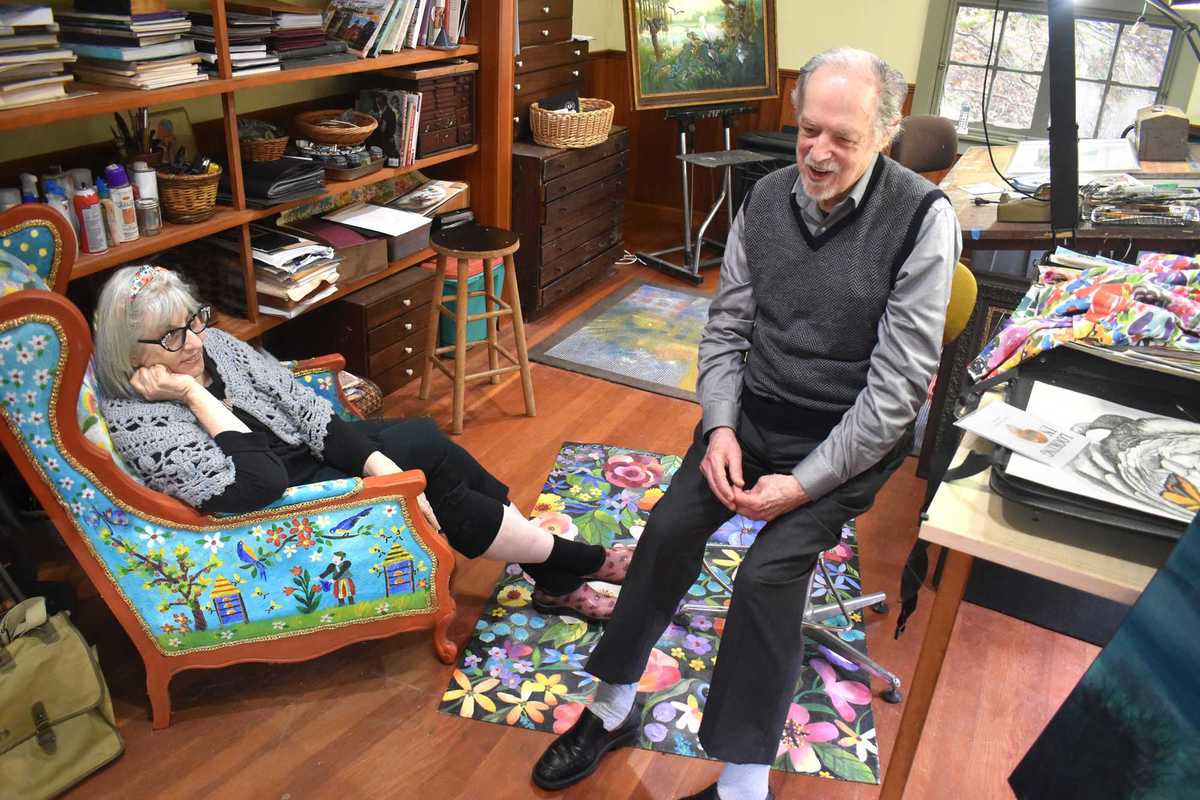
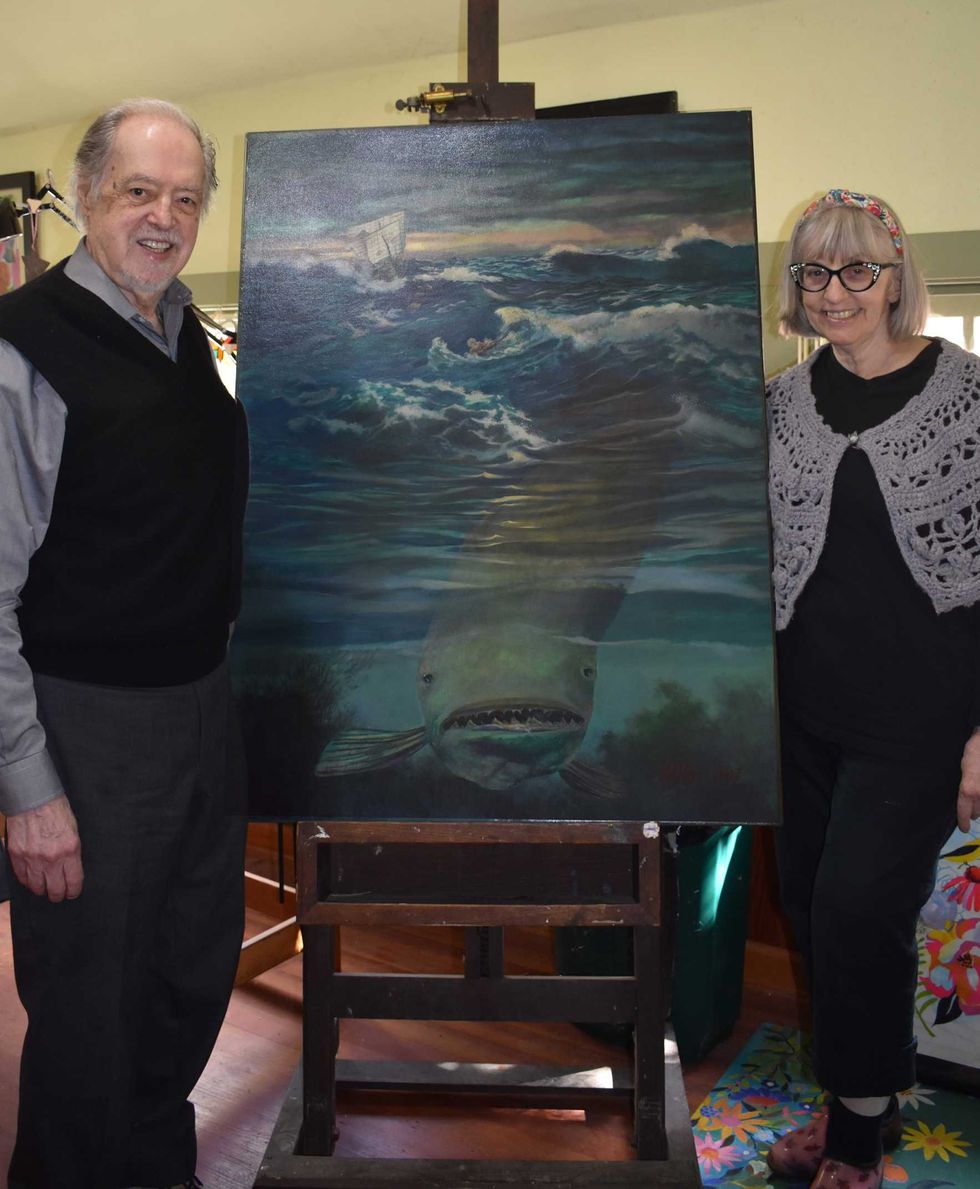
Norfolk artist Jeremiah Bickford is donating part of the profits from his paintings to charities and hopes others will do the same.
Jeremiah Bickford’s art not only showcases the beauty of the landscape, but his work also aims to benefit the community.
While he was always drawn to art, noting, “It’s been simmering in the background all my life,” he really got serious about pursuing his passion about six years ago. He has now produced a number of paintings and, even to his own amazement, garnered some awards.
Bickford, who lives in Norfolk, thinks big when it comes to his watercolors. He works on canvases that are about the size of a piece of plywood — 88 inches by 44 inches. He acknowledged there’s not a lot of meaning behind the large concept, “but it’s like a puzzle for me.”
His focus is on nature and local landscapes, occasionally imaginary,, although his first endeavor was life-sized copies of stained-glass windows. He paints vertically on an 8-foot-by 4-foot easel.
The local scenery provides him with numerous subjects. He’s proud of the piece featuring Freund’s Farm Market flower garden in East Canaan.
He was also pleased to be a finalist in the Berkshire Museum Show in Pittsfield in January 2025, when 41 pieces were chosen from a field of 1,200 submissions from 484 artists.
A panoramic painting of Campbell Falls State Park won him first place at the Indian Mountain School Art Show in April 2025. “I was too embarrassed to open the envelope there, and when I did, I was shocked to see a $5,000 check,” he said.
Bickford recently had his first solo show at the Five Points Annex Gallery in Torrington, where 15 pieces of his work were displayed. One depicted Laurelbrook Farm, owned by the Jacquier family, which is also in East Canaan. Jennifer and Cricket Jacquier saw the painting on their 29th wedding anniversary and were so enthralled with the scene that they bought it as a gift to themselves.
He is currently part of the Sherman Artists Association’s “August Light 2026” show, which opened Friday, Aug. 14 at the Kent Art Association gallery, where he took best in show. That show is on view through Sept. 6.
“I’ve been very lucky for someone who doesn’t really know how to promote my work,” said Bickford, 50.
But Bickford does know that artists are often at the forefront of social change. Describing himself as an introvert, he was looking for a way to show his support. “As things got crazier and crazier in the country, I wanted to do more to help.”
So he is designating about half the profits from the sales of his paintings to a charity. He has donated $2,000 to the Canaan Fire Department, and the next beneficiary will be the Douglas Library in North Canaan.
He hopes the idea will catch on and other artists will follow suit. He’s toying with the thought of establishing an online gallery where like-minded artists could post their work and link to nonprofits.
Bickford, a graduate of Housatonic Valley Regional High School, has a degree in graphic design from Northwestern Connecticut Community College, studied at the University of Wyoming and graduated from Charter Oak State College. He holds a master’s degree in special education from Westfield State University. He has been a special education staff member in the Monument Mountain school system in Sheffield for 18 years.
Millerton News
“Amenia’s Spycatcher,” a new historical drama by George Bistransin, brings the Revolutionary War era to life through the story of Amenia residents Ephraim and Mary Paine, whose lives intersected with espionage, loyalty and the struggle for independence. Presented by the Amenia Historical Society at Amenia Town Hall, Aug. 21 and 22 at 8 p.m. and Aug. 23 at 2 p.m. Admission is free.

Want more of our stories on Google? Click here to make us a Preferred Source.

Want more of our stories on Google? Click here to make us a Preferred Source.