Latest News
Millbrook, Millerton police chiefs represent rural voice in county leadership
Aly Morrissey
Apr 01, 2026
Millerton Police Chief Joe Olenik, left, and Millbrook Police Chief Keith Dworkin at the Dutchess County Association of Chiefs of Police in Poughkeepsie, New York.
Photo Provided
MILLBROOK — Millbrook Police Chief Keith Dworkin has been elected president of the Dutchess County Association of Police Chiefs, placing a rural voice in a key county leadership role at a time when smaller departments are grappling with staffing and resource challenges.
Dworkin, who has been a member of the association for five years, said the role offers an opportunity to strengthen collaboration among law enforcement leaders across the county.
“I was really happy to be able to step into this role,” Dworkin said. “It’s a great opportunity for us to maintain strong working relationships among departments and continue improving how we serve our communities.”
Dworkin’s appointment was also welcomed by Dutchess County Legislator Eric Alexander, who represents Millbrook, Amenia, Washington and part of Pleasant Valley.
“Chief Dworkin is an outstanding manager who has brought a new level of professionalism to our police force,” Alexander said. “His election to this prestigious position is clear recognition of the sophistication, commitment to community and strong leadership he has displayed throughout his career. Millbrook is lucky to have him.”
Dworkin assumes the presidency after serving as treasurer, secretary and vice president of the organization, which brings together chiefs and department leaders from agencies of all sizes across Dutchess County.
The group meets approximately five times a year, convening police chiefs, captains, lieutenants and other department heads to discuss shared challenges, legislative updates and emerging trends in law enforcement.
While departments vary in size and resources, Dworkin said many of the issues are universal.
“Whether you’re a large agency or a small one, we’re all dealing with recruitment, retention and training,” he said. “The issues may look a little different, but they often apply across the board. The goal is to work together and keep those lines of communication open.”
A key priority during his one-year term will be expanding training opportunities and ensuring departments have access to evolving tools and technologies, Dworkin said.
“We’re looking at how we can better provide relevant training to all levels of officers,” Dworkin said. “That includes working with the state and outside resources, and bringing in vendors to talk about things like records management systems and other technology that’s constantly changing.”
The association also serves as a forum for discussion around legislation and policy, often inviting elected officials to speak with law enforcement leaders.
Among the ongoing concerns is the state’s cap on earnings for retired police officers working part-time, which Dworkin said has made it more difficult for smaller departments to maintain adequate staffing.
“It hasn’t kept up with the cost of living, and it really impacts our ability to provide coverage,” he said. “Recruitment and retention continue to be major challenges, especially for smaller agencies.”
That perspective is shared by Millerton Police Chief Joe Olenik, who also participates in countywide discussions – currently serving as treasurer – and represents northeastern Dutchess communities.
“Olenik and I have gotten to know each other over the last few years, and we deal with a lot of similar challenges,” Dworkin said. “We’re smaller agencies, and we don’t always have the same resources, so working together is critical to overcoming those hurdles.”
Beyond formal meetings, Dworkin said the value of the association lies in the camaraderie and relationships built between departments.
“It’s a great collaborative effort,” he said. “It’s great to share ideas, help each other out, even in small ways. Everything we do is collaborative, and that’s what makes the association so valuable.”
Keep ReadingShow less
Reimagining opera for a new generation
Graham Corrigan
Apr 01, 2026
Stage director Geoffrey Larson signs autographs for some of the kids after a family performance.
Provided
For those curious about opera but unsure where to begin, the Mahaiwe Theater in Great Barrington will offer an accessible entry point with “Once Upon an Opera,” a free, family-friendly program on Sunday, April 12, at 2 p.m. The event is designed for opera newcomers and aficionados alike and will include selections from some of opera’s most beloved works.
Luca Antonucci, artistic coordinator, assistant conductor and chorus master for the Berkshire Opera Festival, said the idea first materialized three years ago.
“This production is one of the highlights of the off-season,” he said.
“Opera is all about telling stories through music, which makes the concert a hit with people of all ages,” he added. “Every story has something to tell us about the human experience.” He pointed to the range of material covered in the program. “From the beautiful ornamentation of Baroque operas to the majesty of Mozart, to the gripping emotions of Verdi and Puccini … up to the modern-day stories of today’s operas by composers like Huang Ruo, Missy Mazzoli and so many others.”
The event features three singers from the Berkshire Opera Festival: soprano Juliet Schlefer, mezzo-soprano Abbegael Greene and tenor Maximillian Jansen. All three are still early in their careers, a class of rising vocal talent carrying the torch for the next generation. They will be accompanied by pianist Charles Tsui.
“I think that opera is especially exciting for families and young children precisely because it is all about storytelling,” Antonucci said. “Adding costumes, sets, props and the incredible power of operatic voices to the mix makes it one of the few types of experiences where all the arts come together.”
This year, the production reimagines some of those legendary stories in present-day Massachusetts. As always, “Once Upon an Opera” promises to be an interactive affair, encouraging audience participation throughout its hourlong runtime. While the event is free, reservations are encouraged due to limited seating.
Tickets are available at berkshireoperafestival.org/onceuponanopera.
Keep ReadingShow less
BSO charts future amid leadership transition and financial strain
Natalia Zukerman
Apr 01, 2026
Aerial view of The Shed at Tanglewood in Lenox, Massachusetts.
Provided
The Boston Symphony Orchestra is outlining its path forward following the announcement that music director Andris Nelsons will step down after the 2027 Tanglewood season, closing a 13-year tenure.
In a letter to supporters, the BSO’s Board of Trustees acknowledged that the news has been difficult for many in its community, while emphasizing gratitude for Nelsons’ leadership and plans to celebrate his final season.
The orchestra also pointed to broader challenges facing the institution and the field at large. Attendance has declined over the past two decades, while operating costs have risen. The BSO has relied on more than $100 million in reserve funds beyond standard endowment draws to cover ongoing deficits, and key facilities — including venues at Tanglewood — require significant upgrades.
In response, the organization is advancing a long-term strategy centered on three priorities: programming, partnerships and place. Plans include rethinking how concerts reach contemporary audiences, strengthening ties across Boston and the Berkshires, and investing in major performance spaces such as Symphony Hall and Tanglewood.
The board emphasized that while the BSO remains committed to artistic excellence and its core repertoire, adapting to changing audience habits will be critical to its sustainability. Leaders say ongoing conversations with musicians, staff and community partners have helped shape the new direction.
Despite financial pressures and leadership changes, trustees expressed confidence in the orchestra’s future, underscoring the role of audiences, donors and artists in sustaining one of the country’s oldest cultural institutions.
Keep ReadingShow less

Want more of our stories on Google? Click here to make us a Preferred Source.
Town moves to sell Depot Hill parcel for workforce housing
Leila Hawken
Apr 01, 2026
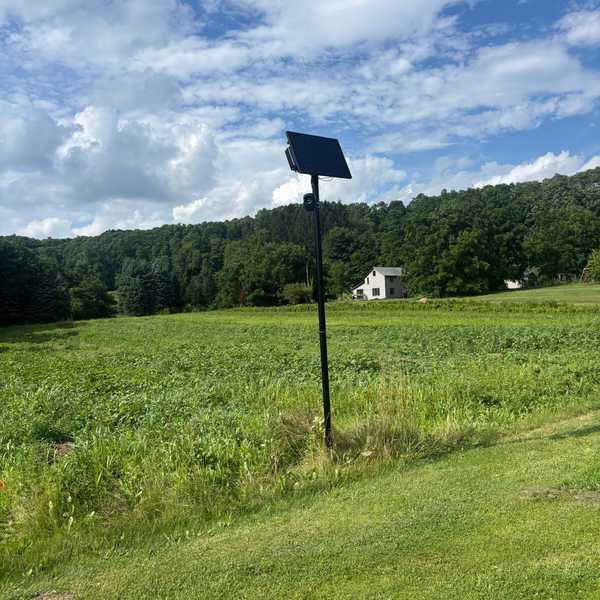
The town-owned parcel of land that Habitat for Humanity plans to buy a half-acre portion of in the Town of Amenia, as seen from the Harlem Valley Rail Trail parking lot on Mechanic Street. The electric vehicle charging station shown above is located on the parcel, and the town will have to divide that portion of land from the rest of the parcel before Habitat for Humanity takes ownership.
Photo by Nathan Miller
AMENIA — A small, town-owned parcel of land on Depot Hill Road moved a step closer to being sold to Habitat for Humanity following action by the Town Board at its meeting on Thursday, March 19. The vote was unanimous. Councilwoman Vicki Doyle was absent from the meeting.
The existing lot, measuring 0.7 acres, will be subdivided so that the space occupied by the town’s newly installed EV charging stations will be retained by the town.
Once the subdivision is finalized, the remaining 0.57-acre lot is slated to be sold to Habitat for Humanity for $30,000. Plans call for construction of a three-bedroom, one-bath home to be designated as workforce housing. The below-market sale price is intended to help keep the home affordable for a qualifying buyer.
Affordable housing has been a longstanding need identified in the town’s planning documents, with officials citing challenges in retaining local workers and young families. Partnering with Habitat for Humanity allows the town to facilitate construction of a modest, income-qualified home while ensuring long-term affordability.
Town Engineer John Andrews is completing a short Environmental Assessment Form, certifying that no significant environmental impact is expected.
In other business, the board began planning for upcoming community events.
Looking ahead to the observance of the nation’s 250th anniversary on July 4, the Town Board acted unanimously to allocate $5,000 for the fireworks display coordinated by the local fire department.
Keep ReadingShow less
A tradition of lamb for Easter and Passover
Leila Hawken
Apr 01, 2026
Roasted lamb
Provided
Preparing lamb for the observance of Easter is a long-standing tradition in many cultures, symbolizing new life and purity. For Christians, Easter marks the end of Lenten fasting, allowing for a celebratory feast. A popular choice is roast lamb, often prepared with rosemary, garlic or lemon. It is traditional to serve mint sauce or mint jelly at the table.
The Hebrew Bible suggests that the last plague God inflicted on the Egyptians, to secure the Israelites’ release from slavery, was to kill the firstborn son in every Egyptian home. To differentiate the Israelites from the Egyptians, God instructed them to mark their doorposts with the blood of a lamb. Today, Jews, Christians and Muslims generally believe that God would have known who was Israelite and who was Egyptian without such a sign, but views of God’s omnipotence in the Abrahamic faiths have evolved over the millennia.
This tradition, celebrated at Passover, has made lamb a first choice for Jewish families commemorating freedom from Egyptian slavery. Christians have continued the tradition, naming Jesus the Lamb of God, whose death serves as atonement for the sins of the world. For them, the dietary restrictions of Lent have ended, allowing a return to eggs, sweets and meat.
Basic recipe: Roast leg of lamb (5-pound leg of lamb, or portion thereof)
2 or more cloves garlic, thinly sliced
Good-quality olive oil
Rosemary
Salt and pepper to taste
Preheat oven to 450 degrees. Trim fat from lamb as desired. Using a sharp knife, cut small gashes in the meat and insert a slice of garlic into each cut. Rub the roast with olive oil, then season with rosemary (some cooks also add thyme), salt and pepper.
Place the meat on a rack in a shallow roasting pan and put it in the preheated oven. After 15 minutes, reduce heat to 350 degrees. Roast for 25 minutes per pound for rare or 30 minutes per pound for well-done. Well-done lamb will be less juicy and less tender. If garlic is not desired, substitute lemon or additional rosemary.
When the roast is done, carve by slicing parallel to the bone, rotating as needed.
Variations: Some recipes substitute lemon juice for olive oil. You may also use salad oil instead of olive oil and add a bit of powdered ginger, a bay leaf, sage and marjoram. Soy sauce is also used.
To make gravy:
After removing the roast to rest, place the roasting pan on the stovetop over heat. Add flour and stir for one minute, until a paste forms. Add beef stock or water to reach the desired consistency. Mash any garlic pieces, if used, to enhance flavor. Strain and serve.
Keep ReadingShow less
Tangled tackle fondling 2026
Patrick L. Sullivan
Apr 01, 2026
The average citizen looks at this and sees fly rods stored in garbage cans. The veteran angler sees an innovative modular storage system.
Patrick L. Sullivan
The snow is mostly gone, the mud is flowing, the stocking trucks are rolling and that means only one thing: it’s tackle fondling time!
Yes, it’s that happy time of year when we dig out all the gear we carefully cleaned and stowed away back in November.
What’s that? You left it all in the car until you had to help Aunt Edna move? And now it’s piled up in the garage?
Never mind that. What’s important is getting ahead of it,starting now.
Reels: Take the spools off and blast them with a can of compressed air. Then deploy a Q-tip to get the stubborn stuff. Then deploy something long and pointy to get the little bits of cotton that came off the Q-tip.
Lines: Clip off the old leader. It’s no good. Pull the fly line of the reel and clean it with something. There are many commercial products available. The Rio line cleaner seems to work pretty well, but it goes fast. I use a weak solution of Dawn dish soap and warmish water and a clean sponge or two, so I can see just how much yick comes off the line. Then I give it a shot of some stuff called Albolene, which is used for removing heavy theatrical makeup. It also functions as a line dressing and costs much less than actual line dressings.
Rods: I check guides and ferrules, and give everything a wipe with a chamois cloth or something similar. Then I start emailing people I barely know looking for someone who repairs rods.
I have something like 60 fly rods, and they are a pain in the neck to store. But I had a brain wave over the winter and bought four kitchen garbage cans. Ignoring the lids, I arranged them in a corner of my living room and to my delight found I can corral most of the rods in such a way that I can actually find the one I want.
It works very well. If the cans had an Orvis or Simms logo on them I could sell them for $85 apiece as a “modular rod storage system.”
Flies: What you absolutely don’t want to do is buy more fly boxes because the giant cardboard box filled with fly boxes is still in the back of the car and you can’t remember what’s in any of them so it’s better to just buy new flies and boxes and use those, reserving the joy of sorting through the old boxes for the summer when you’re at the summer camp that has a nice big table. Whatever you do, don’t do this. Oh, excuse me, that must be the Amazon guy at the door with my new boxes and flies.
Waders and boots: I have a dedicated wader rack where I hang them up. This is an improvement over my old method, which was to leave them in the car in a crumpled heap all winter. Check for leaks by taking a small flashlight and running it over the seams from the inside of the waders. If you see pinholes then it’s time to deploy Aquaseal. There are wader repair kits that have small tubes of Aquaseal and patches that can be cut to fit. Do not buy a big tube of Aquaseal unless you plan to use it very quickly, otherwise the big expensive tube turns to stone in a matter of days. That’s why the tubes in the kits are small. Ask me how I know this.
Check boot laces and replace if necessary. Paracord is your friend here, if you’re on a tight budget and don’t mind using a lighter to create an aglet. Look for missing studs and replace. Clean the soles with an old toothbrush. Do this outside. Ask me how I know this, too.
Note: Thanks for all the kind inquiries as to my new right hip. I am pleased to report that Ye Surgeon took me off the Injured Reserve list a couple of weeks ago, and as soon as things settle down a bit on the run-off, I will be back in action for the first time since September 2025.
Keep ReadingShow less

Want more of our stories on Google? Click here to make us a Preferred Source.
loading