Latest News
Pine Plains unveils first phase of major sidewalk repair project
Nathan Miller
Mar 06, 2026
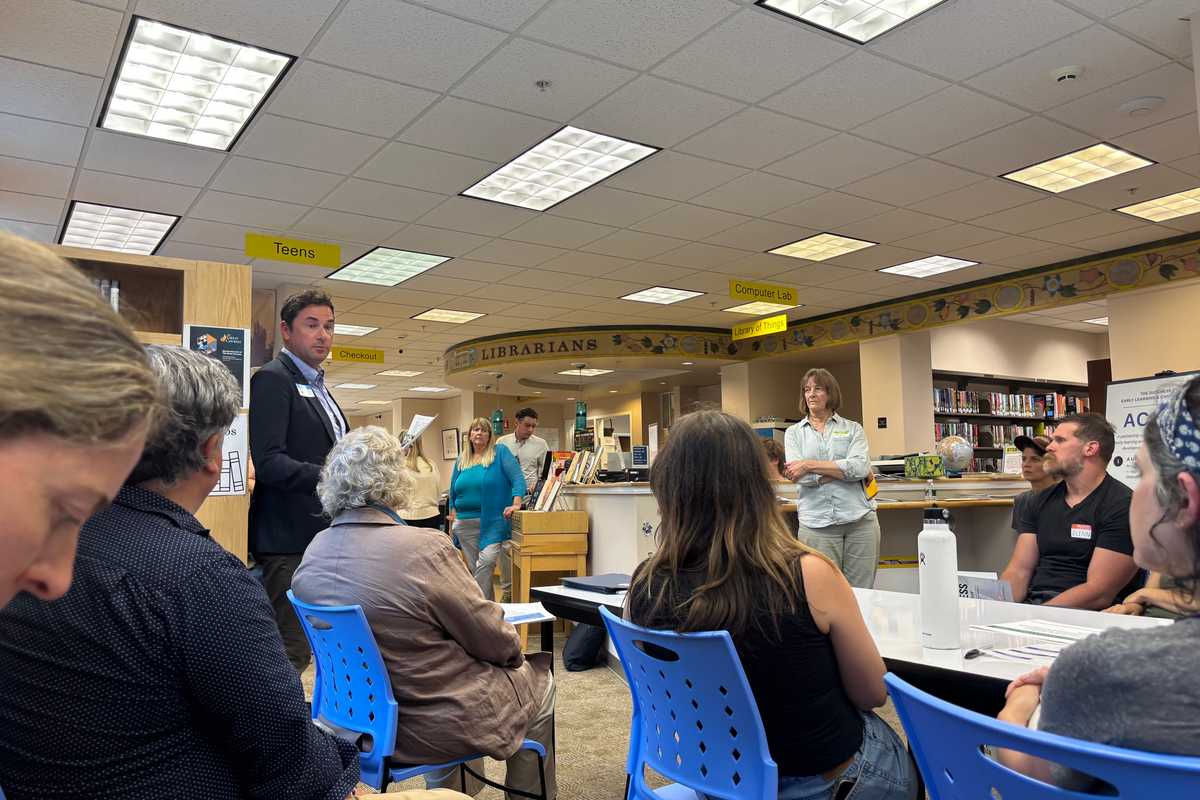
Pine Plains Councilwoman Jeanine Sisco displays a photograph of flashing lights used to alert drivers to pedestrians in crosswalks in Millerton during a public forum at Pine Plains Town Hall on Tuesday, March 3. Sisco outlined plans to repair sidewalks and install two new crosswalks in downtown Pine Plains as a first phase in sidewalk repairs across the town.
Photo by Nathan Miller
PINE PLAINS — Town Board members unveiled plans for sidewalk renovations in downtown Pine Plains as they prepare to apply for a federal grant to fund the first phase of the project.
Councilwoman Jeanine Sisco described the first phase of the sidewalk project at a public forum at Pine Plains Town Hall on Tuesday, March 3.
The first phase calls for repairing sidewalks along Church Street and Main Street and the crosswalks where those streets meet. Two new crosswalks are planned — one on Church Street at the intersection with Academy Street and another on Main Street that will connect the sidewalk on the east side of the street to the Pine Plains Free Library and Community Center.
Town Board members said they intend to apply for a Transportation Alternatives Program grant. The federal funds are administered through the New York State Department of Transportation to finance projects that promote walkability and lessen dependence on cars in a community. The application deadline is March 12, 2026.
Discussion at the public forum centered around crosswalk safety and the inclusion of flashing yellow lights on signposts for pedestrians to activate when they cross. Sisco said it's unclear whether flashing lights will be required at the crosswalks.
She showed pictures of crosswalks in Pleasant Valley, New York, across Route 44, that do not have flashing lights, which she said indicated the lights may not be required in Pine Plains. Sisco also showed pictures of the crosswalks in downtown Millerton that feature lights that would be similar to installations in Pine Plains if required.
Residents were divided on the issue, with opponents raising aesthetic concerns and supporters citing research that flashing lights improve driver awareness and safety at crosswalks.
Pine Plains resident Torey Soracco said she opposed flashing lights at the crosswalks and questioned prior Town Board statements that indicated the lights may be required under grant stipulations.
Soracco asked about the lights' effectiveness, and whether alternative safety measures had been considered. She supported a police presence at the crosswalks to deter unsafe driving.
"I want to make sure we're doing the best way we can," Soracco said. "We already know a way to do that. The fastest way is to give people tickets."
Michael Stabile, who serves as Chair of the Pine Plains Planning Board, spoke in support of flashing lights. He said Federal Highway Administration (FHWA) studies show flashing lights at crosswalks improve driver awareness.
The lights, officially known as "rectangular rapid flashing beacons," reduce pedestrian crashes by up to 47% according to data from the FHWA. Figures on the FHWA's website also state that driver yield rates increase up to 98% at crosswalks with flashing lights.
"I worry about putting sidewalks in that don't have enough safety features," Stabile said.
Sisco said town officials are budgeting for flashing lights in the event they are required, but current plans are to avoid the lights if possible.
Town Supervisor Brian Walsh laid out the timeline of the project. He said the grant process and design work for the first phase would likely take the rest of this year and continue through 2027. He added that the current timeline indicates the first phase of repairs will be complete in late 2028.
After that first phase, Walsh said the project would expand outward from the town center to repair damaged sidewalks and install new paths.
Those plans have not been laid out yet, with no clear timeline given at the public forum. Board members acknowledged the project will be a lengthy process.
Keep ReadingShow less
Living art takes center stage in the Berkshires
D.H. Callahan
Mar 04, 2026
Contemporary chamber musicians, HUB, performing at The Clark.
D.H. Callahan
Northwestern Massachusetts may sometimes feel remote, but last weekend it felt like the center of the contemporary art world.
Within 15 miles of each other, MASS MoCA in North Adams and the Clark Art Institute in Williamstown showcased not only their renowned historic collections, but an impressive range of living artists pushing boundaries in technology, identity and sound.
MASS MoCA is known for its 20th-century holdings spread throughout a sprawling complex of industrial brick buildings. Installations by Sol LeWitt and James Turrell have permanent homes there. Just down the road in Williamstown, the Clark features masterworks by Winslow Homer, Frederic Remington, John Singer Sargent and Claude Monet.
But what visitors might not immediately associate with those established names is how deeply both institutions invest in art happening right now.
On Saturday afternoon, a panel of young artists discussed their relationships with art, identity and technology as part of MASS MoCA’s “Technologies of Relation” exhibition, which opened that evening. The artists represented a broad range of cultural backgrounds, drawing on ancestry while exploring the future of art and technology.
The work itself ran the gamut: wax relief paintings, stained glass, interactive video and sculptural installations. One immersive piece automated the traditional Armenian practice of reading fortunes from coffee grounds. Particularly striking were Roopa Vasudevan’s hand-drawn QR codes and Taeyoon Choi’s large-scale weavings of binary code.
Opening the same night was Zora J. Murff’s “RACE/HUSTLE.” Through photographs, paintings and installations, Murff explores the wide-ranging and sometimes violent implications of being Black in America today. Each piece — whether confronting the rise of white supremacy or examining stereotypes imposed on Black communities — carries razor-sharp visual commentary designed to unsettle.

On Sunday, the Clark continued the contemporary thread. A small exhibition of work by Raffaella della Olga, titled “Typescript,” features intricate patterns created using a typewriter on varied paper surfaces. The effect seems almost impossible until viewers watch a video of della Olga loading her typewriter with 140-grit sandpaper and typing in a hypnotic rhythm. Though the typewriter is considered obsolete technology, she continues to find new applications for it, completing some of the works in recent months.
Next door in the Clark auditorium, HUB New Music performed works written specifically for its unusual instrumentation: violin, cello, clarinet and flute. While that combination may not stand out to casual listeners, relatively little classical repertoire exists for it. The ensemble regularly commissions composers to expand the possibilities.
The results were striking. From the opening notes of Francisco del Pino’s “Passacaglia,” the quartet’s command and layered repetition pulled unexpected emotion from the audience.
After three pieces came the world premiere of Daniel Wohl’s “Mirage,” a roughly 25-minute work accompanied by digital blips, static and electronic textures evoking radio transmissions and UFO lore. Hearing four virtuoso musicians extract entirely new sounds from traditional instruments echoed the weekend’s larger theme: old tools made new again.
Like della Olga’s typewriter, Vasudevan’s QR codes or Murff’s charged imagery, the performances demonstrated that contemporary art often grows from familiar materials — reimagined.
The old masters will always draw visitors to these institutions. But when living artists command equal attention, this quiet corner of the Berkshires feels less like the middle of nowhere and more like a creative epicenter.
D.H. Callahan is a voice actor, creative director and trail steward. He lives with his artist wife in West Cornwall, Connecticut.
Keep ReadingShow less

Want more of our stories on Google? Click here to make us a Preferred Source.
Persistently amplifying women’s voices
Aly Morrissey
Mar 04, 2026
Francesca Donner, founder and editor of The Persistent. Subscribe at thepersistent.com.
Aly Morrissey
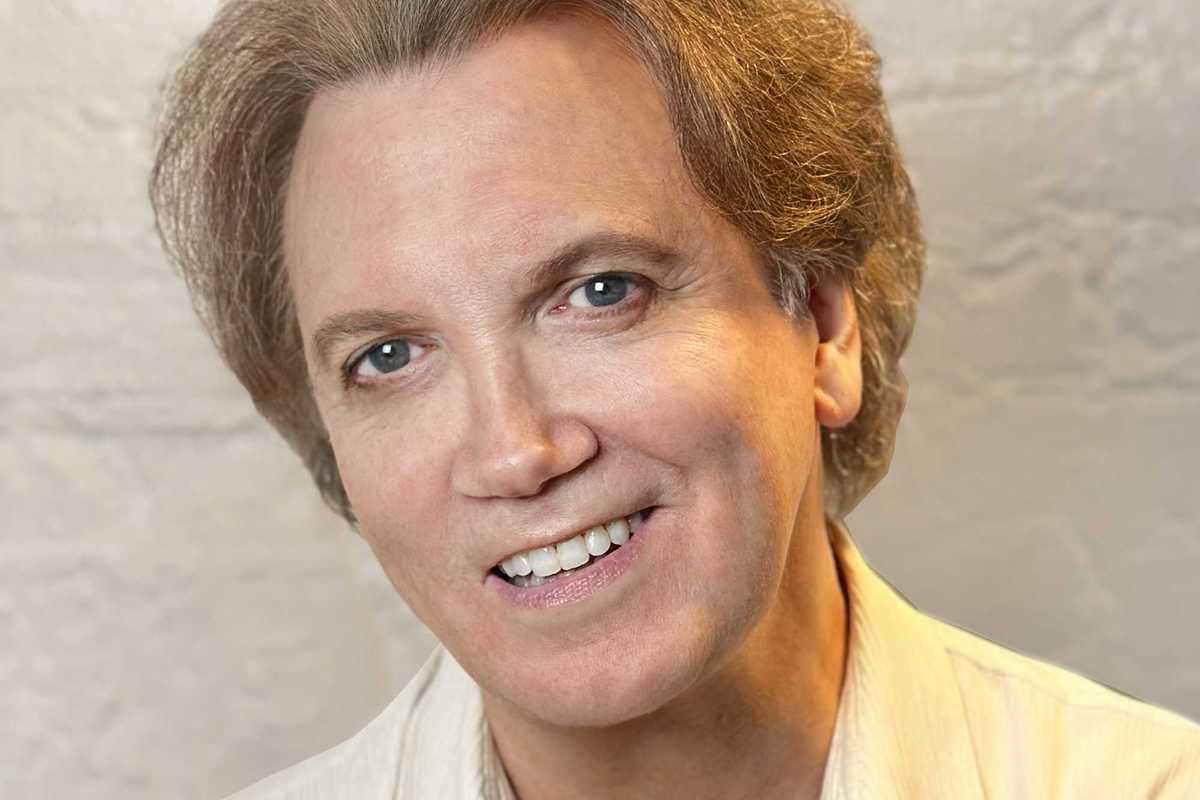
Francesca Donner pours a cup of tea in the cozy library of Troutbeck’s Manor House in Amenia, likely a habit she picked up during her formative years in the United Kingdom. Flanked by old books and a roaring fire, Donner feels at home in the quiet room, where she spends much of her time working as founder, editor and CEO of The Persistent, a journalism platform created to amplify women’s voices.
Although her parents are American and she spent her earliest years in New York City and Litchfield County — even attending Washington Montessori School as a preschooler — Donner moved to England at around five years old and completed most of her education there. Her accent still bears the imprint of what she describes as a traditional English schooling.
Today, she and her family call Sharon, Connecticut, home. While she still travels frequently to Manhattan, she embraces the contrast between city and countryside.
“For me, it’s all about the contrast,” she said, adding that she is friendly and curious about people here in a way that doesn’t feel natural in the city. “I want to know who you are, what you do, and why you’re here. You end up meeting these really interesting people.”
As a longtime editor in newsrooms like The Wall Street Journal, The New York Times and Forbes, Donner said she began to notice something unsettling about how stories were framed, and whose voices were missing.
“It’s just the way news is done,” she said. “It’s the DNA of what we deem newsworthy and important in mainstream media.”
The problem, she explained, isn’t that women aren’t covered at all. It’s that when women are covered, it’s often in a stereotyped way. Women are frequently framed through familiar narratives – the gender pay gap, unpaid labor, caregiving – important issues that persist, she said, but are often treated as repetitive or secondary. Meanwhile, the stories deemed front-page worthy tend to revolve around power, economics, war and politics — and men.
“If we don’t make a deliberate effort to cover women, women won’t be covered,” Donner said.
The issue isn’t unique to any outlet, she stressed. “It’s just the way news is done.”
But that DNA — who gets quoted and whose experiences are centered — has consequences.
And for Donner, that realization demanded a response.
Enter The Persistent.
Founded in 2024, The Persistent was built around what Donner calls a simple but deliberate premise.
“Women don’t get covered in the same way men get covered,” she said.
The goal isn’t to exclude men or create a siloed “women’s section.” Instead, Donner said, it’s about correcting an imbalance by putting women at the center of the story.
Describing the approach as a reframe, this means expanding who is quoted as an expert. It means spotlighting women in business, politics, culture and global affairs. It also means examining major news stories through a lens that mainstream outlets often overlook.
“What we can add,” she said of The Persistent, “is perspective.”
Now approaching its second year — a milestone that will be celebrated next month — the publication operates with an all-women team of writers, editors and illustrators based across the world. The team meets regularly over Google Meet.
“They’re awesome,” Donner said of the editorial meetings. Some of her staff are mothers, some are not. All bring lived experiences to the table. Donner has intentionally created a newsroom culture that balances rigor with support.
“If your writing doesn’t measure up, I’m going to tell you,” she said plainly. “But it’s not a battle. It’s a partnership.”
Beyond publishing stories that matter, Donner wants contributors to be seen.
“I don’t just want people to read the story and forget who wrote it,” she said. “We can do a lot better if we amplify each other.”
As a woman, Donner rejects the idea that success is finite. She wants everyone to have a slice of the pie.
“Just make the pie bigger,” she said. “Bring more seats to the table. Make it richer.”
Donner credits her “mum” for articulating what would become her professional identity.
“You are what you can’t help doing,” her mother used to say.
Today, without hesitation, Donner said she can’t help being an editor.“My identity as an editor is very strong,” she said. Editing, she explained, is less about correcting typos and more about building and shaping ideas.
“Sometimes I imagine this physical movement of cracking something open,” she gestured.
That instinct traces back to childhood. She recalls sitting in a classroom around age 10, listening to a classmate read a short story aloud. For Donner, that moment crystallized something fundamental.
“Someone else’s words made me just sit up straight in my chair and think, wow, that is so good.”
Today, whether she’s in a historic manor house in Amenia or on a Google Meet with her team across the globe, that instinct remains the same: crack the story open, elevate the unheard voice and reframe the narrative.
Keep ReadingShow less
NECC ‘Craft Collective’ offers space to create
Aly Morrissey
Mar 04, 2026
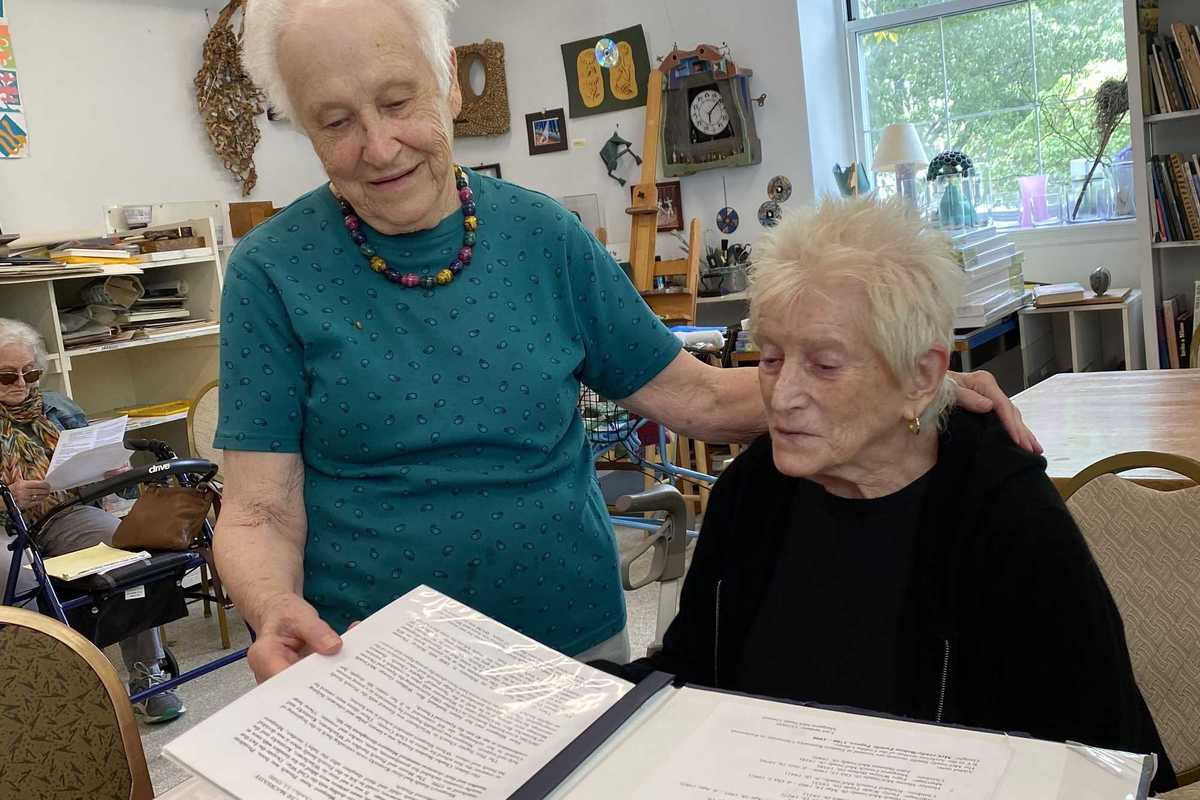
Ash Baldwin, senior administrative assistant at the North East Community Center, launched the weekly Craft Collective in July 2025.
Photo by Aly Morrissey
MILLERTON — A new low-key crafting group at the North East Community Center (NECC) is giving locals a reason to finally finish those half-started projects, providing a space for craft lovers to work in community and exchange tips and tricks.
The weekly “Craft Collective,” – launched in July 2025 by staff member Ash Baldwin – invites community members to bring their own crafts and work alongside others in a casual, social setting. The free program is part of NECC’s broader effort to offer accessible, community-building programming.
“I’m the type of person who struggles to stay focused on projects,” said Ash Baldwin, NECC’s senior administrative assistant, who came up with the idea last summer. “I realized I work better when I’m with other people and when I have a dedicated time and space.”
The idea took shape after Baldwin found herself racing to finish a crocheted baby blanket for her sister’s baby shower.
Participants have already brought a range of projects to the group, from sewing and mending to creative repurposing – including one crafter who transformed an old shower curtain into kitchen valence curtains.
“The goal is really community and connection,” Baldwin said. “People can meet other crafters, swap tips, give feedback on projects – maybe even make a friend.”

Crafting, Baldwin said, offers a kind of mental reset. “It’s peaceful,” she said. “It quiets my mind and lets me focus on one thing at a time.”
Like many crafters, Baldwin admits to having yarn and unfinished projects scattered around her home, and says she tends to make gifts for others more than items for herself.
Though Baldwin has been crocheting since 2022, creativity has always been part of her life. Her mother sews, her grandmother crocheted, and she grew up surrounded by creative projects. Baldwin joked that her grandmother once “fully kidnapped” her American Girl doll to make custom clothes for it. She also describes herself as a longtime “band kid,” saying creative arts were woven into her childhood.
When she’s not organizing the Craft Collective, Baldwin works behind the scenes at NECC, handling administrative and fiscal operations, including service tracking for programs such as the food pantry.
The Craft Collective is held every Tuesday at 6 p.m. at 51 S Center St., Millerton. There is no cost to participate. For questions or to donate crafting supplies, contact Ash Baldwin at ash@neccmillerton.org or (518) 789-4259 ext. 132.
Keep ReadingShow less
Leopold Week honors land and legacy
Jennifer Almquist
Mar 04, 2026
Aldo Leopold in 1942, seated at his desk examining a gray partridge specimen.
Robert C. Oetking
In his 1949 seminal work, “A Sand County Almanac,” Aldo Leopold, regarded by many conservationists as the father of wildlife ecology and modern conservation, wrote, “There are some who can live without wild things and some who cannot.” Leopold was a forester, philosopher, conservationist, educator, writer and outdoor enthusiast.
Originally published by Oxford University Press, “A Sand County Almanac” has sold 2 million copies and been translated into 15 languages. On Sunday, March 8, from 3 to 5 p.m. in the Great Hall of the Norfolk Library, the public is invited to a community reading of selections from the book followed by a moderated discussion with Steve Dunsky, director of “Green Fire,” an Emmy Award-winning documentary film exploring the origins of Leopold’s “land ethic.” Similar reading events take place each year across the country during “Leopold Week” in early March. Planning for this Litchfield County reading began when the Norfolk Library received a grant from the Aldo Leopold Foundation, which provided copies of “A Sand County Almanac” to distribute during the event.
Aldo Leopold, born in 1887 in Iowa, was educated at Yale University, where he studied in the newly formed forestry school, graduating in the class of 1909. His then-radical concept of a “land ethic” states that land as a whole — soils, water, plants, animals and humans — should be understood as one community. Leopold explained, “A thing is right when it tends to preserve the integrity, stability and beauty of the biotic community. It is wrong when it tends otherwise.”
For a small town of roughly 2,000 people, Norfolk has an abundance of conservation land, including the 6,000-acre Great Mountain Forest and Aton Forest, a 1,300-acre research forest. It is a community where many share a sense of responsibility to live sustainably on the land. Sharing Leopold’s essays at the Norfolk Library honors his legacy.
Keep ReadingShow less

Want more of our stories on Google? Click here to make us a Preferred Source.
loading