Farming in the U.S. has changed dramatically over the past 50 years, as consolidation and difficult economic conditions have reduced the number of active farms nationwide by nearly 30%.
New York has been especially affected. The state lost 10% of its farms between 2015 and 2025, nearly twice the national rate during that period. Farmers in northeastern Dutchess County attribute much of the decline to rising labor and equipment costs that many operations can no longer afford.
Turbulent weather has also caused a loss of crops. After the freeze in April, New York State Senator Michelle Hinchey is calling on the Secretary of Agriculture to provide low interest loans to farmers who experienced crop loss because of the extreme conditions.
Following the nationwide implementation of tariffs and high gas prices in the area, output costs have skyrocketed. This has impacted items such as packaging, machines and parts for equipment, which are essential for farmers, throwing off their losses to profit ratio, decreasing their net income. Finding and paying employees a livable wage is another issue facing these businesses with a high cost of living and the seasonal nature of working in this industry.
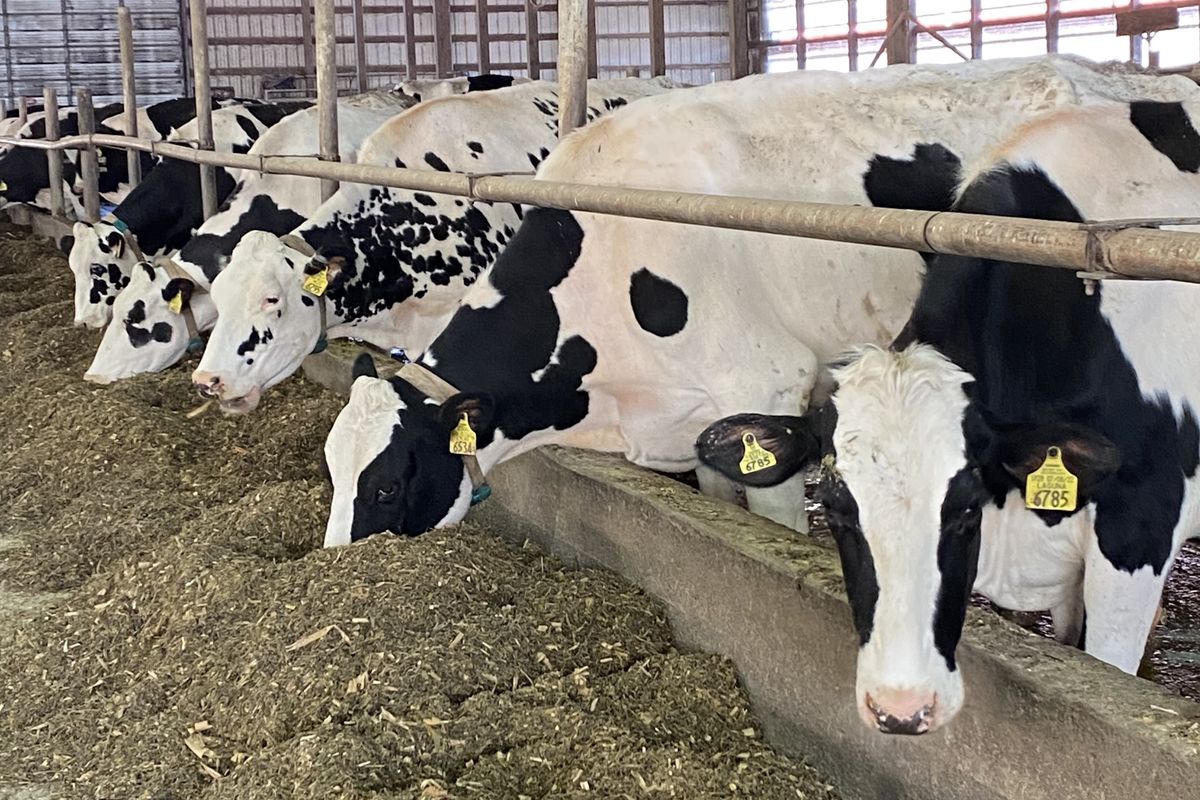
The Hudson Valley has also migrated away from dairy farming, a once thriving industry in the area, to more industrial and community supported agriculture models in order to survive.
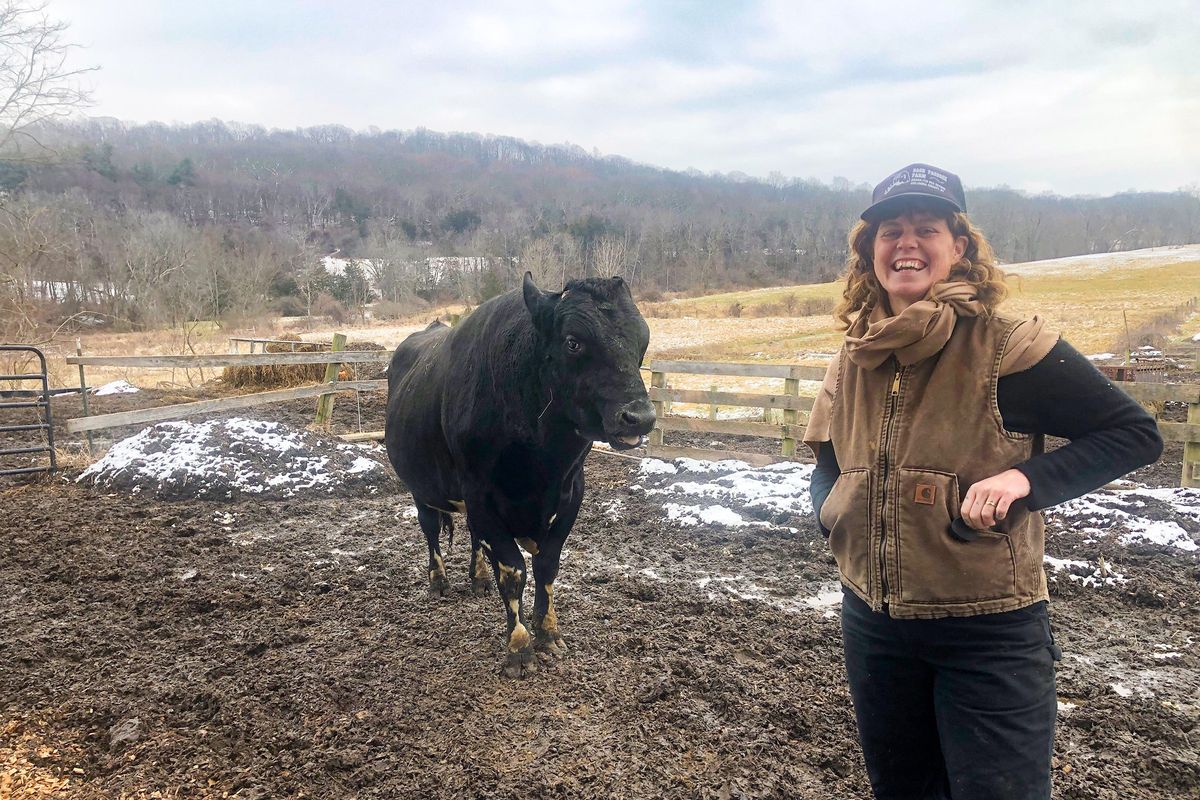
Sarah Chase owns and operates Chaseholm farm in Pine Plains, one of the few remaining dairy farms in the area. Chase expressed these concerns regarding rising costs. After taking over her family’s dairy farm in 2013, she has had to raise prices to combat increased expenses.
“There didn’t seem to be much of a way around it, especially because our employees continue to need increased wages with their costs going up too,” Chase said. “Everything is expensive and that makes it harder to farm.”
Julie Schroeder, owner of Silamar Farm in Millerton, is considering selling after significant changes in the industry. The commonality of farmers leasing land rather than owning property due to high costs has changed the culture significantly.
“When we bought the farm in 1963, there were 49 mostly dairy farms in North East,” Schroeder said. “Now, there are very few farmer-owned farms that haven’t sold their development rights.”
Sisters Hill farm in Stanfordville, owned by the Sister of Charity of New York, is closing after 27 years as a part of the congregation’s downsizing which began in 2023. Dave Hambleton has been a Farmer and Director of the property since its opening and has trained nearly 70 apprentices during his time there. Without having ownership of the property despite running the farm for the last nearly three decades, Hambleton is feeling the effects of land easements.
In the Hudson Valley, small businesses have been vital in keeping farms alive. By consistently purchasing from and working directly with farmers, local restaurants and grocery stores have been able to forge a mutually beneficial relationship.
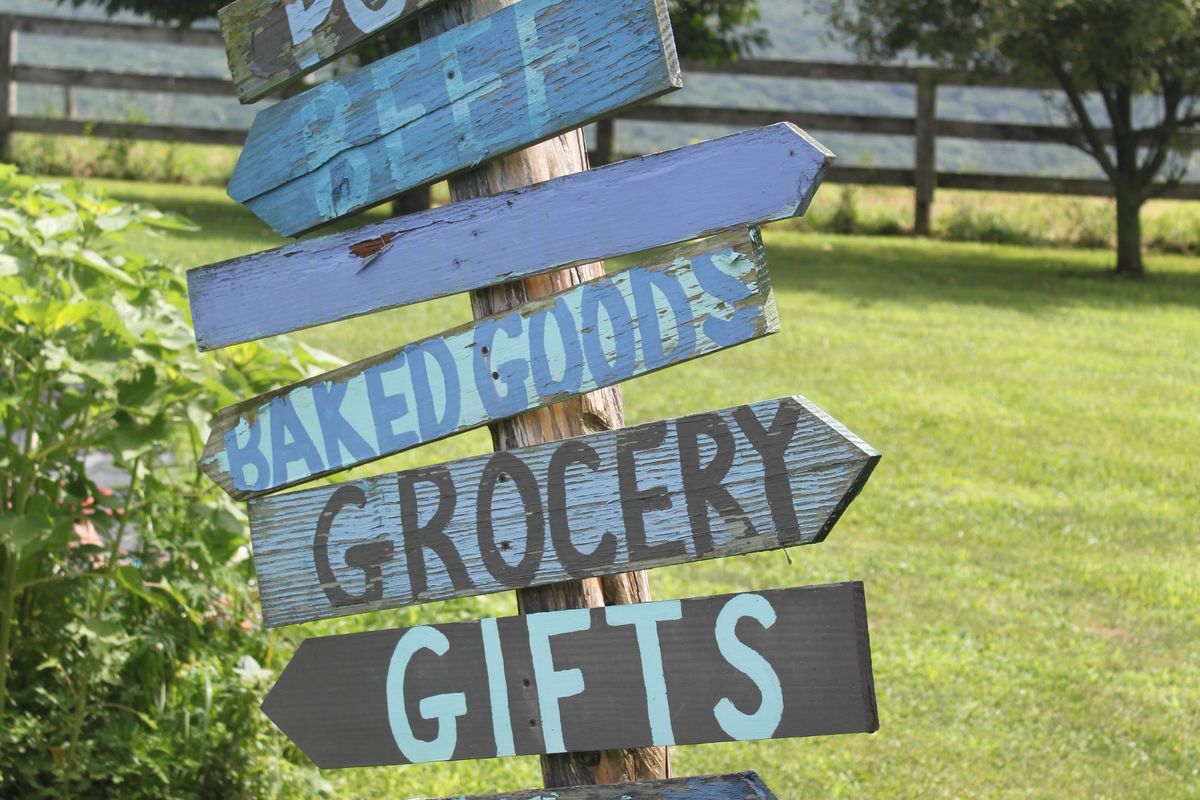
Tri Corner F.E.E.D., a food market in Millerton, is bridging the gap between farmers and shoppers who are often priced out of eating locally. The store offers a sliding scale for pricing, ensuring that people of all incomes can afford locally grown, healthy food.
“Food at the price that the farmers need to receive is sometimes inaccessible for a large amount of our community that have interest in local food,” said Blake Myers, director of food programs for Tri Corner F.E.E.D. Industrial growers are able to achieve higher economies of scale due to their increased output and in turn offer lower prices for customers.
Full Circus Farm, owned and operated by Miriam and Mark Stonehill, primarily sells their fruit and vegetables to local farm stores such as Tri Corner F.E.E.D.and Big Rock Market in Stanfordville.
“One of the great things about working with local farm stores is that they aren’t dictating our prices, we set our prices,” Mark Stonehill said. “There’s a lot of farmers that aren’t in that lucky position.”
Farm to table restaurants also have been a resource for farmers in the area. Willa, a Millerton restaurant specializing in sourcing locally grown ingredients, opened in 2023. Willa prides itself on showcasing a menu that changes nearly every day based on seasonal availability.
“We are really blessed where we’re located in this area because there is such a bounty of small scale organic farmers and we’re able to source from such a close radius,” said Alanna Broesler, co-owner of the restaurant.
Despite these efforts to support local farms, some restaurants must source their food from greater distances to make up for the recent decline in output. Pasture Kitchen, a farm to table restaurant in Millerton, gets approximately 60% of their food from farms in the Hudson Valley, citing availability issues for this widened radius.
“It definitely does make you have to work a little bit harder to find those networks and they might not always be as close to home as you hope,” said Will Lanier, a manager at the restaurant.
Farmers also face challenges when working with local restaurants and stores. Full Circus Farm has moved to working with larger distributors such as the Hudson Seed Company in addition to local businesses.
“It can be really tough to work really closely with another business and then they go out of business,” Stonehill said. “That’s one of the challenges of farming and selling locally is that it’s a difficult business environment for other small businesses.”
In light of these hardships, interest and support from the community is largely valuable in sustaining local farms despite the current turbulent conditions.
“I could not do what I do without interest from community members and where their food comes from,” said Sarah Chase. “It’s the only reason I exist.”
With these difficulties and significant changes in the industry, some farmers are persevering for the love of the game.
“There is a lot of joy in farming and we do it not because we are making millions as farmers,” Stonehill said. “We do it because we love the lifestyle. We love our 5-year-old and 7-year-old getting to grow up on a farm and know where their food comes from and understand in a really special way the natural world and how we as humans fit into that natural world.”

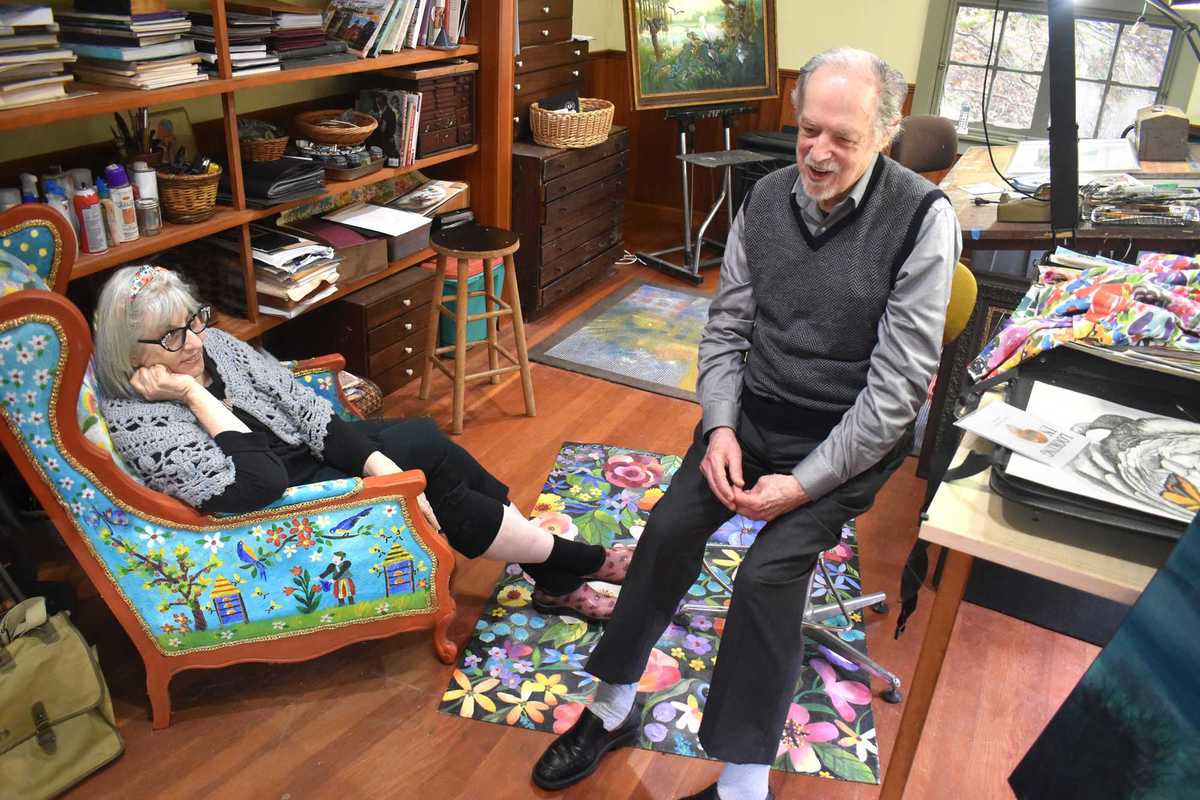
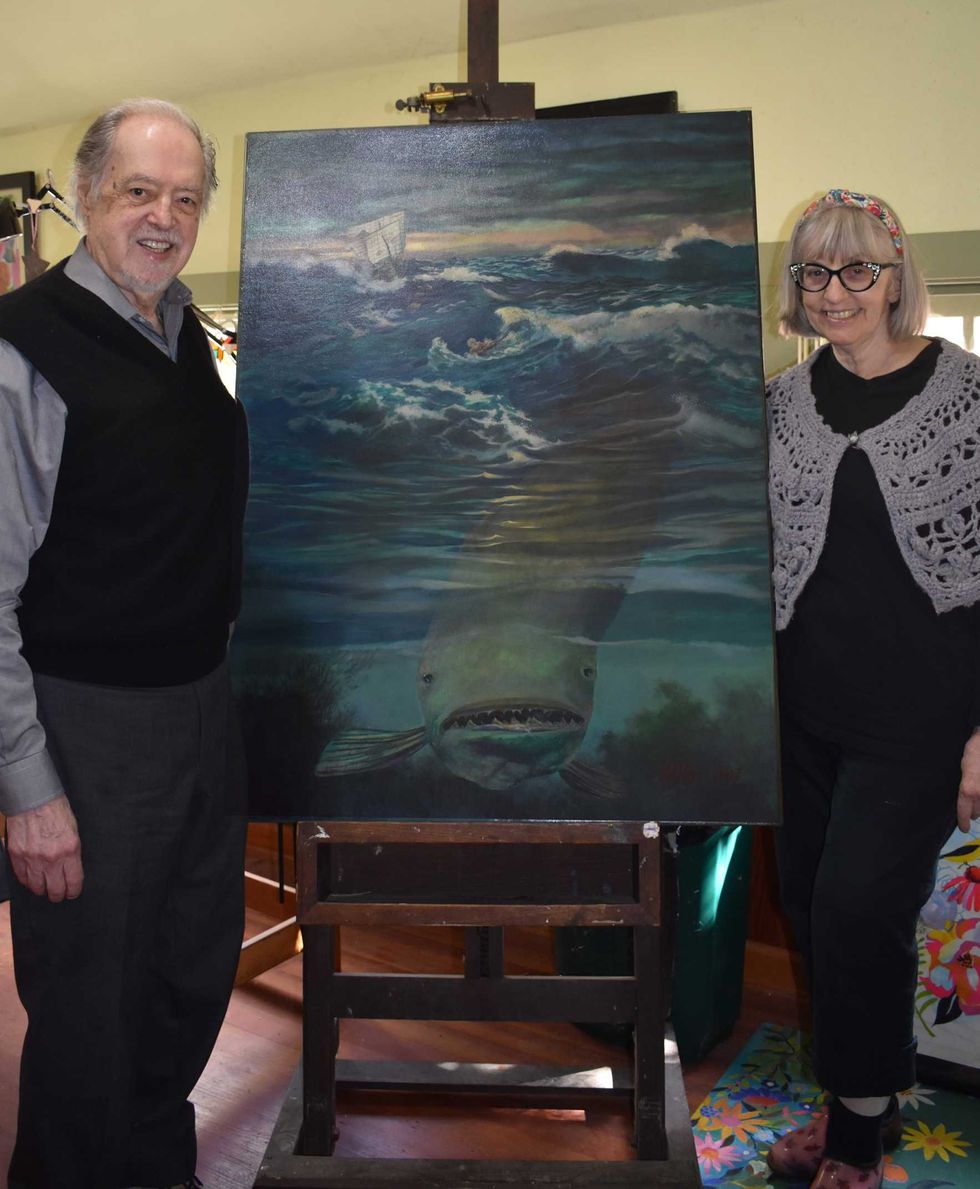 Justine and Victor Valla in their studio with a painting of Victor’s,”Jonah and the Whale.” Robin Roraback