HILLSDALE, N.Y. —Two Hillsdale residents are using a lightweight form of concrete rarely seen in the United States to build highly energy-efficient passive houses, hoping to demonstrate a different approach to residential construction.
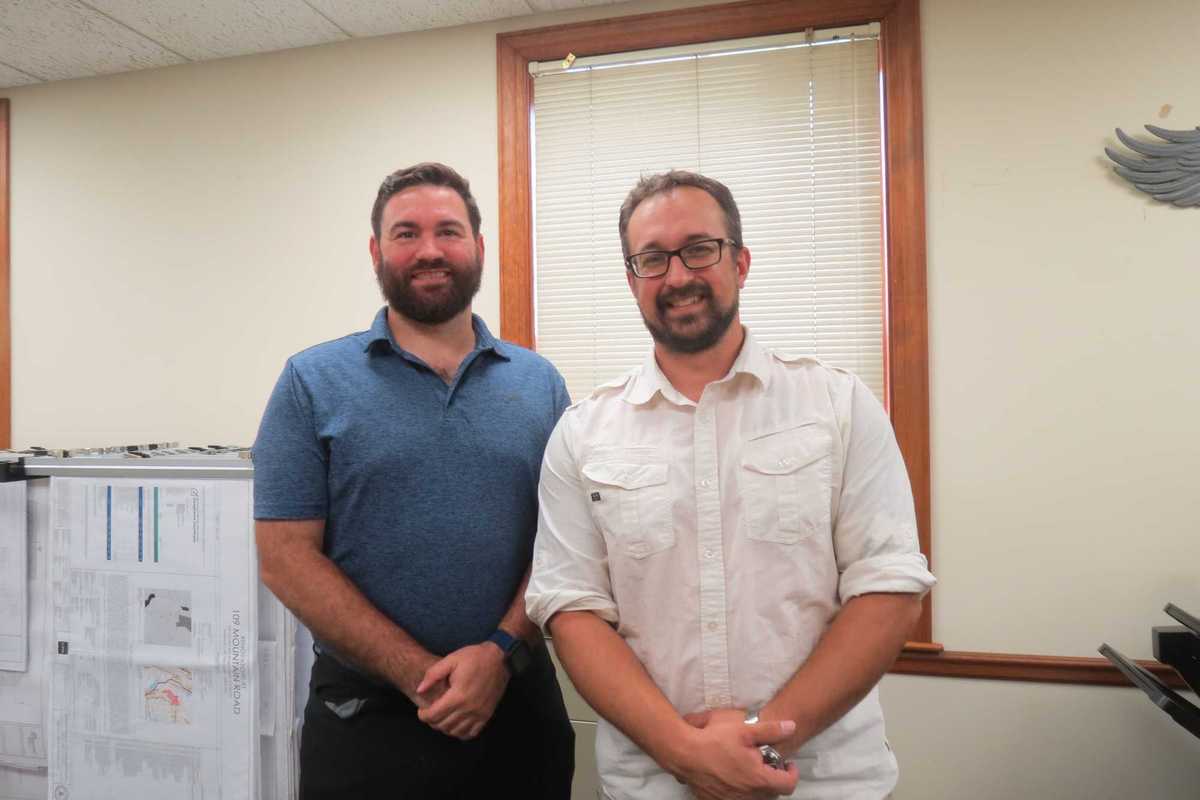
Consultant Dan Levy has been in the passive house industry for over 15 years, and has built two houses that meet passive house certification standards. He has joined forces with Steven Bluestone — a construction company owner who has built five passive houses and three passive apartment buildings over 13 years — over an appreciation for a type of concrete that’s 80% air.
Passive houses are homes designed to use as little energy as possible, reducing the demands for heating and cooling. They aim to be airtight with double or triple-paned windows and built to work with the sun by having wide overhangs that block summer rays but allow a low winter sun to enter the home.
Levy thinks one of the best building materials for the high-efficiency homes is a type of concrete that’s up to 80% air, but is sturdy enough for multi-story buildings. Autoclaved aerated concrete is a lightweight building material originally developed in 1923 in Sweden. Made from sand, lime, cement, and aluminum powder, the concrete is 75% to 80% air and durable for structures, Levy said. It also has a higher fire rating than regular concrete.
While passive houses are not always built using aerated concrete, Levy and Bluestone have used it for their own homes.
Levy and Bluestone met around 10 years ago in Woodstock, New York, when Levy was building one of the first passive houses using aerated concrete in the U.S. in 2014. He felt relieved when he met Bluestone, as Bluestone had the same idea.
“It’s been so nice to have an ally,” Levy said. “It started to reach the point, finally, where people don’t think I’m crazy. Because if Steve Bluestone can do it, then Dan Levy can do it.”
Bluestone and Levy built the first two certified passive houses using AAC in the country, finishing construction just weeks apart.
Levy has since left his passive Woodstock home and lives in Hillsdale, where he’s built himself another passive house using aerated concrete. Construction took two years, but Levy moved in during early 2025 before it was finished.
Proper insulation is vital in a passive house to ensure inside temperatures remain stable and energy usage stays low, Levy said.
In a traditional wood frame house, insulation fills the middle of the wooden studs — which isn’t optimal, Levy said. In a passive house, insulation should be continuous on the outside, rather than interrupted by studs. In Levy’s home, six inches of mineral wool, an environmentally safe material, line the aerated concrete. Stucco covers the outside of his home, as wood can support mold.
“You couldn’t come up with a simpler building,” Levy said.
Since passive houses are airtight, or as close as possible, bugs and mice are almost nonexistent in Levy’s home, he said. Pollen and dust inside the home is also rare.
Bluestone has lived in his home for 12 years, and is currently building an addition. He used a different insulation than Levy, but both homes use aerated concrete for the structure. Bluestone’s house is also airtight and the structure doesn’t support moisture build up or mold.
Using proper building materials and insulation, passive houses are built so the indoor temperature is consistent, otherwise known as mean radiant temperature. Maintaining inside temperature ensures that comfort is maintained throughout the house and energy usage isn’t dedicated towards temperature differences on surfaces or near doors and windows.
“In the middle of the winter, the walls are kept warm by the heating system because the air is warm,” Bluestone said. “Hopefully no one has a telescope, but I can walk around in my birthday suit when it’s 0 degrees outside, and I’m really comfortable everywhere in the house.”
Both Levy and Bluestone said that AAC and the passive house model could be used to support apartment buildings and multi-story homes. Levy’s house is a duplex, and he does short term rentals in his spare rooms.
“People come to experience it and learn about how this is built or just come to have a comfortable place to stay,” Levy said.
AAC remains relatively uncommon in U.S. residential construction, but it is widely used throughout Asia, the Middle East and Europe, according to a January 2026 report by Strategic Market Research.
“The attitude in the United States is, if this was so good, why isn’t everyone else using it? Well, everyone else is using it. They just don’t live in the United States,” Levy said.
China has over 2,000 AAC plants, while the United States has two. According to Levy, using AAC is about comparable in price to using wood framing.
“I’ve been trying for years to show people we actually can build better buildings,” Levy said.
In addition to supporting an energy efficient home, AAC is reusable. After a house is demolished, AAC can be recycled to make more.
Bluestone has 30 solar panels on his house, and Levy will be implementing solar panels in the near future. Once Levy’s solar panels are hooked up, his house will be close to net zero energy usage, he said. Both houses use systems to limit energy usage in water, heating and lighting.
In Bluestone’s house, a button heats the water before it’s dispensed from the faucet. This limits water waste while waiting for the temperature to rise.
“It’s a little bit here and a little bit here,” Bluestone said. “Passive houses actually have a lot of rules, and one is related to that. They want to make sure that the amount of time that you’re running the water, the sink to get the hot water, is minimal.”
According to Bluestone, passive houses are gaining popularity in the Hudson Valley not just for costs, but because the people who live in the region are more environmentally cautious. That’s why Bluestone became interested in building passive houses and using AAC.
“I think it’s the right thing to do. I do believe in global warming and how it’s gonna affect us, how it is affecting us,” Bluestone said.



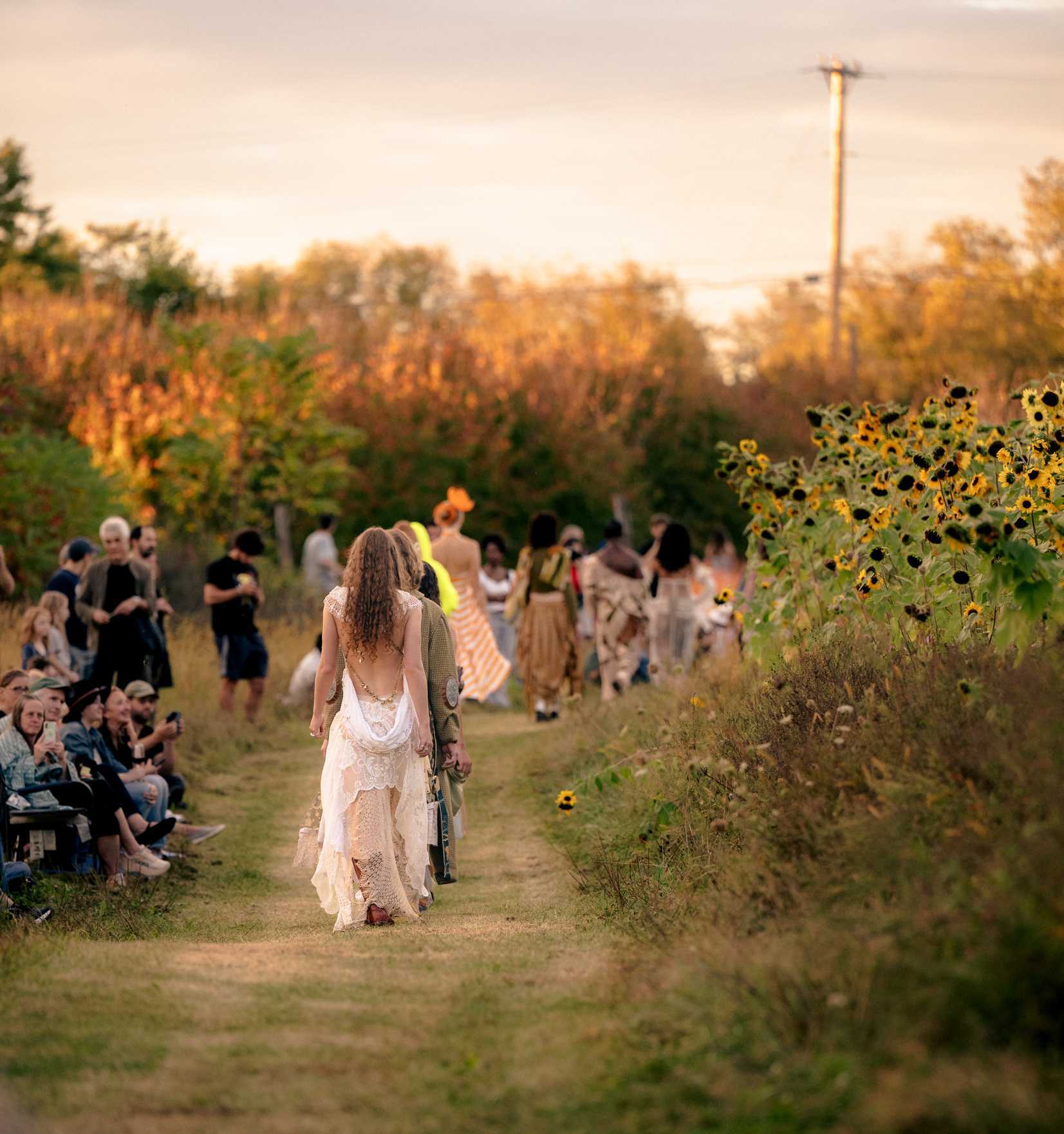 Models walk the organic runway at HVSFW. Ilan Harel

 Susan Schneider, owner of Shandell’s, creates a variety of products with marbleized surfaces in her Ashley Falls studio.L. Tomaino