AMENIA — The Planning Board moved closer to completing the environmental review of the proposed Cascade Creek subdivision during its regular meeting on Wednesday, May 27, agreeing to consider a formal environmental determination at its June meeting.
The discussion centered on completion of the Environmental Assessment Form, a key component of the project’s review under New York’s State Environmental Quality Review Act.
“First you have to decide the impact,” board engineer John Andrews said, explaining the process.
While no decision was made, board members agreed to review a draft negative declaration, a finding that would certify the project is not expected to have a significant adverse impact on the environment. If adopted, the declaration would satisfy SEQRA requirements and allow the project to move forward to the site-plan review stage.
The Cascade Creek proposal, first submitted in 2024 by the nonprofit Hudson River Housing of Poughkeepsie, calls for a 28-lot affordable housing subdivision on 24.13 acres. According to project plans, approximately 59% of the property would remain conserved open space.
Since the application was filed, engineers and planners have worked through the conservation review process while the Planning Board has conducted public hearings and meetings to gather community input. Project plans have been revised in response to concerns raised by residents and board members.
Addressing a previous request from the board for updated traffic information and guidance from the New York State Department of Transportation (DOT), Senior Planner Peter Sander reported that the project’s access plan has been revised to include a single entrance and exit on Route 22 directly across from the Old North Road intersection.
Andrews added that the DOT determined neither a traffic signal nor a dedicated left-turn lane would be necessary at the intersection. The agency suggested a marked crosswalk could be beneficial and noted that existing pull-off lanes provide adequate space for pedestrians along the highway.
Board member John Stefanopoulos asked about reducing the speed limit in the area.
Questions about groundwater and well capacity generated significant discussion.
Andrews said that once the environmental review is completed and the project enters the design phase, developers will be required to conduct detailed analyses of well construction and groundwater availability.
“Those results have to be acceptable to the Department of Health,” Andrews said, noting that until that approval is received, the water issue remains open.
Planning Board member James Walsh observed that some residents along Cascade Road have needed to drill their wells deeper over the years.
Board member Ken Topolsky referenced a letter from residents who argued that groundwater testing conducted to date had been inadequate. Topolsky added his continuing concern about stormwater drainage plans and the potential for flooding downstream in an area with a history of flooding.
Topolsky also expressed concern that the development’s housing designs could appear too uniform and may not reflect the town’s character.
But Sander disagreed.
“We’ve added variety, landscaping and buffers,” Sander said, adding that the actual design drawings will illustrate diverse design decisions. He reminded the board that the development will bring people to the town.
“It’s people and families,” Sander said.
Asked about next steps in the process, Andrews explained that if the board adopts a “negative declaration,” the SEQRA review would be complete and the application could advance to site-plan review. A “positive declaration” would require additional environmental analysis before the project could proceed.



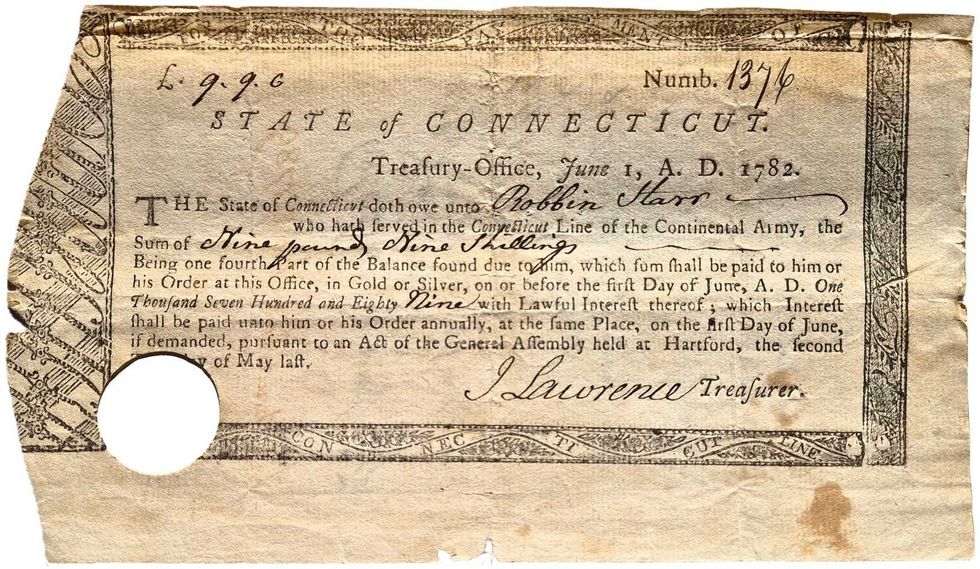 Pay Bill for Robin Starr’s service in the Continental Army.Courtesy the Alex Breanne Corporation
 John Mills speaking at Quinnipiac University.Courtesy the Alex Breanne Corporation

 Stephanie Saetta,with her rescue dog George and Blue (left), a shepherd mix awaiting his forever home.Madi Long