Experts testify at hearing ahead of Wake Robin decision

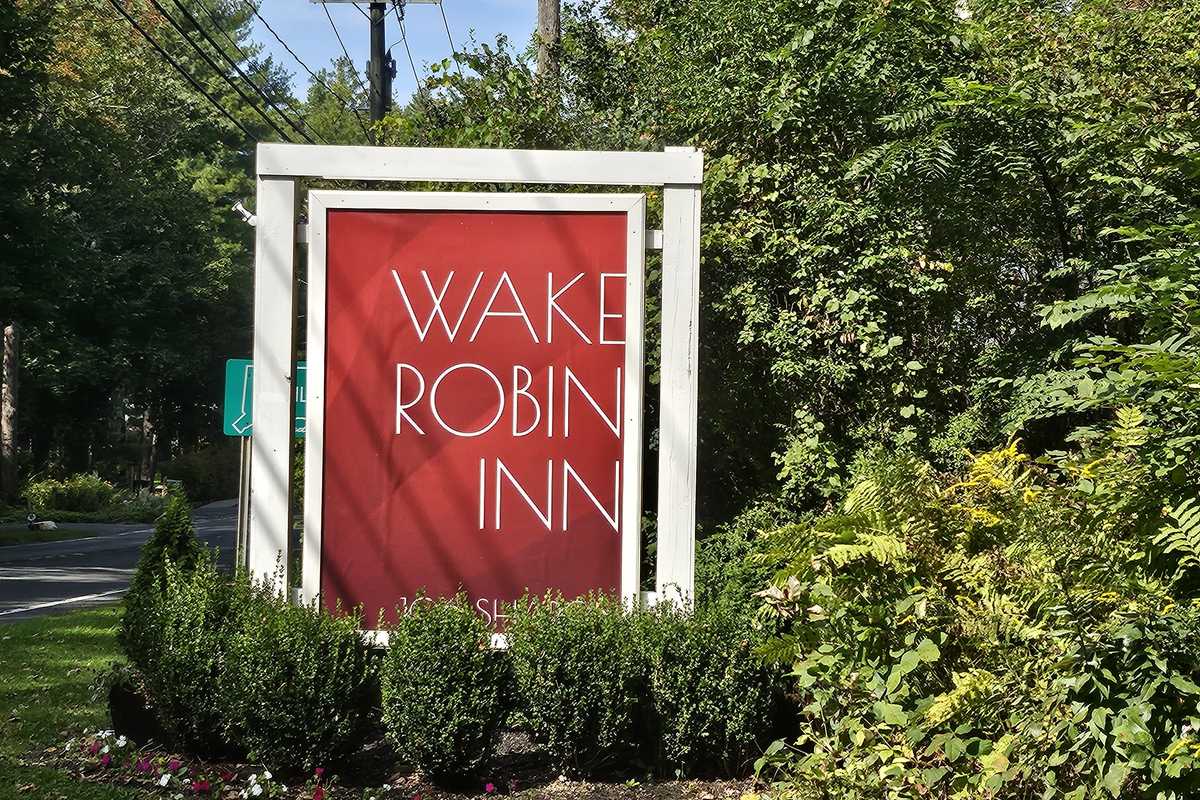
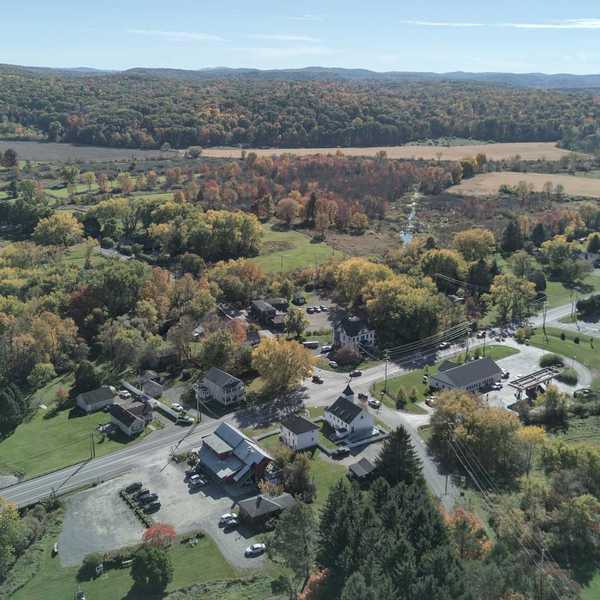
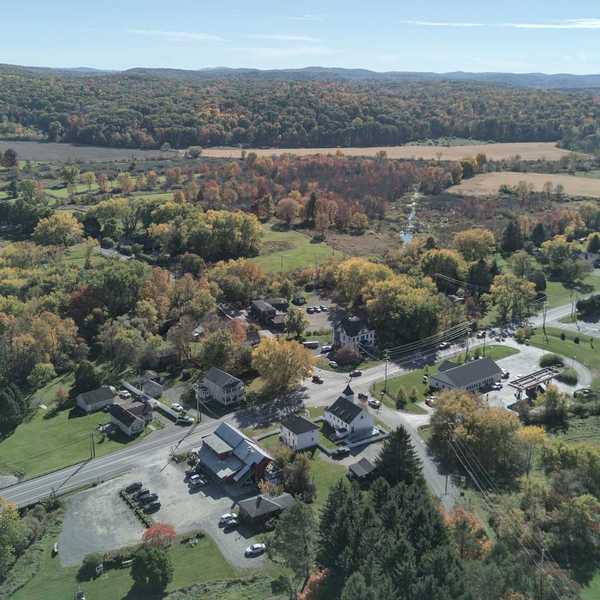
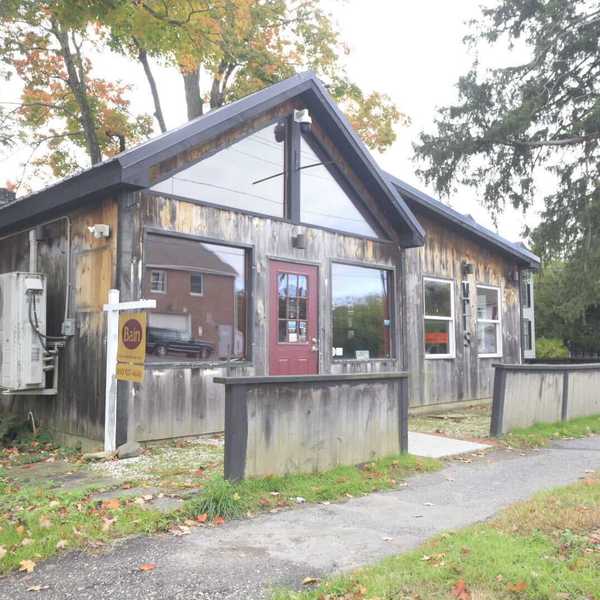
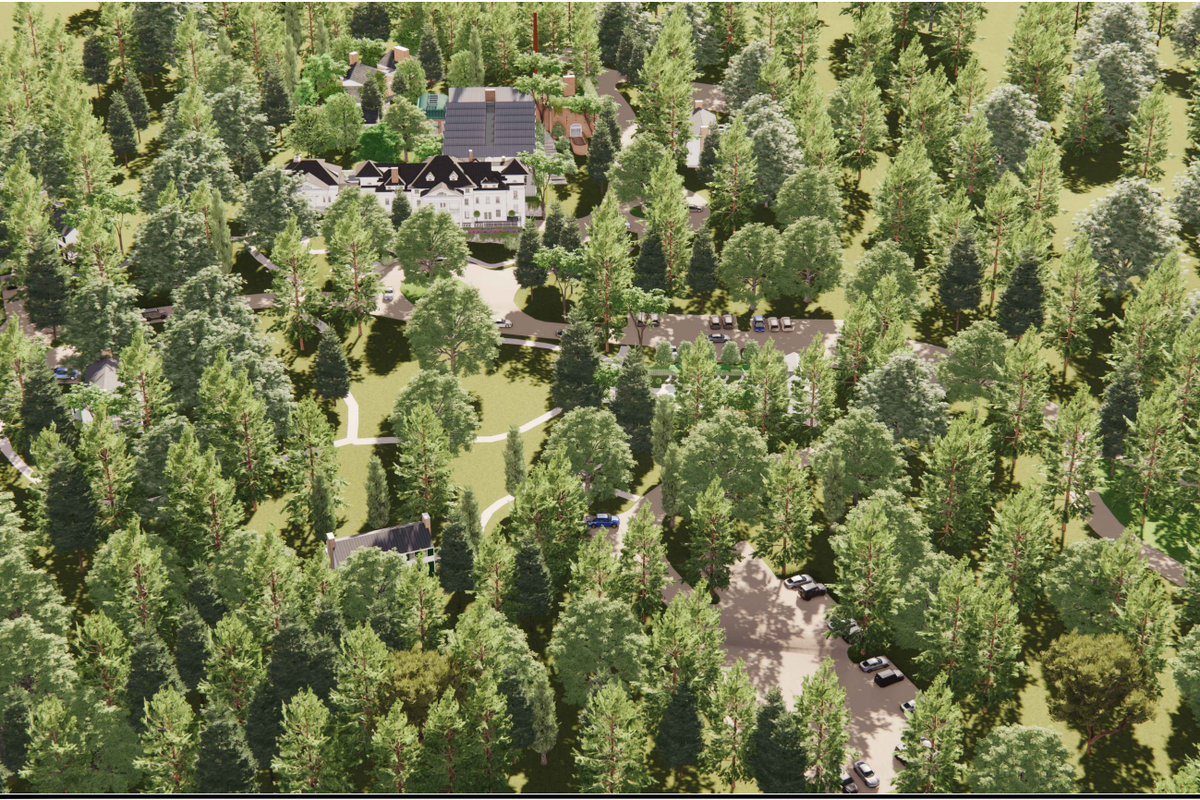
Wake Robin Inn is located on Sharon Road in Lakeville.
Photo by John Coston


LAKEVILLE — Noise pollution continues to be a crux of the public hearing to expand the Wake Robin Inn. On Aug. 26, the fifth hearing session of the month and second-to-last in the statutorily defined window, the question arose: is any additional sound permissible at all?
Bennett Brooks, founding sound engineer of Brooks Acoustics Corporation and an expert hired by Wells Hill Road residents William and Angela Cruger in opposition to the project, said no: “I think all the experts agree that the project will be audible and that’s the criterion.”
Attorney Josh Mackey, who has represented the applicant Aradev LLC since its first appearance before the Planning and Zoning Commission last fall, countered Brooks: “The idea that nuisance within the regulations means anything that is audible to neighbors is simply ludicrous.”
He referenced air conditioning units, dogs barking and children playing as inevitable sounds in a residential neighborhood. Herb Singleton, a sound engineer with Cross-Spectrum Acoustics and the Commission’s third-party expert reviewer, agreed with Mackey, explaining that defining nuisance as any sound emission that can be heard by neighbors “gets dangerous very, very quickly” due to those complicating factors. He suggested that nuisance “implies a level of annoyance based on audibility,” rather than audibility itself.
It was the third hearing in a row in which sound took center stage in the discussion, with the focal point being what constitutes “nuisance,” as it appears in the town’s zoning regulation 803.2 for special permit approval: “The use shall not create a nuisance to neighboring properties, whether by noise, air, or water pollution; offensive odors, dust, smoke, vibrations, lighting, or other effects.”
A sound study commissioned by Aradev for its application and Singleton’s third-party review both stated that the noise produced by the redeveloped hotel would be below a nuisance level at the property boundaries. At the Aug. 12 hearing, though, neighbors countered that any additional noise intrusion onto their own properties would be against the regulations, as they are intended to “protect abutters and neighbors” from intrusion beyond what they are used to, as Bill Cruger put it. Brooks argued in his Aug. 26 testimony that “in terms of size and scope, this project is almost identical to the former application,” which Aradev withdrew in December due to a likely denial.
Brooks was one of three experts brought into the Zoom room on Tuesday evening to provide testimony against the proposed hotel development. The Crugers, who were intervenors in the 2024 round of hearings for the first iteration of the Inn redevelopment proposal, decided not to formally intervene again during this cycle. Instead, P&Z Chair Michael Klemens stated that the Commission decided to allow the Crugers’ experts to “engage in a dialogue” during the process, but without formal party status in the proceedings.
The other two presenters, wetland scientist George Logan of Rema Ecological Services and Brian Miller of Miller Planning Group, echoed Brooks in their testimonies that Aradev’s current application has not satisfactorily reduced the scale and intensity of the first proposal. Representatives of Aradev have continued to argue that the current plan, which reduces the total occupancy from 158 to 130 and downscales its build footprint, among other alterations, adequately address scale and intensity concerns raised by the Commission and the public.
Of Tuesday’s three-hour meeting, only 20 minutes were left for public comment, leading to a much-abbreviated session for residential input. Klemens announced that the next hearing session, scheduled for Thursday, Sept. 4, at 6:30 p.m., will prioritize the public’s chance to speak.
Thursday is the last scheduled date for the public hearing, which state law deems must close on Sept. 9.
Graham Corrigan
North East Town Hall will be open on Thursday, July 2, for people who need a cool place to sit and sip water. The Town Hall is located at 19 N. Maple Ave. in Millerton.
Community cooling centers are opening across Dutchess County as extreme heat brings temperatures into the high 90s.
Many libraries, town halls and community facilities are serving as cooling centers, offering air-conditioned spaces, drinking water and restrooms. Temperatures are expected to reach triple digits in some areas of the county this week.
The centers will not be open this weekend. All locations will be closed on Saturday, July 4, and Sunday, July 5, for the holiday weekend.
Northeast-Millerton Library, located at 28 Century Blvd., will be open and air-conditioned during its normal business hours — 11 a.m. to 6 p.m. — Wednesday, July 1, to Friday, July 3. The North East Town Hall, at 19 N. Maple Ave., will be available as a cooling center Wednesday, July 1, and Thursday, July 2, between 9 a.m. and 5 p.m.
The Pine Plains Community Center, located at 7775 S. Main St. above the Pine Plains Free Library, will be open 24 hours a day from Wednesday through Friday. The Free Library downstairs is open noon to 6 p.m Friday, and Town Hall, at 3284 Route 199, is open 8 a.m. to 3 p.m. on Wednesday and Thursday.
The Stanford Free Library, located at 6035 Route 82, will be open Monday through Friday from 9 a.m. to 7 p.m., and Stanford’s Town Hall at 26 Town Hall Rd is available from 8 a.m. to 1 p.m. on Monday through Friday.
Extreme heat can cause dehydration and heat stroke. Residents are encouraged to remain inside or under shade whenever possible and drink plenty of water.
Jennifer Almquist
Benjamin Reynaert
Creating a home is, at its core, an act of love.
— Benjamin Reynaert
Benjamin Reynaert is focused on creative direction and interior styling. He is market director at Elle Décor, a design consultant, and author of “The Layered Home: Inspiration for Crafting Cozy, Collected Rooms,” published this year by Clarkson Potter. He co-founded Ticking Tent, a market featuring antiques, luxury items and vintage treasures. The biannual event is held in New Preston, Connecticut, and Bedford, New York.
Adopted from South Korea at 3 months old, Reynaert grew up in Bloomfield Hills, Michigan. He always knew he wanted to be an artist. “I just loved drawing. I loved making things with clay,” he said. “Remembering what it felt like to be creative as kids and applying that to our creativity as adults is essential.” A graduate of the Rhode Island School of Design (RISD), where he earned a BFA and a degree in architecture, Reynaert also studied bookbinding in Rome. His attention to detail and aesthetic sense reflect years of training and a finely tuned eye for objects. “Attending RISD nurtured my creativity and taught me how to problem-solve,” he said.
His career began at Martha Stewart Living. A contributor to Architectural Digest, Elle Decor, House Beautiful and Veranda, Reynaert has also served as style director at Domino. He has worked with Farrow & Ball, Chairish, Neiman Marcus, Sunbrella, Anthropologie, Gap, Bunny Williams Home and Stella Artois. He shares his work on Instagram via @aspoonfulofbenjamin.
“I’ve been fortunate to travel the country and abroad for Elle Decor, covering design fairs and trade shows like Deco Off in Paris, London Design Week in England, Cersaie Tile Show in Bologna, Italy, High Point in North Carolina and the Kitchen and Bath Industry Show in Las Vegas,” he said. He is drawn to unique objects and textiles. “As a market editor, the pieces that stick with me are not the newest. They are the ones I stumble upon and imagine living with.”
Reynaert is also co-founder of Ticking Tent with Christina Juarez, president of Christina Juarez & Company. The biannual event has become a destination for collectors and designers seeking curated antiques and design objects.
“I met Ben about 15 years ago when he was a young design editor and I was early into my career as a design communications strategist having switched gears from the fashion world," Juarez said. “We immediately clicked. I was impressed by his multidisciplinary creative talents — styling, writing, vision and impeccable eye — and his passion for the thrill of the hunt. I could not ask for a better partner and friend — my brother from another mother — and a yin to my yang. Two creatively minded people with a love of old and new beautiful things, and the ability to curate what the luxury shopper doesn’t know they need and most definitely wants.”
Reynaert described the most recent Ticking Tent as the largest yet. “We hosted over 2,000 guests and transacted our most sales to date with 75 vendors,” he said. “The most exciting part is seeing friends and watching new connections being made. I’m excited for the next event, Nov. 13–14, in Bedford, N.Y.”

For Reynaert, objects are defined as much by narrative as by design. “An object is about the story — whether it’s passed down in your family, something you worked hard for, bought on a trip, or a friend gave you,” he said. “With that added narrative, it doesn’t need to be the most aesthetically pleasing thing. The memory attached makes it beautiful. I like the idea of simple, seemingly insignificant items having a ton of meaning. Treat a thrift store painting as you would a Picasso.”
Greg Domres and Peter Nichols’ residence in Litchfield, which they share with their miniature schnauzer, Bunny, is one of 15 homes featured in Reynaert’s book, “The Layered Home.” The couple hosted a book signing at George Home in Washington Depot. “I first met Ben at press events during my time at John Derian,” Domres said. “We became friends and stayed connected professionally over the years.”
The book spans interiors from Eric Goujou’s shop The Wolf Tile in Paris’ 5th arrondissement to textile designer Schuyler Samperton’s Litchfield farmhouse. “Sharing the stories of talented, stylish people I’ve met during my tenure in magazines has been a privilege,” Reynaert said. “The most inspiring interiors are layered — with personality, patina and the poetry of a life lived. This book is my love letter to that idea.”
Reynaert said he would like to travel to Japan and Australia and hopes to develop his own product line in the future. “Balancing work and life is a challenge,” he said. He spends downtime with his husband, Luis Illades, in Delaware, where they are renovating a Victorian home.
“I feel incredibly fortunate to blend my work and my life in the home I share,” he said. “Creating a home is, at its core, an act of love.”

Want more of our stories on Google? Click here to make us a Preferred Source.
Natalia Zukerman
Mickalene Thomas and Delano Dunn at Wassaic Project.
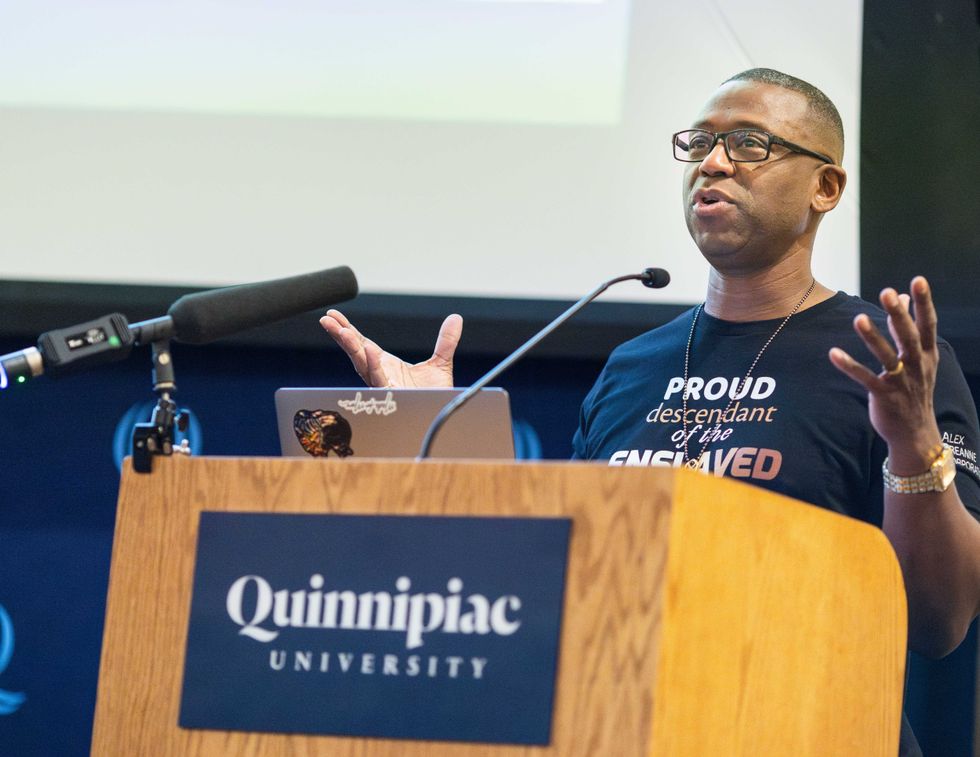
Before “Echoes in the Margin,” Delano Dunn’s new solo exhibition at Troutbeck in Amenia opened, the artist sat down with curator and artist Mickalene Thomas for a conversation at the Wassaic Project on Wednesday, June 24. Their wide-ranging discussion offered an intimate look into Dunn’s practice while situating the work within broader questions of history, memory and representation.
Presented by the Wassaic Project, the exhibition brings Dunn’s richly layered paintings into conversation with Troutbeck itself, the historic estate long associated with artists, writers and civil rights leaders, including W.E.B. Du Bois, Langston Hughes and many more.
Thomas, an artist whose multidisciplinary practice spans painting, collage and installation, first met Dunn when she was his graduate adviser at the School of Visual Arts. “I think your work needs to be out there more,” she said, noting the urgency of this collection in the current socio-political moment.
Dunn’s layered collages often begin with an image unearthed from flea markets, used bookstores and forgotten archives.
“I go to secondhand shops, old bookstores, any place that looks like it has history in it,” he said.
Sometimes, he explained, an image becomes the centerpiece of a work. Other times it simply sparks an idea.
“There’ll be an idea that pops into my head. I’ll read something or hear music or a lyric, and then I’ll think, ‘I’ve got to find an image that matches that.’”
His color palette also carries its own history.
“I grew up in L.A. during the L.A. riots,” Dunn said. “I would sit on my porch as a kid. I was watching the neighborhood burn, but the sky was beautiful.”
He still paints with those saturated blues, reds and oranges.
“Color can transport you. Color can make you feel safe, or happy or scared,” he said. “Those colors made me feel safe.”
For Dunn, Troutbeck’s own layered history became an active part of the work. Learning that the estate had hosted W.E.B. Du Bois, Langston Hughes, Ida B. Wells and generations of civil rights leaders informed his direction.
Dunn was given access to Troutbeck’s archives and found handwritten notes by Langston Hughes, and writings by Du Bois and Wells that found their way into the exhibition.
“There was a letter between Amy Spingarn and Martin Luther King Jr.,” Dunn recalled. “To be in its presence and hold it... you don’t see communication like that every day.”

Much of Dunn’s work invites viewers to dig deeper into history rather than accept simplified narratives.
“I want them to look at it and go, ‘Wow, this is really amazing and interesting and colorful and beautiful,’” he said. “And then I want them to be terrified shortly after that.” He accomplishes this through bold, colorful, and often playful compositions that draw the viewer in before revealing their more complex historical underpinnings. As Thomas wrote, “Dunn’s compositions invite viewers to sit within that tension and take it in.” That impulse toward deeper investigation extends to Dunn’s own children, who are often his first audience.
“They’ll ask, ‘What is this? Why does this person look the way they look? Why are you using that color? Why are you using glitter?’”
Those conversations, he said, become lessons in looking beyond appearances.
Thomas framed collage itself as a kind of storytelling practice —“the gathering of information… piecing things together”—and praised Dunn’s ability to translate research, memory and visual pleasure into a unified language. She also underscored the importance of creative joy in the process. “If you’re going to your studio and you’re not having fun,” she said, “you shouldn’t be doing it.”
Dunn said one of the biggest misconceptions he hopes to challenge is the idea that there is a monolithic Black experience.
“There are so many different perspectives out there. This is just one of them,” he said. In the same breath, Dunn said he adopts the label “Black artist” because “it would make my Grandpa proud.”
The nearly two-hour conversation shifted seamlessly between humor and history, studio practice and social commentary, ultimately returning to what both artists believe art can accomplish: encouraging curiosity, complicating familiar stories and inviting viewers to question what they see.
As Dunn put it, “History is so much more nuanced than what we’re taught. There’s so much more going on below the surface.”
D.H. Callahan
Scott Siegler at his home in Sharon.
Scott Siegler is bored of success stories. But Scott Siegler has had the kind of successful Hollywood career that people write books about.
Before he was 30, he’d earned three degrees. Before he moved to Hollywood, he’d already won an Emmy for one of the nine documentaries he directed and produced. Before he helped launch Netscape, bringing the Internet to the public, he’d already started his own Hollywood studio.
Siegler’s had a lot of success in his life, but he’s not going to talk about it unless you ask him directly. He’ll reluctantly tell you about defending “Married… With Children,” the longest-running live-action sitcom ever aired on Fox, when groups of concerned parents tried to get it banned from Television. But bring up a real struggle, like the time he led the board of Pandora through 25 unprofitable quarters, and he lights up. The challenges thrill him more than the successes ever could.
Now, after spending a lifetime rising to business challenges of every stripe, he’s settling into a more creative role. According to his longtime friend David Chase, creator of “The Sopranos,” it’s about time. Chase, who wrote the foreword to Siegler’s debut book, “Mobsters in the Mansion,” reminisces about meeting Siegler over 40 years ago. While Siegler had all the business sense of a top executive, Chase could tell that there was something wilder and more mischievous than the average Hollywood suit.
That mischief springs to life on the pages of“Mobsters in the Mansion.” The loosely autobiographical collection dives into the humor of hubris and failure. The stories unfold chronologically, from adolescence to midlife, but the characters don’t adhere to any timeline. Instead, Siegler uses new people and perspectives to personify the stories he tells, allowing readers to immerse themselves in the emotional truth of the experiences rather than the particulars of one life.
Writing fictionalized stories based in reality freed Siegler from writing the truth. He believes the heart of the story is what matters more than the literal details. “It’s true,” he claimed during a conversation about his book, “but that doesn’t mean it actually happened.”
On Tuesday, July 7 at the Scoville Memorial Library in Salisbury, Siegler will appear in conversation with renowned journalist Brian Ross. Ross has won six Peabodys, six duPont-Columbia Awards and is the author of the New York Times bestseller, “The Madoff Chronicles.” His career in journalism — a profession that leaves little room for creative liberties — should provide an intriguing foil to Siegler’s relationship with the truth.
To register for the event, visit scovillelibrary.org
To order the book, visit 4fireplacepublishing.com
Millerton News
Crescendo, the Lakeville-based nonprofit specializing in early and rarely performed classical music, is taking a deep dive into the works of Johann Sebastian Bach this summer as artistic director, Christine Gevert, explores the genius of one of history’s greatest composers through a series of public masterclass workshops at Saint James Place in Great Barrington. More information at crescendomusic.org.

Want more of our stories on Google? Click here to make us a Preferred Source.

Want more of our stories on Google? Click here to make us a Preferred Source.