Thank you!
Your support is sustaining the future of local news in our communities.

EarthTalk


Dear EarthTalk: Is there scientific basis to the assertion that global warming is affecting our ability to make decisions and lowering our collective intelligence?     — P.D., Sacramento, Calif.

As we continue to pump carbon dioxide (CO2) and other greenhouse gases into the atmosphere and the climate warms around the world, it’s not only our health and the environment that we have to worry about. A handful of recent studies conclude that a warmer world with higher CO2 concentrations in the air we breathe is likely to make us less intelligent. 

To wit, a recent study on “Heat and Learning” from the American Economic Association assessing test scores of some 12,000 school-age kids across the U.S. over a seven-year timespan found that in years with more hot days than normal, average test scores declined across the board, signaling a correlation between hot weather and the ability to concentrate and learn. 

Meanwhile, a 2018 study by researchers from the Yale School of Public Health found that air pollution itself has a hugely negative effect on human cognition. Yet another recent study found that humans exposed to high concentrations of atmospheric CO2 (1,000 parts per million) exhibit a 21% reduction in overall cognitive abilities. 

At our current rate of output, atmosphere carbon levels will likely surpass 1,000 ppm by the end of the century. The upshot of such atmospheric conditions, as reported by James Bridle in his book New Dark Age, could be a 25% reduction in human decision-making ability as well as a 50% drop in more complex human strategic thinking abilities by 2100. 

Rather than letting society fall into a downward spiral, we must step into our critical roles as deciders of both our environment’s and our civilization’s fate. Scientists have found clear connections between heat and political unrest, so turn these new warmths into an opportunity to get out and make a change. 

Whether through protesting or striking, we need to speak our voice and stand together for a brighter future — both metaphorically and literally.

EarthTalk® is produced by Roddy Scheer & Doug Moss for the 501(c)3 nonprofit EarthTalk. See more at https://emagazine.com. Send questions to question@earthtalk.org.
The views expressed here are not necessarily those of The Millerton News and The News does not support or oppose candidates for public office.

Latest News

A life reshaped by clay in “Matin”

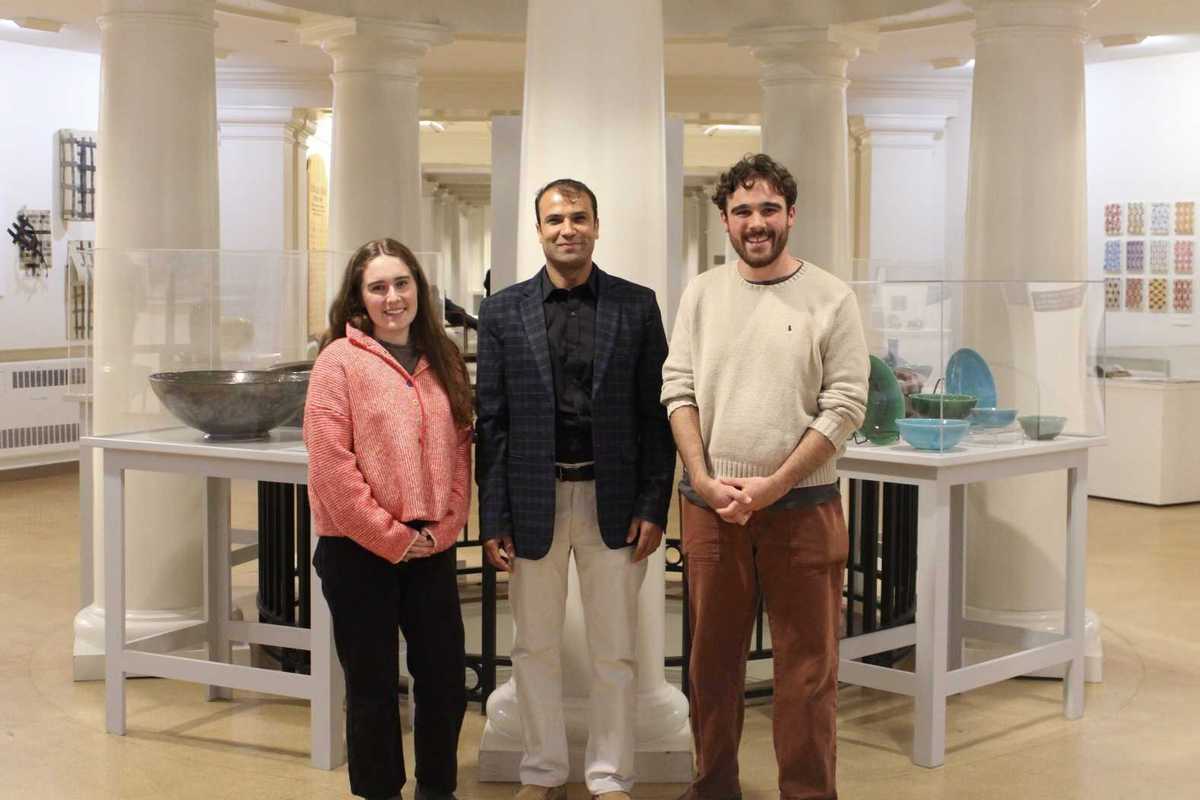
Left to right: Hannah Wheeler, Matin Malikzada and Yonah Sadeh.

D.H. Callahan

On Monday, Oct. 26, a group of students, teachers and local residents gathered at the Hotchkiss School in Lakeville for a screening of the new short documentary “Matin.” The film tells the story of Matin Malikzada, a seventh-generation Afghani potter making a new life in New Milford, Connecticut. The film was made by local filmmaker Yonah Sadeh, creator of the Video Wall at the David M. Hunt Library, and Berkshires-based potter Hannah Wheeler, who were both present for the screening, along with Malikzada himself.

As a member of the seventh generation of his family to master the art of pottery, Malikzada had done things the way his family had for over a century. Istalif, the village where his family has lived for generations, was known throughout Afghanistan for its pottery, with wares sent across the country for use as everyday cups, bowls, plates and other vessels. The pottery-making families of Istalif gathered clay from the same mountain, about 30 to 45 minutes away by donkey. Every July, they would head north toward the Uzbekistan border to gather ishkar, a plant they processed by hand to make their signature glazes.

Keep ReadingShow less
google preferred source

Want more of our stories on Google? Click here to make us a Preferred Source.

Meg Sher finds her calling among the stacks

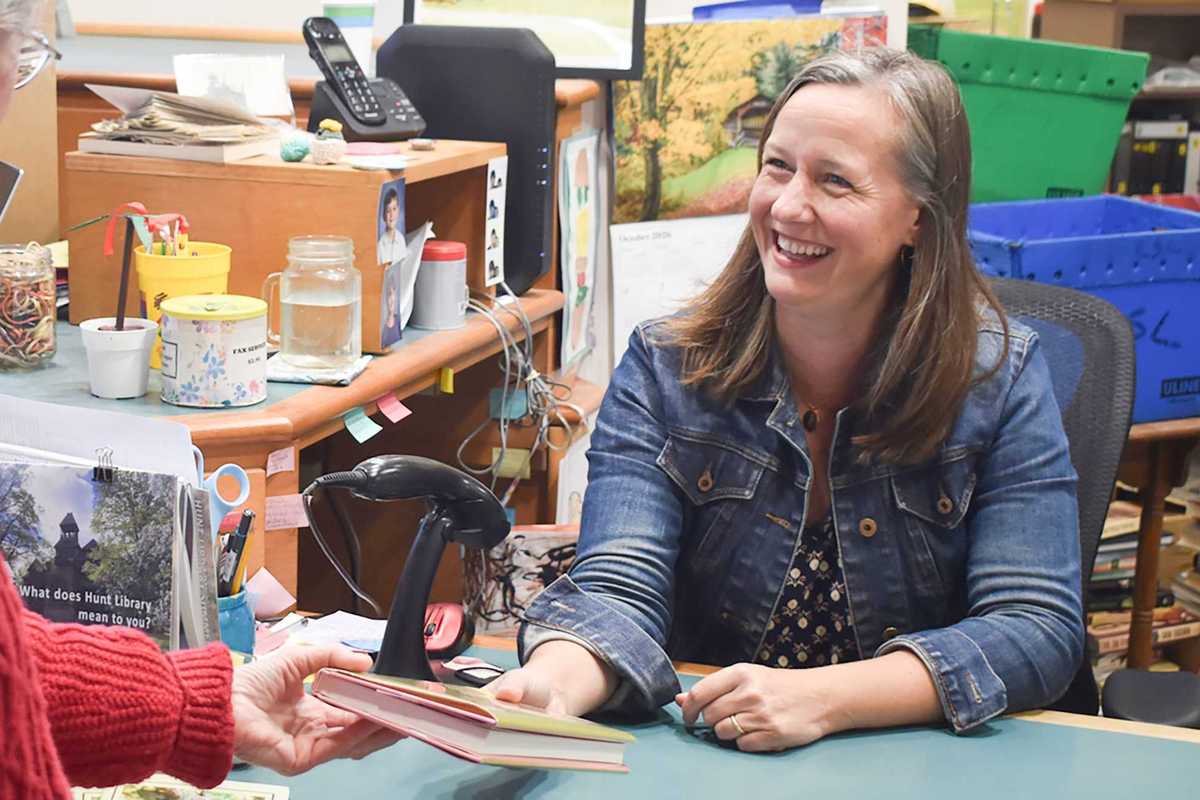
Meg Sher, executive director of the David M. Hunt Library in Falls Village.

L. Tomaino

When Meg Sher came to Falls Village in 2006 from Old Lyme, Connecticut, where she grew up, she never imagined she’d someday be the executive director of the David M. Hunt Library.

Although, in hindsight, perhaps it makes sense.

Keep ReadingShow less
Crescendo’s 23rd season speaks to the heart and mind

Christine Gevert, founding artistic director of Crescendo, conducts the audience at a performance.

Steve Potter

For Christine Gevert, founding artistic director of Crescendo, music from centuries past is anything but a relic. It is a living, breathing art form, full of drama, emotional complexity and, occasionally, surprises. As the regional choral and period-instrument ensemble launches its 23rd season, Gevert is once again bringing forgotten masterpieces into the present.

“Early Music has been my lifelong passion and the focus of my specialization in Europe and South America,” Gevert said. “Bringing this repertoire to our audiences in a nuanced way that does justice to its incredible depth, intensity, and beauty is deeply important to me.”

Keep ReadingShow less
Close Encounters with Music celebrates 35 years of musical discovery

Close Encounters with Music’s 35th season opens with “Saluting the Clarinet” featuring clarinetist Alexander Fiterstein.

Provided

For 35 years, cellist Yehuda Hanani has been inviting audiences to experience classical music in unexpected ways. As founder and artistic director of Close Encounters with Music, Hanani has built a concert series that goes beyond the music itself, exploring connections to literature, history, politics and the human experience.

This year, Close Encounters celebrates its 35th season with “Celebration & Discovery,” a seven-concert series that opens Sunday, Nov. 1, at the Mahaiwe Performing Arts Center in Great Barrington.

Keep ReadingShow less
google preferred source

Want more of our stories on Google? Click here to make us a Preferred Source.

google preferred source

Want more of our stories on Google? Click here to make us a Preferred Source.