Making Tracks To Admire and Enjoy Railroad History

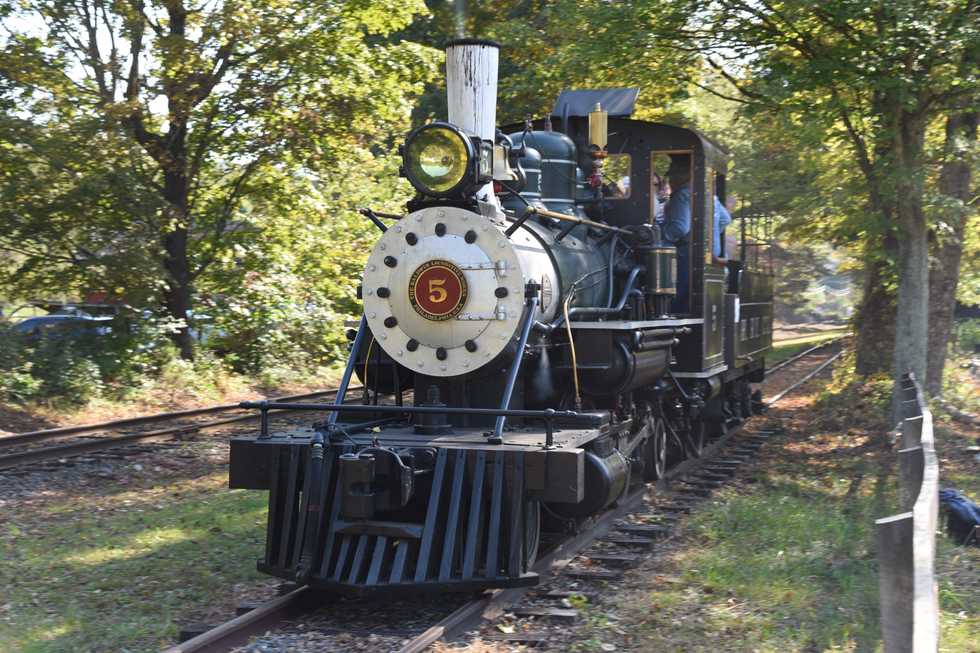
You can ride an antique narrow-gauge steam engine train at the CAMA Fall Festival in Kent, Conn.
Photo by Lans Christensen

There’s something about railroad trains — from the way their horns scald the hillsides with sound, to the searing brilliance of their headlights at night, to the trembling of the earth as they roll by — that can’t help but stir the soul.
It’s not just our awe at the size, length and mass of these leviathans of the land, but also the window they open into a large part of America’s history. Whenever we wander down abandoned rights-of-way or climb aboard mothballed locomotives at rail museums, we can envision what it took from the (mostly) men who labored to open up our continent.
Imagine, for example, that it’s a blistering mid-August and you’re shoveling a ton of coal by hand into a steam locomotive’s fiery furnace. Think about what hands it took to drill into solid rock using hammer and steel, John Henry-style, in all kinds of weather. You’ll start to appreciate how different life was a scant century and a half ago, and the tremendous work it took to link an expanding America’s borders.
Because we live where three railroad-pioneering states join together, we’re blessed with many opportunities here to marvel at train history. If you or your children are amateur ferro-equinologists (a fancy name for people who study the “iron horse”), one way to slake your curiosity is to start at the North Canaan, Conn., Union Station, first built in 1872.
Canaan Union Station
A century ago, trains westbound from Hartford on the Central New England line crossed tracks there with the New Haven Railroad’s Berkshire line (which still shoulders the Housatonic Railroad’s freight traffic several times a day). The Victorian-style station was rebuilt at great expense after near demolishment in a 2001 arson-related fire, and today houses a small museum with rail memorabilia (for more info, go to www.canaanunionstation.com; museum hours are Saturdays from 10 a.m. to 2 p.m.) as well as a brewery and offices. Look skywards for the steam-train weathervane on the station roof.
And if you’re interested in purchasing a piece of history, the station is for sale.
The Hoosac Tunnel
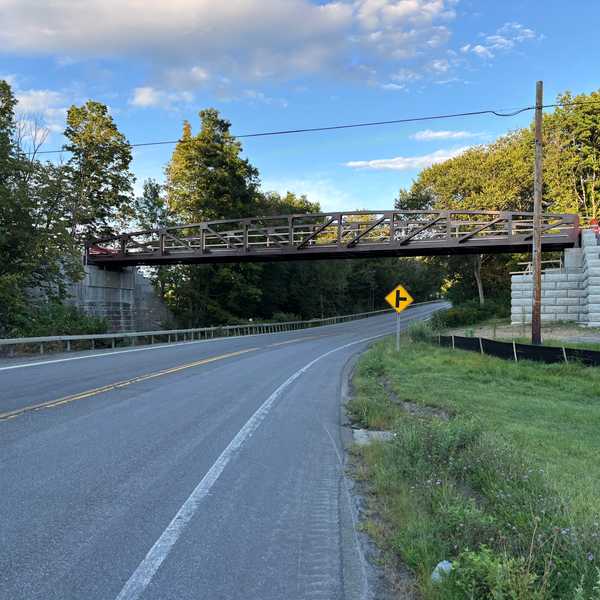
Artifacts of bygone railroads pepper the area, from crumbling bridge abutments visible from Salisbury’s Weatogue Road and a pergola on a causeway in Twin Lakes to the massive Hoosac Tunnel in North Adams, Mass.
Completed in 1874 after two decades of stop-and-go work, the tunnel was the second-longest in the world at that time. More than 190 men perished building it, earning it the sobriquet “the bloody pit.”
It’s still the longest active transportation tunnel in the U.S., east of the Rockies. An active freight corridor, it’s closed to visitors, but its entrance is visible from the Florida, Mass., end, near Pittsfield. A free museum in a former railroad yard at 115 State St. in North Adams documents the history of the Hoosac Tunnel and related railroad lore.
The North Adams Museum of History and Science at Western Gateway Heritage State Park is temporarily closed because of COVID-19; go online to www.mass.gov/locations/western-gateway-heritage-state-park for information on its reopening.
CAMA in Kent, Conn.
If hands-on contact with steam engines beckons you, a visit to the Connecticut Antique Machinery Association museum in Kent, Conn., might be what you crave.
Narrow-gauge locomotives and steam machinery there bring the Industrial Revolution to vivid life.
CAMA reopened quietly in May and, for now, will only welcome visitors on weekends. Usually, the best times to visit are the opening and closing weekends, in spring and autumn. There was no reopening weekend this year because of COVID concerns but the Fall Festival is scheduled for Sept. 24 to 26.
During the festival, the massive historic steam engines are powered up; there are swap shops on the lawn, with small bits of antique machinery for sale; and steam engine fans bring their most beloved antiques and either drive them around the grounds or put them on display under tents.
Railroad and
Railway museums
For visiting a treasure trove of full-scale locomotives, passenger cars, freight stock and track utility trains, the Railroad Museum of New England at the 1881-vintage depot in Thomaston, Conn., reopens in July. They occasionally offer excursion rides on the Naugatuck Railroad.
Danbury Railway Museum also has several diesel locomotives, passenger and freight cars, and a 1907 steam engine that once ran on the Boston and Maine line.
Walking the line
No tracks remain on the CNE right of way, but walking trails in Salisbury, Conn., and Farmington, Conn., invite strollers and bicyclists to amble along level pathways where trains once ran.
It’s fun to stop by the Poetry Tree on the 1.7-mile Railroad Ramble off Route 44 in Salisbury and peruse what local poets have posted.
A longer (18-mile) path, the Farmington River Trail, follows the former CNE right-of-way, connecting with the Farmington Canal Heritage Trail at Tunxis Meade Park in Farmington and at Drake Hill Road in Simsbury.
In nearby Millerton and Amenia, N.Y., there’s easy access to the ever-expanding Harlem Valley Rail Trail, now paved from just north of the (still-operating) Wassaic Metro-North train station all the way to Ancram.
Farther west, the Walkway Over the Hudson State Historical Park lets you enjoy spectacular views as you walk across the Poughkeepsie-Highland Railroad Bridge. When completed in 1889, it was the second-longest bridge span in the world.
There’s far more rail history in the area than this article can list, but these sites can give you a place to start. Check internet listings for opening hours and travel directions.
Elena Spellman
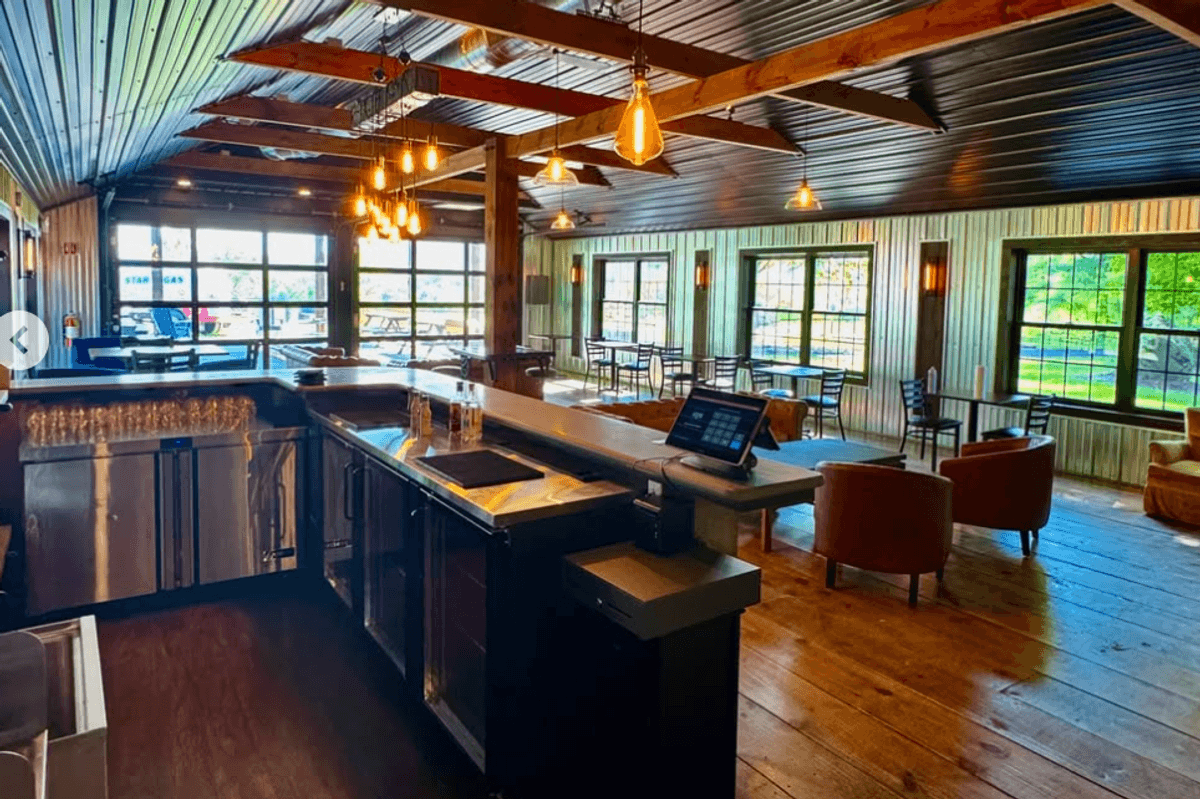
Dan Baker, left, and Daniel Latzman at Barrington Hall in Great Barrington.
Barrington Hall in Great Barrington has hosted generations of weddings, proms and community gatherings. When Dan Baker and Daniel Latzman took over the venue last summer, they stepped into that history with a plan not just to preserve it, but to reshape how the space serves the community today.
Barrington Hall is designed for gathering, for shared experience, for the simple act of being together. At a time when connection is often filtered through screens and distraction, their vision is grounded in something simple and increasingly rare: real human connection.
The partnership behind Barrington Hall began long before the building itself. Both Baker and Latzman grew up on Long Island, spent more than a decade in New York City, and eventually found their way to the Berkshires, drawn by the desire for something different. What they didn’t realize at first was just how closely their lives had already mirrored one another.
They were born in the same hospital, a year apart. Their families had distant connections. They even played on the same soccer team — never meeting, but moving through the same spaces. It wasn’t until they became neighbors in Egremont about five years ago that those parallels came into focus.
“In hindsight, it feels inevitable,” Latzman said. “But it was actually extremely random that we ended up here.”
From the beginning, Barrington Hall was meant to be a place people return to, not for any one event, but for the experience of being there. On any given week, the space might host a jazz performance, a dance party, a songwriter circle or a children’s event. Some nights bring in touring acts. Others highlight local creatives. The variety is intentional and so is the atmosphere.
“It’s about people,” Baker said. “It’s about being present.”

Baker and Latzman are keenly aware of the world outside with its constant barrage of information, political conflicts, a culture that pulls people deeper into their screens. Barrington Hall offers a way out of that noise.
“A little bit of a bubble,” Latzman said. “A place to step away from everything else.”
During a recent event, they noticed something telling: a full room of people dancing, talking, engaged — and almost no one on their phone.
“That’s when you know something is working,” Baker said.
Taking over a beloved local space comes with responsibility, one Baker and Latzman have met by honoring the building’s traditions while also expanding them.
“We didn’t feel obligated,” Latzman said. “We felt honored.”
Part of what makes the space distinct is its versatility. Large enough to host more than 250 people, yet intimate enough to feel personal, it fills a gap in the local landscape, serving a wide range of people and bringing different groups together in the same space.
“We want people to feel like, if something’s happening here, it’s worth checking out,” Latzman said.
They are carefully balancing community access with the realities of running a business, with an eye toward the long term.
“We want this to be here in 20 years,” Latzman said.

That vision extends beyond the building itself — future collaborations, expanded programming, a growing role in shaping the cultural life of the Berkshires. But at its core, the mission remains simple: to create a place where people can gather, a place that feels alive.
And perhaps most importantly, to create a place where, if only for a few hours, people can step away from the noise of the world and enjoy being together.
When asked who they’re most excited to host next, their answer was immediate: The Mammals on April 10 and Lee Ross, a one-man party band from Massachusetts, scheduled to perform on May 1.
For more information and tickets, visit
barringtonhallgb.com
Aly Morrissey
Paley’s Farm Market, located near the New York–Connecticut border on Amenia Road in Sharon, Conn.
SHARON, Conn. — For many local residents, spring doesn’t truly begin until Paley’s Farm Market opens its doors, and customers turned out in force for its 44th season opening on Saturday, March 28.
Located on Amenia Road in Sharon, Paley’s is a seasonal destination for residents of New York and Connecticut and, over the past four decades, has evolved from a locally grown produce center into a full-scale garden center, farm market and fine food market.
Despite a chilly start to the day, the opening drew a steady crowd, with a full parking lot and early signs of the busy season ahead.
“It’s been going really well,” said owner Sarah Coon, who purchased the business from her brother in 2019. “It’s chilly, but we’ve had a nice turnout. The sun’s out, and that always helps.”
Mimi Harson of Sharon and Anette Cantilli of Millbrook shared an outing together to purchase flowers and plants for their deck pots.
“It’s exciting, we love Paley’s,” Cantilli said of the opening day as she filled her car trunk with pansies.
Behind the scenes, opening day is the culmination of months of preparation – much of it beginning long before winter has fully loosened its grip.
“We open our first greenhouse in early February, and that’s when the fun begins,” Coon said. “We start planting pansies then, and once you open that greenhouse, you’re committed. It’s like having a bunch of babies out there – you have to make sure nothing goes wrong.
This year’s opening comes after a particularly snowy winter that, just weeks ago, left the property covered in large mounds of snow.
“I looked around and thought, ‘I don’t know if we’re going to be able to open on time,’” Coon said. “There was snow everywhere. It was hard to even imagine. But here we are.”
Early spring offerings include rows of colorful pansies grown from seed, along with cold-tolerant vegetable starts, herbs and Easter-ready planters designed for patios and entryways. Bulbs such as daffodils and tulips are also available, along with seeds, soil and gardening supplies.
“It’s not too early,” she said of the growing season. “You can start seeds indoors now, even just on a windowsill. And if it doesn’t work, you can always come back and getplants.”
While the market’s popular prepared foods and grocery offerings will arrive later in the season, the early weeks focus on planting and preparation. Dry goods are expected in the coming weeks, followed by a gradual buildout of the full market.
New this year, Paley’s has partnered with Homegrown National Park, a national initiative promoting the use of native plants. The collaboration will help customers more easily identify native species to incorporate into their gardens.
“We think it’s going to be good for our staff and our customers,” she said. “It makes it easier for people to mix native plants into what they’re already doing.
Paley’s typically operates through mid-October, employing up to a dozen staff members at the height of the season, along with part-time and retired workers who assist with planting and maintenance.
For many, the opening marks more than just the start of a business cycle – it’s a seasonal ritual.
“We all need a little color right now,” Coon said. “And a little warmth. It’s coming.”
Natalia Zukerman
Gail Rothschild with her painting “Dead Sea Linen III (73 x 58 inches, 2024, acrylic on canvas.
There is a moment, looking at a painting by Gail Rothschild, when you realize you are not looking at a painting so much as a map of time. Threads become brushstrokes; fragments become fields of color; something once held in the hand becomes something you stand in front of, both still and in a constant process of changing.
“Textiles connect people,” Rothschild said. “Textiles are something that we’re all intimately involved with, but we take it for granted.”
Her work begins, often, with something small: a scrap of linen from the Judean desert, dating “to a time before the notion of ‘Israel’ or ‘Palestine;’” a fragment so diminished it barely registers as an object; or a rare indigo-dyed child’s head cloth from Tutankhamen’s tomb.
“I call them portraits of ancient linen,” she said.
Rothschild grew up in Greenwich and studied drawing and painting at Yale University. “That was kind of my first love,” she said. But she quickly veered toward something more collective, working with Peter Schumann at the Bread and Puppet Theater, building papier-mâché puppets and participating in a kind of performance-based activism that blurred art and politics.
“After Yale, I got out of school and thought‘Wait a second. I don’t want to paint anymore. I need to work with people in communities and make things.’”
She moved to Brooklyn and began working in public schools, developing projects rooted in collaboration and local history. The projects were ambitious, research-driven, and often confrontational. At the University of Massachusetts, she recalled asking students: “Did you know that Amherst was named for Jeffrey Amherst, who was responsible for giving blankets infected with smallpox to Native Americans? Why don’t we look into that?’”
There were sculptures, letters to watchdog groups, installations. She worked on four such projects a year, she said, until the pace became unsustainable. “At some point I just said, ‘I’m exhausted. I’m going back to the studio.’”
What brought her back was a book, “Prehistoric Textiles ” by Elizabeth Wayland Barber. Inside, she encountered an image of a 7,000-year-old textile, unraveling.
“It said to me, ‘this could be a great big abstract painting’,” she said. “What does it mean that this textile, this thing that used to be a Cartesian grid and over time has gone back to nature?”
That question became a kind of axis for her work. “There is this cusp between nature and culture,” she said. Early on, she avoided textiles with imagery, drawn instead to the raw language of fiber itself. But eventually, even that boundary softened. A project with the Godwin-Ternbach Museum introduced her to Egyptian textiles — Christian, pagan, Greek, Roman influences colliding in woven form.

What followed was a deepening relationship with museums and, crucially, with conservators. Institutions like The Metropolitan Museum of Art and collections in Berlin and Paris began sending her images of textile fragments, sometimes pieces she has still never seen in person.
“It’s almost easier for me to transform it when I haven’t seen it,” she said.
Her process is both precise and intuitive. She grids the canvas and the source image, drawing freehand to “honor what the object is.” For a time, she works closely from the photograph. Then something shifts. “At some point I’ll say, ‘It’s a painting. It’s got to talk to itself,’ and then I stop looking at the photograph.”
What emerges is layered, luminous and muscular. “Sometimes people say, ‘Do you miss making sculpture?’ and I say, ‘I never stopped.’”
You feel that in the surfaces: the tension of threads pulling apart, the sense that something is both forming and dissolving at once. Even the backgrounds — often ambiguous, atmospheric — are not neutral. “It’s really more about feeling the space around the object,” she said, especially as she considers how ancient fragments are mounted on modern fabrics. “I get to invent an entirely other language.”
Some of her most arresting work is on the monumental textiles of The Met Cloisters, where medieval tapestries, some towering more than a dozen feet, are slowly, painstakingly conserved. It’s in the conservation labs that Rothschild has observed the physical reality of these works: their own weight pulling them apart, threads breaking under centuries of strain. Conservators insert new threads to stabilize them and Rothschild documents this process. “There’s a kind of poignancy to their work,” Rothschild said, “because as hard as we work to conserve the objects of our past, in the greater cosmic scheme of time, it’s only temporary. There’s something beautiful about that.”
Time operates on multiple levels in Rothschild’s work. There is the time of the object —thousands of years, in some cases — and the time of the painting, which unfolds over months. “Once I start working on something, I can’t stop,” she said. “But then it’ll rest for a while and I may change it, add layers.”
And then there is the time of attention itself, the way looking can tip into obsession, into pattern-seeking that doesn’t quite turn off. Rothschild is aware of that edge.
“I have to make myself stop or I just see patterns everywhere and I can’t stop, really,” she laughed. “That’s why I’ve built in other things I need to do in my life like take the dogs for a hike or, you know, volunteer at the Sharon Land Trust… otherwise I go a little nuts. And it wouldn’t be good painting either.”
A painting session, for her, has its own its own arc. “There’s kind of a trajectory for every work session. I might be repeating something and suddenly it looks linear. The language I started painting with may change by the end and I think, ‘Oh God, I’m gonna have to go back and repaint that.’”
But then, she said, there is a pause.
“I kind of step back and say, ‘No, this painting can hold both. That’s part of its history. There’s the history of the object but then there’s the history of the painting.’”

Want more of our stories on Google? Click here to make us a Preferred Source.
Aly Morrissey
The Four Brothers Drive-In on Route 44 in Amenia.
AMENIA — The Four Brothers Drive-In quietly opened its 2026 season with a “soft launch,” offering a family-friendly double feature on Friday, March 27 and Saturday, March 28, while signaling a broader push to keep the experience affordable amid economic uncertainty.
Though the towering movie screen was back in action last weekend, casting a glow over downtown Amenia, the full property — including The Shack, mini golf, and the Hotel Caravana airstreams— will officially open April 17.
“We always want to be affordable and accessible,” owner John Stefanopoulos said. “With everything going on — the economy, the war and changes to the movie business — we decided to lower our prices this year.”
General admission has dropped from $15 to $12 for adults and from $10 to $8 for children.
“It’s a great bargain to watch one or two movies and enjoy an experience that’s communal, exciting and fun for adults, kids and even dogs,” he added.
Founded by four Greek immigrant brothers who arrived in the U.S. in the early 1970s, Four Brothers grew from a single Connecticut pizzeria into a regional chain over the following decades, building a loyal following around family recipes, including its signature pizza and Greek dressing.
The drive-in was added 14 years ago and has continued to evolve beyond movies,leaning into what has become a hallmark of the Stefanopoulos family’s brand — a mix of nostalgia, hospitality and playful reinvention.
“It wouldn’t be us if we didn’t try something new,” Stefanopoulos said.
That experimentation is especially evident in the menu, which manager Tom Stefanopoulos said will take center stage this season.
“The really cool part of the drive-in is our food component, and this year we’re pushing hard on the menu,” he said.
New this year, guests will be able to access rotating, limited-time menu items through a QR code featured on menus. The code links to playful multimedia content revealing surprise offerings — a strategy designed to keep visitors engaged and coming back.
Among the debut items will be a pork katsu sandwich — a crispy fried pork cutlet served on fresh bread with a house-made special mayo and a touch of hoisin sauce, blending Greek and Asian influences in a creative, out-of-the-box offering.
“We’re trying to have fun with it,” Tom said. “It keeps our guests interacting with us, gives them something new each time they come, and keeps everyone surprised.”
“It’s very on brand with who we are,” John said. “We’re always finding different ways to create an experience.”
The drive-in will also bring back its weekly Throwback Thursday programming, often featuring live music and guest appearances, along with returning favorites like lobster rolls — now joined this season by a new spicy truffle variation.
“We joke that we’ve become the lobster kings,” John joked, adding that they find it funny that they set out to offer Greek-style pizza but have become more well-known, at least in the summer months, for their lobster rolls.
A new “Dubai” shake and sundae — featuring pistachio and chocolate flavors inspired by Mediterranean influences — will also be available for the first time.
Beyond the food and film, updates are underway across the property. The Hotel Caravana Airstreams will undergo slight renovations, offering a glamping experience for people wishing to stay on the property. They will feature new furniture and decor to make the space relevant and fresh.
The outdoor dining area will also feature new patio furniture, with a more lounge-like section where adults can hang out for drinks.
As always, movie schedules will be announced on a monthly basis. The Shack will open on April 17, and by May, the venue will be open seven days a week.
“For us, and for our staff, it’s a really special place to work,” John said. “You feel the energy of summer — the movie starting, cars and people pouring in, the music, the whole scene.”
Over the years, the atmosphere has drawn its share of celebrities, including Ethan Hawke, Jason Blum, Liam Neeson and Lin Manuel Miranda.
As the drive-in marks its 14th season — and the restaurant approaches 50 years — the family sees the moment as both a milestone and a continuation.
“With America’s 250th birthday on the horizon, it’s wild to think we’ve been serving our Greek-American style of pizza for about twenty percent of that time,” John said.
Learn more at playeatdrink.com.
Richard Feiner And Annette Stover
Cast of “Laughter on the 23rd Floor” from left to right. Tara Vega, Steve Zerilli, Bob Cady (Standing) Seated at the table: Andrew Blanchard, Jon Barker, Colin McLoone, Chris Bird, Rebecca Annalise, Adam Battlestein
For a century, the Sherman Players have turned a former 19th-century church into a stage where neighbors become castmates, volunteers power productions and community is the main attraction. The company marks its 100th season with a lineup that blends classic works, new writing and homegrown talent.
New England has a long history of community theater and its role in strengthening civic life. The Sherman Players remain a vital example, mounting intimate, noncommercial productions that draw on local participation and speak to the current cultural moment.
Sherman Players President Missy Alexander is an enthusiastic champion of the group’s history and collaborative spirit, which engages amateurs and professionals alike “to see what fun we can have” in bringing theater to all audiences. Everyone pitches in — from sets and costumes to administrative work — to bring each production to life. She calls it the “extra special sparkle” that has defined the company since its first performances in their historic church home in 1926.
The season opens in April with Neil Simon’s “Laughter on the 23rd Floor,” a comedy set in the 1950s television writers’ room during the McCarthy era. In June, the company will present a production (with live music) of the classic Broadway musical “Bye, Bye Birdie!” one of the first shows that highlighted the Baby Boomer generation and our “Kids are King” culture.
In July, The Sherman Players will debut “Restored to Reason,” a new work by local writer Elizabeth Young about Mary Todd Lincoln. Developed through the theater’s Cold Lemonade reading series, the work marks the first time the company has taken a piece from staged reading to full production, a memorable milestone in the group’s historic mission.
September brings a timely revival of the historic American courtroom drama, “Inherit the Wind.” The Sherman Players last presented this riveting account of the infamous Scopes “monkey trial” in 1966. The season concludes with a special holiday presentation of “An American Christmas Carol,” an original adaptation of the Dickens classic, written by Artistic Director Robin Frome, directed by Jane Farnol.
Alexander is quick to acknowledge that The Sherman Players is committed to supporting the broader regional arts community. “We’re closer than you think, and we all draw on the same talents and resources,” she said. “We all see and support each other’s work.”
This dedication is helping to enrich the theater-going experience for everyone, from long-established generational Sherman Players patrons to new, younger audiences looking for community connection.
The Sherman Playhouse is located at 5 Route 39 N, Sherman, Connecticut. For tickets, subscriptions and more information, visit shermanplayers.org.
Graham Corrigan
Stage director Geoffrey Larson signs autographs for some of the kids after a family performance.
For those curious about opera but unsure where to begin, the Mahaiwe Theater in Great Barrington will offer an accessible entry point with “Once Upon an Opera,” a free, family-friendly program on Sunday, April 12, at 2 p.m. The event is designed for opera newcomers and aficionados alike and will include selections from some of opera’s most beloved works.
Luca Antonucci, artistic coordinator, assistant conductor and chorus master for the Berkshire Opera Festival, said the idea first materialized three years ago.
“This production is one of the highlights of the off-season,” he said.
“Opera is all about telling stories through music, which makes the concert a hit with people of all ages,” he added. “Every story has something to tell us about the human experience.” He pointed to the range of material covered in the program. “From the beautiful ornamentation of Baroque operas to the majesty of Mozart, to the gripping emotions of Verdi and Puccini … up to the modern-day stories of today’s operas by composers like Huang Ruo, Missy Mazzoli and so many others.”
The event features three singers from the Berkshire Opera Festival: soprano Juliet Schlefer, mezzo-soprano Abbegael Greene and tenor Maximillian Jansen. All three are still early in their careers, a class of rising vocal talent carrying the torch for the next generation. They will be accompanied by pianist Charles Tsui.
“I think that opera is especially exciting for families and young children precisely because it is all about storytelling,” Antonucci said. “Adding costumes, sets, props and the incredible power of operatic voices to the mix makes it one of the few types of experiences where all the arts come together.”
This year, the production reimagines some of those legendary stories in present-day Massachusetts. As always, “Once Upon an Opera” promises to be an interactive affair, encouraging audience participation throughout its hourlong runtime. While the event is free, reservations are encouraged due to limited seating.
Tickets are available at berkshireoperafestival.org/onceuponanopera.

Want more of our stories on Google? Click here to make us a Preferred Source.

Want more of our stories on Google? Click here to make us a Preferred Source.