Candy-O’s marks five years with move, merger with T-Shirt Farm

Gillian Osnato marks Candy-O’s five years, plans move
Photo by Aly Morrissey


Gillian Osnato marks Candy-O’s five years, plans move
MILLERTON — As Candy-O’s celebrates five years on Main Street, owner Gillian Osnato is preparing for a move that blends business with personal history.
The retro candy shop, which opened in 2021, will relocate two doors down, consolidating with The T-Shirt Farm — the longtime family business founded by Osnato’s late father, Sal Osnato.
After her father’s death in April 2025, Osnato spent a year running both businesses, often racing back and forth between storefronts, supporting staff, greeting customers, and keeping operations running.
“It got to a point where I couldn’t really be present in either space the way I wanted to be,” Osnato said. “One or the other was always going to suffer.”
The decision to consolidate, she said, was driven as much by sustainability as by sentiment. The T-Shirt Farm had long been defined by her father’s presence, and maintaining that connection — while also running a second business — proved increasingly difficult.
“He was such a fixture,” she said. “I’m not him, but I do take after him. Not being there consistently, I think people felt that.”
The move will allow Osnato to bring the two businesses together under one roof, creating a space that reflects both her father’s legacy and her own evolving vision.
While Candy-O’s signature offerings — including novelty sweets and packaged treats — will remain, Osnato acknowledged that some customers may miss the freshly-scooped ice cream. She said the new space may still offer pre-packaged pints, but will no longer serve scooped ice cream.
Looking into the future, Osnato said her long-term goal is to combine the T-Shirt Farm and Candy-O’s into a general store-style model, featuring custom apparel, gifts and locally sourced products.
“My dream is to create something that feels like a general store,” she said. “T-shirts, candy, grab-and-go snacks, but also things that feel a little more modern, a little more vibrant — but still affordable.”
The transition will happen in stages, with the new space expected to open in early April and continue evolving through the summer season. A full rebrand, potentially incorporating a name that nods to her father, is likely to follow next year.
In the meantime, Osnato said she is focused on simplifying operations and reconnecting with customers.
“It’ll be more manageable, and I’ll be able to actually be present,” she said. “I’m really excited. I think it’s going to be something special.”
Aly Morrissey
Filmmaker Philip Milano of Dover Plains holds the Scotch U-matic cassette containing his original 1970s documentary about the Harlem Valley Transportation Association.
Long before the bustling Harlem Valley Rail Trail hosted runners, walkers and cyclists, a historic railroad ran through Millerton, connecting rural towns to New York City. The eventual dismantling of the railroad was met with criticism and pushback from residents.
That chapter of local history comes alive in a resurfaced documentary film that had been tucked away in an attic in Dover Plains for more than 40 years.
Philip Milano, the filmmaker and longtime Dover Plains resident, made the film as a student project during his time at New York University.
“It took me about a month to make,” Milano said. “I played all the music myself, lined up the interviews and edited it.”
The 28-minute film chronicles the efforts to retain passenger and freight rail service between New York City and Chatham, New York in the 1960s and 1970s.
Milano was contacted last year by a former Copake Falls resident who wanted to view the film for research. Skeptical that the old Scotch U-matic cassette – a bulky, professional-grade videotape used in the 1970s – would still play, Milano agreed to ship the only existing copy of his movie out west. To his surprise, it was successfully digitized.

The video is slightly grainy with crisp audio. Footage shows the former Saperstein’s building – now Westerlind – and its famed railroad mural, along with shots of the old Sharon and Millerton stations.
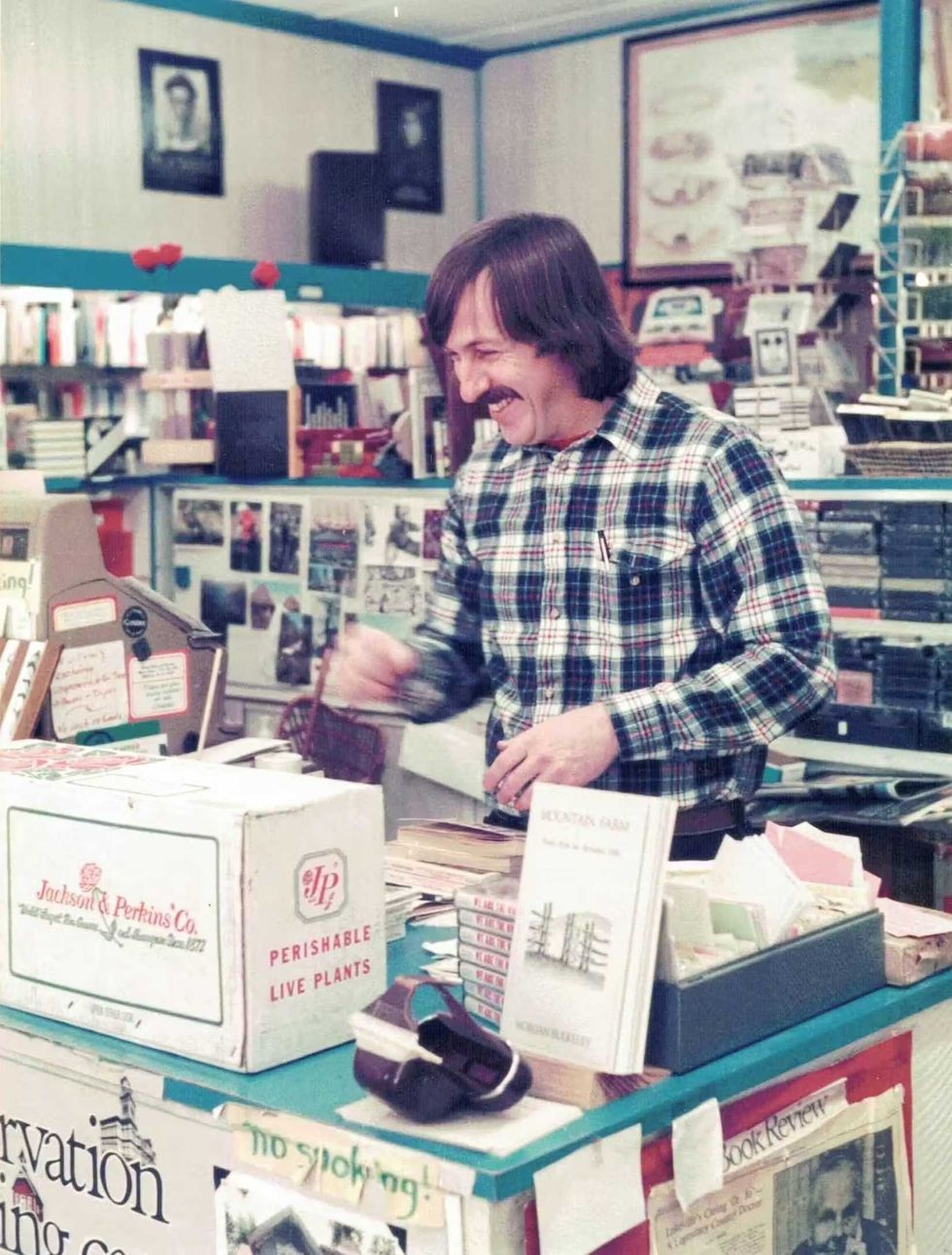
In an early scene, a young Holly Nelson – co-founder of Oblong Books – stands in her store and speaks passionately about the loss of rail service and its impact on rural businesses, farms and residents.
“It brings in the whole question of rural powerlessness,” Nelson said, warning that locals would soon become “highway hostages,” forced to drive gas-guzzling cars.
The late Frank Perotti, who served as the supervisor of North East for more than a decade, also appears, speaking about the loss of freight service affecting his dairy farm. “We see the loss in the economy since we’ve lost the service to the railroad,” he said.
The video aired on cable television, which was only available in Manhattan at the time. He watched the premiere from his aunt’s city apartment, surrounded by friends and bottles of wine.
“This must be what the Beatles felt like the first time they heard one of their songs on the radio,” he remembers thinking.
The film was also screened at The Moviehouse in Millerton for a one-night showing.
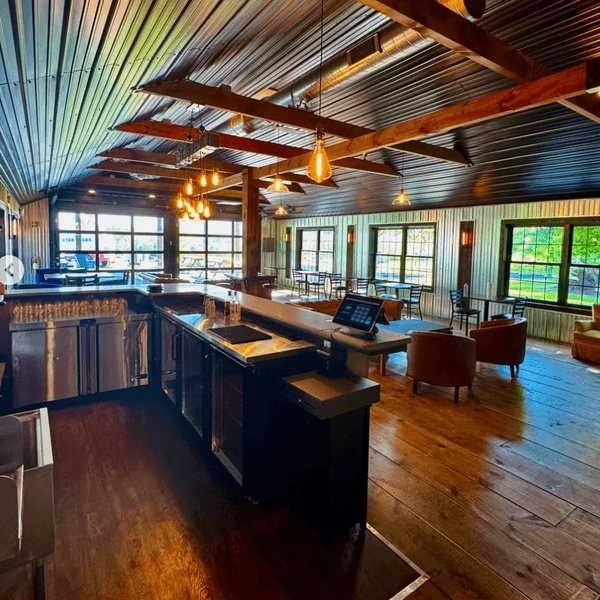
Though Milano didn’t pursue filmmaking after NYU, he stayed rooted in the area, opening Milano’s Restaurant in Pine Plains, which operated for 14 years. The location is now home to Back Bar Beer Garden.
Nearly 50 years later, Milano says he is content with how history unfolded. “If the trains had stayed, this whole area would look completely different,” he said. “In a way, I’m glad it didn’t happen because I still like bouncing along these scenic back roads. It’s one of the prettiest parts of New York.”
Aly Morrissey
The Village of Millerton was founded a decade before the Civil War during a time when railroads were transforming rural economies, the nation was expanding westward and tensions over slavery were mounting.
The first 25 years of Millerton reflected that era of rapid change, characterized by an almost overnight transformation from farmland to being a railroad hub.
According to “A Beckon Call to a Village,” a 2001 history compiled by former North East Historical Society president Diane Thompson, leaders in the already-established Town of North East understood the opportunity a rail line could bring.
A meeting was held at the Wakeman House, home of local farmer Walter Wakeman, where a small group of men began laying out plans for a village that did not yet exist.
Wakeman himself played a crucial role, selling a 66-foot strip of his farm – nearly half a mile long – to the railroad. Additional acreage followed to accommodate a depot, engine house, sheds and extra track.
Civil engineer Sidney Miller is credited with bringing the railroad to what would later be known as Millerton in 1851. According to historical documents, he was so well regarded that the village was named in his honor.
On Sept. 1, 1851, the first train rolled into Millerton.

Iron production also played a key role in Millerton’s early growth. In 1854, the Millerton Iron Company established a major foundry in the area known as Irondale.
By 1882, the plant employed about 150 workers and by 1890 it was producing up to 12,000 tons of pig iron annually. The raw iron was used to manufacture cast-iron products, including railroad car wheels.
Irondale grew into a small industrial hamlet with a general store, grist mill and post office.
With the railroad established, Millerton quickly expanded. In 1852, just one year after the first train arrived, the Millerton Hotel was erected on North Center Street behind what is now the Oakhurst Diner. Built by Alexander Hawley, Alexander Trowbridge and James Winchell, the two-story building catered to rail passengers and visitors.
The hotel was later acquired by A.J. Pulver, who modernized it. For roughly 50 years, it stood as a symbol of Millerton’s growth before being dismantled in 1936. Its materials were salvaged during the Great Depression.
That early period saw the construction of a Greek Revival-style commercial building that housed E.W. Simmons & Co., Millerton’s first general store. Opened in partnership with Harvey Roe of Spencer’s Corners, the store sold groceries, lumber and building supplies.

By the mid-1860s, Millerton’s commercial district continued to expand. In 1865, prominent builder Ambrose Beers constructed an Italianate-style carpenter shop that would later become home to Dewitt “Dewey” Husted and his wife. For 18 years, it operated as a confectionery and bakery. It later served as a sporting goods and furniture store, and after a 2008 renovation is now home to Elyse Harney Real Estate.
By 1875, Millerton was formally incorporated and recognized as a municipality. Kneeland J. Munson became the village’s first mayor.
In just 24 years, Millerton had transformed from farmland to railroad outpost to incorporated village, with even greater expansion waiting in the decades to come.
D.H. Callahan
The Kingston Guards and the Bovina Dairymen
These aren’t your standard gym rats trying to relive their high school or college glory.
The Kingston Guards are playing ball the way it used to be played. To be specific, they’re playing baseball by the rules of 1864, the last full season before the Civil War. To them, it’s a purer form of the game, devoid of constant rule changes and all that pesky equipment like gloves, helmets and catchers’ masks. Sure, there are umpires, but they’re really there more to settle arguments than make actual calls.
The whole game feels less aggressive and more friendly. In fact, many of the players on the Guards and other teams in the vintage baseball scene came from softball leagues that had simply become too competitive. These aren’t your standard gym rats trying to relive their high school or college glory. More often, they’re history buffs looking for something a little more athletic than the synchronized marching of Civil War reenactments — though, to be fair, some of them are still Civil War reenactors.
While decidedly less competitive, this brand of vintage baseball isn’t necessarily less involved. The Guards practice every week. They travel the eastern seaboard playing teams like the Boniva Dairymen, the Ulster Nine and the Hunky Dory Base Ball Club of Lansdale. They even attend a two-day vintage base ball festival in Gettysburg, Pennsylvania, where teams from across the country gather to take in a side of military history with their friendly competition.
The vintage baseball movement appears to have gotten its start in the mid-1990s, perhaps as a response to the 1994 Major League Baseball strike, which resulted in a canceled postseason and World Series. As the Major League Baseball Players Association prepares to renegotiate its collective bargaining agreement after the 2026 season, rumors swirl of another such eventuality. With many baseball fans disillusioned by an increasingly capitalistic league, another strike could fuel interest in vintage baseball.
The rules are the same for all these clubs, but the uniforms certainly are not. The Guards wear thick woolen uniforms that team member Brock “The Badger” Mehan describes as not just hot, but “humid.”The Dairymen, in the Catskills, don slacks, button-down blouses, suspenders and newsboy caps. But no matter the uniform on their backs, everybody seems to be on the same team.
You can catch the Guards in all their old-time action when take the field at the Rhinebeck Aerodrome on Aug. 14 and Sept. 11.

Want more of our stories on Google? Click here to make us a Preferred Source.
Elena Spellman
Owners Asio and Angela Highsmith
Coffee means community, It’s a big part of the hospitality vision that my wife and I want to bring to the world.
— Asio Highsmith, Co-owner
Asio Highsmith, co-owner of the bright red espresso truck in Great Barrington, greets patrons with the kind of warmth and energy that can change the trajectory of a day. There is laughter, conversation and a genuine sense of connection. And the coffee is amazing. It’s clear that Best Damn Espresso’s popularity has as much to do with people as it does with espresso.
Despite becoming one of the Berkshires’ most recognizable small brands, its owners maintain a surprisingly low profile, focusing more on their craft than on self-promotion. “We didn’t move up here to be on Front Street,” said Highsmith. “We came because we love nature and wanted to start a new chapter of our lives.” That chapter began after years spent in New York City.
Asio’s wife Angela, a California native drawn to nature, had spent years bringing their children to the Berkshires. The family already owned property there, and the pandemic simply accelerated the move they were already considering. Their son summed up the family’s feelings best when he was 5 years old. “He said, ‘I want to be in a place where there’s more trees than people,’” Angela recalled.
The move wasn’t motivated by business ambitions. In fact, neither Asio nor Angela intended to become entrepreneurs again. “We came up here for the outdoors and for the beauty,” Angela said. The espresso truck emerged almost by accident. When old café equipment began taking over their basement, Angela suggested putting it on a truck.
“That’s exactly what happened,” Asio laughed. What began as a practical idea soon evolved into something much larger.

Asio brings decades of hospitality experience to the business. A lifelong bartender and mixologist, he approaches espresso the same way a master cocktail maker approaches a drink — with precision, intention and respect for the craft.
“Coffee means community,” he said. “It’s a big part of the hospitality vision that my wife and I want to bring to the world.” For Asio, every drink matters. “My motto is one drink at a time,” he said. “I focus on what’s in front of me.”
That philosophy extends beyond the espresso machine. Customers aren’t simply buying a beverage; they’re entering an experience shaped by two people who view hospitality as an act of service. “Food is magic. Coffee is magic,” Asio said. “It’s an exchange of great energy.”
Angela, who often works the front of the truck, describes the customer relationship in similar terms. “When someone comes to the truck, you’re hosting them,” she said. “You’re entertaining them. You’re giving them exactly what they want.”
Despite doing almost no traditional marketing, Best Damn Espresso has developed a devoted following throughout the region. Asio attributes that growth to consistency rather than promotion. “Advertising is overrated if your product is mid,” he said.
The name itself — Best Damn Espresso — is intentionally bold. Many businesses would hesitate to make such a claim. Asio sees it differently. “It’s actually me challenging myself,” he explained. “Every time I look at that truck, I see ‘Best Damn Espresso.’ The aspiration for being great at what we do happens every day.” That relentless pursuit of quality appears to resonate with customers.
Four years after launching, the company has expanded from a single truck to multiple units. Yet despite the growth, Asio and Angela remain focused on maintaining the same personal connection that defined the business from the beginning. They have also become unexpected pioneers in the local food-truck scene. “There wasn’t really a food truck presence in Great Barrington before we started,” Asio said. Today, several food trucks operate in the area, some inspired by their success. “The benefit is inspiring someone,” he said.
To receive daily updates on the truck’s location, customers can text “BDE” to 844-659-1203.
D.H. Callahan
On Saturday, July 18, Boondocks Film Society heads west to Catskill for its exclusive screening of the indie comedy darling “Maddie’s Secret.”
The group, which has been putting on one-night-only screening events throughout Litchfield, Dutchess and Berkshire counties for the past nine years, is crossing the Hudson yet again to take over its new home away from home, the Community Theatre. Last month, the society returned to the theater for its second screening there, bringing in Ira Glass, host and producer of NPR’s “This American Life,” to discuss comedian Mike Birbiglia’s “Sleepwalk With Me.” Glass, who produced the film, was joined on stage by his wife, writer and director Susanna Fogel. Connecticut-based indie-pop duo Mates of State also got in on the action, performing original songs, including “Now,” which was featured in the film.
Boondocks has earned a reputation for exactly this kind of enhanced screening. The society offers much more than just a movie. For each event, it works with local eateries to create custom food and cocktail menus inspired by the night’s film. There is usually film-themed music from local acts, though booking a band with a song featured in the film was a particularly fitting touch. But what Boondocks has become best known for is its conversations with actors, directors and other key figures behind the films. For “Maddie’s Secret,” the society is bringing in a quadruple threat: actor, director, writer and producer John Early.
Early has gained recognition for his roles in “Search Party,” “Eternity,” “Wet Hot American Summer: Ten Years Later” and “At Home With Amy Sedaris.” But beyond those larger titles are the projects he has developed himself, including the HBO stand-up special “Now More Than Ever,” an episode of the Netflix series “Characters,” and the web series “555,” which he created and starred in with his longtime comedic collaborator Kate Berlant.
All of those projects demonstrate an extraordinary commitment to a particular style of cringe comedy. Early often embodies deeply unlikeable characters, mining humor from their boundless self-interest. His character in “Search Party” falsely claimed to have had cancer as a child. In “555,” he stole from a wheelchair-bound fan. His characters in “Characters” revel in awkwardness and unabashed narcissism.
While Early is accustomed to writing his own characters, “Maddie’s Secret” marks his first time directing and producing a feature film. Supporting him is a standout ensemble that includes Vanessa Bayer, “3rd Rock From the Sun” star Kristen Johnston, Conner O’Malley and, of course, Kate Berlant. Festival audiences have embraced the film, which, after a modest initial release, is now receiving wider distribution as word of mouth continues to spread.
Patrick L. Sullivan
A cold mountain brook that enters one of the New York City reservoirs.
PHOENICIA, New York My annual week off in the Catskills in early June got off to a satisfactory start. The first week or so of June usually means a lot of different bugs hatching, which in turn means the angler can sling three or four patterns with a fair bit of confidence.
This time around the isonychia were dominant. This is a big reddish-brown mayfly, sometimes known as a Slate Drake and most frequently imitated on the Esopus Creek with a traditional winged wet fly, the Leadwing Coachman.
I remember as a callow youth of 12 being instructed by an impossibly ancient codger -- hell, he was probably 65 -- that a Leadwing Coachman wet fly, size 10-14, would produce on the Esopus when nothing else would. In the intervening half century I have put this proposition to the test and found it accurate.
What was different this year was the isos were flying around. Usually we see their casings on the rocks, but not the adult mayflies in the air.

The first night it was all browns in the 14-18 range. The second night it was all rainbows in the 10-14 range.
That was early in the trip. Three days in, things warmed up considerably, and without any mitigating rain.
So the range of options was limited, and the preferred time of day was just before dawn. Note I said “preferred.” The actual start time varied depending on how late my attorney, Thos., and I stayed up watching Fu Manchu movies.
I low-crawled up a mountain brook at dawn with a Tenkara rod and did okay with wild browns. On the scramble out I had a brief and alarming encounter with a descendant of the Hound of the Baskervilles, whose owner helpfully said “Don’t make any sudden moves.”
“Any chance of a leash here?” I said in what I hoped was a cheerful, non-threatening tone of voice.
So there’s that.
Gary Dodson alerted us that the Spot That Must Not Be Named was in play. This is a cold mountain brook that enters one of the New York City reservoirs and depending on how full the latter is, forms a channel of cold water that mixes in with the warmer reservoir water. If the timing is right, the angler can latch into some decent trout and whatever else has fins and an inquisitive nature.
So one morning, while the boys worked the big deep cold pool by the bridge, I made my way downstream, deploying the stream thermometer frequently to try and figure out the magic spot where trout would be comfortable enough to hang out and nosh.
I used a favorite tactic: a dry/dropper rig, with a Chubby Chernobyl as the top fly and de facto bobber, and a series of nymphs and wet flies on an 18-24 inch fluorocarbon tipper dropper, 4X or 5X, tied directly to the bend of the Chubby’s hook.
This worked immediately, with good browns in the 16-18 inch range hitting the nymphs and a Jerry Shillcock isonychia wet fly pattern.

In a nod to tradition, I used one of my late father’s Orvis Battenkill bamboo rods for the purpose. It is eight feet long in three sections and weighs about 100 pounds. At least that’s how it feels after using graphite rods.
On the last morning the cold to warm water ratio was getting less favorable at the Spot. It was now or never.
Thos. was chucking dries up the big pool.
I waved him down, rerigged him with the dry-dropper combo and gave highly technical instructions.
“Walk around the left of that clump of vegetation, slowly so you don’t make a huge wake, and when the waves die down heave this in there and let it sit, and count to 30. Then twitch it a bit.”
Lo and behold, it worked.
On the medical front, my new right hip didn’t give me any trouble. I didn’t push it either.

Want more of our stories on Google? Click here to make us a Preferred Source.

Want more of our stories on Google? Click here to make us a Preferred Source.