History, Art, Architecture and Paris in an Online Tour

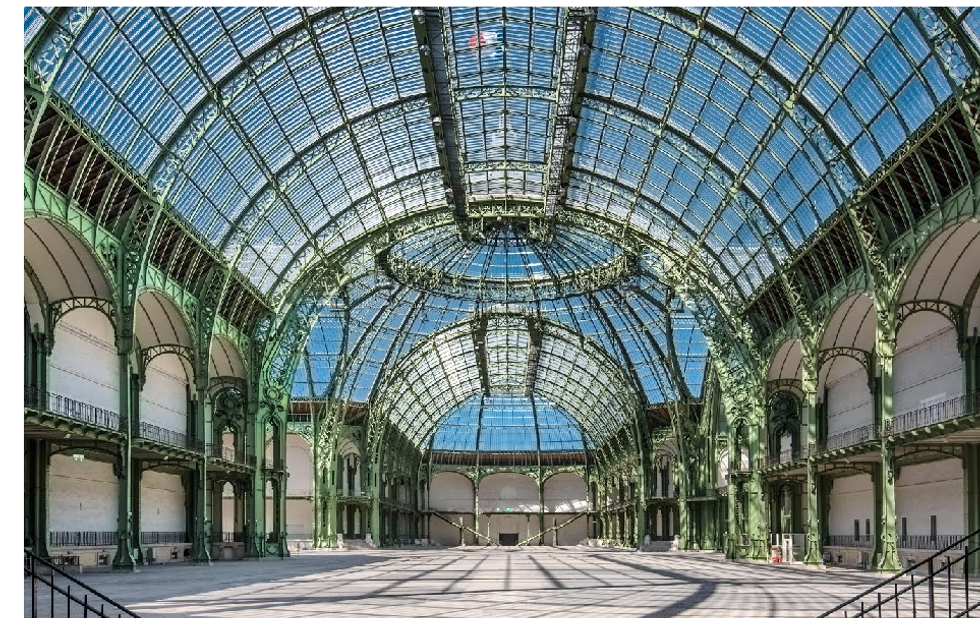
The nave of the Grand Palais after restoration, 2012. Photo © 2015, Rmn-GP-Grand Palais201


It’s not like most of us have the opportunity to visit all the great museums even without COVID-19. But it is possible these days to get a “next best thing” tour of world culture thanks to the internet.
Let me be clear at this point that I’m not a great art connoisseur and have not been to most of the world’s great museums (yet). But I would like to learn more, and as the new year begins I feel a bit of an urge to learn and see new things; while the online museum experience has a lot of flaws, it also is better than sitting around the house watching cat videos on YouTube.
Let’s begin by saying frankly that most museum virtual tours are disappointing, for many reasons. Generally the art works are all presented as being the same size, so that a wall-size painting such as Georges Seurat’s “A Sunday on La Grande Jatte” (at the Art Institute of Chicago, www.artic.edu) looks the same size online as “Maternal Caress” by Mary Cassatt, which is about 10.5 by 4.5 inches.
Many museums offer virtual “walking tours” and Google street view visits to museum galleries, but they’re usually poorly lit, distorted and nausea-inducing if the camera pans around too quickly.
You are also unable to access many virtual tours unless you download Adobe Flash, which I have had some bad experiences with and won’t allow on my computer.
Google tries very hard to put its fingerprint on most of the world’s museums and cultural heritage sites through its Google Arts and Culture website. There you can find links to many museums and lots of activities, most of which are geared to young people. There are games and puzzles, and there are short videos of indie pop culture icons such as Grimes and Fiest talking about famous works of art, modern and ancient.
Most of it I found uninteresting or overwhelming but there are some glimmers of excellence. The one I liked best and that I’ll recommend to you here is a tour of the Grand Palais in Paris. If you go to the actual museum website, you just get the usual short teasers about their current shows.
But if you go to the Google Arts and Culture page on the Grand Palais, you get interesting history and photos of the creation of the building —which combines sculpture and classical architecture and a glass dome and an outdoor colonnade — for the Universal Exposition of 1900.
The photos and the history (in English) are clear and easy to absorb. For World War history buffs, there is an entire text and photo section on the conversion of the space (which is huge, on the scale of Grand Central Station) into a hospital for wounded soldiers.
There are four “views”of the exterior of the building, including a view of Paris from the roof. Unlike the dizzying videos in which a camera pans around a site, here you click on arrows that bring your progressively closer to whatever details you’d like to focus on.
And of course there are photos and short explanations of the photos and paintings in the museum’s collection.
No doubt there are many other excellent tours of art and architecture on the internet.
But in a three-hour search of the internet this morning, the website for the Grand Palais was the one I felt most like recommending. It was a nice mix of architecture and art; and it was a virtual journey to Paris, which is a city I’d like to visit if I had the time and money and there wasn’t a worldwide pandemic.
To visit the Google Arts and Culture tour of RMN-Grand Palais online, go to https://artsandculture.google.com/partner/rmn-grand-palais.
In case you’re wondering, RMN stands for Réunion des musées nationaux.
Nathan Miller
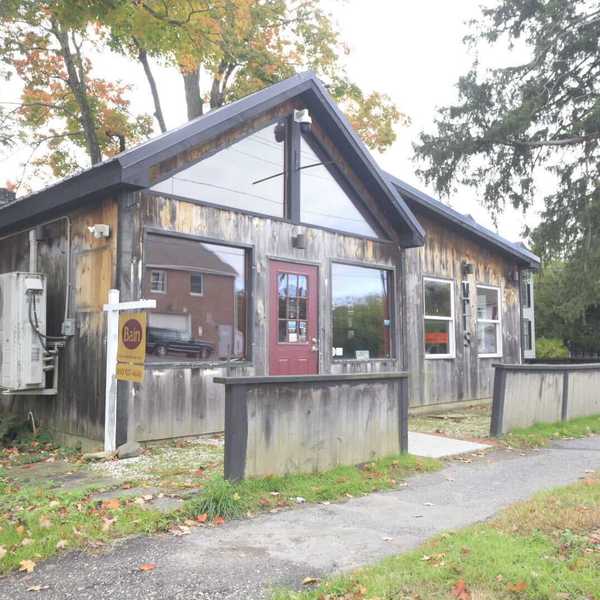
The former Roe-Jan Center School on Route 22 in north Copake was abandoned in 1999. Developers are proposing turning the building into a resort and spa.
COPAKE — The long-abandoned Roe-Jan Center School could soon be transformed into a large hotel and wellness resort.
Engineer Alan Didio of Chatham and architect Paul Bennett of New York City are currently before Copake’s Zoning Board of Appeals with a proposal to turn the 41-acre site into a hotel and resort. The plans include a 97-room hotel in the former school building, 31 standalone lodges and cabins containing an additional 77 guest rooms, three restaurants, two bars, a spa, Pilates and yoga studios, a gym, saunas and steam rooms, a farm store with on-site greenhouses, retail shops including a bakery and an ice cream shop, two swimming pools, two hot tubs, a pickleball court, and a tennis court.
The school building was abandoned in 1999 when the Taconic Hills Central School District consolidated operations into a Craryville, New York, campus. It is currently owned by Markland Columbia LLC, which purchased the property for $500,000 in 2014.
The proposal calls for renovating the existing buildings on the property, with additions to the former school to accommodate hotel rooms, dining areas, and many of the resort’s amenities, including the spa, gym, bars, and retail space.
New construction will stretch around the outside edge of the property that sits along the west side of Route 22 between Copake and Hillsdale. Drawings show a planned road running around the perimeter of the property providing access to 15 lodges with between three and five bedrooms. Walking paths will lead to 16 additional smaller lodges, with one to two bedrooms each, planned to line a new retention pond that is to be located in the southern portion of the property.
All together, the lodge buildings will total more than 64,000 square feet of new building footprint on the property. That’s in addition to the 97-room, 82,000-square-foot hotel that is planned to occupy the abandoned school and an addition to the building.
The proposal is still in its early stages, having first been introduced to Copake’s Zoning Board of Appeals at that board’s May 28 meeting. The proposal is currently undergoing a public hearing at the Zoning Board of Appeals, which began on Thursday, July 23, at Copake Town Hall.
Gina White, who operates Mandala Yoga & Arts in a building just south of the abandoned school, said she’s waiting to watch the development move through regulatory processes before forming an opinion on the project.
Generally, though, White thinks the plans are likely to be positive for the area. “It’s a resort town,” she said.
Joseph Brennan
George Bistransin points out a headstone marking the final resting place of Ephraim Paine in the Old Amenia Burying Ground.
AMENIA — When Amenia resident George Bistransin stumbled across a century-old newspaper account describing the arrest of a Revolutionary War spy in his hometown, he couldn’t stop thinking about it. That discovery inspired Amenia’s Spycatcher, an original historical play that will debut Aug. 21-23 at the Amenia Town Hall Theater as part of the nation’s 250th anniversary celebration.
The play tells the story of Ephraim Paine and his wife, Mary, who are buried today in the Old Amenia Burying Ground on Mygatt Road. Bistransin wrote, directed and produced the play, hoping to transport audiences back to the late 18th century through historically accurate language, characters and settings.
“It was my hope that when people enter that theater that they are back in the 18th Century,” Bistransin said. “No anachronisms, only old-fashioned language.”
The inspiration struck after Bistransin, 70, read an article from a 1900 edition of the Amenia Times recounting the arrest of a Revolutionary War spy.
History has shaped much of Bistransin’s life. Before writing Amenia’s Spycatcher, he translated plays by Roman playwright Plautus for schools.
Bistransin said the play has occupied months of his life and is the latest expression of his lifelong fascination with history.
He said he wants Amenia to understand Paine and the conflicts in his life. “I think it is an examination of relationships,” Bistransin said. “Romantic love versus familial love, duty, the sacrifice you have to make for other people.”
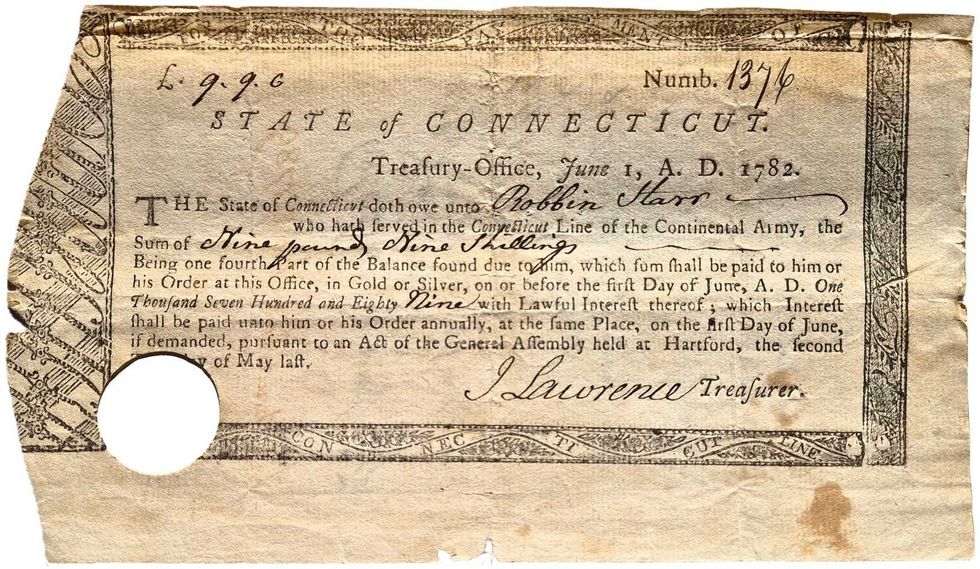
Paine fled Connecticut to avoid paying taxes to a state church and went to sea as a whaler to avoid debtor’s prison. Bistransin based much of his tale on the account offered by Paine’s descendant, Martha Bockee Flint, who wrote the article recounting the story of her great-great-great stepmother, who risked her life for colonial freedom.
The playwright also drew on the journal of the wife of a German general who fought for the British at Saratoga and passed through Amenia as a prisoner of war.
Bistransin described the play as his gift to the town. He spearheaded the production with the help of a $15,000 Dutchess County grant secured by Betsy Strauss and the Amenia Historical Society. Bistransin took on writing, directing, producing and casting the play largely by himself.
Bistransin acknowledged a few key helpers along the way. Anna Bonelli illustrated the posters that now advertise the show across town. Town Hall custodian John Nowak found the scenery and lighting from local resident David Palmieri. Town librarian Victoria Herow helped research the obscure historical figure.
Long before this play, Bistransin started his professional career as a park ranger in Boston overseeing burial grounds. After a stint teaching Latin, he founded Theater Ludicrum, where he learned from Roman drama how playwriting works.
Eventually he grew tired of city life and sought broader pastures, bringing him to Amenia in 2016. While working as a security guard at the Metropolitan Museum of Art, he remembers saying to himself, “I don’t want to die in a railroad apartment in Queens.”
He rode the train to the end of the line and found a place to raise goats like his sister did in Ohio. Since then, Bistransin has volunteered with the Amenia Historical Society. He also helps maintain the Old Amenia Burying Ground, where Paine and other Revolution-era Amenia residents are buried.
Bistransin jokes that he has been as stubborn as his billy goat, Ferdinand, in seeing the production through. He also knows that taking on nearly every aspect of the play leaves little room to blame anyone else if it falls short.
“An actor does a good job in a well-made play,” he said. “I made all the decisions. Not only am I comfortable with that, but I don’t want any interference. If it’s bad, it’s my fault.”
Despite the pressure, Bistransin said he feels fortunate to have had the opportunity to tell an overlooked chapter of Amenia’s history and hopes residents will come out to experience it. “I feel so lucky to have this opportunity,” he said.
Nathan Miller
MILLERTON — A local boarding school’s efforts to receive current formal approval for its buildings received support from neighbors and faculty of the institution at the first public hearing in the Planning Board approval process.
Olivet Academy, which took over the former Kildonan School campus in 2020, is seeking a special use permit, certificates of occupancy for all campus buildings, and approval of its existing septic systems to satisfy current state Department of Education requirements for private boarding schools.
Architect Ray Nelson, representing the school, told the Planning Board on Wednesday, July 22, that the state now requires schools to provide current certificates of occupancy for all campus buildings under the operating institution’s name. Because the campus predates modern permitting requirements, many of its buildings were never issued formal permits or certificates of occupancy.
The campus has operated as a school since it was built in 1940, first as the Barlow School and later as the Kildonan School from 1980 until the institution closed in 2019. Nelson said the current application is intended to formally document and legalize longstanding uses of the property rather than expand or substantially alter the campus.
Wednesday night’s meeting marked the first public hearing on the application, marking a step toward approval that will bring the historic school into formal legal compliance for the first time since its construction over 80 years ago.
Betsy Strauss, a longtime neighbor of the property, and her husband, Julian, spoke in support of the school and its efforts to obtain formal approval. She said Olivet has been a good neighbor and she’s delighted to live in a neighborhood surrounded by schools on both sides.
Strauss’s property is bordered on the west by Olivet Academy and on the east by the Webutuck Central School District campus.
“It’s very nice to know that we’ve got people who are serious about their work and are good neighbors,” Strauss said.
Milo Tsukroff — a Pleasant Valley, New York, resident and math instructor at the school — said he has taught at the school for five years and loves the community.
He said Olivet students excel in and out of school, and that the presence of the boarding school and Webutuck’s campus in such close proximity qualifies that section of town around Morse Hill Road and Haight Road as a de facto education district.
“Graduates return to this school and tell us they’re college math classes are too easy because they learned math at Olivet,” Tsukroff said.
Planning Board members opted to keep the public hearing open pending approvals from outside agencies for outstanding issues such as approval of an existing septic system and building department certification. The next public hearing is scheduled for Wednesday, Aug. 12, at 7:35 p.m. at the North East Town Hall on Maple Avenue.

Want more of our stories on Google? Click here to make us a Preferred Source.
Madi Long
Ariel Grald rides Adagio’s Nobility around the showjumping ring at the 41st annual Millbrook Horse Trials on Sunday, July 26. The Millbrook Horse Trials is an annual event that combines dressage, showjumping and cross-country.
Leila Hawken
AMENIA — Months of deliberation over the environmental impacts of a proposed workforce housing subdivision concluded Thursday, July 23, when Planning Board members voted to move the project forward to site plan approval.
The environmental impact analysis phase in connection with the Cascade Creek subdivision application was completed following the Planning Board’s unanimous vote for a “negative declaration” as part of the State Environmental Quality Review (SEQR) process.
The proposal, submitted by the Hudson River Housing of Poughkeepsie, calls for a 28-home workforce housing development on a 24.13-acre parcel between Cascade Road and Route 22. The developers also aim to preserve open space and environmentally sensitive land.
The negative declaration means the Planning Board found the proposed workforce housing development is not expected to have significant adverse environmental impacts, allowing the application to move forward to the site plan review stage without requiring a full Environmental Impact Statement.
That action allows the developer to proceed to the site plan phase of the application process where actual plans for the subdivision are submitted for consideration by the Planning Board. Public hearings will be included in that site plan process.
A significant issue within the SEQR process had been the board’s concern about the volume of water storage that would support firefighting efforts within the planned subdivision.
Attorney Alec Gladd, of Cuddy & Feder LLP out of Fishkill, New York, representing the developer, stated that the fire department is asking for water storage capacity data that could only be answered within the site plan phase. Currently, the developer is offering on-site fire suppression and home sprinklers in each housing unit.
“We have met the requirement for now,” Gladd said, noting that the SEQR analysis is an environmental review.
The issue of firefighting capacity can be raised again later in the process once the site can be tested for water availability, advised Planning Board attorney Cassandra Britton.
“Sprinklers are for evacuation of people from their homes, but you still need water to fight the fires,” said Planning Board Engineer John Andrews. Water storage to support home sprinklers is separate from water storage to fight fires.
Peter Deister, chairman of the local Board of Fire Commissioners, attended the meeting and expressed his concern about the issue of adequate water storage capability. The fire department has scheduled a second meeting with architect Richard Rennia, who designed the project, on Monday, Aug. 10.
Leila Hawken
Paula Pelosi
AMENIA — Friends and community members are invited to celebrate the life of local art curator Paula Pelosi at the Smithfield Church.
A significant loss to the contemporary art world, as well as to her many local and area friends, the life of Pelosi will be celebrated at a memorial service set for the Smithfield Church on Saturday, Aug. 1. The service will begin at 2 p.m.
Pelosi died this year in April after a brief battle with pancreatic cancer.
The memorial service will be led by the Rev. Douglas Grandgeorge, Pastor of The Smithfield Church.
Pelosi’s career brought her close to luminaries in the art world including years as an executive assistant and curator for artist Frank Stella, an association that led her to divide her time between her home in Amenia and her Brooklyn home. She looked after all details of curating and hanging Stella’s exhibitions world-wide and assisted in the management of his local horse farm. In addition to art-related travel, Pelosi enjoyed traveling for pleasure to experience remote regions.
Community service was an important aspect of Pelosi’s life as she served 10 years as a member of the Amenia Zoning Board of Appeals.
“I knew Paula as a friend and a colleague,” said Judy Westfall on Friday, July 24, remembering Pelosi’s service on the ZBA, when Westfall served as ZBA Secretary. “She loved Amenia and always looked to the future with great pride and enthusiasm.”
“She was a kind and gentle woman with a great heart. She cared greatly about her work and the many friendships she had in Amenia. Her presence is missed,” Westfall said, noting that Pelosi’s smile brightened the mood at every ZBA meeting.
“I always referred to her as the ‘Queen of the ZBA’ because she was the only woman member,” Westfall said.
“She was a wonderful woman,” said Town Supervisor Rosanna Hamm on Friday, July 24, adding that she regretted not having had an opportunity to work with Pelosi longer to know her better. Hamm began her term in office in January 2026.
Tributes offered by Town Hall staff and ZBA members carried effusive praise and genuine appreciation for Pelosi’s service to the town.
“Paula led a very interesting life,” Hamm said.

Want more of our stories on Google? Click here to make us a Preferred Source.

Want more of our stories on Google? Click here to make us a Preferred Source.