‘Stranger Things’ And the Return Of Kate Bush’s ‘Running up that Hill’


Three horrified kids cower in a graveyard, as their redheaded friend is jolted upward in the air, ragged with terror.
This is a scene from the fourth season of the Netflix production “Stranger Things.” The teen horror hit is the number one English-language program on Netflix. Each episode averaged $30 million to produce. And it’s had a radical impact on the public; for instance, its emphasis on Dungeons & Dragons (D&D) has contributed to the board game’s newly popular presence.
“Stranger Things” started with four best friends fighting otherworldly horrors in their small-town home of Hawkins, Ind., in the 1970s. Now, the group of youngsters has grown to a team of 13, navigating the ’80s and battling the same sci-fi freaks — specifically, the supernatural foes originate from the Upside Down, a twisted parallel world.
In the season three finale, Max (the floating redhead mentioned above) witnessed her half-brother, Billy, die in a fight scene.
In season four, Max and her pals are freshmen, rattled from their past in the Upside Down and nervous about confronting the banal trials of high school.
It is Max who suffers the most. She plugs herself into headphones, isolates herself from her friends, and settles into headaches and nightmares that keep her from being able to come to grips with Billy’s death.
When teens in Hawkins suddenly start having visions of trauma and are then possessed by uncanny forces that hang them in the air, with their limbs at impossible angles, Max knows she’s next.
Working to stop the scourge, Max’s friends discover a solution. Music, they learn, reaches parts of the brain that words alone can not.
Max’s friend Lucas fastens headphones to her ears as she floats in the air, possessed by a monster from the Upside Down. Kate Bush’s popular 1985 song, “Running up That Hill (Deal with God),” helps her remember moments with her friends. She runs to freedom as Bush sings, “I’d be running up that road, I’d be running up that hill, I’d be running up that building.”
Like D&D, the series has made a new hit of Bush’s song. Although a cult favorite in its day, it never topped number 30 on the Billboard Hot 100. After it was featured on “Stranger Things,” the song returned to the Billboard charts at number 8, and was number 1 on the iTunes chart, thanks to the show’s huge audience.
The song also reflects the show’s focus on true loyalty. Bush sings, “If I only could, I’d make a deal with God, and I’d get him to swap our places.” This group of friends risks life and loss for each other.
Perhaps part of the reason for this series’ enormous popularity is that the plot builds allusions to other beloved works of science fiction.
As teens battle grotesque creatures that even grownups in lab coats can’t destroy, there are references to “The Lord of the Rings” and multiple Stephen King classics, like “Carrie” and “It.”
There might even be a nod to the Neal Stephenson novel “Snow Crash.” One of the “Stranger Things” friends, Argyle, works at Surfer Boy Pizza, which delivers fresh pies in a strict 30 minutes. Stephenson’s hero does the same; it’s how the action in the novel starts.
Besides calling to triumphs of science fiction, the season is winning in other places.
There’s a new character, Eddie, proving to be popular because of his bad-boy cover. Underneath, he cradles a sensitive love for guitar music.
Steve and Nancy’s recent flirtation is also stirring the “Stranger Things” fanbase. It’s hinting at a provocative love triangle between the two and another teen, Jonathan.
Besides the graveyard with Max’s stint in floating possession, there are other creative scenes in the recent season making it an engrossing watch. The characters’ adventures take place in the haunted Creel family home, the hideout lake shack, and Russia.
Will’s interest in painting is also far from a slight hobby. His rolled-up painting that he carries through episodes is frustratingly mysterious — until the conclusion of the show.
And speaking of the conclusion, there’s more in store. Brothers Matt and Ross Duffer, who created “Stranger Things,” are expanding the universe. The seven episodes of season four, volume one, clock in at 9 hours and 7 minutes.
And volume two, which was released on July 1, has one episode (number 9) that lasts two hours and 30 minutes.
“Stranger Things” is available on Netflix.
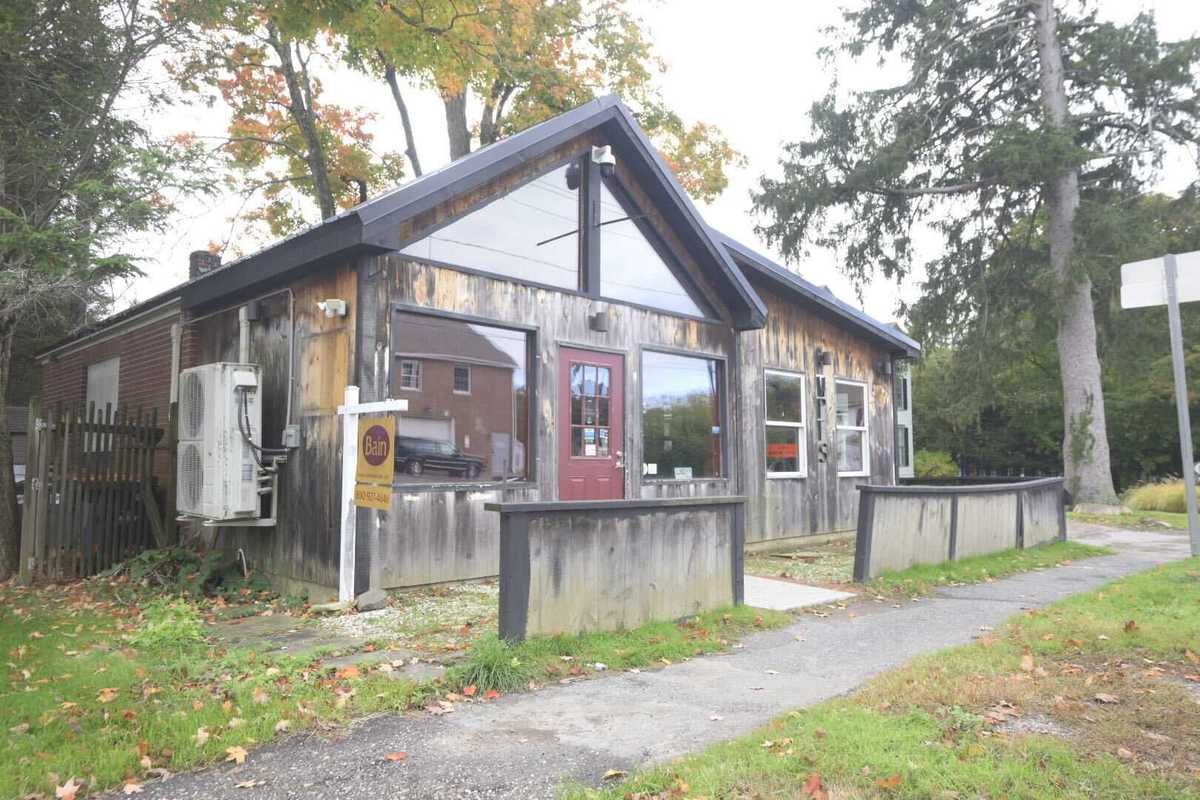
The following excerpts from The Millerton News were compiled by Kathleen Spahn and Rhiannon Leo-Jameson of the North East-Millerton Library.
January 24, 1935
About Millerton
Mayor and Mrs. William J. Brewer and Mr. and Mrs. Miles Jenks left on Monday for a month’s vacation in Florida.
Mr. Roy Ganung and daughter, Jane, spent Tuesday afternoon In Poughkeepsie.
Jean Silvernale is confined to home by illness.
Miss Blanche Bates is spending several weeks at the home of her brother, Edward Bates, at Pittsfield, Mass.
George Wooding of Thornewood spent Sunday at the home of his sister, Mrs. Harry Card.
Mr. and Mrs. Lewis Decker and family moved to Lakeville on Sunday.
January 22, 1976
Snowmobiles Tresspassing[sic], Officer Says
Trespassing and riding on public roads are the major offenses committed by area snowmobilers this winter, New York State Conservation Officer Harry Wheeler stated this week.
He asserted that a number of snowmobile riders have been sighted traveling on public roads and soaring across private property without permission, both illegal acts.
January 18, 2001
Local Homes Added to Historic Register
COLEMAN STATION — Three houses in the town of North East were recently added to the National Register of Historic Places.
The Oliver Barrett House, the Dakin-Coleman Farm and the Thomas Wheeler Farm, all located in the Coleman Station area, were selected by the New York state Office of Parks, Recreation and Historic Preservation to be listed individually on the register, though the entire Coleman Station Valley was considered for the recognition in 1993.
Millerton Sees Some Business Changes; Shops Move, Expand
MILLERTON- Two stores on Main Street in Millerton have interior changes in the works.
Leslie Hoss Flood has recently relocated her Amenia-based store to the basement of the Millerton Antiques Center. Ms. Flood’s shop had been in Amenia for about 15 years, where, in addition to selling used and antique furniture, Ms. Flood also ran an upholstery shop.
After removing several partitions and installing new lights, the basement store looks entirely new. Ms. Flood is pleased with the space, which offers more room in which to showcase her wares. She is also taking advantage of the additional area by creating a separate reupholstery room and a section to display in-stock fabrics.
Pasta-At-Large Expands
After acquiring the empty space, owner Sofia Okołowicz has expanded her business to provide “a little more elbow room inside.”
The front portion has been open since late November and, in recent days, Ms. Okolowicz has removed a wall and had electricity installed in the new area.
The college-age generation is grappling with inflation, increasing housing prices, climate change, and now mass corporate layoffs. In a world where geopolitical turmoil is increasing, the ground beneath their feet is shifting. Many believe their future is bleak.
My nephew, Joey, just got married. His wife lives with her parents, and he lives with his. While he makes good money as a pharmacy manager at a national chain drugstore, neither he nor his wife can afford even a down payment on a house in Long Island. They are moving in with the wife’s parents. Joey’s sister is also married with two children. They also live with their parents. Welcome to the American dream turned nightmare for almost 70 million young Americans.
The typical age range of Gen Z is 1997 to 2012. They are the demographic cohort succeeding Millennials and preceding Generation Alpha. They are the most racially and ethnically diverse generation in America, with 48% being non-white.
Almost all of this generation is highly active on social media. Almost 60% are planning to pursue a college education. They are just as likely to identify as Republicans, Democrats, or Independents. As such, the present populist upheaval the U.S. is undergoing takes an inordinate toll on them. It may be why 91% of Gen Zers report experiencing symptoms of stress and anxiety.
While Wall Street opened the year celebrating the promise of a bright future, thanks to AI. Opinion leaders predict that artificial intelligence, robots, and space, among other technological breakthroughs, will dramatically reshape the way the world works. For college grads, all they see is a no-fire, no-hire labor market where unemployment among workers ages 20 to 24 continues to rise. It is now to 5.3% and even worse for those younger than that.
The National Association of Colleges and Employers predict the entry-level hiring crisis will worsen this year, rating job prospects as poor or at best fair. At a recent gathering of employers at the Yale School of Management, 66% admitted they planned to cut jobs or freeze hiring.
With an economy that is expected to grow by 3% in 2026, one would have expected the opposite reaction, but then you would not be reckoning with the impact of artificial intelligence on the job market. Potential employers are concerned and uncertain about how AI might reshape the workforce over the next few years, and rightfully so.
Most analysts believe that many white-collar positions, especially at the entry level, will be replaced by technological advancement. Underscoring that concern, many corporate giants, including Amazon, UPS, Target, and Google, announced layoffs affecting more than 60,000 jobs. And to many, that is just the tip of the iceberg.
Faced with taking fast-food jobs at minimum wage and lacking work experience in their hoped-for professions, 3 in 5 Gen Z workers are looking elsewhere for a job with some kind of reasonable future. Almost half of these young workers believe the blue-collar jobs may offer better long-term security than corporate work in the technology fields. The top sectors pursued by Gen Z include plumbing, automotive repair, construction, and electrical work.
I happen to agree with that belief, but unfortunately, Gen Z applicants face the same barrier to entry in their white-collar arena—lack of experience. Many job applicants, regardless of industry, are now required to have at least 3 years of experience and up to 5 years before being considered.
The lure of six-figure salaries in the blue-collar area is attracting more Gen Zs to vocational schools. However, what many conveniently forget is that earning that kind of take-home pay requires years of experience, a substantial investment in personal tools and equipment, and serious wear and tear on the body.
As I write this, in the next room, a 65-year-old builder I’ll call Scott, who is going in for his second knee replacement next month, is building another room in our condo. Assisting him is a young GenZer. There is a constant stream of chatter as Scott talks through his drywalling process. His helper listens intently. They seem eager to learn and ask questions as they work. He did the same when he placed the struts and erected the wall.
For several years, Scott has been involved in a local high school program that teaches vocational school grads his business, while they gain on-the-job experience and a paycheck. Scott and others like him are providing a solution one day at a time. He is one answer to the dilemma facing this struggling generation. This country needs more Scotts to hire and teach a young workforce in need.
Next week, I will highlight one area where many Gen Xers have found an alternative to home ownership. It holds risks but doesn’t cost an arm and a leg to get involved.
Bill Schmick is a founding partner of Onota Partners, Inc., in the Berkshires.Bill’s forecasts and opinions are purely his own and do not necessarily represent the views of Onota Partners, Inc. (OPI).
Caroline Farr-Killmer wears her hunting bibs after being inducted into the historic Rounders’ Hunting Club in November 2025, becoming the first woman to join the club since it was founded by World War II veterans in 1954.
MILLERTON — A lot has changed for Caroline Farr-Killmer over the last two decades, but the smell of campfire smoke and the familiar bark of an old blue alarm clock have stood the test of time at the hunting grounds of the historic Rounders club, a place that has served as a second home for her family for generations.
In November 2025, Farr-Killmer, 25, became the first adult woman to be unanimously voted into the hunting club, a group that’s known as much for its camaraderie and history as its dedication to safety, respect and the outdoors.
Founded in 1954 by WWII veterans, the group — originally named the Rounders of Riga — began as six men who wanted to step away from civilian life and gather around a shared love of hunting. Longtime member Larry Conklin has referred to the group as the “real-deal Band of Brothers,” which has expanded to include vetted family members and friends over time. Farr-Killmer is its newest member.
Today, the Rounders club is comprised of 10 adult members, along with several junior members.
Though she is defying gender stereotypes, Farr-Killmer approaches the milestone with gratitude, viewing it as a chance to learn from a community that has always felt like home.
During hunting season, which takes place between November and early winter, members take turns doing chores, which can include constructing the 16 x 32 military tent or preparing meals like venison tacos.
“I am grateful and excited,” Farr-Killmer said, adding that she appreciates the vote of confidence from the Rounders. “I think it will be fun to bring a female presence into the hunting world, especially as it is such a male-dominated sport.”
While a number of female junior members currently exist, Farr-Killmer hopes that her hands-on involvement will pave the way for other women to join in the future.
Farr-Killmer’s connection to the Rounders spans generations. Her grandfather, Bryant Killmer, was the first family member to join the Rounders in the 1990s and remained an active member until his death in 2020.
“As a kid, I would look forward to all the stories from the older gentlemen who had lived such interesting lives — many of whom were veterans,” Farr-Killmer said.
Today, she carries on her family’s legacy with her brother, a junior member, and her father.
“My family is excited, but especially my dad, Ray,” she said.
Ray Killmer — who taught her the culture, tactics and lifestyle — said he is proud of her.
“I look forward to the legacy being carried on,” he said.
When she received the official welcome into the club, Farr-Killmer said she was “ecstatic.” Though she has been attending camp since childhood for its social traditions, she has only been hunting for several years.
Induction into the Rounders marks another achievement for Farr-Killmer, who has been heading up the demolition and reconstruction of Millerton’s water department building since a fire destroyed it and all the equipment inside last year.
“I want to send the message that you can do what you set your mind to,” she said. “I think it is great that times have evolved and this sport has become one that is much more inclusive.”