Books & Blooms’ tenth anniversary

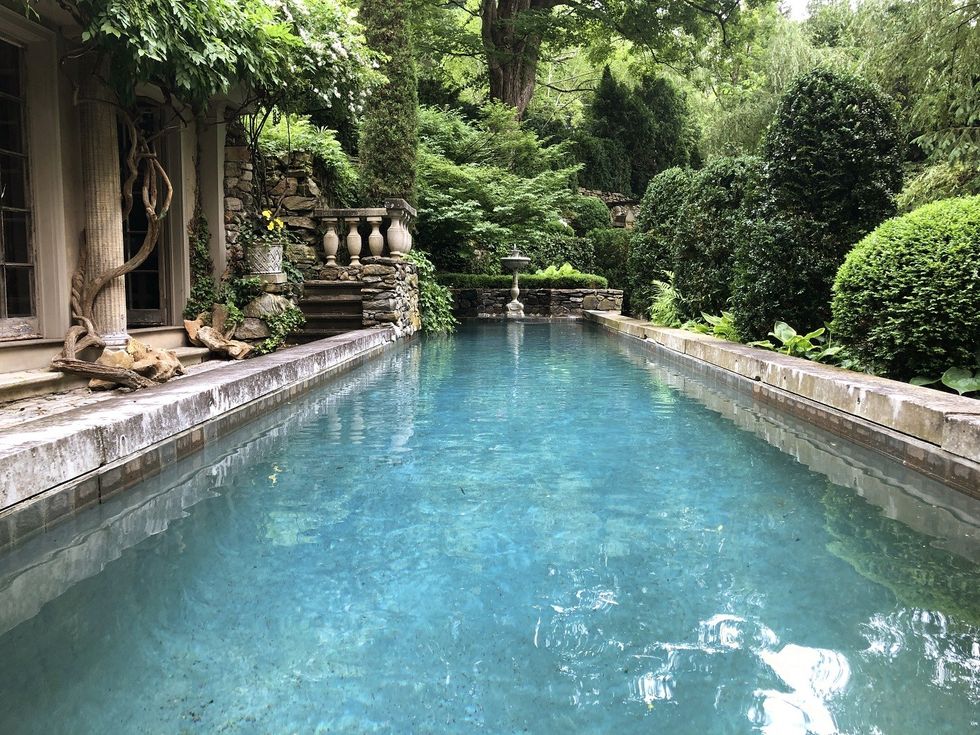
Dee Salomon on what makes a garden a garden.
hoto by Ngoc Minh Ngo for Architectural Digest

Dee Salomon on what makes a garden a garden.
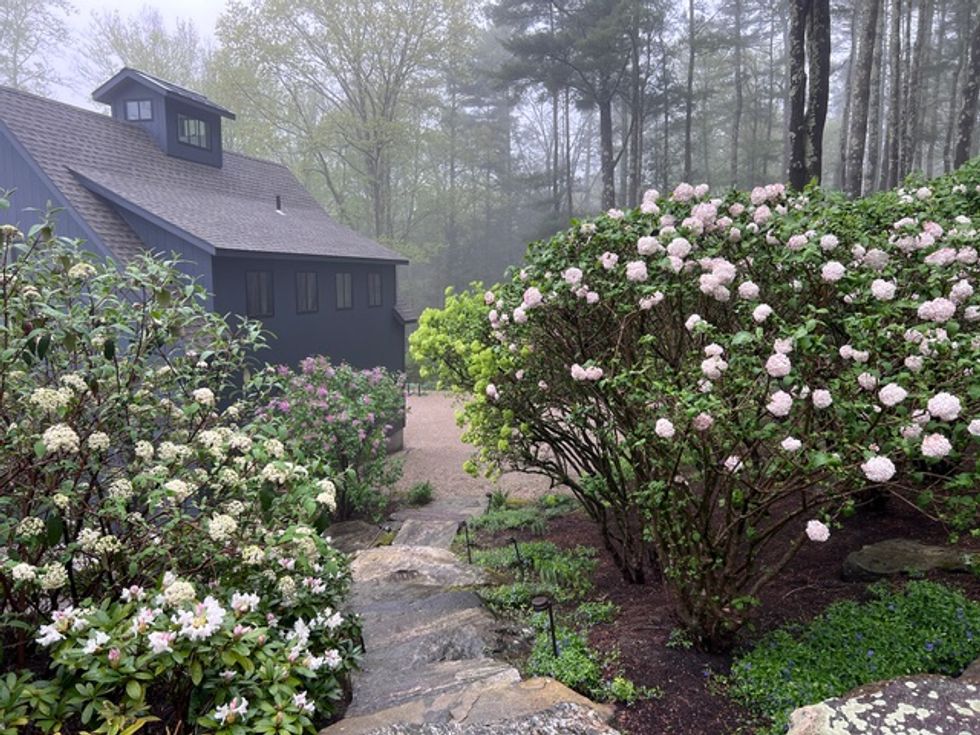
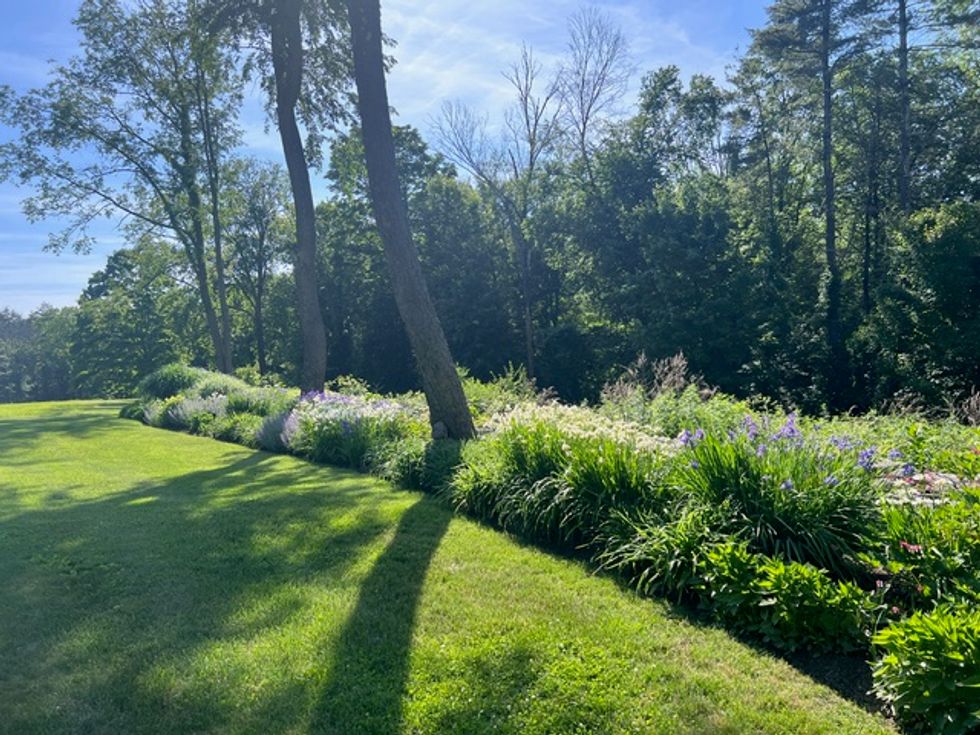
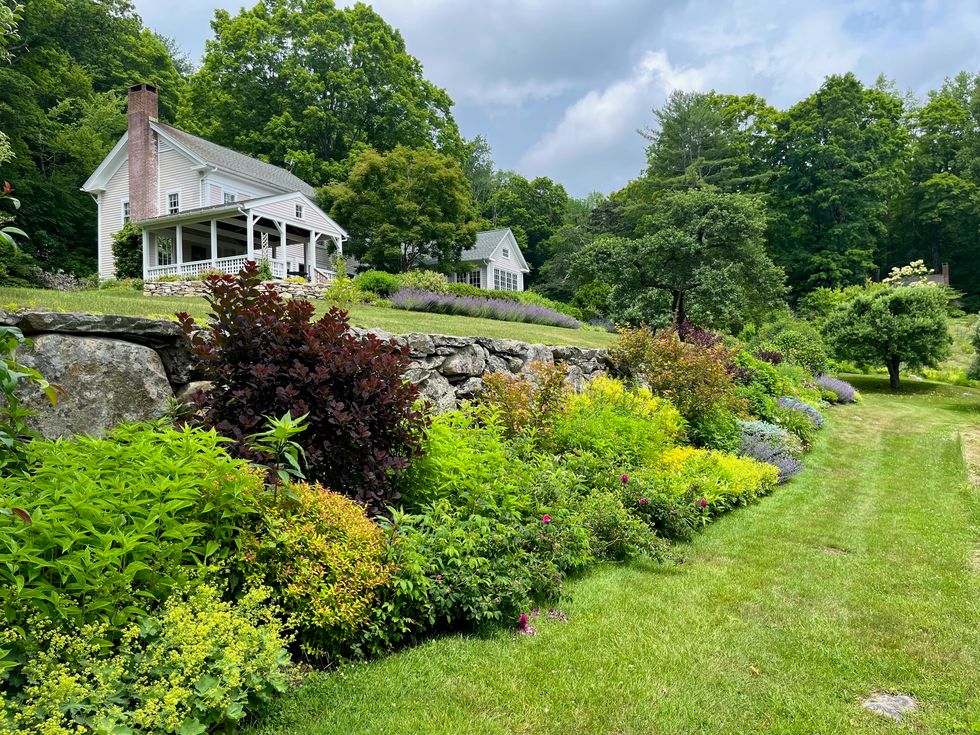
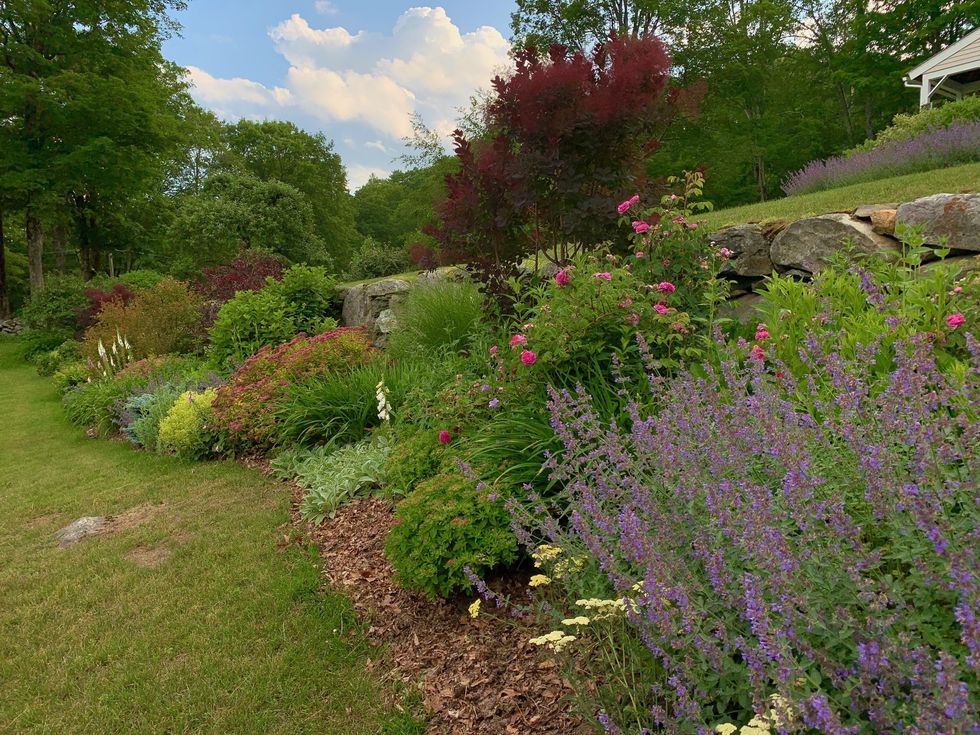
On June 20 and 21, the Cornwall Library will celebrate its 10th anniversary of Books & Blooms, the two-day celebration of gardens, art, and the rural beauty of Cornwall. This beloved annual benefit features a talk, reception, art exhibit, and self-guided tours of four extraordinary local gardens.
The first Library sponsored garden tour was in June 2010 and featured a talk by Page Dickey, an avid gardener and author. This year’s Books & Blooms will coincide with Ellen Moon’s exhibit “Thinking About Gardens,” a collection of watercolors capturing the quiet spirit of Cornwall’s private gardens. Moon, a weekly storyteller to the first grade at Cornwall Consolidated School and art curator for The Cornwall Library, paints en plein air. Her work investigates what constitutes a garden. In the description of the show, she writes: “there are many sorts...formal, botanical, cottage, vegetable, herb...even a path through the woods is a kind of garden. My current working definition of a garden is a human intervention in the landscape to enhance human appreciation of the landscape.” Also on display are two of her hand-embroidered jackets. One depicts spring’s flowering trees and pollinators. The other, a kimono, was inspired by Yeats’s “The Song of the Wandering Aengus.”
On Friday, June 20 at 5:30 p.m. writer and garden philosopher Dee Salomon will give a talk titled, “What Makes a Garden a Garden?” at Cornwall Town Hall. Beloved for her “Ungardener” column here in our newspapers, Salomon will reflect on the meaning of gardens and their place in the human imagination. The presentation is followed by a festive cocktail reception at the library, with live music by the Crownback Funk Trio, an improvisational blend of funk, blues, and jazz.
Then on Saturday, participants can enjoy self-guided tours of four distinctive Cornwall gardens, each with docents on hand to answer questions. From a terraced Italianate hillside overlooking the Housatonic River to a wild deer-frequented garden brimming with perennials and daffodils, these gardens tell stories of transformation, imagination, and place.
Books & Blooms is a reflection of the Cornwall Library’s vital role in town. “The library really is the central meeting place,” said event organizer Kirk Van Tassel. “People come here for talks, kids’ programs, art exhibits. It’s a cornerstone of community life.”
To purchase tickets, visit cornwalllibrary.org

Nathan Miller
Voters also passed a resolution to purchase two new 72-passenger school buses.
AMENIA — Webutuck Central School District voters approved a 2026-27 budget on Tuesday, May 19, that triggers the district's first property tax increase in over five years.
The approved spending plan locks in a 1.35% increase to the tax levy. Under the new rate, property taxes will sit at approximately $8.77 per $1,000 of assessed home valuation. According to Webutuck Business Administrator Robert Farrier, a homeowner with a property valued at $200,000 can expect a total school tax bill of about $2,036 for the upcoming year.
That tax bump will cover a 4.45% increase in overall expenditures, largely driven by salary increases and health insurance costs.
Farrier said the district has multi-year agreements with labor groups that mandate increases to employee salaries, meaning those costs are predictable year over year. Salaries are set to increase by a total of $515,344 over last year’s budget, including special education positions that were added during the 2025-2026 school year.
Health insurance costs are projected to rise sharply next year. Farrier said he expects regular annual increases averaging 8% to 10% going forward.
In addition to the budget, voters also approved a bus purchase and reelected three incumbents to the school board.
Voters approved the purchase of two 72-passenger buses and a Bobcat UW56, a side-by-side all-terrain vehicle.
Judy Moran, Amy Wesley and Jerry Heiser were all reelected to the school board. The three incumbents ran unopposed for an additional three-year term on the board.
Superintendent Ray Castellani said the vote reflects a supportive school community. He thanked voters for coming out to the polls at Webutuck High School on Tuesday.
Graham Corrigan
Stissing Mountain High School in Pine Plains.
PINE PLAINS — Voters in Pine Plains rejected the school district’s proposed budget Tuesday, May 19.
While the measure achieved a majority — the final count was 458-432 in favor — it failed to reach the 60% supermajority necessary after the district’s budget pierced the state tax cap.
The school district is now left with three options: put the same budget up and hope for better results, revise the budget, or adopt a contingency budget with deeper cuts. Another round of voting will take place on June 16. State election laws mandate that a public hearing on any new budget needs to happen the week of June 2-9.
The proposed budget represented a year-over-year expense increase of 5.34%, and a tax increase of 4.43%. Budgeted expenses totalled $40,778,791.
New York State limits school districts to a maximum tax levy increase of 2%. Proposed levies that exceed that rate require a 60% supermajority approval at the ballot box.
Budget cuts of $491,000 were already included in the proposed budget. Chief among the eliminations are two 5 p.m. bus routes, new equipment purchases, and elementary school enrichment programs.
If the board of education makes additional reductions to fall within the tax cap, a simple majority of 50% is needed to pass the budget.
For that to happen, the board needs to eliminate $290,569 in expenses, District Superintendent Dr. Brian Timm said.
A contingency budget is the harshest scenario. If the proposed budget fails again on June 16, the district will be forced to reduce the budget by another $945,789, for a total difference of over $1.2 million from the budget that failed to pass Tuesday.
“Certainly some things will be unpopular,” Timm said at a special session after the vote. “Where we are allowed to make our recommendations is in getting it to the tax cap, but the contingency budget is up to the board.”
Timm suggested having a revised budget ready for board discussion by May 26, and a public hearing June 9. Both meetings will be open to the public.
In other ballot news, incumbent James Griffin and Amie Buehler were elected to the two open school board seats. Voters also approved a measure to buy five new school buses, using funds from a previously-approved bus reserve.
Graham Corrigan
MILLBROOK — Millbrook Central School District had its proposed budget ratified Tuesday, May 19.
Residents voted 391-221 in favor of the $37,992,751 plan. It’s a year-over-year increase of 6.57%, and the tax levy will rise at a rate of 7.02%.
Millbrook’s budget does not exceed the allowed state tax rate — meaning the budget needed a simple majority to pass. While some program and staffing cuts are included, the district was able to avoid a contingency budget and the additional $1.5 million in cuts it would have necessitated.
The district is faced with rising insurance and transportation costs, and is still waiting on state aid from the to-be-determined New York budget. Governor Kathy Hochul announced a broad agreement on key priorities earlier this month, but state legislators filed for their twelfth budget extension last week.
The next year at Millbrook will include a number of capital projects aimed at repairing the school’s aging buildings. Leaks and roof damage have been a persistent problem at the school’s buildings, and a capital project fund transfer is set to address the damage.
Further down the ballot, Howard Shapiro and Chris Rosenbergen were both reelected to their Board of Education seats.

Want more of our stories on Google? Click here to make us a Preferred Source.
Nathan Miller
Wassaic-based cannabis grower Douglas Broughton in his basement greenhouse at his home on Old Route 22 on Sunday, May 17.
MILLERTON — A cannabis dispensary planned for Main Street is facing lengthy delays that the Wassaic-based grower behind the project attributed to bureaucracy at the Office of Cannabis Management.
Doug Broughton, who operates a commercial cannabis farm at his home on Old Route 22 in Wassaic, plans to open a retail wing of his licensed cannabis microbusiness at 32 Main St. in downtown Millerton. Broughton first announced the plans earlier this year, targeting March and April openings that were later pushed back
He now hopes to open the shop in early summer, but said he can’t peg a specific date due to delays at New York State’s Office of Cannabis Management.
Broughton attributes sluggish administration at OCM to interference from larger cannabis businesses. Those businesses, he said, consume much of the agency’s time and resources, creating delays that can place significant financial strain on smaller microbusinesses like his own.
He said selling his cannabis wholesale to retailers has been keeping him afloat as he pays $1,800 per month on rent for the space on Millerton’s Main Street. Despite that, he’s confident the quality of his products and his shop will make up for the wait once it’s over.
“We have a lot of options and we can be very competitive,” Broughton said, adding he believes his cannabis is of a higher quality and better value than larger, corporate producers. “They threw huge amounts of money into bullying their way into a market and now nobody wants their weed.”
Broughton’s business has also faced other challenges. Rising fuel and commodity prices due to the Trump administration’s conflict with Iran have increased shipping costs, cutting into Broughton’s wholesale profits.
Those price hikes hit Broughton in multiple ways, affecting the cost to purchase packaging for his cannabis and the cost to ship it to retailers.
“I just got containers. I ordered a year ago and the shipping cost would be $2.50,” Broughton said. “Now, it was $6.50.”
The situation isn’t dire, though. Standing in his basement greenhouse in his Wassaic home, Broughton explained that he’s only utilizing just over one-tenth of his legally allowed grow area.
Under OCM regulations, licensed microbusinesses such as Broughton’s are allowed up to 5,000 square feet of mixed-light growing space, his preferred growing method.
Mixed-light growing means Broughton uses a combination of artificial and natural light to grow his cannabis plants. He said he exercises scientific precision over his crops, manipulating artificial light color, humidity levels, nutrients and temperature to ensure his ideal product.
Broughton said he uses just over 600 square feet of his allotted growing space currently, so the business has plenty of room to expand to cover rising costs. But Broughton encouraged proponents of small business and legal cannabis to write to state officials about the effects of long licensing periods on small businesses.
“If people want to get this open, write a letter,” Broughton said. “I’m wholesaling still. It’ll be fine, but I’m excited to get it open.”
Leila Hawken
Enhancing educational opportunities for students in the Millbrook Central School District since 2001, the Millbrook Educational Foundation took part in the Millbrook Volunteer Fair on Saturday, May 16. Residents were invited to learn about volunteer opportunities with the foundation and a variety of other local and regional organizations. The event, now in its fifth year, was held at the Millbrook Library.
Christine Bates
Known as the “Ice House,” 12 State Line Road on 3.81 acres was sold by the mortgage holder after standing vacant for years. The property was later renovated and resold for $400,000 on April 15.
MILLERTON — North East’s housing market continued to cool this spring, with home prices holding relatively steady and sales activity slowing compared with the post-pandemic surge that drove prices sharply higher across the region.
The 12-month trailing median sale price for residential properties in the Town of North East, including the Village of Millerton, was $420,000 for the period from May 1, 2025, through April 30, 2026. That figure remained essentially unchanged month-to-month, but marked the second consecutive year of declining annual median prices.
The residential median includes all types of housing sales — from modest village homes to large estates with significant acreage — but excludes commercial properties and vacant land sales. Among the higher-end transactions during the period was the sale of 5-15 Homestead Lane for $3.1 million.
Outside the village, where homes are generally situated on larger parcels, the median sale price reached $575,000. Within the Village of Millerton, where lots are typically smaller, the median price for the 10 homes sold during the period was $410,000.
The townwide median price of $420,000 was down 2% from the $430,000 median recorded during the 12-month period ending April 30, 2025. It was also 4% below the median recorded the year before that, continuing a gradual market slowdown following the price increases seen during and immediately after the COVID-19 pandemic.
Sales activity has also slowed considerably. North East recorded 24 residential transactions on a trailing 12-month basis at the end of April, down from 37 sales during the previous year.
Housing inventory showed modest improvement entering the spring market. In early May, 14 homes were listed for sale in North East, including four properties with asking prices above $1 million. Among them was the Hudson Valley Magazine “design home,” listed for $3.99 million.
Only two residential properties were listed for sale within the Village of Millerton in early May. Meanwhile, four commercial properties remained on the market in the village, along with eight parcels of vacant land throughout the town.
Town of North East March and April property sales
710 Smithfield Road — 23.89 acres were sold on April 20 for $190,000.
26 South Center St. —An investment property in the Village of Millerton was sold on April 15 for $700,000.
12 State Line Road — 3 bedroom/2 bath renovated home on 3.8 acres sold on April 15 for $400,000.
5-15 Homestead Lane — 3 bedroom/2 bath home built in 1950 on 258 acres sold on March 27 for $3.1 million.
Town of North East and Village of Millerton closed sales for March and April from realtor.com with property details from Dutchess Parcel Access. Median price and activity calculations for all residential properties from NY State Sales Web transfers through February 2026 with updated residential sales for March and April. Current market data from One Key MLS. Compiled by Christine Bates, Real Estate Advisor with William Pitt Sotheby’s International Realty, Licensed in Connecticut and New York.

Want more of our stories on Google? Click here to make us a Preferred Source.

Want more of our stories on Google? Click here to make us a Preferred Source.