Art and entertainment in 2025

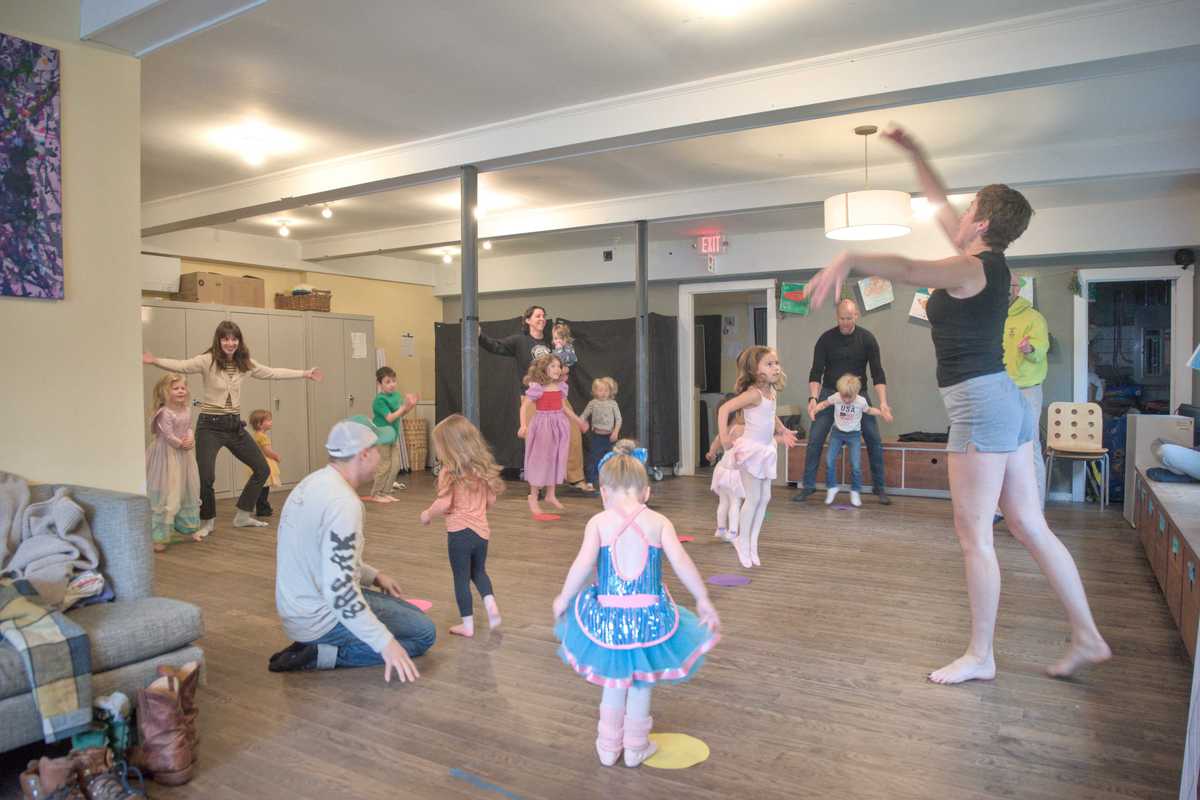
The cast of 'Once Upon a Mattress' at Sharon Playhouse.
Aly Morrissey

The cast of 'Once Upon a Mattress' at Sharon Playhouse.
In 2025, the pages of Compass tracked the steady hum of creativity across the Northwest Corner. Here’s a look at some of the highlights that shaped the year.
ART
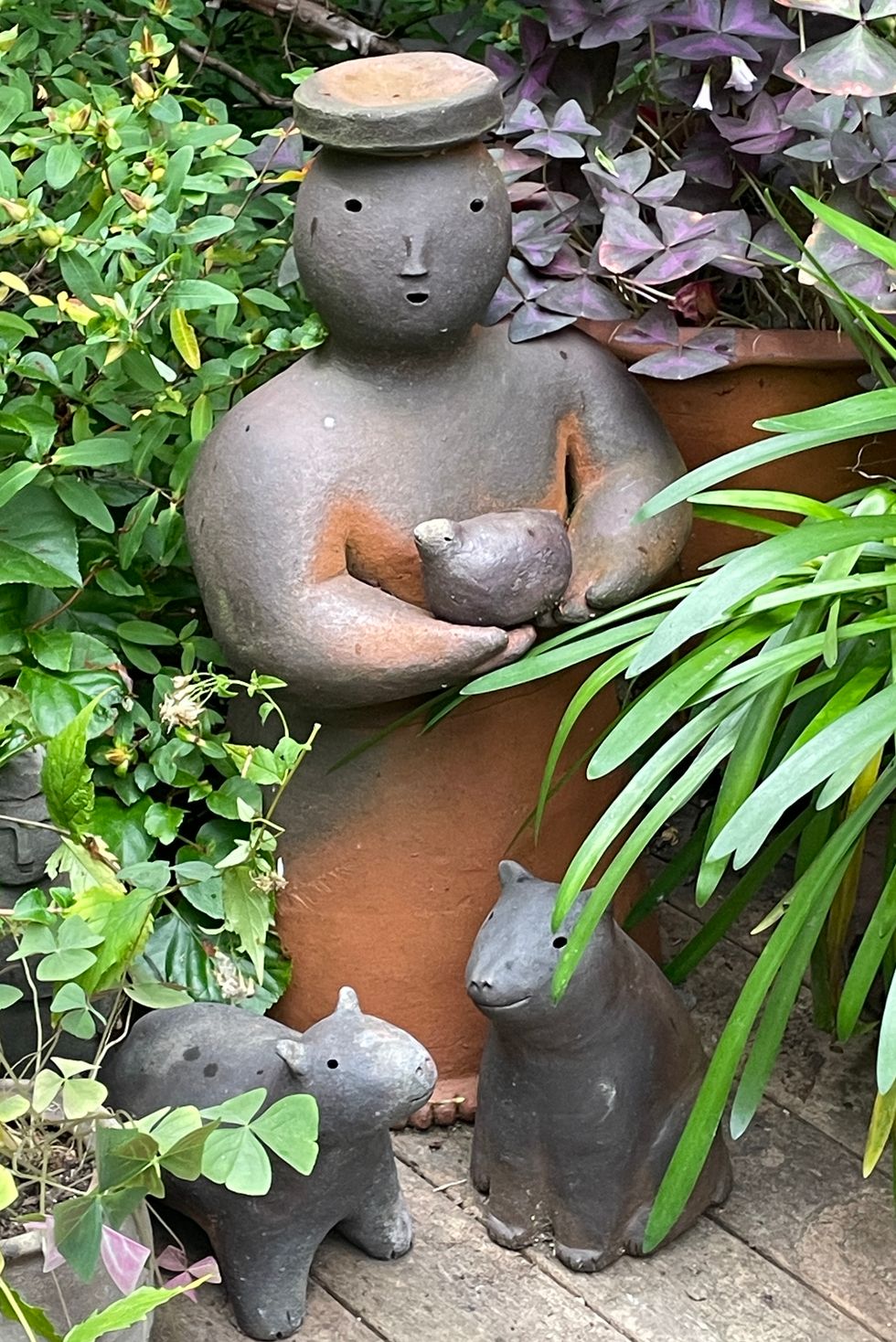
The Hotchkiss School marked 50 years of co-education with The Art of Joy Brown, a sweeping retrospective honoring the internationally celebrated sculptor. Opening Feb. 22 in the Tremaine Art Gallery, the exhibition traced Brown’s five-decade journey from her early pottery training in Japan to the large-scale bronze figures now installed around the world — and newly on the Hotchkiss campus.
Millbrook School hosted the first-ever Firefly student artist showcase in February, bringing together young artists and bird enthusiasts from schools across New York and Connecticut.
The David M. Hunt Library’s Art Wall continued to feature local artists, including Jon Kopita, who displayed a decade of his meticulous, repetitive hand-lettering exploring order and identity.
A collaboration between The Nutmeg Fudge Company, artist Gerald Incandela, and Saint John Paul the Great Academy resulted in a vibrant student-designed mural in Torrington.
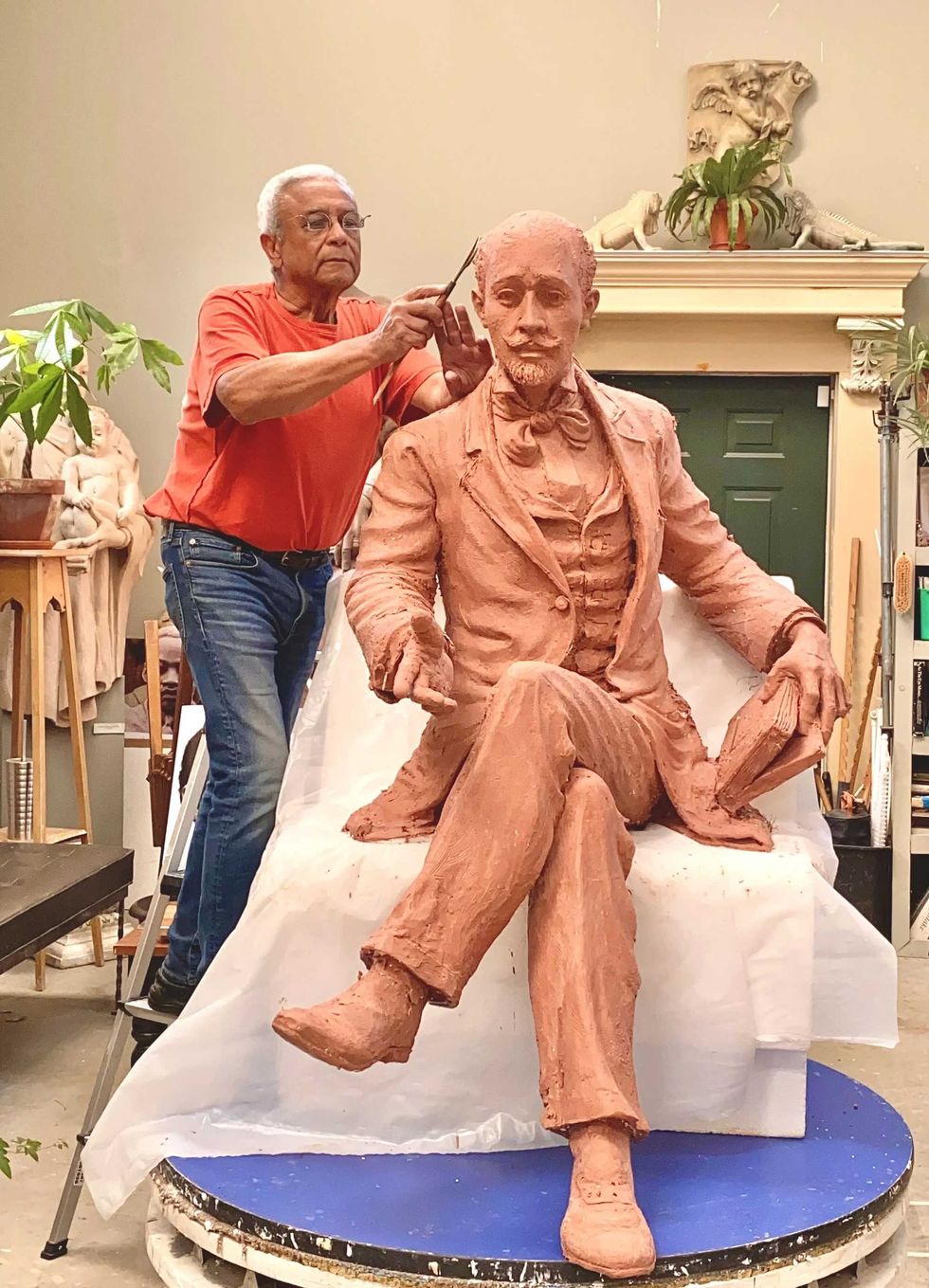
Great Barrington marked a major milestone this year with the unveiling of a life-sized bronze sculpture of W.E.B. Du Bois in front of the Mason Public Library. Created by National Sculpture Society honoree Richard Blake, the piece anchors a redesigned public plaza.
The Wassaic Project received a $100,000 multi-year operating grant from Foundations for Community Health and Amy Wynn stepped down Oct. 31 as the first executive director of the American Mural Project (AMP) in Winsted.
BOOKS
We welcomed new freelance writers Laurie Fendrich and Olivia Prager who covered the region’s robust literary scene. Highlights included Ann Temkin at Cornwall Library; Ruth Franklin at Congregation Beth David; Elias Weiss Friedman (AKA “The Dogist”) at Troutbeck; Gwen Strauss at the White Hart Speaker Series; and the return of the Haystack Book Festival in Norfolk.Books & Blooms celebrated its tenth anniversary in June with a two-day celebration of gardens, art and the rural beauty of Cornwall.
FILM
The Triplex in Great Barrington hosted screenings, festivals and conversations throughout the year, from a Bob Dylan biopic talkback with Seth Rogovoy to student screenings of “Selma,” benefit events and the launch of the Queer Cinema Club. The Stissing Center expanded film programming with a new projector and a short-film festival featuring local artists and the Moviehouse in Millerton continued its incredible programming.
Legendary civil rights activist Dolores Huerta sat down with The Journal in October in advance of the screening of “Dolores” in Norfolk, the documentary by Peter Bratt and executive producer Carlos Santana that presents an unflinching portrait of a woman whose voice, body and will shaped the political terrain of the United States.
MUSIC
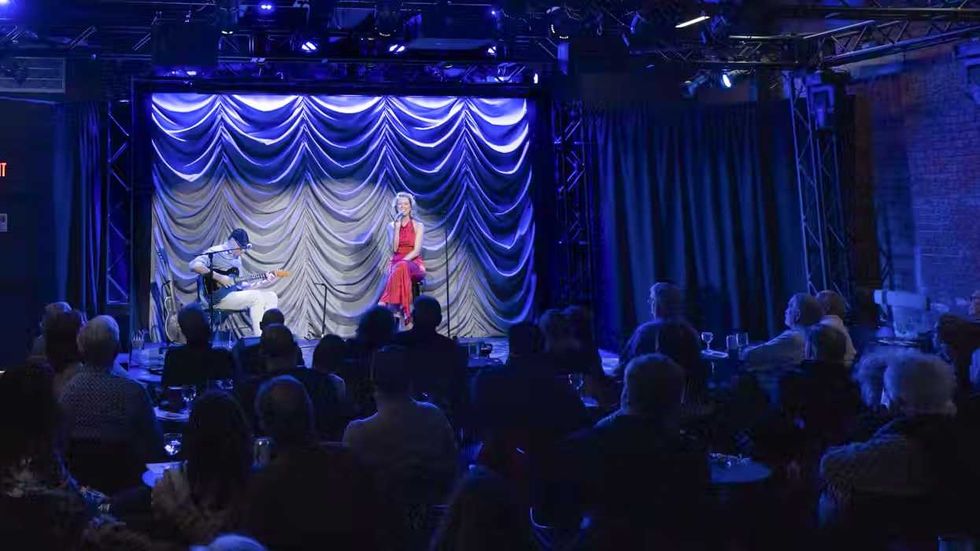
From brass bands and local musicians at street fairs and green spaces to classical and chamber music series presented by organizations from Music Mountain to Tanglewood, music was a staple of the Compass calendar.
The Twelve Moons Coffeehouse in Falls Village continues its once-a-month series that consists of a robust open mic followed by a featured performer.
The American Mural Project’s live music and Happy Hour Piano Series was also a monthly anchor that featured a multitude of styles of music.
The Indigo Room, a new performance space connected to The Mahaiwe in Great Barrington, opened in the beautifully restored historic firehouse next door, offering a smaller space for intimate performances. The Mahaiwe continued to delight with programming that included greats like Old Crow Medicine Show, Paquito D’Rivera, Natalie Merchant, Roseanne Cash and many more.
Crescendo, the award-winning organization that brings works from the Renaissance and Baroque periods to new life, launched its 22nd season with performances at Saint James Place in Great Barrington and Trinity Church in Lakeville.
Rufus Wainwright performed a benefit concert for Out for Dutchess at The Stissing Center.The beloved Race Brook Lodge in Sheffield hosted its final Fall Gratitude Festival before closing its storied doors.
COMMUNITY
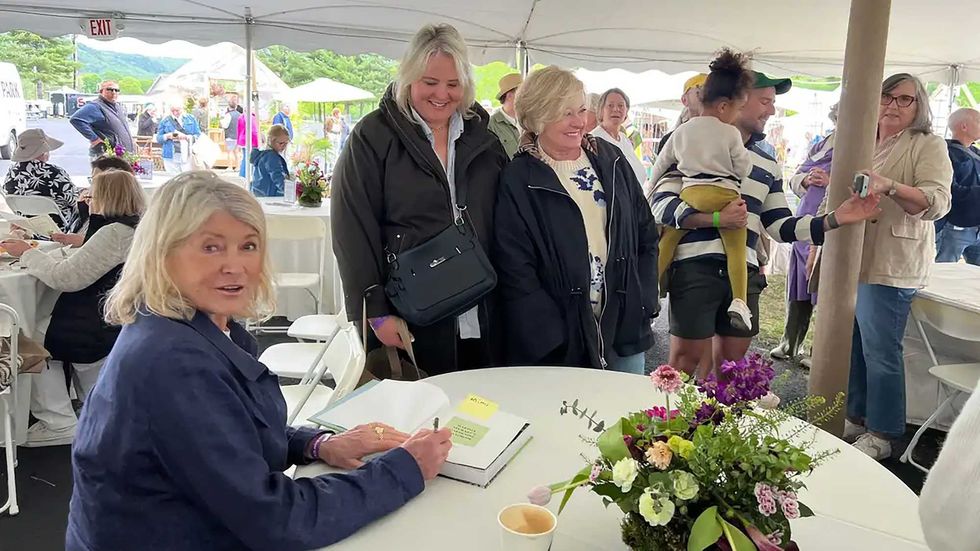
Trade Secrets celebrated its 25th anniversary with record crowds. The annual event, benefiting Project SAGE, featured over 50 vendors and special attractions like a signing of Martha Stewart’s gardening book, following a day of local garden tours.
Scenic bike routes were explored in these pages and Kerri Lee Mayland’s offerings on design are a delightful new feature. Dee Salomon’s column “The Ungardener” continues to inform and delight and community events such as the Farm Fall Block Party at Rock Steady Farm in Millerton kept readers connected to local farm life.
THEATER
The Sharon Playhouse delivered a lively season of classic musicals, sharp comedies and community-centered work. Highlights included “Million Dollar Quartet,” a popular run of “Annie,” A.R. Gurney’s “Sylvia” and a fall staging of Agatha Christie’s “The Mousetrap.” The Writers Playground Festival championed new short plays by local writers, while the YouthStage program mounted family favorites like “Once Upon a Mattress,” “Finding Nemo Jr.” and “101 Dalmatians Kids,” giving young performers steady opportunities onstage. The Playhouse also welcomed new managing director, Meghan Flanagan.
The Ancram Center for the Arts celebrated its 10th anniversary. Highlights included the “Real People Real Stories” series, the regional premiere of “Where the Mountain Meets the Sea,” and Plein Air Plays 3.0, which brought original short plays to surprise outdoor locations. The Center also advanced new work through its Play Lab Residency, featuring David Cale’s “Blue Cowboy” and “Framed,” a new musical by Ancram local Mary Murfitt with music by Murfitt and Pam Drews Phillips.
In May, Richard Maltby Jr.’s “About Time” opened at Goodspeed’s Terris Theatre. He spoke with us about the deeply personal revue, describing it as a meditation on aging, memory and the strange clarity of life’s “third act.”
The Stissing Center continued to expand its theatrical footprint in 2025, presenting a mix of classic drama, new work and intimate staged readings. Highlights included Theatre On the Road’s atmospheric “Dracula,” a summer run of the off-Broadway musical “Kafkaesque!,” and Tangent Theatre Company’s reading of Harold Pinter’s “Betrayal.”
Highlights of theater at Hotchkiss in 2025 included a spring premiere of “R.I.P. Lunch,” an original play by alumna Mallory Jane Weiss, and a lively fall production of the musical “Pippin.” Housatonic Valley Regional High School also had a strong theater year in 2025, highlighted by a spring production of “Urinetown” that earned statewide recognition, summer performances through the Grumbling Gryphons Theater Arts Camp, and student apprenticeships at Sharon Playhouse. We also welcomed new writers Annette Stover and Richard Feiner who have beautifully expanded our theater coverage.

Gary Dodson casting at dawn on the Salmon River in Pulaski, New York in late April. It was cold but it sure looked nice.
I was very optimistic as winter loosened its grip in the early part of 2025. I had a couple new rods to play with, my rotator cuff problem on my casting arm was resolved in a satisfactory manner, and I joined a private fishing club in the Catskills and was looking forward to exploring new water.
Some of the exploring and trying new things with new rods happened, but a lot of it did not. I blame Nature.
(Listening to anglers complain about the weather is as tedious as it gets, so feel free to skip the next bit.)
Just for laughs I plotted out the Housatonic flow from April 1 to Nov. 22 on the United States Geological Survey website. What I got back was an inverse bell curve, with high flows at the extremes and a long period of very low flows in between.
Amazingly, this corresponds to the rain, or lack thereof, between April 1 and Nov. 22. It’s just science.
So, looking back at the Tangled archives and my own hastily scribbled journal notes, I see that I started out when the snow and ice were still on the ground on the Blackberry in North Canaan and Macedonia Brook in Kent.
I do remember trying out a short rod, 6-feet 10-inches, from Zen Tenkara. I used it with two-fly rigs, including weighted flies, which should not work in theory, but it did in practice. The biggest problem was when a guy in the parking lot asked me what it was. I said, “It’s a Hachi” and the guy said, “Gesundheit.”

I had an interesting encounter with a couple of DEEP guys who were putting some brown trout fry in the Blackberry, since they had them to spare and were wondering what would happen. I suggested that they would get eaten up fairly quickly by the adult trout and they agreed but did it anyway.
The private water was a bust. There’s no other way to put it. I got there three times all year, and by the beginning of July the drought had settled in and the stream was nothing but a trickle.
I’m going to reup because I enjoyed meeting my fellow club members and the nice landowners who allow us to barge around their properties This year I’m going to hit it often and hard in May and June, circumstances allowing.
My Catskill fishing buddy Gary Dodson has got the big fish bug bad. We went back to Pulaski in late April and I caught a steelhead using a decadent and depraved method called “plugging.” I’m glad to have done it once and feel zero need to do it again.
I’ve had an 11-foot-4 weight switch rod kicking around for a few years. I never knew how to rig it up. In the two-handed rod world, the line weight designation means diddly. It’s all about grains and different tips and all this stuff that I just don’t want to learn.
Since Gary was already down in that rabbit hole I just gave him the rod, a big inexpensive Redington reel and asked him to get the appropriate lines and tips and set it up for me. Which he did, for about $150.
And I got to deploy it on the water precisely once in September before…
My right hip got the Gang Gong from the medical profession.
Yep. By the time this is published, I will have had my new right hip for about a month.
At this rate I’m going to be about 40% after-market parts.
So the entire autumn fishing routine, normally a happy and productive time, was shot to hell. My hip worked just enough to let me know that the kind of aggressive and active fishing I like to do was out of the question.
So apart from fiddling around in a half-hearted way with the fall stockies on the Blackberry in October, I spent the fall and early winter sitting around watching YouTube fish videos and plotting and scheming for all the excellent fishing adventures I will have with my new right hip.
The unmistakable V-shape of a beaver-hewn tree trunk.
Long before we moved to Litchfield County, there had been a flood on the property caused by the breakup of a beaver dam miles away from the house, near the top of the state forest on Sharon Mountain. There, beavers have a pond whose dam usually slows the run of a stream that journeys down the mountain, under Route 7, through our property and empties into the Housatonic River. Who knows what other damage the water did on its way down from the broken dam, but the resulting flooding left a watermark about knee-high on the inside of our old cottage, now painted over.
What do beavers have to do with ungardening? At its core, ungardening is about restoring native habitats and increasing the diversity of native plants and animals in an ecosystem — aka biodiversity — which we must accomplish because, frankly, our lives depend on it.
For all their practical nuisance to humans, beavers are central to maintaining ecosystems across a large portion of the U.S. They are considered a keystone species: As with the keystone in an arch, an ecosystem will fall apart without its support. In the 18th and 19th centuries, beavers were killed nearly to extinction by trappers who sold their fur. Their return is helping to repair the areas surrounding their habitats. The homes they cleverly engineer filter pollutants, boost plant and animal biodiversity and create resilience to climate change — and they do this quickly.
Most negative human experiences with beavers result from blocked culverts and dammed streams that create the beavers’ ideal pool-like environment. This causes flooding upstream of the blockage and drought downstream.
“We need to find ways to live with beavers,” said Sandy Carlson, a teacher and poet who recently completed the Beaver Institute’s BeaverCorps Wetland Professional training in Southampton, Massachusetts.
“When beavers hear the trickle of water flowing out from a pond or stream, it triggers their instinct to block this release by building a dam. This insight led to a rather low-tech innovation that has allowed beavers and humans to more happily coexist. Cleverly called the Beaver Deceiver, the device lowers the water level of the pond without triggering the beavers’ water-trickle instinct.”
The Beaver Deceiver is a 6-foot-diameter wire mesh cage protecting one open side of a PVC pipe. It is installed in the deepest part of the pond, with the pipe running over the beaver dam — where it can be camouflaged — and into the water on the other side. Water is drawn out of the pond, lowering the water level upstream while maintaining flow downstream.
Carlson has apprenticed with Diane Honer of Beaver & Wildlife Solutions, based in Chester, Connecticut, performing site assessments and installing pond-leveler devices so beavers and humans can coexist. “People are happy because the water level is low, and the beaver thinks the water level is fine,” she said.
Last year, a family of beavers moved in nearby, building a low-profile home against the side of a large tree trunk that had fallen into a relatively deep part of the Housatonic. This created a small, pond-like area on the downriver side of the trunk.
I wasn’t aware of these creatures until one day, while walking along the river, I stopped in my tracks. Like one of those puzzles where you’re meant to spot the differences between two images, something was missing. A weeping willow we had planted a decade earlier, flourishing on the riverbank, had disappeared from view. Up close, the unmistakable V-shape of a beaver-hewn trunk was almost cartoonlike — yet not at all funny. That tree was one of the few nonnative species we planted, and I had imagined it fulfilling the romantic “leaf cascade over the water” look willows do so well.
My son told me beavers seek out willow for its salicylic acid content — the active ingredient in aspirin. I imagine they had a drug-addled willow fest at our expense.
The solution to this particular beaver problem is even more low-tech than the Beaver Deceiver: installing wire mesh or a plastic cage around trees you want to protect from beaver teeth. It also helps to know which woods beavers prefer. Their favorites include aspen, poplar, willow, alder, birch and maple. Protect those first, before hardwoods and conifers.
Let’s welcome the beaver and its ecosystem-restoration superpowers.
Dee Salomon ‘ungardens’ in Litchfield County.
What a rotten decision to terminate the contract with Northern Dutchess Paramedic (NDP) and to replace it with a single paramedic assisted by an EMT.
When I was an EMT with Salisbury, beginning in 1985, we were an advanced life support (ALS) service, and we had an ALS member on each team who could start IVs, use MAST trousers and, I believe, intubate.
These members were available on each shift but did not come out for calls where they were not needed.However, the state of Connecticut, not understanding the needs and abilities of our area, sent down a decree that we had to have an ALS person respond to every call even if it was a simple injury with no need for advanced life support.
So, due to a shortage of people who wanted to take the advanced EMT-I training, we were forced to give up our EMT-I service and just be a basic life support service with NDP coming out for an increasing number of calls.
The current plan is risible for its inadequacy, a patently obvious cost-shaving ploy, that will strain volunteer services and endanger patients. I have no idea if it is even a possibility for local volunteer services to resume ALS even if they can staff the calls adequately.
With the growing number of talented, smart people coming into the area, many of whom actually want to do something good around here, I wonder if the local volunteer services couldn’t train enough ALS personnel so that we could once again be more than just BLS services. Otherwise, I foresee a lot of needless morbidity and mortality arising from this ill-considered decision.
Marietta Whittlesey
Gallatin
Recent public discussion regarding paramedic services in the Sharon community has understandably raised concerns. As such, we welcome the opportunity to clarify the facts and, more importantly, to reassure residents that emergency medical services in Sharon are not only continuing but strengthening.
Sharon Hospital is now part of Northwell Health, the largest health system in the Northeast, with extensive emergency transport and EMS capabilities across western Connecticut and the Hudson Valley. As part of this system, Sharon Hospital is supported by a licensed and experienced paramedic program already operating in the Danbury and New Milford region, with the ability to extend those services to appropriately support the Sharon community.
Effective January 1, 2026, Sharon Hospital will ensure 24/7 emergency medical coverage for the community. This includes support for emergency response, interfacility transport and critical care needs, backed by the depth, redundancy, and clinical oversight of a larger health system. These capabilities are not theoretical – they are already in place and functioning successfully across our region.
Some commentary has focused on the hospital’s decision not to continue sponsoring Northern Dutchess Paramedics (NDP). It is important to note that NDP was acquired in October by Empress Ambulance Service, a private, for-profit, out-of-state organization. We recognize that the change in sponsorship may disrupt NDP’s business interests in the Sharon community, yet it does not represent a loss of emergency medical services for residents who rely on us for care.We want to be clear: no EMS services are being eliminated, and no gaps in coverage are anticipated. Our responsibility is to ensure safe, reliable, and compliant emergency care for our patients and our community, and our current plan does exactly that.
Change can bring uncertainty, and we recognize the importance of open communication. Sharon Hospital remains committed to transparency, collaboration with local EMS partners, and continued engagement with community leaders and residents. We invite you to a Town Hall on Thursday, January 8th at 5-6pm in the Cafeteria at Sharon Hospital to answer any questions you may have. Please RSVP to Griffin.Cooper@nuvancehealth.org.
Our focus remains where it belongs: on delivering high-quality, dependable emergency medical care to the people of Sharon and surrounding towns, today and into the future.
Christina McCulloch
President,
Sharon Hospital