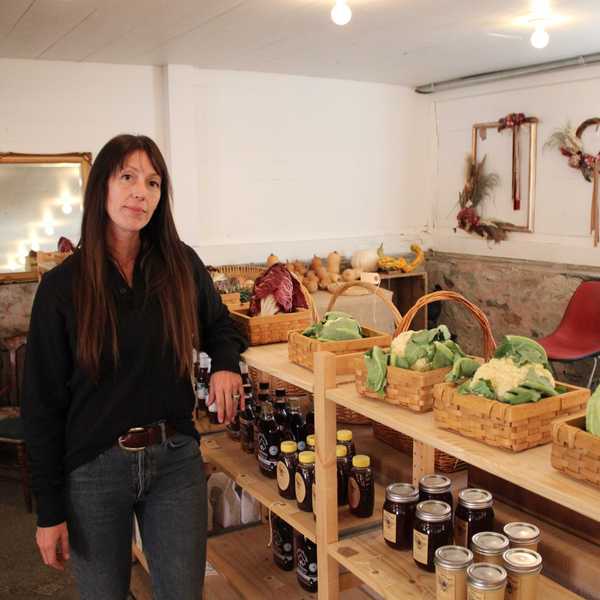
MILLBROOK — A private community-supported agriculture operation can continue after garnering support from Washington Planning Board members.
Mindy Yang and William Harris, the married duo behind Silverbrook Manor on Route 44 west of Millbrook, appeared before the board on Tuesday, June 2, after they received a letter from the town’s zoning enforcement officer noting complaints that the property’s use was noncompliant.
Harris explained that the letter from ZEO Jonathan Ialongo advised the couple to seek a special use permit for their farm, requiring an application to the Planning Board.
Yang and Harris founded a membership-based CSA on a farm property near the intersection of Route 44 and Route 82 in Washington after purchasing the property in 2021. The pair described the venture as an education-focused CSA, where members may join or lead educational hikes, harvesting fruits and vegetables or foraging for wild food.
“We really advocate on human experience and connection,” Yang said. “Especially now with AI, it’s about IRL.”
Following Ialongo’s advice, Harris and Yang applied for a special use permit to run an educational club at their farm property.
But Planning Board members said such a permit was unnecessary. Planning Board Chair Doug Giles argued that Silverbrook Manor doesn’t fit within the definition of an educational institution or a private club under town zoning code.
Giles said that Silverbrook Manor’s operation was actually permitted by right under sections of the town’s zoning code that address agricultural production and under New York State’s Agriculture and Markets law.
“The agricultural part of it, the CSA, the nature walks — all of those are pretty much permitted by right,” Giles said.
Board members determined — with the advice of the board’s attorneys — that a special use permit was not necessary. They advised Harris and Yang that they may continue operations but should seek an official determination letter from the zoning enforcement officer.
Glamping, bed and breakfast applications also cause confusion
Two other discussions — one a pre-application for a “glamping” business and the other for a bed and breakfast — also caused some confusion among board members.
Engineer Jim Teed presented plans for a glamping setup comprising two seasonal, impermanent yurts and a permanent a-frame house on the Millbrook Beef & Dairy farm property at the intersection of Shunpike and Route 44.
On behalf of property owner David Baldwin, Teed is preparing plans to eventually pursue a special use permit to operate a private camp. He said the yurts will consist of a permanent concrete pad that will hold impermanent tents during the summer months. The a-frame will serve a dual purpose as a check-in location and an additional rental unit for campers, Teed said.
The confusion stemmed from the appropriate definition under the town’s zoning code. Planning Board consultant Aaron Werner found a provision during the meeting relating to “glamping” that he said seemed to apply and regulate yurts, but not the permanent a-frame.
Werner continued, explaining the applicant would likely need permits for accessory dwellings in addition to the campground, and that wetlands on the property increase the complexity of the designs and what information would need to be included.
“I don’t think this board has seen an application like this in recent years,” Werner said. “We’re going to be looking at potentially many different approvals that will need to take place.”
The bed and breakfast application came at the end of the meeting, prompting yet another debate over definitions in the town’s zoning code.
James Meagher applied to convert his parents’ former home on Welwyn Road into a bed and breakfast, seeking to generate revenue from the home to offset the cost of property taxes.
Meagher explained he did not primarily live at the residence, spending weekdays in New York City and weekends in Millbrook. That revelation, along with the fact that Meagher’s anticipated business partner and chosen innkeeper at the proposed B&B, Emily Hay, was the person who submitted the application, prompted Planning Board members to inform Meagher that his application did not fit within the town’s B&B regulations.
Washington zoning code requires a bed and breakfast to be the owner’s primary residence, and requires applicants for a bed and breakfast special use permit to be the owner of the property. Because Meagher does not live at the home and the application was actually submitted under Hay’s name, board members suggested Meagher should instead seek a short-term rental permit from Town Hall instead.
Under the town’s short-term rental law, property owners must reside in the primary structure for at least 100 days per year to qualify for a permit.
“I don’t mind doing the short-term rental,” Meagher said. “We were under the impression this might be more straightforward.”




 Farm & Friends 2025.Provided

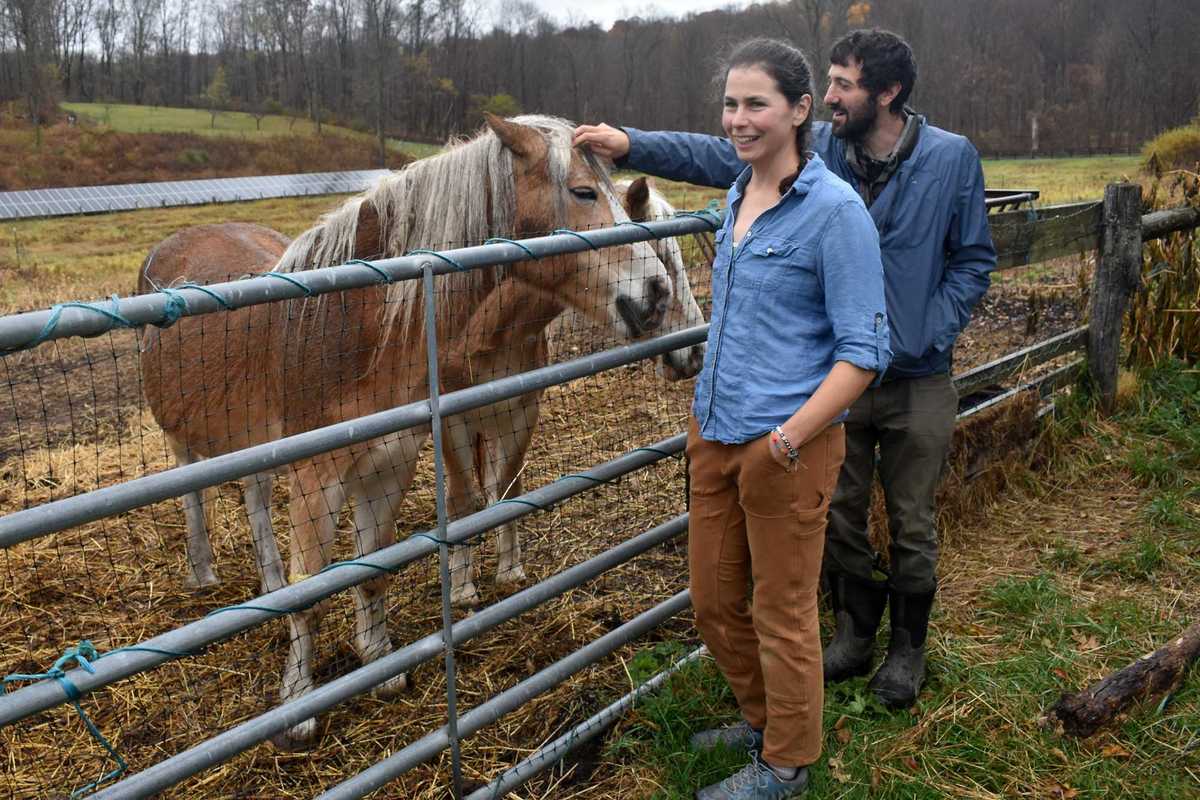
 Mark Stonehill and Miriam Goler with their winter greens at Full Circus Farm in Pine Plains. L. Tomaino