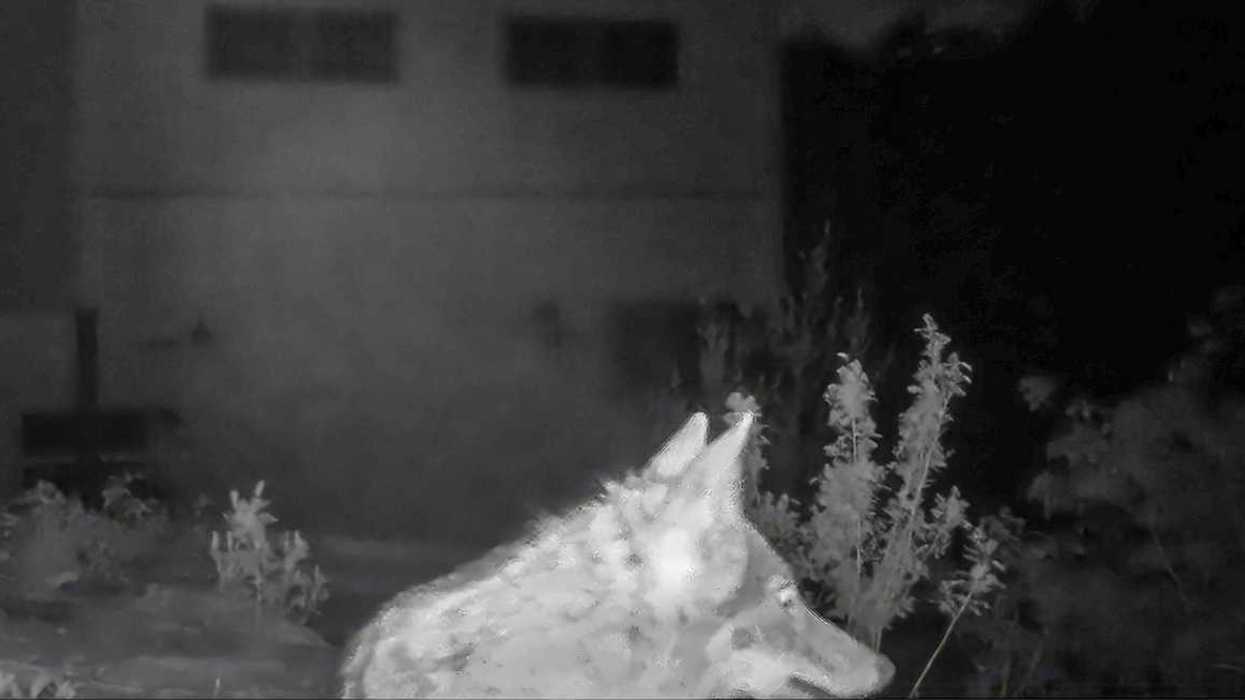
Our compost pile has always been a community gathering spot. It’s where messages are exchanged, meals shared, habits and idiosyncrasies of close neighbors observed and celebrated.
Every day, except when the snow is deep enough to fall into our boot tops, we trudge out to a spot at the edge of the woods behind our house to deposit peels, cores, outer leaves and trimmed ends remaining from our cooking. Every year, we turn it and spread the nutrient-rich soil it produces, feeding vegetable beds, bushes and trees.
We still have much to learn about gardening and caring for multi-acre native gardens with snacks and habitat for local wildlife. For example, composted surplus lettuce seeds produce small circular salads surrounding every tree and bush on the property. Fall-composted tomatillos produce so many volunteer plants around the yard we could open a salsa stand. That’s the flora.
On the fauna front, observing what becomes of our composted items is an ongoing source of fascination. Watermelon rinds are picked clean over several days, showing progressively smaller bite marks, with probably the chipmunks having to settle for whatever little hot pink flesh the bigger biters leave behind.
Eggshells are always worth pushing around during the night, on the off chance they are not completely empty.Lychees, though exotic, are delectable, and portable enough to take back to a den or nest. Grapes, it goes without saying. A past-its-sell-by-date block of firm tofu was snapped up without a crumb remaining. (Probably by the same individuals who dug up every soybean I planted before they could sprout.)
I have read the articles that advise against feeding wild animals. I know the delicate line we’re treading but don’t believe a few food scraps will fool our many resident bears into thinking they can count on us for a regular dinner or make them want to get closer to us in any way.
So it’s extremely rare that I put animal protein out to compost —less than once a year. But I had a few ounces left of line-caught, Alaskan slow-roasted salmon that we were not going to come back to, and I could not justify denying a less-fussy eater the enjoyment of it. Plus, I hate to waste food.
Out of consideration, I kept the salmon separate from the daily remains from our French press, assuming that, given a choice, only humans or an Asian palm civet would prefer to have their salmon served with coffee grounds. To that end, I deposited the salmon a few feet away from the big pile, elevated on its own tree stump. I must admit, it looked tempting. And it made me wonder if the cliché that we eat with our eyes first applies to other creatures as well.
More-than-human beings have very few options for communicating with people, since we are so dense and oblivious to their signals. Lacking opposable thumbs, pens and pencils are out of the question. When they want to comment negatively on something, they can’t ghost us (the preferred method of office colleagues, in my experience), since we wouldn’t notice, and wild animals pretty much always want nothing to do with us anyway. Their vocalizing is lost on us because we’re too insensitive to interpret what they’re saying. That leaves them with biting, which gets our attention but is impractical most of the time. And the turd, a unit of communication that seems to hold meaning in any language.
For example, our first dog, Truman, lived with us in the Back Bay area of Boston. Every day on the Charles River Esplanade he met other dogs of myriad sizes and breeds. The protocol was inviolate. Sniff butts, take turns peeing on a nearby tree, be friends. Following this protocol demonstrated goodwill and confirmation of shared values for peace and freedom among the pack. Democracy in action. One day, a generously-haired Pomeranian (or something) broke protocol. He sniffed butt and then pooped. Truman was incensed and revealed a side of his personality that was new to us. He growled and lunged at the offender. But more interestingly, he developed a hatred for bushy dogs that he continued to nurture for the rest of his life. Just seeing a bushy dog across the street set him off. One bad experience became a hard-to-shake belief about an entire population.
The morning after my slow-roasted salmon offering, there was nothing but a fish oil stain where the salmon had sat on the stump’s pale flesh. But in its place, carefully placed, was a turd.
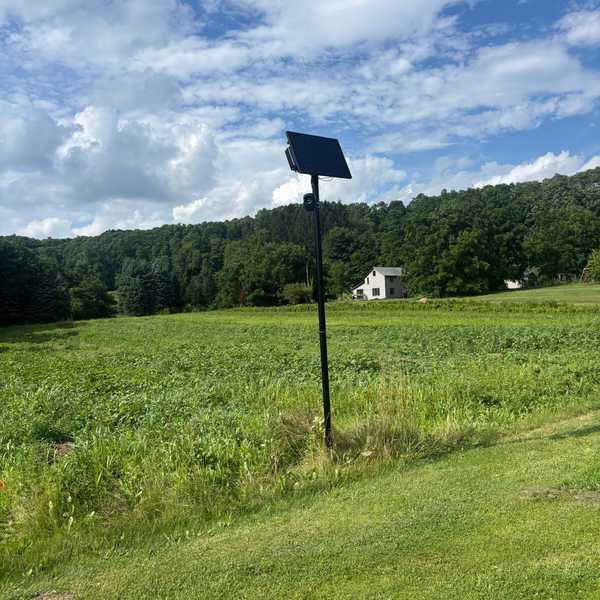
I deduced that the response came from a member of the fox family that lives just up the hill. I have caught them on trail cameras. And, I know they would not likely be sharing turf with the coyotes who live down near the wetlands. Coyotes are about the only other locals from whom the deposit size would fit, as it were.
But what did it mean? “Thank you”? “Here is my review.” “Hey, from now on this is my stump?” “ I was so excited to find this I couldn’t control myself?”
I have no doubt the fox knew we were having a conversation. And that the fox’s understanding was much more nuanced than my own limited grasp of information. My best guess is that after I said, “Here’s some salmon,” he said, “I was here, this matters, this is mine.” I put out a piece of fish, he gave it meaning and place, communicating to his entire skulk about status, territory, health, relationships and opportunity.
As I’ve been working on this essay, a good friend sent me links to several articles in today’s Financial Times, principally on why sustainability and concern for the environment have fallen out of fashion.
Every species is better than we are at reading the signs.
Cheryl Heller is a designer, educator and business strategist who pioneered the field of social design and founded the first social design MFA program at the School of Visual Arts. She lives in Norfolk.

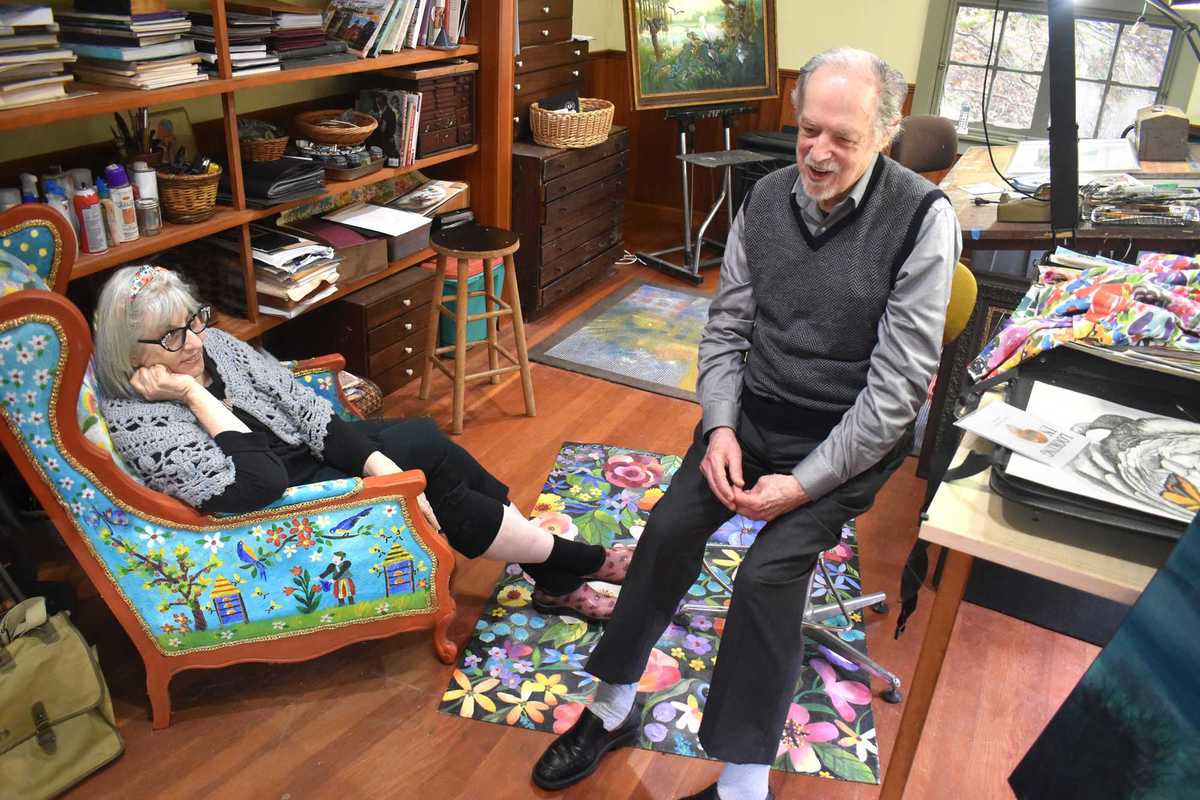
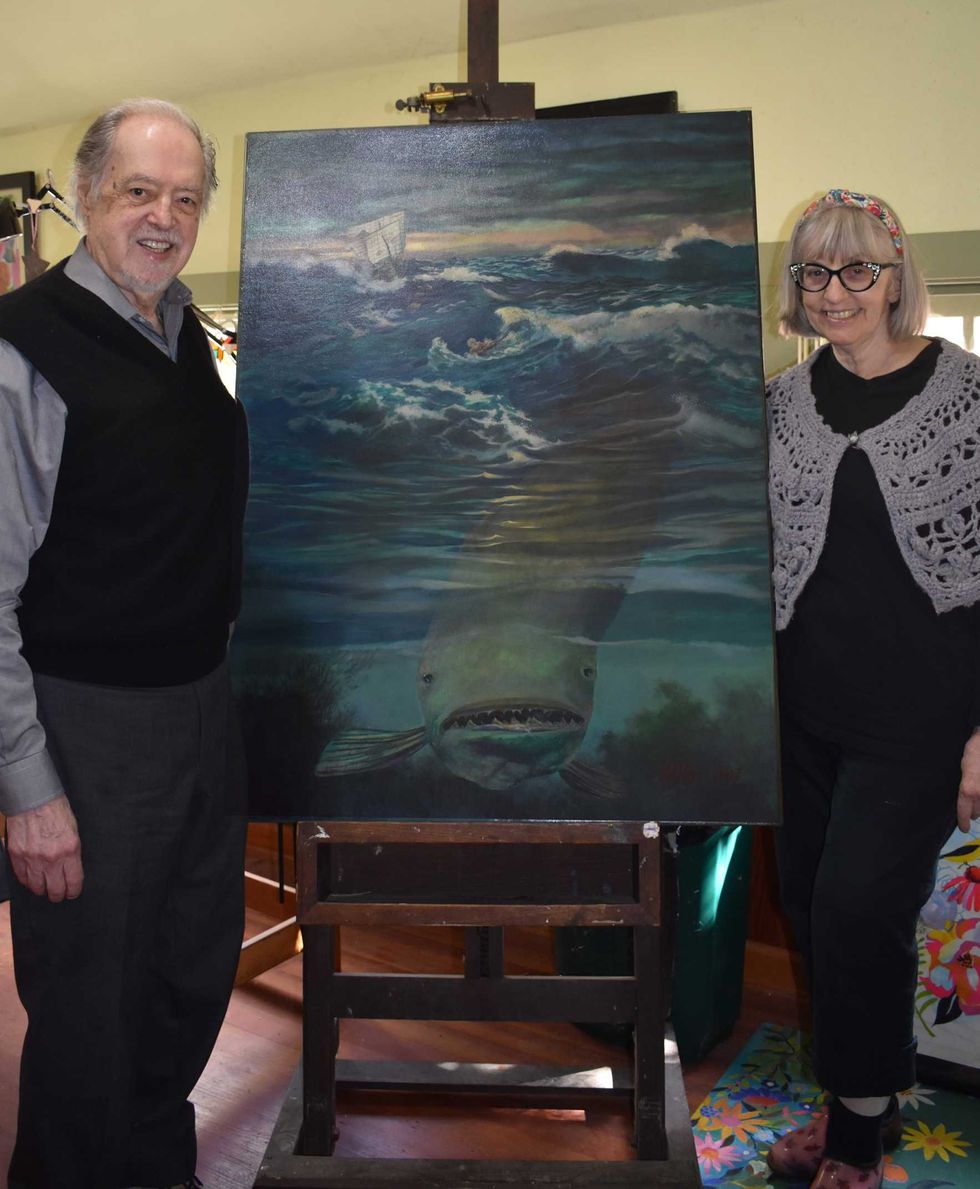 Justine and Victor Valla in their studio with a painting of Victor’s,”Jonah and the Whale.” Robin Roraback