Taiga brings Siberian-inspired dining to Hudson

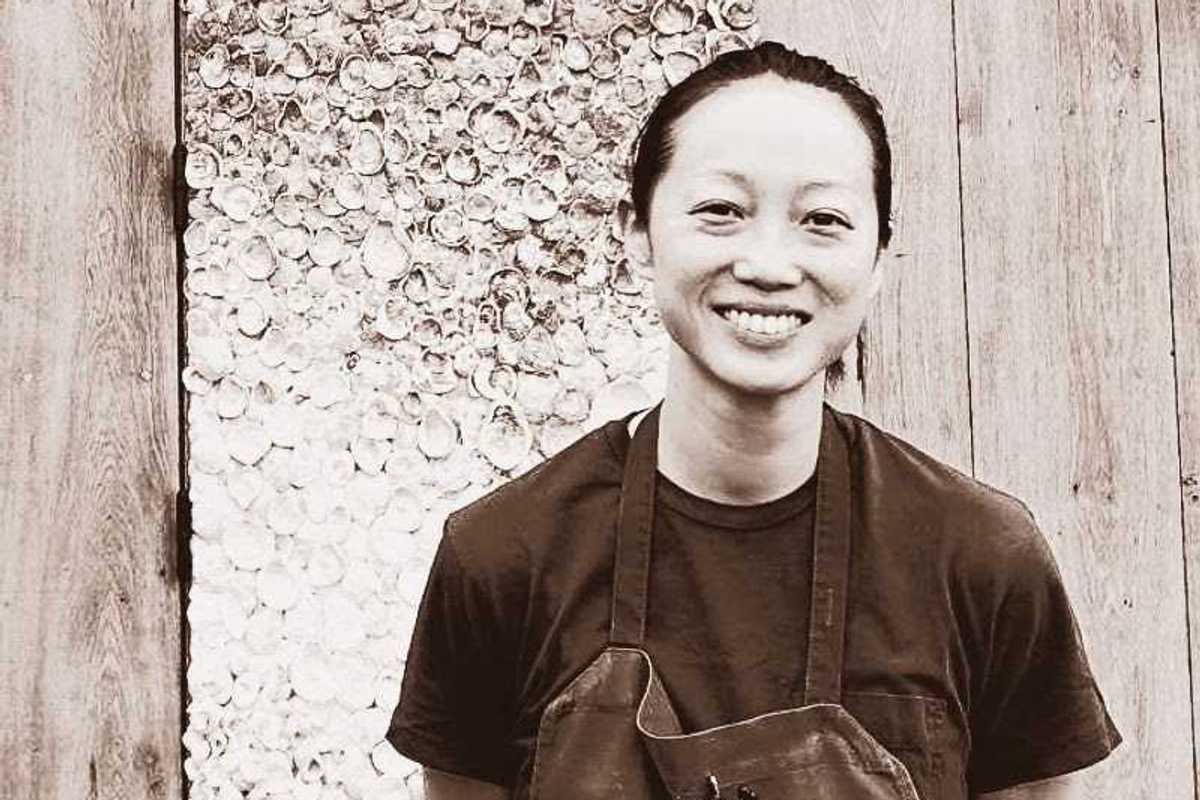
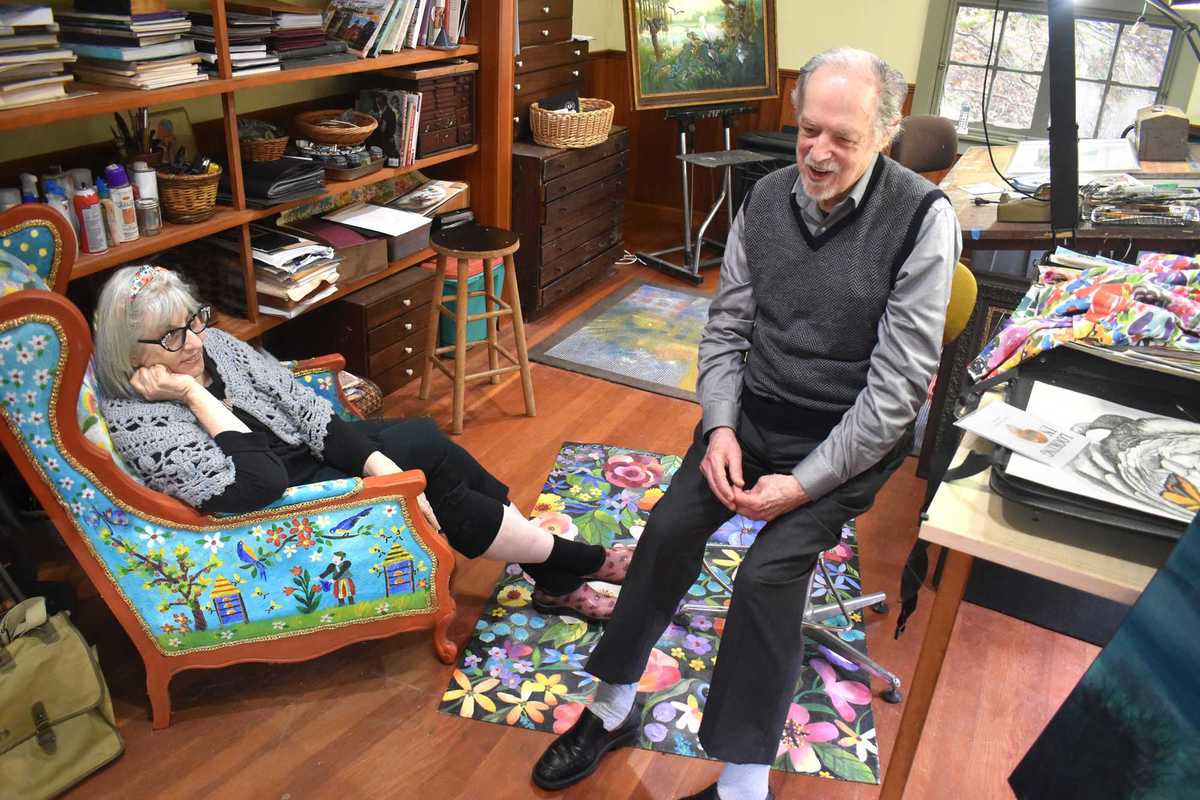
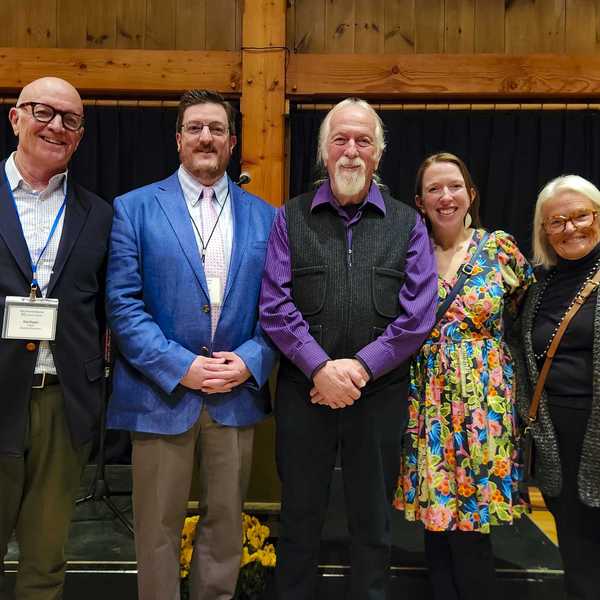
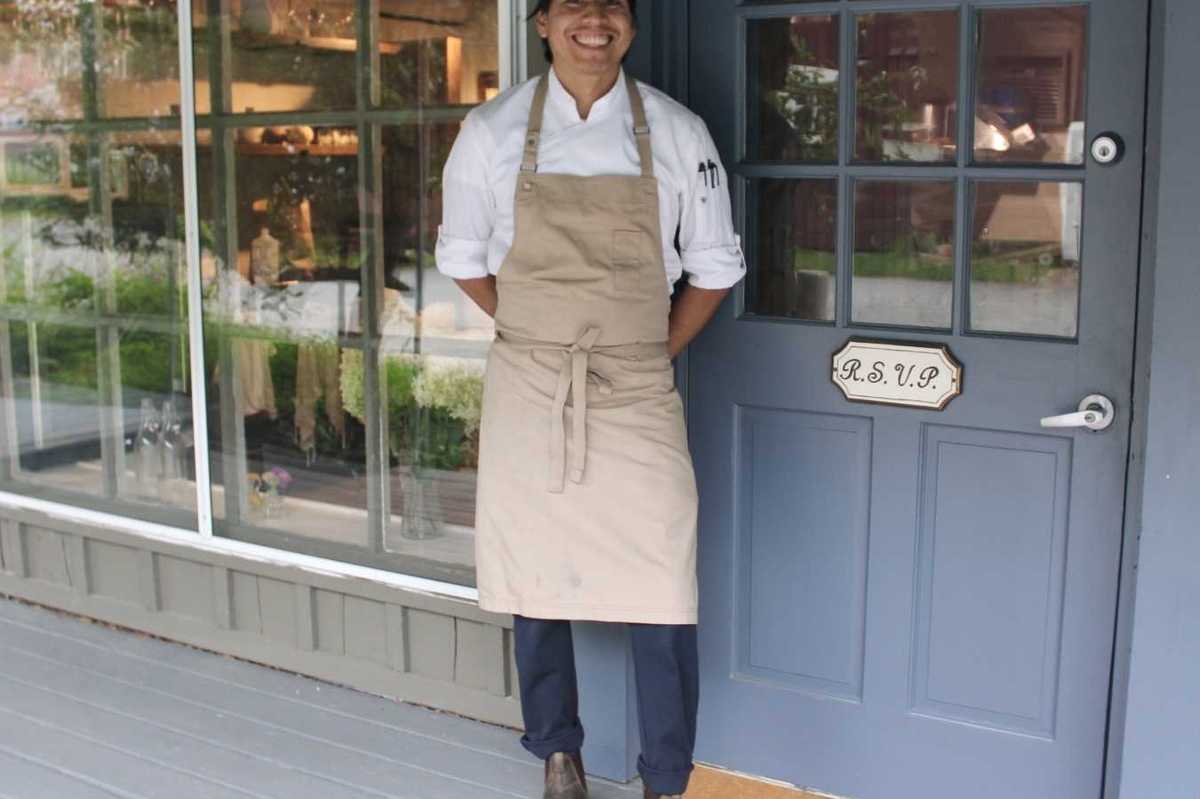
Vlad Larvin, founder and chef of Taiga.
Provided


Vlad Larvin, founder and chef of Taiga.
We never wanted Taiga to feel like a traditional restaurant. We wanted it to feel emotional, immersive and deeply personal — almost like stepping into another world for a few hours.
— Vlad Larvin
Walking into Taiga in Hudson for the first time did not feel like walking into a restaurant — it felt like stepping into a memory. As a Russian immigrant who grew up between cultures, I did not expect to find a place that evokes such a specific emotional response, both familiar and cinematic. Candlelight flickered against dark wood and vintage wallpaper while old Soviet-era music played softly in the background. The scent of herbs, smoke, tea and fresh blini filled the air — at once unfamiliar and deeply nostalgic. It became clear almost immediately why people speak about Taiga as more than simply a place to eat.
What makes Taiga unusual is that the food is only part of the experience. The restaurant was created by Vlad Larvin and his partner, Waldemar Sirko. Larvin, originally from Biysk, a small town in Siberia’s Altai region, worked in photography and fashion design before opening Taiga — fields that continue to shape every part of the restaurant today. Every detail — the lighting, photography, textures, music, pacing of the evening and even the scent in the air — feels intentionally designed to create emotion and atmosphere, not just visual style.
“We never wanted Taiga to feel like a traditional restaurant,” Larvin said. “We wanted it to feel emotional, immersive and deeply personal — almost like stepping into another world for a few hours.” That philosophy becomes immediately apparent the moment dinner begins.
Nearly everything at Taiga is made from scratch by Larvin, from delicate handmade dumplings to traditional blini and seasonal dishes inspired by Russian, Slavic and Central Asian influences. The menu changes frequently and reflects Larvin’s Siberian upbringing near Kazakhstan and Mongolia, where food culture naturally blended European and Asian traditions. Many ingredients are sourced locally from Hudson Valley farms, while certain teas, herbs, honey and spices come directly from the Altai region of Siberia — creating a menu that feels simultaneously rooted in two different worlds.
As someone who grew up around Russian food, I expected familiarity. What surprised me was the emotional accuracy of the experience. The dishes had the warmth and intimacy of home cooking while still feeling refined and modern. Larvin credits his grandmother, who taught him to cook from a young age, with instilling an emotional foundation around food. “In our culture, food was never just food,” he said. “It was love, care, generosity, conversation and connection.” That idea seems to define the entire atmosphere of Taiga.
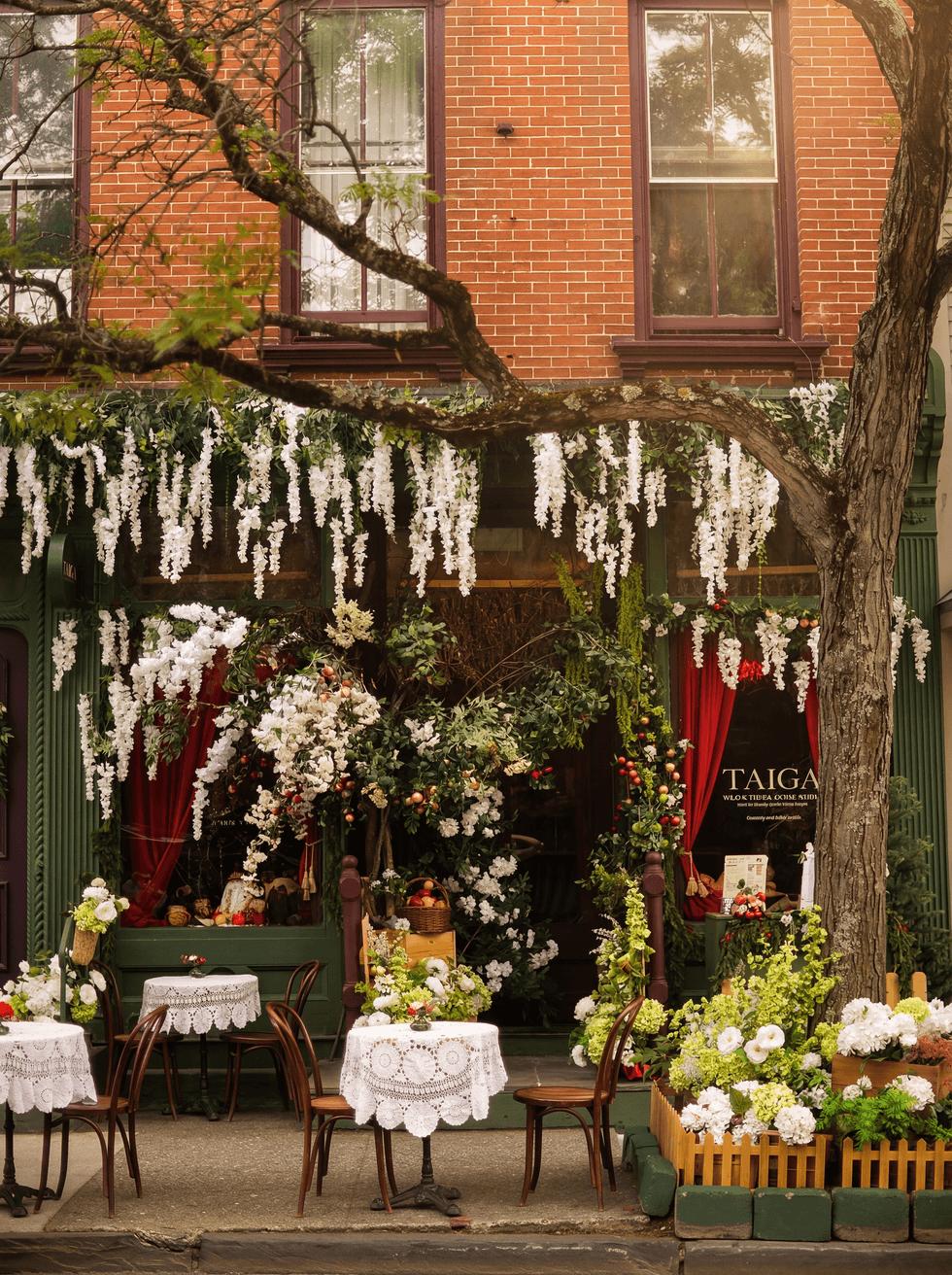
Unlike many restaurants designed for quick turnover, Taiga encourages people to slow down. Tables glow under candlelight while guests linger for hours over wine, conversation and shared dishes. The restaurant’s Thursday movie nights further deepen that atmosphere, transforming the dining room into what Larvin describes as a “candlelit cinema,” where carefully selected American, European and Russian films play softly in the background. The effect is surprisingly transporting.
At one point during my visit, I looked around the room and realized almost nobody was looking at their phones. People were talking slowly, laughing, sharing plates and leaning into conversations. That sense of emotional presence is precisely what Larvin hoped to create.
“We want people to slow down, disconnect from the outside world and feel warmth, comfort, curiosity and connection,” he said. “Ideally, dinner at Taiga feels less like going to a restaurant and more like being invited into someone’s home late at night.”
Much of the restaurant itself was restored and designed personally by Larvin and Sirko. Vintage furniture, antique objects and much of the photography throughout the space were collected over years of travel or created by Larvin himself.
For many Americans unfamiliar with Russian or Eastern European culture, Taiga offers an introduction that feels intimate rather than stereotypical. But for Russian-speaking visitors, the experience can feel unexpectedly emotional.
There is something moving about hearing familiar music while eating handmade dumplings in a candlelit room in the Hudson Valley. Something about it collapses distance. For a few hours, Hudson felt connected to another world entirely — one built around hospitality, memory and gathering around a table. And perhaps that is what makes Taiga so compelling. It is not simply serving food. It is creating atmosphere, emotion and human connection in a time when many people seem desperately hungry for exactly that.
Taiga is located at 119 Warren St., Hudson. For menus and reservations, visit
taigarestaurant.com
Millerton News
Let Us Vote for We the People
Now is the time that tries our souls. As we celebrate our Declaration of Independence in 1776, let us commit ourselves to the ideals declared 250 years ago by voting for We the People and our Common Good and by declaring our independence from the current wannabe-king. Let us campaign and vote
FOR the full promise of our Declaration of Independence;
FOR equality and the rights to Life, Liberty, and Pursuit of Happiness of all people of all races, colors, faiths, genders, and ethnic origins;
FOR government of the people, by the people, for the people, NOT government of the rich, by the privileged, for the select few;
FOR our communities and the Common Good in our cities, suburbs, and rural countryside, including affordable healthcare, quality schools and colleges, food security, libraries, local police, fire protection, disaster relief, postal service, transportation and communications infrastructure;
FOR the rule of law, freedom of the press, and academic freedom;
FOR fair taxation of all, NOT tax breaks for the rich;
FOR affordable food, housing, and drugs;
FOR health regulations based on science;
FOR peace, NOT capricious wars of choice;
FOR performance of solemn treaty obligations, NOT whimsical repudiation;
FOR professional diplomats and scientists to conduct international negotiations, NOT amateur in-laws and business friends;
FOR legislation prohibiting payouts to convicted criminals from an “anti-weaponization” settlement fund;
FOR sensible tariffs, NOT tariff yo-yo;
FOR ethics and truth, NOT corruption and falsehoods;
FOR intelligent modesty, NOT dumb arrogance;
FOR responsible political parties, NOT personal cults;
FOR developing and regulating AI to be positive and safe for society, NOT a threat to civilization;
FOR humane public administration of detention centers and prisons, NOT private profiteering and cost cutting through inhumane treatment;
FOR legislation to remove presidential immunity from criminal prosecution;
FOR legislation to prohibit portraits of living persons on passports, currency, and securities and to prohibit monuments to and statues and posters of living current and former presidents in any location other than a presidential library;
FOR the integration of legal immigrants into American society, NOT deportation;
FOR prohibitions on members of Congress from trading securities and on government officials from using inside information for personal gain;
FOR legislation to require IRS audit of the tax returns of the president, his immediate family, and their businesses;
FOR a well-trained and fully funded military loyal to the Constitution and the people, not to any individual;
FOR limiting the use of the military to operations outside the country which are authorized by Congress, NOT for using the military for domestic control of the people or interference with elections;
FOR the support of veterans and their families;
FOR funding public radio and television;
FOR public monuments to celebrate our values and ideals, NOT gaudy personal vanity projects;
FOR protecting our natural resources, environment, water, air, and climate;
AND FINALLY, FOR celebrating the ideals in our Declaration of Independence and the Constitution and committing to a new birth of freedom to realize those ideals for all people.
We can do it!
G. A. Mudge
Sharon, Conn.
Zoning and data centers
The majority of Americans, regardless of political leaning, are resisting the building of more data centers. These centers require massive amounts of electricity to power the servers, sucking up millions of gallons of water daily to cool them. Facilities operate 24-hours a day and generate a persistent low-frequency buzzing from the cooling units and exhaust from the diesel generators when they are in use.
Towns can use their zoning laws to block the use of large sites from becoming data centers. Zoning should be used to protect schools, hospitals, and environmentally sensitive nature centers, with limited drinking water supplies.
The world’s largest data centers are owned by Amazon Web Services, Microsoft Azure for cloud computing and AI, Google Cloud for global network, and Meta and Apple for their social platforms. They say they need the data centers to stay ahead of China with AI innovation. Telecommunications providers like AT&T, Verizon and Telehouse also own massive data centers for networking, hosting and cloud services to businesses.
Connecticut has about 50 data centers but no mega-sized centers, located across the state. Wallingford with 10, and Norwich with 16 have the most data centers.
Connecticut’s data centers are heavily regulated by the Connecticut Siting Council, for their location and environmental impacts, but towns can determine whether data centers can be built using their zoning regulations. Some towns like Morris have enacted temporary moratoriums.
Connecticut has a controversial Data Center Tax Incentive Program to attract high-tech investments, giving tax breaks to these companies.
The Tech companies do not need a free ride; they should pay for their electricity costs and pay taxes as all other businesses do. Regulations are needed particularly for the enormous water usage and chemical treatments required for cooling, which can impact local watersheds and well-water.
There is also the problem of constant noise and pollution these cooling systems create.
Lizbeth Piel
Sharon, Conn.
Leila Hawken
Farmer, merchant, landowner and mill owner Philip Hart and his wide-reaching legacy were brought to life during a talk at The Millbrook Library on Saturday, June 27. Researcher Kathy Moyer, left, presented the illustrated talk that was followed by tea at the 1800s multi-generational home of the Hart family, now the home of Nan Greenwood, right, who hosted the tea and tour.
MILLBROOK — Early Millbrook founder Philip Hart, whose successful mill on Harts Village Road helped give the community its name, was the focus of a presentation sponsored by the Millbrook Historical Society at the Millbrook Library on Saturday, June 27.
Historian and genealogist Kathy Moyer presented “The Illustrious Family of Philip Hart and Hart House,” tracing the Hart family’s history in Millbrook and the generations of descendants who went on to build wealth, influence and philanthropic legacies.
Hart built the Federal-style Hart House in 1800 for himself, his wife, Susana Akin, and their 11 children who survived to adulthood. The home remained in the Hart family for eight generations until 1954. Nan and David Greenwood purchased and restored the property in 1984, and David Greenwood later served for many years as town historian.
Born in Rhode Island, Hart later moved west in search of economic opportunity and found it in what would become Millbrook. Although described as a “Worldly Baptist,” he married Akin, a local Quaker, and the couple remained together for 55 years.
Moyer described Hart as a farmer, merchant, major landowner, mill operator and clothier, producing broadcloth that was smoother and less itchy than traditional homespun fabric.
“He was a fun guy to be around,” Moyer said, adding that Hart became known as the “Father of the Inland Industrial Revolution” because of his role in shaping the region’s early economy.
One of Hart’s lasting contributions came in 1804 when he helped improve the Dutchess Turnpike — today’s Route 44 — by having the roadway near his mill surfaced with crushed stone, creating a smoother route for commerce that benefited both travelers and his business.
While some Hart descendants remained local, others became prominent figures in New York. Moyer said family members helped shape the development of Troy during its rise as one of America’s wealthiest cities and later founded major banks, helped establish the Brooklyn Botanic Garden, and became leaders of New York society during the Gilded Age. Several built homes in Brooklyn Heights along Remsen Street and Pierrepont Place, overlooking the East River.
Closer to home, the family’s Quaker heritage led to its long association with the Nine Partners Boarding School, where Hart’s children were educated.
Moyer has retired from serving as Associate Director of Development, Historian and Archivist at Oakwood Friends School, which traces its roots to the Nine Partners school.
After the talk, historical society members were invited to tea and a tour of the Hart House, hosted by Nan Greenwood.
Leila Hawken
MILLBROOK — By overwhelming margins, voters in a special village election approved measures allowing Bingo and Games of Chance in Millbrook after the Millbrook Engine, Hook & Ladder Company No. 1 sought to once again allow the games and use the events as fundraisers.
The Board of Trustees unanimously certified the election results during a special meeting Wednesday, June 24.
Mayor Peter Doro announced the final tally. The bingo referendum, which would allow nonprofits and businesses to run bingo games with an appropriate license from New York State, passed 87-1, while the games of chance measure was approved 82-6.
“The Millbrook Engine, Hook & Ladder Company No. 1 is incredibly grateful for the overwhelming support our community showed in approving Bingo and Games of Chance,” said Company President Kelly Tomasulo in response to the vote.
“As a 100% volunteer fire department, these fundraisers are vital to helping us provide equipment, training, and the resources needed to protect our community,” Tomasulo added.
Bingo returns to the firehouse on Friday, Oct. 2
Cell tower lease
Separately, the Board of Trustees unanimously approved a new cell tower lease with AT&T that will add telecommunications equipment to the village water tower, joining existing installations by T-Mobile and Verizon to improve local cellular service.
Under the renewable five-year lease, AT&T will install and maintain equipment on and around the water tower. The company will pay the village a one-time fee of $30,000 and monthly rent of $2,500, with the rental payment increasing 2.5% annually over the life of the agreement.

Want more of our stories on Google? Click here to make us a Preferred Source.
Christine Bates
The historic, renovated home built in 1788 on 17 acres at 9715 Route 22 sold for $1,037,500 in May.
HILLSDALE — Hillsdale has emerged as one of Columbia County’s strongest housing markets, with home prices surging over the past two years.
The median sale price for the 12-month period ending May 31 reached $865,000, up 20.9% from a year earlier and 27.8% from the comparable period ending May 2024, according to Multiple Listing Service data.
At the same time, inventory climbed sharply. Thirty-nine homes were on the market at the end of May, up 144% from a year earlier and 44.4% from May 2024.
Hillsdale transfers March to May
La Branche Road & Dawson Road — 202.2 acres of vacant land located in Hillsdale and Austerlitz transferred on March 24, 2026, for $1.25 million.
110 Meadow Lane — 3 bedroom/2 bath home on 11.9 acres transferred on April 7, 2026, for $825,000.
550 Rockledge Road — 2 bedroom mobile home on 38 acres transferred on April 28, 2026, for $199,000.
487 Hunt Road — 1 bedroom/1 bathroom renovated carriage house on 118 acres transferred on April 30, 2026, for $875,000.
9715 Route 22 — 5 bedroom/2.5 bath home on 17 acres transferred on May 1, 2026, for $1,037,500.
46 Collins St. — 4 bedroom/3 bath home on 2.3 acres transferred on May 21, 2026, for $1,625,000.
*Town of Hillsdale recorded real estate transfers from March 1, 2026, to May 31, 2026 from Columbia County Clerk records of deed transfers between unrelated parties. Market statistics from William Pitt Sotheby’s Market Watch for May 2026.
Aly Morrissey
The all-female cast of Swingtime Canteen prepares to wave goodbye after bringing WWII-era music and stories to the stage. The special July 4 performance is among Sharon’s holiday festivities.
SHARON, Conn. – Swingtime Canteen will go out with a bang after the Fourth of July, with the Sharon Playhouse’s patriotic season opener set to close Sunday, July 5. With a handful of shows remaining, the all-female cast reflected on the importance of centering women in a WWII story, their favorite moments in the production, and their go-to local haunts while staying in the Northwest Corner.
Sitting on the vibrant stage bedecked with stars, stripes and life-sized WWII-era posters, the cast took turns talking about the relevance of the show as the country prepares to celebrate its 250th anniversary.
“What’s so cool about Swingtime Canteen is the way it features women,” said Claire Marie Spencer, who plays Topeka Abotelli, the Rosie the Riveter-inspired character. “I think that the show does an incredible job of featuring the enormous shift in history that happened during WWII when, in a lot of ways, women came to the forefront in a beautiful team effort.”
The show’s fading Hollywood starlet and band leader Marian Ames, played by Margaret Dudasik, brings a group of instrument-playing women to London, providing her with a meaningful second act as a performer for American troops stationed abroad.
“It was a period of time when probably everyone you knew was serving,” Dudasik said. “A husband, a high school sweetheart, a neighbor. It really shows that you never know what someone’s going through or dealing with.”
Michelle Lemon, who returns to Sharon after years of performing and choreographing at the Playhouse, enjoys significant stage time as she jams on the saxophone, guitar, banjo and piano throughout the show. But for her, it’s a moment of collaboration with the audience – one of many – that causes her to choke up during every performance.
“We invite the audience to sing with us, and to see people sing the lyrics back…I kind of have to disassociate because it’s so beautiful.”
Spencer echoed the sentiment, saying it’s a song called “Pack Up Your Troubles” that brings her to tears each night.
“The idea of 18-year-old boys singing such a happy, upbeat song in the midst of such evil and darkness is powerful,” she said, alluding to a parallel between the song’s history and how it was performed by the women during the show amidst a dark moment.
Still, the show is chock-full of lighter moments and familiar tunes. Lauren Seery, who plays Lt. Jeannie Pielmeier and serves as an integral member of the band, enjoys the first moment when the cast breaks the fourth wall with style – and sweets.
“There’s a break in the middle of the song ‘Hollywood Canteen’ where the band gets to jam out over some really fun changes, and Lucy, Michelle and Margaret’s characters go into the audience and serve real donuts and coffee to the audience as if they were the troops,” Seery said.
The show features 30 different songs from the 1930s and 1940s in a fast-paced, upbeat production that brings audience interaction into the spotlight.
Originally hailing from six different states across the country, the cast currently resides in Manhattan or Brooklyn but has found a handful of local favorite spots during the show’s run.
The cast said they’ve gone as a group to Grassland Dessert Cafe in Lakeville for ice cream more than once. Lucy Rhoades – who shines this year as Katie Gammersflugel after her breakout Sharon Playhouse debut as Dyannne in Million Dollar Quartet last summer – said her first job in New York City was working at an Irving Farm so she stops in for coffee in Millerton often. Others have enjoyed antiquing in the area, stopping at On the Run for a breakfast sandwich, and hiking in Kent State Park and enjoying views of the 250-foot waterfall.
Tickets for Swingtime Canteen are still available at sharonplayhouse.org, including a special holiday afternoon performance at 4 p.m. on the Fourth of July.
Graham Corrigan & Nathan Miller
Millerton fire crews block traffic going south of the Route 22/Route 44 intersection in the Village of Millerton after one person died in a motorcycle crash on Monday, June 29.
This story has been updated.
MILLERTON — One person is dead and two are injured after a crash involving two motorcycles and a car on Route 22 near Silamar Farm just after 11:30 a.m. on Monday, according to the Dutchess County Sheriff's Office.
Authorities said one motorcycle operator died and the other was transported to Vassar Hospital in critical condition. The operator of the car was also transported to Vassar Hospital for medical evaluation, according to a statement from the Sheriff's Office.
The identities and ages of the involved individuals have not yet been released. Authorities say the crash is still under investigation.
Route 22 was closed between Route 199 and Main Street in Millerton. The road was reopened to traffic by 5 p.m.
First responders from Amenia, North East, and Millbrook responded to the scene.

Want more of our stories on Google? Click here to make us a Preferred Source.

Want more of our stories on Google? Click here to make us a Preferred Source.