MILLERTON – Five student films on little-known aspects of history were shown at The Moviehouse in Millerton Thursday, Aug. 27.
Rhonan Mokriski, a history teacher at Salisbury School, introduced the films, which were from the 2026 Troutbeck Symposium, held at the Troutbeck hotel complex in Amenia.
“Hamilton in Salisbury” by Rocco Famularo, a student at Salisbury School, used primary sources and some detective work to establish that Alexander Hamilton did in fact have a connection to Salisbury.
Drawing on a survey by Samuel Moore, Famularo noted that what is now Route 44 was known for years as Hamilton Street.
And working backwards from an item in The Lakeville Journal in 1941, Famularo was able to find evidence of a 1793 real estate transaction in Salisbury involving Hamilton.
Ty Moynahan, another Salisbury School student, looked at the Northeast Lime Company of North Canaan, which produced magnesium.
Magnesium was needed as part of the Manhattan Project, which produced the first atomic bombs, subsequently used on Hiroshima and Nagasaki, Japan during World War II. Moynahan interviewed Christian Allyn of North Canaan, who said that the Northeast Lime Company was known for the purity of the product and the plant’s ability to produce the volume necessary.
There was a personal connection for the filmmaker. He interviewed his grandfather Steve Moynahan, who told the story of his father, John F. Moynahan, who worked on the project.
“My name was actually on the bomb” that was detonated over Hiroshima on Aug. 6, 1945.
“It was supposed to be the bomb that ended the war,” said Steve Moynahan. “My father wrote ‘No white crosses for Stevie’ on it.”
Produced by a team at Housatonic Valley Regional High School, “MLK in Connecticut” looks at the summer a 15-year-old Martin Luther King Jr. spent at a tobacco farm in Connecticut.
The story relates how King, traveling by train in the summer of 1944, had to ride in a segregated car until Washington, D.C., where the travelers switched to a train with integrated seating.
He was headed to the Cullman Brothers tobacco farm in Simsbury. The farm produced broadleaf tobacco for cigar wrappers.
One interviewee, Lerone Martin of the Martin Luther King Jr. Research and Education Institute, said King’s future career was foreshadowed at the farm, when he was asked to lead Bible study.
The Black students working at the farm were invited to worship by a church in Simsbury, and King was asked to join the choir.
The MLK film was produced by Jordan Almeida, Sophia Camphouse, Ivy Zheng, and Sophia Fitzpatrick.
Another film was “Hotchkiss and Hampton,” made by students in Hotchkiss teacher Amanda Robiolo’s history classes, who examined the connection between The Hotchkiss School in Lakeville and what was then known as the Hampton Agricultural and Industrial Institute in Hampton, Virginia. (It is now Hampton University.)
In 1903 Hotchkiss students were making direct financial donations to Hampton and the relationship deepened over the years. The students practiced “microhistory,” making use of census records, city directories, and military records.
The final film, “Juanita Jackson: The Power of Youth” by Lionel Maltby of Salisbury School, focused on the remarkable career of Juanita Jackson Mitchell, who was the first African-American woman to practice law in Maryland and was active in the National Association for the Advancement of Colored People (NAACP) starting in the mid-1930s.
After the films, Mokriski opened the discussion by noting that the 2026 Troutbeck Symposium was the sixth year of the event, which brings high school students together to work on neglected areas of history and to tell those stories.
“We’ve found so many good ones,” he said. “You just got a taste of it.”
Mokriski said that in addition to acting as historians, the students are also filmmakers, responsible for all the technical aspects of a successful film.





 Tiffany Lemelin, shelter manager, brushing Marsala upon arrival.Provided
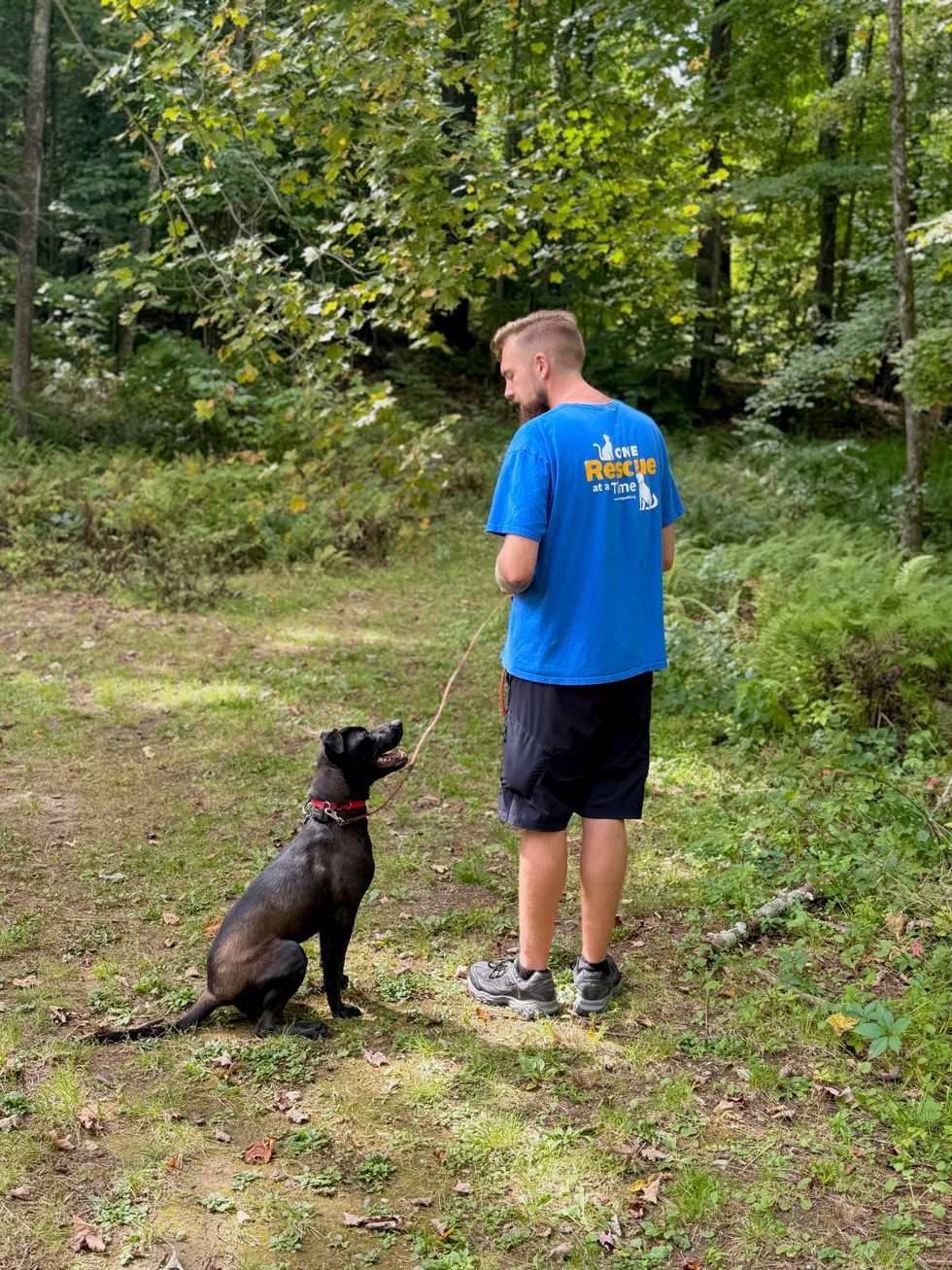 Michael DeBarba, certified dog trainer working with Marsala.Jennifer Almquist
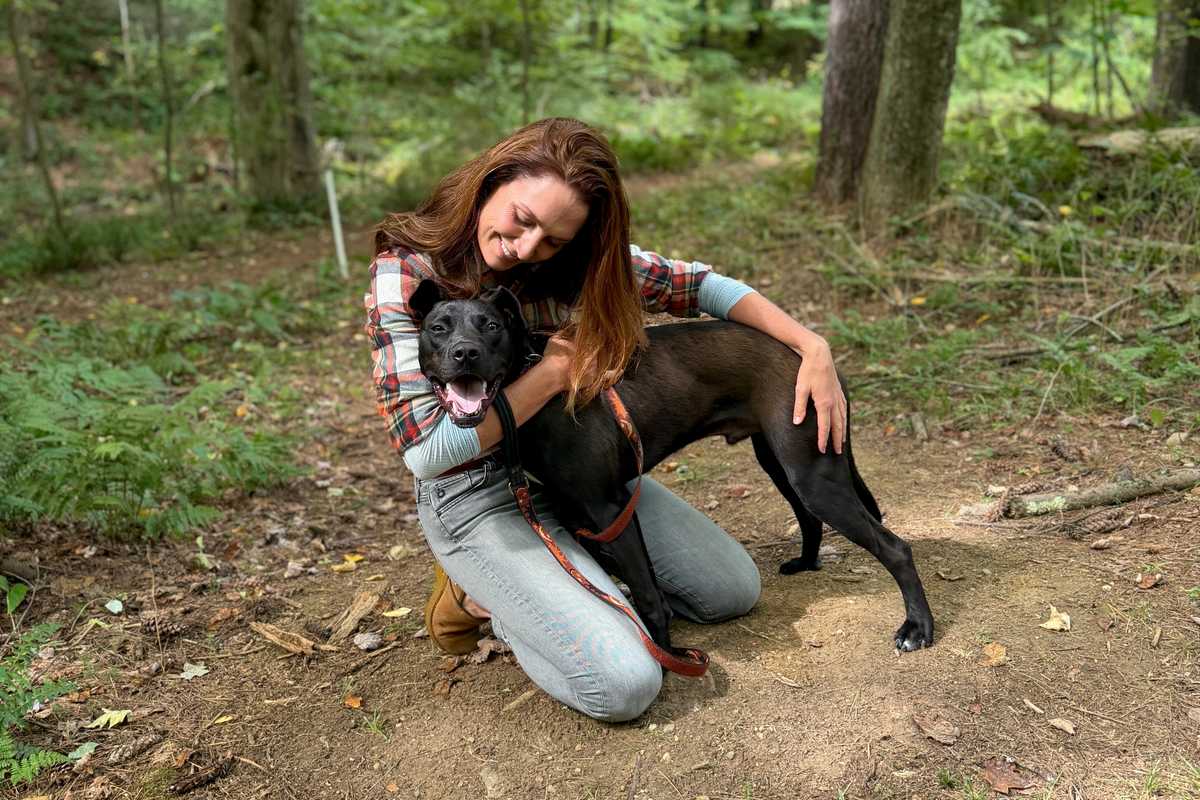 Marsala wins a heart.Jennifer Almquist
 Sadie, center, a Carolina dog, plays with her friend Negra, a terrier mix. Bella Linda, the small poodle, has since been adopted.L. Tomaino
 Wesley, a young, exuberant mix, is looking for an active home.L. Tomaino
 Bonnie and Clyde, an affectionate terrier pair.L. Tomaino