Connecticut hears case for Northwell’s merger with Nuvance Health

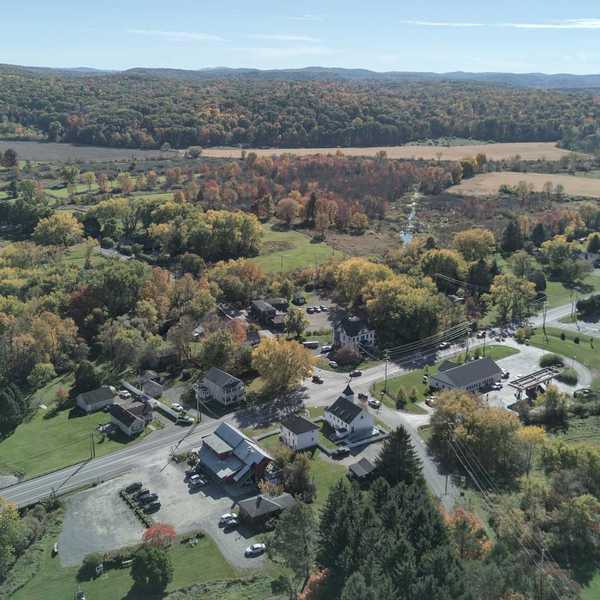
Sharon Hospital in Sharon, Connecticut
Archive photo

Sharon Hospital in Sharon, Connecticut
HARTFORD — The Connecticut Office of Health Strategy held a Certificate of Need hearing on the proposed merger between Northwell Health and Nuvance Health Wednesday, Nov. 6.
Nuvance, parent company of Sharon Hospital, is seeking to merge with Northwell, the largest private health care system in New York state, primarily for financial stability. Nuvance has reported a deficit of $99 million in 2024 and is in need of a partner to survive.
“The risks of trying to pull this off as a standalone system are simply too great,” said Nuvance CEO John Murphy.
Murphy said Northwell was chosen from an initial pool of 25 potential partners. Northwell has had success reviving struggling hospitals in the past and claims to have never closed down a hospital.
He said Northwell “demonstrated a willingness to make a significant capital commitment” to Nuvance’s seven hospitals in Western Connecticut and New York’s Hudson Valley. Murphy praised Northwell’s “distinguished history of turning hospitals around that were facing financial distress.”
If the merger is approved, Northwell will become the parent company of Nuvance Health. Nuvance’s board of directors would continue to oversee its hospitals, but six new board members would be added from Northwell’s team. Northwell will oversee approval of capital and operating costs.
Northwell CEO Michael Dowling explained his organization’s values: “We want to be the best place to receive care and the best place to work.”
Northwell described a model of assimilating cultures with the hospitals it takes over, focusing on engagement with the staff to attract new professionals and minimize turnover.
Dowling said Northwell’s health care network serves more than two million individuals annually and offers medical care from birth to the end of life.
Northwell currently operates 23 hospitals and more than 900 care locations. More than 85,000 individuals are employed by Northwell.
“We are not a hub and spoke system,” said Dowling. “We have a record of expanding care as needed in each local community. We believe in providing care as close to where people live as possible as long as it can be done safely and with the highest quality.”
The community-driven group Save Sharon Hospital was granted intervener status for the Nov. 6 hearing and expressed support for the merger between Nuvance and Northwell.
Sharon Hospital’s Dr. Howard Mortman, labor and delivery specialist since 1991, stated his trust in Northwell to “do what is right for Sharon Hospital and our community.”
Northwell representatives have visited Sharon to meet with the community group several times in the past year to discuss concerns and goals for the future of rural healthcare in the Northwest Corner.
“They do not plan to cut any services and instead plan to grow services at Sharon Hospital,” said Mortman. “[Northwell] has shown they greatly care about Sharon Hospital.”
Dr. David Kurish of Sharon Hospital spoke in favor of Northwell’s plans to increase intensive care services. In 2023, Nuvance applied for a certificate of need to replace the ICU with a progressive care unit.
Kurish said Northwell’s pledge will “lead to fewer patients being transferred” from Sharon Hospital.
Overwhelmingly positive remarks filled the public comment session of the hearing.
State Rep. Maria Horn (D-64) said, “This affiliation is in the best interest of my constituents.” She felt Northwell demonstrated an “impressive record” of investing in community hospitals and praised its commitment to engaging with stakeholders.
Sharon Hospital board chair Richard Cantele said he supported the merger because “hospitals are the cornerstone of our communities” and Northwell will preserve “a long-term future for Nuvance Health and Sharon Hospital.”
Following public comment the hearing was closed. The Office of Health Services will review the filings before making a ruling on the certificate of need.
John Dennis, of Millerton, presents a bluegill he caught in Rudd Pond on Friday morning, Feb. 6. Dennis said he catches enough fish for a meal — usually about a dozen fish — before packing up and shuffling off the ice.
MILLERTON — Rudd Pond is open for ice fishing as of Thursday, Feb. 5.
Taconic State Park rangers announced the ice was safe for fishing in a Facebook post Thursday morning. Ice on the pond must average at least 6 inches thick across the entire surface before it is opened to recreation, according to park staff.
On Friday, Feb. 6, Brian Booth of Millbrook and John Dennis of Millerton were out on the ice catching crappie and bluegill at 10 a.m.
"I've been fishing here since I was a kid," Dennis said. He was jigging, which is a fishing technique where a baited hook is dropped through a hole in the ice and "jigged" to simulate natural movement.
Booth was fishing through a combination of jigging and devices called "flip-ups," which have a line connected to a spring-loaded flag that flips up when a fish grabs the hook.

Temperatures are predicted to stay well below freezing for the next week. An extreme cold weather warning was in effect for the region all weekend and stretched into Monday morning on Feb. 9.
Forecasts predict heavy winds and blustery conditions to continue this week, with a chance for temperatures to increase leading into this weekend. Booth and Dennis each said that wind is a major contributor to uncomfortable conditions on the ice, where natural wind breaks are nonexistent.
Dennis uses a sled with a collapsible shelter to haul his ice fishing equipment onto the pond. He said that the tent can be a great boon, especially when combined with a small space heater.
"I could fish in my t-shirt," Dennis said.
But wind has caused problems when Dennis’s sled wasn’t anchored properly. He said he was dragged across the ice by strong gusts during a recent trip to a frozen lake in Connecticut.
Rudd Pond is open from sunrise to sunset year-round. Taconic State Park employees said they will continue to monitor the ice and provide updates on its status.
Drivers should expect more police on the roads this weekend as law enforcement warns of ramped-up DWI check-points over Super Bowl weekend.
Law enforcement is expected to ramp up DWI check-points across the region this weekend.
Across Dutchess County, local law enforcement agencies will take part in a “high-visibility enforcement effort” during Super Bowl weekend aimed at preventing drivers from operating vehicles under the influence of drugs and alcohol. Increased patrols and sobriety checkpoints are planned throughout the county from Sunday, Feb. 8, through Monday, Feb. 9.
In a statement, Dutchess County Executive Sue Serino emphasized the need for safe roads and thanked law enforcement who “work year-round to keep our neighborhoods safe.” She added, “Make the winning play during Super Bowl weekend and plan for a safe ride home.”
Nationwide, traffic fatality data indicates Super Bowl Sunday is one of the deadliest days of the year for impaired driving, with a significantly higher number of alcohol-related deaths than on typical Sundays.
During the Jan. 29 Village Board meeting, trustees voted to sign the annual STOP-DWI agreement with Dutchess County, part of a statewide effort to keep dangerous drivers off the roads. Similar efforts also take place around Memorial Day, Independence Day, Labor Day, Halloween, Thanksgiving and during the December holiday season.
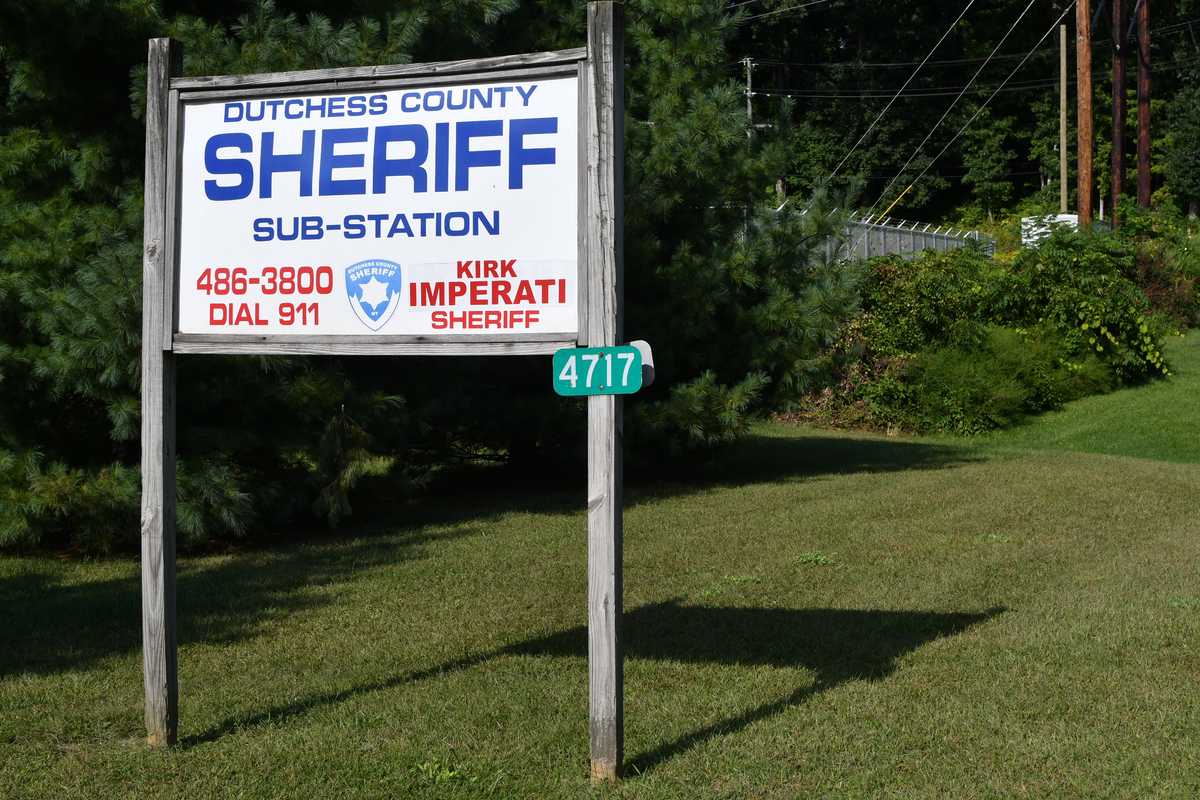
Millerton Police Chief Joseph Olenik said his department typically participates in all DWI check-points, but will not this weekend because of staffing issues. He said that does not mean county and state police will not be active in the Millerton area.
Students wore black at Housatonic Valley Regional High School Friday, Jan. 30, while recognizing a day of silence to protest Immigration and Customs Enforcement.
FALLS VILLAGE — In the wake of two fatal shootings involving Immigration and Customs Enforcement agents in Minnesota, students across the country have organized demonstrations to protest the federal agency. While some teens have staged school walkouts or public protests, students at Housatonic Valley Regional High School chose a quieter approach.
On Friday, Jan. 30, a group of HVRHS students organized a voluntary “day of silence,” encouraging participants to wear black as a form of peaceful protest without disrupting classes.
The idea was spearheaded by junior Sophia Fitz, who said she wanted a way for students to express their concerns while remaining in school.
“What really inspired me was that I was feeling very helpless with these issues,” Fitz said. “Staying educated with what’s going on in not only our country but globally can be very stressful as a teenager. Kids right now are feeling very hopeless and want to do something, but don’t know how.”
Teachers Peter Verymilyea and Damon Osora were on board with the idea early on, describing it as a peaceful and respectful way for students to express their beliefs.
Assistant Principal Steven Schibi also backed the effort, emphasizing the importance of student participation.“I think it’s important for us to listen to students,” he said. “And they have to learn how to have a voice in such a way that it’s not disruptive.”
After discussions with Superintendent Melony Brady-Shanley and Principal Ian Strever, school administrators agreed that participation would be optional and that students could choose whether to wear black or not.
Schibi, along with several staff members, participated in the movement by wearing black themselves. Math department chair Kara Jones was among the participating teachers. “Everybody deserves their voice, so I’d rather do the day of silence than everybody stay home,” she said.
Among HVRHS students who supported the protest, at least one cited concern for friends affected by immigration enforcement.
Sophomore Peyton Bushnell said he felt anxious, fearing for the safety of friends and acquaintances. “I think it’s all really messed up,” Bushnell said. “I have a lot of Hispanic friends, and I worry if there’s ICE in Great Barrington, if they came here [and] deported my friends. I can’t even imagine.”
Bushnell said Fitz’s initiative encouraged him to speak more openly about the issue.
Senior Molly Ford echoed that sentiment. “I think it’s a peaceful way to protest and I think it’s the best way to do so,” Ford said.
Many students wore black to show support, and senior Victoria Brooks shared her thoughts on what it meant to her. “It means following along in a form of advocacy alongside other students,” Brooks said.
Some students declined to comment when asked about the protest. Others said they were unaware the protest was taking place. Three seniors interviewed during lunch said they would have participated had they known, calling it a “neat idea.”
Not all students were convinced of the protest’s impact. A group of juniors questioned whether it would make a difference.
“I think that it is good that we’re trying to do something,” one student said. “But I’m not sure how much the silence aspect of it will help, but I think that it’s good that we’re trying.”
Some students questioned the efficacy of the protests, including a group of seniors who offered their opinions. They expressed the belief that the protests were “pointless,” and that President Donald Trump probably didn’t even know that HVRHS existed.
“I just don’t think it’s the best way to go about it. Like, what is us being silent and wearing black gonna do,” one of the seniors said.
Senior Cohen Cecchinato voiced his opposition to the protests in another interview.
“The staying silent, I think, is for the lives that were lost, which I agree with,” Cecchinato said. “But I think that wearing black, like the movement that it’s behind, the people that are putting it into place in our school are doing it because it’s like the ‘F ICE’ movement or the abolish ICE movement, which I think is just wrong.”
Other students said they believed political protests don’t belong in school.
“I just don’t think we should bring politics into school,” one senior said. Another added, “I think it’s causing … a really big divide and people are using it to be advantageous to themselves and their own beliefs.”
However, one senior expressed a sharply critical view of the protest. Senior Ashton Osborne dismissed students who chose to wear black or participate in the demonstration and criticized organizer Sophia Fitz. He also said he strongly supported the federal immigration agency and added that if he were old enough, he would want to work for ICE.
The comments reflected a minority viewpoint among students.
Mia DiRocco, Hannah Johnson and Peter Austin are seniors at Housatonic Valley Regional High School and participants in The Lakeville Journal’s student journalism program, which produces HVRHS Today.
PINE PLAINS — Dutchess County Legislator Chris Drago, D-19, will host a public forum later this month to discuss ongoing childcare challenges — and potential solutions — facing families in Northern Dutchess. The discussion will take place on Wednesday, Feb. 25, from 6 to 7:30 p.m. at The Stissing Center in Pine Plains and is free and open to the public.
Drago said the goal of the forum is to gather community feedback that can be shared with county and state stakeholders, as Dutchess County positions itself to benefit from $20 million in state funding as part of a new childcare pilot program.
Earlier this month, Dutchess County was named as one of three counties in New York selected to participate in the pilot, which was announced by Gov. Kathy Hochul as part of a broader plan to bring universal childcare to the state. The funding is expected to support expanded childcare capacity, with a focus on infants and toddlers.
“We are inviting people who have expressed concern about childcare in Northern Dutchess, along with local school and faith-based program leaders, nonprofit organizations, and elected officials,” Drago said in a statement, calling childcare solutions a “critical need in our communities.”
The event follows the recent closure of the North East Community Center’s Early Learning Program (ELP), which left a number of families in Millerton and surrounding towns without childcare options — and left teachers without jobs. NECC announced the closure of ELP in early November and officially closed its doors on Dec. 18, 2025.
In a signal of support, Assemblymember Didi Barrett — who represents a largely rural district that covers parts of Dutchess and Columbia Counties — joined childcare advocates in the state capital last week to hear concerns from constituents. Barrett has praised recent state investments aimed at addressing childcare gaps, saying she will fight to ensure funds reach rural parts of her district.
“I am committed to ensuring that this is truly universal childcare and that the program addresses the childcare needs in Millerton, North East, and the surrounding communities, especially with the recent closure of the North East Community Center’s Early Learning Program,” Barrett said.
In December, Barrett secured $1 million in funding to expand childcare services at Dutchess Community College, and said she is committed to ensuring that new state funds will benefit those in rural communities.