Savannah Stevenson’s second act

Savannah Stevenson as Mrs. Paroo and Elliott Andrews who plays Harold Hill in the nationally touring production of “The Music Man.”
Marshall Meadows


Savannah Stevenson as Mrs. Paroo and Elliott Andrews who plays Harold Hill in the nationally touring production of “The Music Man.”
Sharing laughter, tears, music and dancing through stories that illuminate our common humanity touches us in a way that builds connection, empathy and genuine community.
— Savannah Stevenson
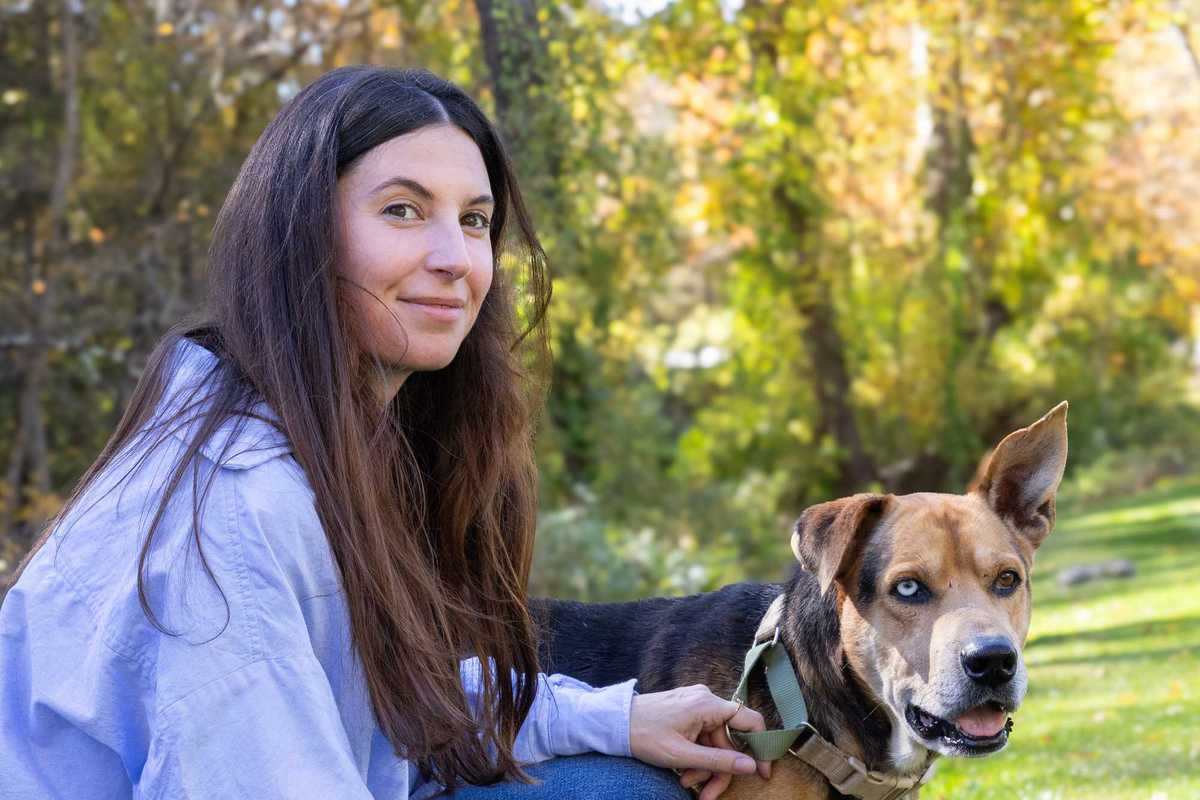
Savannah Stevenson has lived enough lives already to make most people feel lazy.
She grew up in Atlanta in a musical family, with a father who played “The Sound of Music” cassette tapes in the car and a mother who played hymns on the piano. She went to Carnegie Mellon to study musical theater, moved to New York afterward and, for a while, imagined a life onstage.
Then she became a lawyer instead.
“The leap from performing to lawyering isn’t as significant as it seems,” Stevenson said one recent morning from somewhere between tour stops on the national tour of Meredith Willson’s “The Music Man,” in which she now plays Mrs. Paroo, the Irish immigrant mother of Marian the librarian.
For 18 years, Stevenson practiced law at high-profile New York firms specializing in criminal defense before eventually becoming head of ethics, compliance and risk at Peloton during the company’s dizzying pandemic boom years.
“At some point in time, I got married and had children,” she said matter-of-factly. “And then life kind of unfolded.”
Stevenson and her husband began renting a house in Falls Village “just to get out of the city on the weekends.”
“We fell in love with it, of course,” she said. “And then when the pandemic hit, we of course fled the city up to that house and decided not to go back.”

The family — Stevenson, her husband Jon, and daughters C.C. and Sylvie — became full-time Salisbury residents in 2020.
Then came another plot twist.
While the world was buying exercise bikes and streaming spin classes from their living rooms, Stevenson was part of Peloton’s legal leadership team. But after the company’s spectacular rise came the somewhat inevitable crash.
“In 2023, the board decided to let the entire executive team go,” she said.
Suddenly, Stevenson found herself unemployed in Northwest Connecticut with time on her hands and a teenage daughter deeply immersed in the Sharon Playhouse YouthStage program.
“My older daughter said to me, ‘Well, as long as you’re bringing me to and from rehearsals every day, why don’t you audition for the show?’”
She auditioned.
“And they were like, ‘Oh, you actually can sing.’”
What followed sounds like the plot of a feel-good movie about reinvention in middle age: mother and daughter performing together at the Sharon Playhouse while Stevenson rediscovered a part of herself she had set aside decades earlier.
“It was the most joyful experience ever,” she said. “And I kind of realized that now, in my late 40s — I’ll be 50 this year — I’ve aged into this entire new crop of roles. The mothers, the older wise women, the cougar,” she said, laughing. “All of these great older women’s roles.”
So, she started auditioning.
And getting the parts.
Now she’s on a six-month national tour.
“It really does feel like a full-circle moment for me,” Stevenson said.
If that sounds glamorous, Stevenson is quick to point out that touring theater is less champagne and more buses, protein bars and Peloton app workouts in hotel rooms.
“There are certainly times where it’s a show Monday night in one city, get on the bus, show Tuesday night in another city, get on the bus,” she said. “There’s a lot of time on the bus.”
Mostly, though, she talks about the crew with something approaching reverence.
“We finish a show at 10:30 or 11 at night. They load out the entire set onto trucks. Then they sleep on the bus, get to the next city at 8 a.m., load it all back in and rebuild it,” she said. “They work so hard. It’s incredible.”
In “The Music Man,” Stevenson now plays the role she once dreamed of from the opposite side of the generational divide.
“I would have sung Marian in my 20s,” she said. “Now I get to play her Irish mother, Mrs. Paroo.”
There is a scene where Marian sings “My White Knight,” and Stevenson stands nearby as Mrs. Paroo listening silently. And while the younger actress sings about longing and possibility, Stevenson finds herself thinking about her own daughters.
“Sometimes I just find myself standing there with a tear running down my cheek,” she said.
Meanwhile back home, Stevenson has become one of the Sharon Playhouse’s most visible champions. She joined the board in 2023 and stepped into the role of president this year.
“There’s social science that provides really strong evidence about the benefits of having a theater in your community,” Stevenson said. “Lower rates of violence. Higher rates of volunteerism. Higher graduation rates.”
She speaks about theater the way some people speak about public libraries or churches — as essential civic infrastructure.
“Sharing laughter, tears, music and dancing through stories that illuminate our common humanity touches us in a way that builds connection, empathy and genuine community,” she said.
Much of that conviction comes from watching what theater has done for her own children.
When her oldest daughter interviewed at competitive boarding schools this year, Stevenson said interviewers repeatedly commented on her poise and confidence.
“They would say to me, ‘All that theater education is really paying off,’” Stevenson said. “She can establish connection with people readily.”
When asked what advice she might offer to other women contemplating a midlife pivot, Stevenson resisted the fantasy of reckless transformation.
“I don’t think it’s about jumping without a net,” she said.
Instead, she advocates something more measured.
“It’s about making a calculated risk,” she said. “And then, once you’ve run those calculations and feel planful enough about it, really diving into that risk headlong.”
Which is perhaps another way of saying that sometimes the girl who once sang show tunes in Atlanta and studied musical theater at Carnegie Mellon never actually disappears.
Sometimes she’s just waiting patiently for her cue.
For tickets to The Music Man, visit themusicmantour.com
D.H. Callahan
Cheers! The Revolutionary Whisky Series at Ten Mile Distillery, each named for a significant battle of the American Revolution, celebrates America at 250.
In December 2024, the U.S. Alcohol and Tobacco Tax and Trade Bureau officially established the Standard of Identity for American Single Malt Whisky. It was the first new classification in more than half a century, creating new possibilities for American distillers. One of the distilleries taking advantage of this new landscape is Wassaic’s Tenmile Distillery. It is well positioned to make history because Tenmile has always honored traditional whiskey-making practices.
Single malts are often associated with Scotch whisky. Perhaps that’s why, years before the new standard was adopted, Tenmile hired Shane Fraser, a Scottish master distiller with 30 years of experience at some of Scotland’s most prestigious distilleries. Fraser began designing the distillery from the ground up. Alongside owner and general manager Joel LeVangia, he emphasized time-honored traditions, favoring hands-on craftsmanship over the increasingly automated methods used by larger producers. When it comes to making the best whisky possible, Tenmile believes in learning from the past. That philosophy extends beyond the distilling process.

In late 2025, in anticipation of the 250th anniversary of the signing of the Declaration of Independence, the distillery introduced its Revolutionary Whisky Series. The collection features 57 unique expressions, each with its own combination of barrel types and aging periods, and each named for a significant battle of the American Revolution.
LeVangia sees the series not only as something collectible — a hallmark of the international craft distilling world — but also as an opportunity to educate. Most Americans learn about the Revolution in high school U.S. history classes, but LeVangia wanted to go beyond familiar stories such as Washington crossing the Delaware or the famous command to wait until soldiers could see “the whites of their eyes.” Each bottle helps tell a deeper story.
To bring those stories to life, Tenmile has gone the extra — dare they say, 11th — mile. Tom Bouldin, Ph.D., serves as the distillery’s historian. He consults on the series, helping LeVangia and Fraser connect each expression to an appropriate battle of the American Revolution. He also leads Tenmile’s lecture series. While some of Bouldin’s talks explore the history of popular music, his primary focus is the battles of the American Revolution.
With each new release, Tenmile hosts an intimate evening of history and whisky tasting. Centered on Bouldin’s meticulously researched lectures, the events often spark broader conversations about the battles, the people who fought them and what those events still mean today. It’s a style of promotion rarely seen today. Although the distillery and its grounds are stunning, these gatherings are not designed as Instagram photo opportunities. Instead, they bring together a small group of people eager to learn from the past while tasting something new.
That is what the Revolutionary Whisky Series — and Tenmile Distillery as a whole — is all about: learning from history while forging its own.
Richard Feiner And Annette Stover
Renée Fleming, Andris Nelsons and Thomas Hampson.
On Friday, July 17 at 8 p.m. in the Koussevitzky Music Shed at Tanglewood, two of the greatest American voices of their generation, soprano Renée Fleming and baritone Thomas Hampson, join Music Director Andris Nelsons and the Boston Symphony Orchestra in a performance of excerpts from John Adams’ groundbreaking opera “Nixon in China.” The piece, performed earlier this year in Boston and at Carnegie Hall in New York City, is a highlight of a program that also includes “Meditations on Grace” (2024) by BSO Composer Chair Carlos Simon, and the melodic and technically demanding Violin Concerto by Samuel Barber.
Fleming is internationally celebrated for her vocal and dramatic artistry, as well as for her advocacy for the powerful impact of the creative arts in health. Hampson has long been recognized as one of the most innovative musicians of our time and has received countless international honors for his singular artistry and cultural leadership. Both performed in “Nixon in China” earlier this year at the Paris Opera under the baton of Kent Nagano.
Adams’ “Three Scenes from Nixon in China” is a suite taken from the opera and prepared especially for the BSO performances with Fleming and Hampson in the roles of Pat and Richard Nixon. The suite includes Act I, Scene I, in which the Nixons arrive in Beijing; Pat Nixon’s “This is prophetic” aria from Act II, Scene I; and Nixon’s speech followed by a chorus of toasts and cheers (“Gam bei!”) in Act I, Scene III.
The full opera premiered in 1987 and has become one of the most celebrated works of contemporary American music. As The New Yorker wrote, “Not since ‘Porgy and Bess’ has an American opera won such universal acclaim as ‘Nixon in China.’”
The libretto is based on Nixon’s groundbreaking February 1972 visit to reestablish diplomatic ties with the People’s Republic of China. The production was controversial at the time: an opera about a recent American president whose resignation was still vivid in the country’s memory. Created by a first-time opera composer, a poet new to opera (Alice Goodman) and a young avant-garde director (Peter Sellars), the piece defied expectations of what a contemporary opera could be.
Yet “Nixon in China” has proved to be something far more than a provocation; it has been hailed as helping to revitalize American opera. It uses realistic scenarios based on recent historical events to make direct statements about big social questions, especially the status of women in history and society. It is also credited with helping to create the subgenre of the “headline opera,” works that refract the mythology of recent real-life events and personalities through the lens of operatic music, words and staging.
Adams’ score is a dazzling fusion of rhythmic vitality and luminous choral textures with the psychological intricacy of character drama. It reflects the composer’s ongoing search, as he has put it, to find “the sacred in the everyday.” The result is a distinctive kind of music theater that transforms historical and contemporary narratives into modern parables in order to explore the tension between public facade and private reckoning, and between human motive and moral choice.
This Tanglewood concert promises to be a highlight of the summer’s music season. It is part of the BSO’s E Pluribus Unum festival, a multiyear celebration that shines a spotlight on American music to explore the country’s history and ideals and to raise critical questions on topics that shape our collective experience.
For more information and to purchase tickets, visit bso.org.

Want more of our stories on Google? Click here to make us a Preferred Source.
Jack Sheedy
The cast and crew of “Rebeltown: The Musical.”
John Alan Segalla was working in Boston a few years ago, giving historic tours at the site of the Boston Tea Party. Now, as America celebrates 250 years as a nation, the Canaan native is about to debut a new version of his original musical, “Rebel Town,” inspired largely by the Boston Tea Party, the protest that helped launch the American Revolution.
“It wasn’t until I got to Boston and learned the Tea Party story that I fell in love with this moment in history, and I saw the story as wildly compelling and very important, and really a story that was very misunderstood, mistaught in schools,” Segalla said at a recent rehearsal in Stockbridge, Massachusetts, ahead of the show’s July 10 opening.
Segalla wrote most of the script during 2020, hoping to produce it by 2023, the Tea Party’s 250th anniversary. He finally mounted a version of the show in Stockbridge in 2024. It ran a bit long, he said, so the current iteration is more compact, running well under two hours.
The musical focuses on the lives of carpenter William Grey (played by Segalla), his wife Sarah Grey (Emma Robertson) and apprentice Peter Slater Jr. (Ryleigh Fillio), with appearances by historical figures such as Paul Revere (Chris Vecchia), Samuel Adams (Ryan Mascilak) and John Hancock (Christopher Boswell).
The action follows the clandestine meetings of the Sons of Liberty as they plan the bold destruction of British-taxed tea in Boston Harbor, culminating in Paul Revere’s storied ride, featuring a mechanical horse designed by technical director Ronald Piazza. According to the show’s website, “As rebellion turns to revolution, the cost becomes deeply personal: families are torn apart, loyalties tested, and the line between heroism and sacrifice begins to blur.”
The show is directed by Actors’ Equity member Michael Siktberg, who has worked at Bucks County Playhouse, Sharon Playhouse, the Ogunquit Theatre among and other venues during the past 20 years. He said, “I originally agreed to do this because of John, because of my love and respect for him and our growing friendship.”
He said he sees parallels between events of 250 years ago and today, noting “how they echoed the themes of our lives now.”
The participants in the Tea Party thought they would make a difference. “What is fascinating to me,” Skitberg continued, “is that they really tried to do it peacefully, they really tried a statement without bloodshed.”
But it didn’t work. King George III retaliated with the Intolerable Acts, ultimately inspiring the Declaration of Independence and the Revolution.
Rebecca Gardner, assistant stage manager, said the show could be thought of as the “Hamilton” of Boston. “It’s not Hamilton’s Revolutionary War story; it’s not ‘1776’; it’s another story of that era, which hasn’t been told before,” she said.
Emilyn Bona, also an assistant stage manager, said she has known and worked in theater with Segalla since high school. Even though she now lives in Albany, she said she jumped at the chance to work on Segalla’s latest creation.
Segalla is a Dramatists Guild member and holds a Bachelor of Arts degree in Theater from Russell Sage College. He has toured nationally as Jack in “Magic Tree House: Soars with Reading.” He co-authored a farce, “Moral Dilemmas of the Modern Day Vampire,” which was produced Off-Off-Broadway and in New England. He has performed extensively and received numerous awards, including the New Hampshire Theatre Award for Best Supporting Actor in a Drama for his performance as Don Armado in Shakespeare’s “Love’s Labour’s Lost.”
“This is not a musical that’s taking any political side, left or right,” said Segalla. “It’s meant to be a unifier, and it’s meant to be something to educate and to remind people that this moment in history seeded the Declaration.” He said he hopes it will inspire “a renewed sense of pride in the earliest American values of what we wanted to be, a renewed sense of spirit in what we could become: that shining city on a hill.”
“Rebel Town: The Musical” runs July 10 through 19 at the Kathleen E. McDermott Auditorium, Monument Mountain Regional High School, Great Barrington, Massachusetts. For tickets and more information, go to www.rebeltownthemusical.com.
Natalia Zukerman
Community mural design by Macayla Muzzulin will be painted by volunteers on July 11 in Franklin Plaza in Torrington.
From 10 a.m. to 4 p.m. on Saturday, July 11, Five Points Arts in Torrington will host a community mural project celebrating the nation’s 250th anniversary. Volunteers of every age and artistic ability are invited to help paint a 20-by-6-foot mural designed by artist Macayla Muzzulin. The mural will be completed in one day, transformed from a numbered outline into a permanent public artwork along the river in downtown Torrington.
“We firmly believe art is for everyone,” said Five Points founder and executive director, Judith McElhone. “It’s so great to be able to do this with such talent, and with Launchpad artists, volunteers and staff there to help.”
A recent graduate of the Hartford Art School, Muzzulin is one of Five Points’ Launchpad artists, an initiative that provides shared studio space and professional support to emerging artists. About two dozen artists work from studios above the downtown gallery, where they have access to facilities, mentorship and a creative community.
Muzzulin’s connection to Five Points began long before she became a professional artist.
“She’s been with us since she was 14 years old as a volunteer,” said McElhone. “I knew her skill level and that she would be perfect for this.”
Muzzulin has not created a finished color rendering of the mural. Instead, participants will be working from her numbered design, matching paint colors to corresponding sections. Like many community murals, the artwork will emerge through collective effort rather than individual authorship.
Five Points has expanded steadily over the years. What began as a 740-square-foot summer storefront gallery through the Torrington Arts and Culture Commission’s temporary Art Space Torrington initiative in 2012 has evolved into one of Connecticut’s leading contemporary arts organizations. Today, the nonprofit includes a gallery that has exhibited nearly 1,800 artists and an Arts Center that provides studios, exhibition space and educational programing. This community mural continues that evolution by bringing art beyond the gallery walls and into the heart of downtown, further cementing Five Points’ role in Torrington’s cultural revival.
The project is sponsored by The City of Torrington, Neag Foundation, Jerry’s Artarama in West Hartford and the NWCT Arts Council. For more information, visit fivepointsarts.org.By Natalia Zukerman
From 10 a.m. to 4 p.m. on Saturday, July 11, Five Points Arts in Torrington will host a community mural project celebrating the nation’s 250th anniversary. Volunteers of every age and artistic ability are invited to help paint a 20-by-6-foot mural designed by artist Macayla Muzzulin. The mural will be completed in one day, transformed from a numbered outline into a permanent public artwork along the river in downtown Torrington.
“We firmly believe art is for everyone,” said Five Points founder and executive director, Judith McElhone. “It’s so great to be able to do this with such talent, and with Launchpad artists, volunteers and staff there to help.”
A recent graduate of the Hartford Art School, Muzzulin is one of Five Points’ Launchpad artists, an initiative that provides shared studio space and professional support to emerging artists. About two dozen artists work from studios above the downtown gallery, where they have access to facilities, mentorship and a creative community.
Muzzulin’s connection to Five Points began long before she became a professional artist.
“She’s been with us since she was 14 years old as a volunteer,” said McElhone. “I knew her skill level and that she would be perfect for this.”
Muzzulin has not created a finished color rendering of the mural. Instead, participants will be working from her numbered design, matching paint colors to corresponding sections. Like many community murals, the artwork will emerge through collective effort rather than individual authorship.
Five Points has expanded steadily over the years. What began as a 740-square-foot summer storefront gallery through the Torrington Arts and Culture Commission’s temporary Art Space Torrington initiative in 2012 has evolved into one of Connecticut’s leading contemporary arts organizations. Today, the nonprofit includes a gallery that has exhibited nearly 1,800 artists and an Arts Center that provides studios, exhibition space and educational programing. This community mural continues that evolution by bringing art beyond the gallery walls and into the heart of downtown, further cementing Five Points’ role in Torrington’s cultural revival.
The project is sponsored by The City of Torrington, Neag Foundation, Jerry’s Artarama in West Hartford and the NWCT Arts Council. For more information, visit fivepointsarts.org.
Lucia Iandolo
Gridley Chapel at The Wassaic Project.
The Wassaic Project will host its first musical act of the season at the Gridley Chapel on Saturday, July 11. The event is free and was made possible with funding from a grant from the New York State Council on the Arts.
Officially opening in October, the Chapel will come alive with the sounds of sinonó, a trio featuring vocalist and composer isabel crespo pardo, cellist Lester St. Louis and bassist Henry Fraser. The group draws on Latin American folk and classical chamber music to create what it calls “poemsongs.”
NYSCA is a state agency that provides funding for artistic projects through grants, including the Support for Artists grant opportunity.
Kasssandra Gonzalez, development and communications assistant at the Wassaic Project, said the program allows the organization to support artists in their current and future projects.
“We really care about supporting artists and sustaining artistic practices,” Gonzalez said. “A big part of that, which no one likes to talk about, is having enough funds to make projects possible.”
The Wassaic Project has received this grant since 2022 to support artists in New York state who are part of its program and need funding for future projects. The grant includes nearly $10,000 in direct support for artists’ creative work and allows the organization to present programming it might not otherwise be able to offer, including the July 11 performance.
Gonzalez said there is a common misconception that accessible arts programming is available only in New York City, and the Wassaic Project continues working to make art available to everyone in the community.
“Wassaic Project continues to be a force for good and remains very focused on community,” Gonzalez said. “The idea behind the suggested donation, and making sure that everything is essentially free, is to let people in the area know they can come here and make this their community space.”
The Gridley Chapel is located across the street from Maxon Mills at 37 Furnace Bank Road, Wassaic. Doors open at 7 p.m., and the performance begins at 7:30 p.m. Admission is free, and guests can RSVP at wassaicproject.org

Want more of our stories on Google? Click here to make us a Preferred Source.

Want more of our stories on Google? Click here to make us a Preferred Source.