Latest News
First cannabis dispensary opens in Pine Plains
Graham Corrigan
Aug 05, 2026
Manager Benjamin Abrahams working behind the counter of Pine Plains’ first cannabis dispensary.
Photo by Graham Corrigan
PINE PLAINS — The first cannabis dispensary in Pine Plains opened for business last week.
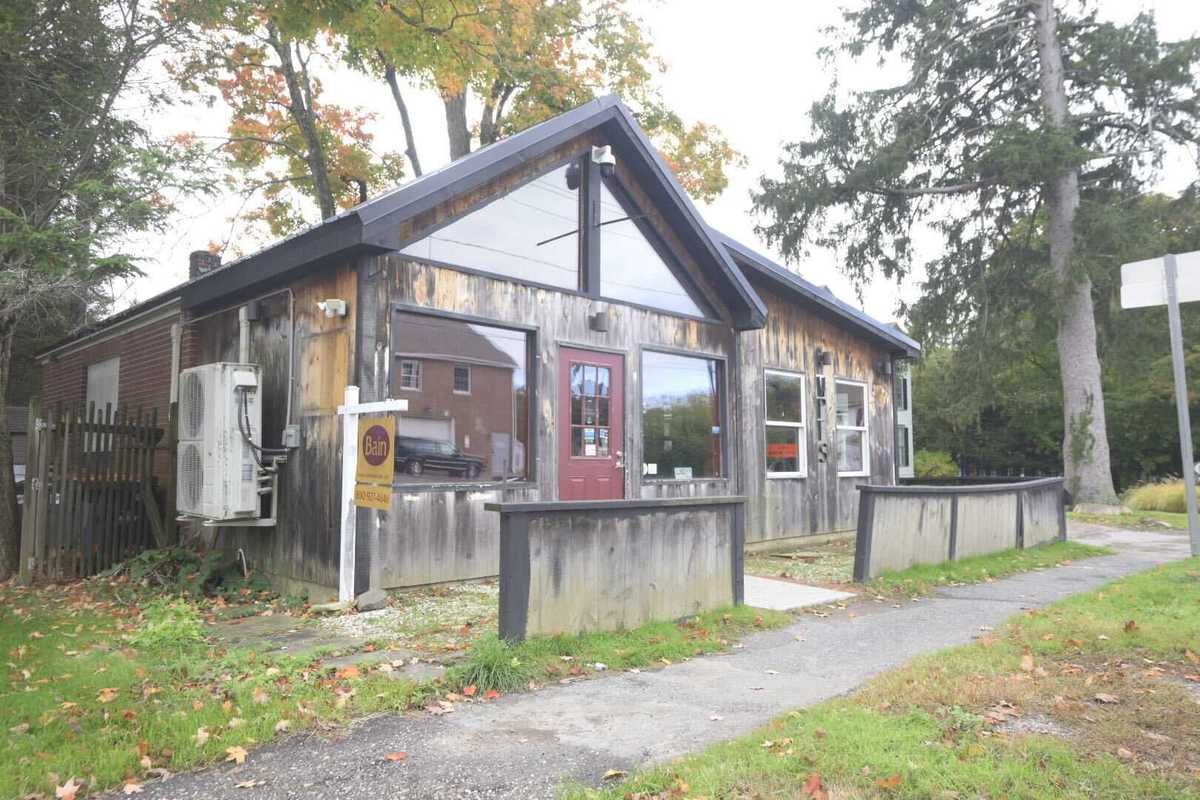
The store is still unnamed, but it’s built on the former site of a weigh station — and has retained some key elements of the building’s past.
The dispensary is the first step in a larger plan to breathe new life into the former Deuel’s Home Center property at 7723 Main Street. There are two other buildings on the property that the owners plan to convert to a grocery store and ice cream shop.
But the dispensary comes first. It’s the brainchild of Christopher Gumprecht, Benjamin Abrahams and Brian Seiler. Seiler and Abrahams have managed one cannabis store already — Upstate Pines in Red Hook. Gumprecht bought the Main Street property in 2020, and approached the two about managing a Pine Plains location.
But the trio faced a number of hurdles in order to open the Pine Plains store. First, there was opposition from the Pine Plains Hose Company, which argued the building’s location violated a rule prohibiting cannabis sales within 300 feet of a public service. A waiver was eventually granted in December 2025.
Arguments over an accessibility ramp delayed the project a further seven months. The Planning Board voted in July to allow the business to open without a ramp, and obtain a certificate of occupancy.
The building is freshly painted and two signs flap in the wind outside; there’s little to indicate that the storefront sells cannabis.
Inside, the showroom is bright. On one wall, rows of magnified cannabis buds sit ready for inspection in glass orbs. Edibles are on display in a case below the counter. An old scale, original to the building, has a place of honor near the back.
But the dispensary has not won over everyone. A homemade sign that reads “Say No To Drugs” sits propped on a neighbor’s fence, facing the dispensary.
Abrahams is unfazed. “We’re pioneers,” he said with a grin.
There has been a recent surge in dispensaries, with New York legalizing the sale of recreational cannabis in 2021. Millerton’s first dispensary, Blackrabbit Farms, is slated to open on Main Street later this year.
Keep ReadingShow less
New state law allows medically assisted suicide
Graham Corrigan
Aug 05, 2026
New York’s Medical Aid in Dying Act, which allows terminally ill adults to obtain self-administered medication to end their lives, took effect Aug. 5.
In order to qualify for the prescription, New York residents must be at least 18 years of age, and have a medically confirmed terminal illness that is incurable and irreversible and will likely cause death within 6 months, whether or not treatment is provided.
“People should have autonomy over how they live, but also how they die,” said Keavy Bedell, co-founder of the end-of-life facility East Mountain House, which is based in Lakeville. “If one has reached the point where quality of life is no longer there, and they don’t want to go through the suffering, I firmly stand in the corner of MAID being an option.”
The option is not available in Connecticut. But New York joins 13 other states that offer MAID, including a host of other nations. New York residents must receive approval from two physicians and are subject to a five-day waiting period.
Furthermore, “no person shall qualify for Medical Aid in Dying solely because of age or disability,” the law states.
Bedell hopes Connecticut will join its neighbor in approving similar legislation. “The end of life is a very challenging time for the family and friends,” she said. “MAID is anti-suffering, and it’s a compassionate choice.”
The process works as follows: patients must submit both a spoken and written request, with the oral request captured on audio or video and stored in their medical record. The written request requires two witnesses who are not relatives, caregivers, or otherwise positioned to benefit financially from the patient’s death.
Then comes sign-off from two physicians, along with a separate mental health evaluation by a psychiatrist, psychologist or neurologist. If that evaluator determines the patient lacks decision-making capacity, the process ends there. Patients may change their mind and rescind their request at any time. However, if they move forward with it, they will be prescribed pills.
MAID still faces opposition, even as it goes into effect. Two lawsuits are currently in New York courts to block the legislation — one objects on grounds of religious freedom, the other over disability rights. The former, filed by over a dozen Catholic groups, claims that even though participation is ostensibly voluntary, providers and facilities are forced to inform terminally ill patients about the option or provide referrals, forcing an unconstitutional conflict with their faith.
Disability rights advocates, meanwhile, point to the fact that individuals with disabilities face severe gaps in care or reductions in supportive services, putting them at risk of being steered toward medical aid in dying instead of receiving proper treatment. The group of plaintiffs includes the Independent Living Center of the Hudson Valley.
No injunction has been ordered to prevent the legislation from going into effect.
Under the law, using the prescription does not constitute suicide for legal purposes, and death certificates will list the patient’s underlying illness, not the medication, as the cause of death. Life insurance payouts cannot be withheld as a result, though the state’s Medicaid program will not cover prescription costs.
Keep ReadingShow less
After two decades, Millbrook Antiques Mall owners ready to pass the torch
Eloise Pickering
Aug 05, 2026
MILLBROOK — After two decades of ownership, Jeff and Thelma Zwirn are selling the Millbrook Antiques Mall as they look to retire and focus on spending time with their family.
The couple purchased the Franklin Avenue antique mall in 2005 after deciding to leave New York City in the years following the Sept. 11 terrorist attacks. Now, they have listed the business and its three-story, 5,000-square-foot building for $1,495,000 and are looking for a buyer who will continue operating it as an antique mall.
Established in 1979, the Millbrook Antiques Mall is home to more than 20 vendors spread across 40 rooms. The business generates revenue through vendor rentals, sales commissions, consignments and the owners’ own antique booth. The mall also serves as a retail outlet for Made In Cookware products.
According to Jeff Zwirn, the couple is already in advanced discussions with a prospective buyer.
“We have a few interested buyers, and one is pretty far along,” he said. “He has a vision for growing the business while keeping it an antique mall.”
Jeff Zwirn describes himself as the passive investor, while Thelma has overseen the day-to-day operation of the business from the beginning.
“My wife is on site several times during the week, so she manages the shop. She provides guidance to the dealers, she interacts with the customers. She’s just a wonderful CEO,” Jeff Zwirn said.
Their decision to leave New York City and purchase the business was shaped by the events of Sept. 11, 2001.Jeff Zwirn worked for Keefe, Bruyette & Woods, an investment banking firm whose offices occupied the 88th and 89th floors of the South Tower of the World Trade Center. The firm lost 67 employees in the terrorist attacks.“After attending so many funerals, we decided to shuffle the deck regarding our goals and objectives,” Jeff Zwirn said.
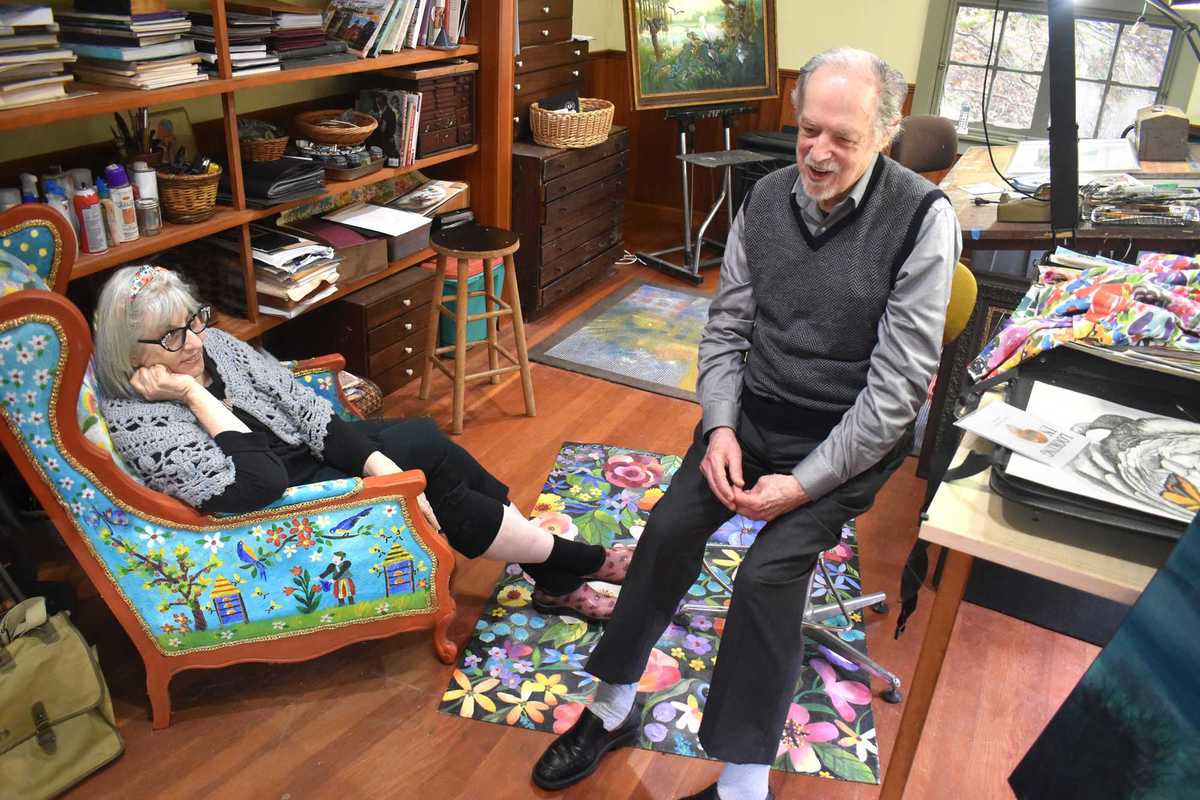
Looking for a slower pace of life, the couple relocated to Millbrook and purchased the Millbrook Antiques Mall. Before the move, Thelma Zwirn worked in New York City as an artist and teacher.
Wendy Maitland, founder of Atelier and the property’s listing broker, said the Zwirns have carefully maintained both the building and the business during their ownership.
“We have a very special property and owners who have a high level of pride of ownership and have taken incredible care of this building throughout their stewardship,” Maitland said. “I feel very lucky to be representing this property and these particular owners.”
Maitland said preserving the business itself will be just as important as selling the real estate.
“The property is most valuable to someone who will continue their legacy because they’ve built up a tremendous following, great reputation and tremendous goodwill throughout the community and beyond,” Maitland said.
As they prepare for retirement, the Zwirns said they are looking forward to spending more time with their children and grandchildren.
“This is the right time for us to focus on other priorities, including more time with the family, the grandchildren, with our own kids,” Jeff Zwirn said.
Keep ReadingShow less

Want more of our stories on Google? Click here to make us a Preferred Source.
Let's hear it — August 6, 2026
Millerton News
Aug 05, 2026
This Week
New York has approved legislation for the Medical Aid in Dying Act, which will allow certain terminally ill adults to request medication to end their lives. Supporters say it offers dignity and relief from suffering, while opponents worry about moral concerns and protections for vulnerable people.
What are your thoughts on the law and why?
Send your responses to social@lakevillejournal.com by Monday, Aug. 10 at 10 a.m. or comment on Facebook or Instagram.
We’ll publish a selection in next week’s paper.
Last Week
What’s your favorite hidden gem in our community, and why should others check it out?
“Innisfree Garden in Millbrook, NY. You can walk around the lake at your own pace, enjoy a picnic, or relax in the chairs.”
— Darryl Gangloff, Millerton
“The lattes at Tri Corner and the seed library at NorthEast-Millerton Library! (They also have tons of resources you can use with a library card and others you don’t need a library card for)”
— KT McClune
“The Oakhurst for starters, food never disappoints. Then I’d head to The Elephants Tusk across the street because they have great consignment finds. And I get my nails done at Amore nails by Herringtons, Grace and Alex are amazing humans and deserve your support!!”
— Susie Q’s Homemade Sourdough Co.
“Rosemary Rose Finery on Main Street!! It’s a magical shop filled with one of a kind jewelry, from breathtaking estate pieces to turquoise and silver pieces sourced directly from the Southwest and cool funky treasures like brooches and earrings from decades past! You can also find herbal and local goods alike! Both the space and the owner are beautiful, warm and welcoming. It’s a place you have to stop in, you never know what treasures you will find @rosemaryrosefinery!”
— Danidogsjm
“Speaking strictly of commercial “hidden gems” I’d have to say it is in my opinion that the absolute best baker in the *entire* region can be found at the Millerton Farmer’s Market. The Baker’s Wife has a lot of strong competition against their breads but none top them. As for non commercial hidden gems there are multitudes, but I’d be loath to divulge them as they would cease to be hidden gems then wouldn’t they?”
— Andres Vialpando, Millerton
Keep ReadingShow less

Want more of our stories on Google? Click here to make us a Preferred Source.
loading


How hospice pioneers transformed end-of-life care in the Northwest Corner
Millerton News
On a winter day in the early 1970s, Peter Warner, a young man dying of leukemia, lay in bed at Sharon Hospital, waiting in agony for his next dose of pain medication. Hospital rules insisted he could have it only every four hours. Not a moment sooner.
His mother, Claudia Warner, watched the minutes tick by while her son suffered. She realized that medical care was failing him, not because it couldn’t cure him but because it couldn’t, or wouldn’t, ease his pain.
Spurred by her grief and frustration—and having glimpsed at Yale New Haven Hospital what a new approach called hospice could offer—Warner began to push for drastic change in how dying patients were treated in our region. Together with two Sharon Hospital nurses, Louisa Lafontan and Donna DiMartino, she pioneered hospice care in the Northwest Corner.
Lafontan, who had helped build Sharon Hospital’s intensive-care unit, mentored DiMartino, and the two became lifelong friends. Inspired by Florence Wald, then dean of the Yale School of Nursing, who had brought hospice care to Connecticut from England, both nurses saw how medicine’s relentless focus on cure overlooked something equally important. “Sometimes people [could not] be cured,” says DiMartino. “They just wanted to be cared for.”
“When Louisa came back and began to talk about hospice, my ears went up,” DiMartino recalls. “All of us as nurses began to see there was a need, and it was right in front of us.”
Claudia Warner created a steering committee on hospice care in the Northwest Corner and recruited Lafontan to lead it.
Change nevertheless unfolded slowly. Like the rest of the hospital staff, the nurses had been trained according to the traditional ethos of Western medicine: save lives, extend them, restart them if possible. “Death didn’t happen in hospitals,” DiMartino says. “It was not an accepted part of life back then.”
As education in hospice care spread—Lafontan led much of the training in the Northwest Corner—health care providers began to understand the importance of treating pain aggressively. “We learned that dosage and timing needed to be for the patient experience,” says DiMartino. At the end of life, addiction to pain medication is not the primary concern; pain management and well-being are.
Medical personnel and volunteers spoke with families, pharmacists, and clergy, toured funeral homes, and learned that dying involves communities as much as medicine.
Medicare’s hospice benefit, enacted in 1983, expanded access but also transformed hospice from a grassroots movement into a more institutionalized system. Lafontan continued training nurses and volunteers and helped bring hospice into long-term care facilities. DiMartino eventually became hospice director at the Salisbury Visiting Nurses Association (now part of the Visiting Nurse and Hospice of Litchfield County), where she trained younger nurses.
Most end-of-life care still happens at home, where family members become the default caregivers. Yet while most people hope to avoid dying in a hospital, not every family can provide round-the-clock care. For decades, Lafontan and DiMartino imagined a place to fill that gap—for their patients and themselves, when the time comes.
In September 2025, East Mountain House (EMH) opened in Lakeville, Connecticut, bringing that vision to life. Housed in a private residence, EMH allows residents to receive hospice support while trained caregivers provide the daily physical care families often struggle to manage alone.
When the two nurses toured the facility together, they were struck by how closely it matched what they had imagined. “We couldn’t have imagined a better place,” says DiMartino. “There are rooms for families to stay, and staff who provide the care, which is monumental.” Nurses from Visiting Nurse and Hospice of Litchfield County check in regularly.
After retiring from nursing, Lafontan and DiMartino became hospice volunteers themselves, sitting with patients, listening to their stories, and giving families a chance to rest.
Both women recall a man dying at home who had a photo of an aircraft carrier on his wall. When they first met him, “he was sort of shrunken up, sitting there in a chair,” recalls DiMartino. By coaxing him to talk about the image, she learned that he had been a pilot whose job was training others to land on the carrier. “I watched his body change into a man who had this great story to tell.”
“When you’re really present with a patient, you [see] them in the whole breadth of their life,” says DiMartino of the human connection intrinsic to hospice care. “The end is part of life, and we’ll all get there. But every person’s life has meaning. You just have to [listen] and you’ll find it.”
To learn more about the origins of hospice in our region and hear an oral history with Louisa Lafontan and Donna DiMartino, visit
eastmountainhouse.org/history-of-hospice/