




Latest News


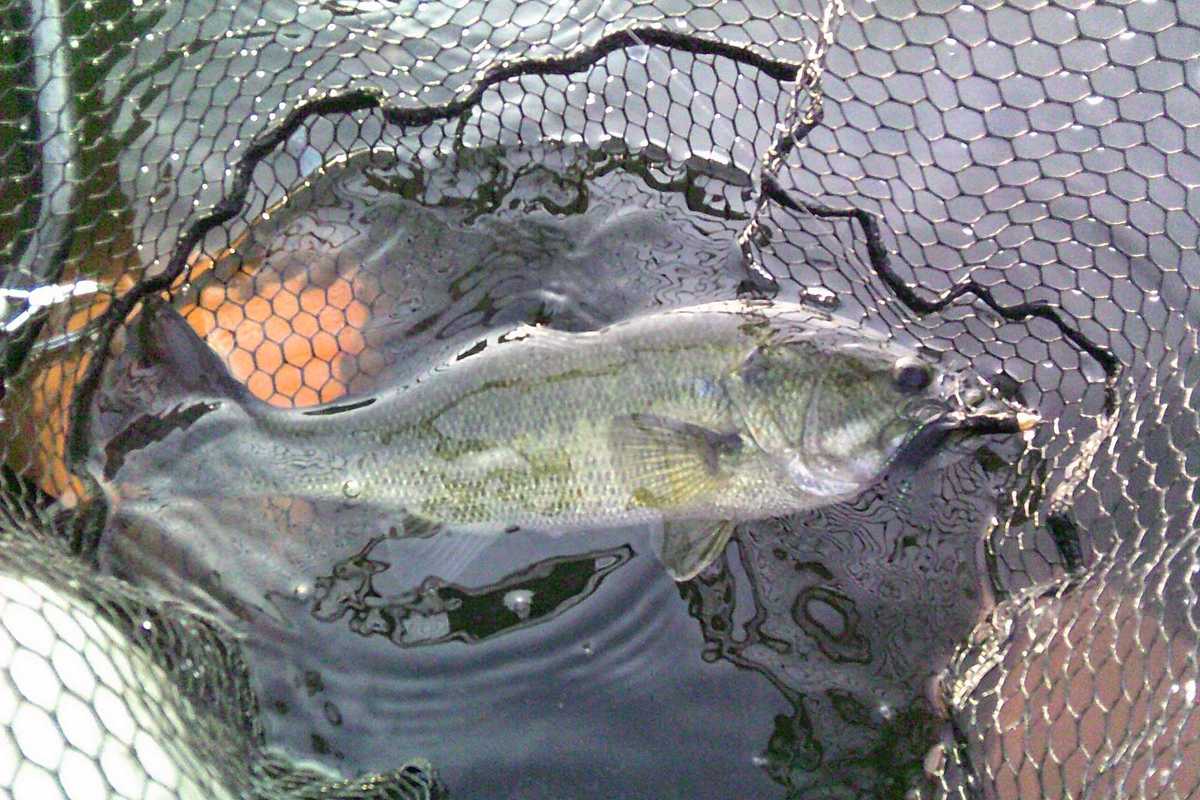
This fish took a Wooly Bugger in basic black, with rubber legs. Always get the rubber legs.
Patrick L. Sullivan
Then I hit on a succession of inflatable pontoon and belly boats, powered by oars and/or swim fins, and there I have remained.
Did I forget to mention that no motors are allowed on this lake? Well, no motors are allowed, and it’s no good arguing that a small electric trolling motor couldn’t possibly hurt anything. Ask me how I know this.
It’s a quiet, rejuvenating few weeks. The phone gets enough signal on one end of the deck to receive messages and maybe make a call if the wind is right. If something comes up, it’s only 15 minutes to so-called civilization.
When not fishing, I read, visit assorted cousins, listen to baseball on the AM radio and/or stare blankly into the middle distance.
Bassing with a fly rod in still water is a different game than chasing trout in streams.
A medium-fast-action rod, 8 to 10 feet, in line weight 7 or 8 is the starting point. The flies are big, and the wind is constant, so the angler needs some power, tempered with a bit of finesse.
I usually bring two rods. One is rigged with a floating line with a heavy front taper for turning over surface flies such as poppers.
The other has either a sink-tip or intermediate line. The lake is not all that deep, and the Woolly Buggers, Clousers and other streamers are heavy. The idea is to stay out of the vegetation while getting close to where the lunkers are hunkered down.
I use short nylon leaders, 7.5 feet with 1X tippet out of the package, and modify them constantly with additional sections of fluorocarbon tippet, snaps and droppers.
Surface action is usually minimal during the day unless it’s overcast. The lake runs east-west, so the angler can track the midmorning and late-afternoon shadows and work those areas.
Or the angler can wait until about 6:30 p.m., when things start to pick up.
Or get out there at the crack of dawn, which is best if surface action is the goal.
For subsurface fishing, some experimentation is required to find the right combination of flies, leader and sink rate. The angler also has to decide whether to troll.
There are a few places where a dry-dropper rig is appropriate, the dry being an extremely buoyant popper with a piece of stout fluorocarbon tippet tied to the bend of the hook and something heavy and wiggly at the end, like a stonefly nymph with rubber legs. (Always get the rubber legs.)
If this sounds like a bobber, it’s because it is. Don’t tell anyone. The purists don’t like it.
A net with a long handle is necessary. There is no leverage when sitting in what amounts to a floating chair.
I do not bring my phone for fish pictures. I will drop it into the depths. Ask me how I know this.
Instead I bring a small point-and-shoot camera. These get lost too, but perversely I have better luck keeping the cheap gear safe than the expensive items.
Sunscreen is applied liberally and frequently. After 50-odd years of being outside, I now have to visit the dermatologist every so often to have my face edited, and I don’t enjoy it.
A baseball cap does nothing for the ears and neck. I have a hat with a wide brim and a vented top, so it doesn’t get too hot. It looks stupid, but this is an acceptable risk.
Finally, a word about the quarry. Largemouth bass are not picky eaters. When engaged they usually dive and tug. Once in a while they leap. They are easily discouraged, however, and after a minute or two come meekly to the net.
Smallmouth, not so much. These aren’t especially big, but every smallie I’ve ever met thought it was much bigger than it actually was. Expect acrobatics.
Perch usually grab my fly when I don’t want them to.
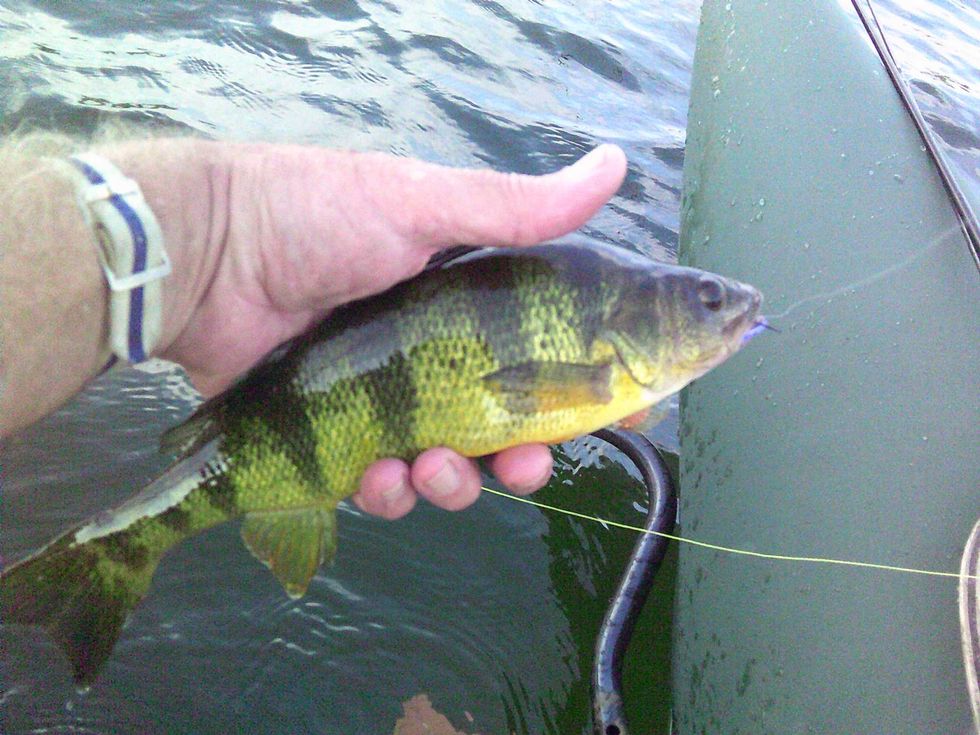 Perch are in the August mix, usually when I don’t want them to be.Patrick L. Sullivan
Panfish are everywhere. They are extremely cooperative. Chasing sunnies is a good way to get a newcomer started.
And then there are the pickerel. These are nasty fish. Very antisocial. I keep a pair of long-handled pliers handy to get the fly out of their mouths safely while admiring the large number of very sharp teeth. They will bite the pliers. Do not use your fingers. Again, ask me how I know this.
Upon release, it’s not unusual to observe the pickerel hanging around a few yards away, glaring and plotting hideous revenge.
So this is the August routine, occasionally leavened with a scramble into a brook trout stream if conditions allow.
It’s peaceful. Kind of boring, in a good way.
And then in the fall the game shifts back to rivers and streams for trout.

Want more of our stories on Google? Click here to make us a Preferred Source.


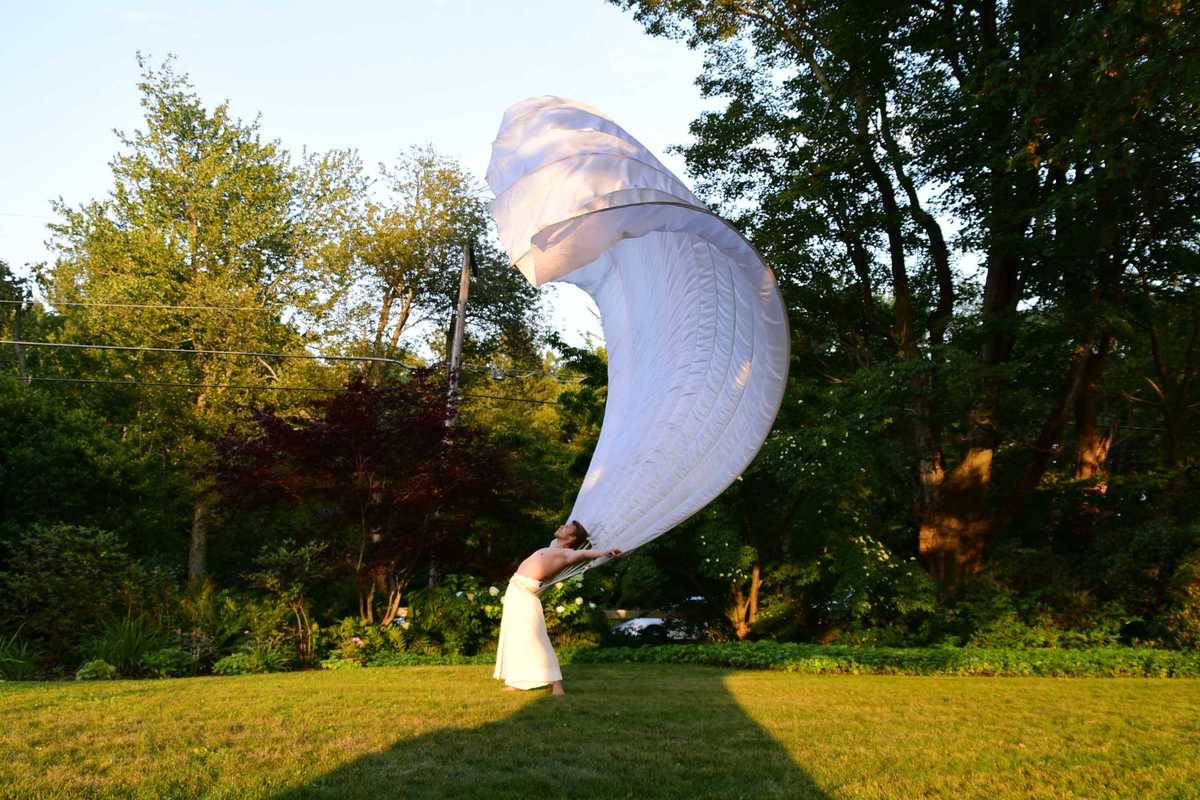
MOMIX is one of the featured performers at this year’s Arts Connected fundraiser on Aug. 29.
Provided
 Barry Blitt created an original piece for the fundraiser that will adorn a limited edition T-Shirt for sale during the event.Provided
The evening will feature live plein air painting by artists from Plein Air Litchfield, performances by Our Culture Is Beautiful (OCIB), fire performer Cinderfella, and Susan Becker Aziz’s monumental humpback whale puppet, originally created for Paul Winter’s “Missa Gaia.” Guests will also have the opportunity to purchase artwork from a curated exhibition, with proceeds supporting the Arts Council’s mission to strengthen and promote the arts throughout Northwest Connecticut.
This year’s honorary host committee includes Meryl Streep, Diane von Furstenberg, Tim Daly, Téa Leoni, Maria Horn, Patti LuPone, Jack O’Brien, Sam Waterston and Paul Winter. Creative cocktail attire is encouraged, and attendance is limited. The event is open to guests 21 and older.
For more information or to purchase tickets, visit artsnwct.org
Want more of our stories on Google? Click here to make us a Preferred Source.