

Latest News
Classifieds - August 11, 2026
Millerton News
Aug 11, 2026

AUTOS FOR SALE
1990 Mazda Miata hard top/soft top. Manufactured Oct. 1989. 64,000 plus miles. 99% original parts. $20,500. 203-215-0729.
HELP WANTED
Garden Help. Looking for an experienced person to weed my acre garden and cut back some plants. In Salisbury. For July and August. Could continue into Fall. naylor99@gmail.com
Wyantenuck Country Club is seeking waitstaff. Lunch shifts available for weekdays with flexible shift options for weekends and some dinners as well. Call 413-528-0350 or send resumes to brandon@wyantenuck.org
Simple part-time help needed in Millerton garden, pleasant environment. Must have basic knowledge of plants/weeds. Pays well. Call 518-789-9289.
SERVICES OFFERED
Hector Pacay Landscaping, LLC. Residential & Commercial. Tree service, Painting, Masonry, Stone Walls, Lawn Mowing, Gardens, Construction. 845-636-3212. CT and NY.
LOJA CLEANING AND JANITORIAL Home and Apartment Cleaning. Commercial Janitorial and Maintenance. Offices & Commercial Spaces. Move In/Move Out. Customized Deep Cleaning Projects. Licensed & Insured. 475-746-8621 or 475-529-6484. lojacleaningservices@gmail.com
REAL ESTATE FOR SALE
PUBLISHER'S NOTICE: Equal Housing Opportunity. All real estate advertised in this newspaper is subject to the Federal Fair Housing Act of 1966 revised March 12, 1989 which makes it illegal to advertise any preference, limitation, or discrimination based on race, color religion, sex, handicap or familial status or national origin or intention to make any such preference, limitation or discrimination. All residential property advertised in the State of Connecticut General Statutes 46a-64c which prohibit the making, printing or publishing or causing to be made, printed or published any notice, statement or advertisement with respect to the sale or:rental of a dwelling that indicates any preference, limitation or discrimination based on race, creed, color, national origin, ancestry, sex, marital status, age, lawful source of income, familial status, physical or mental disability or an intention to make any such preference, limitation or discrimination.
HOUSE FOR RENT
1 bdrm cottage for rent in Millerton. W/D, hardwood floors, garden. On a small farm with beautiful views. 15 min. drive to Harlem line. $1750/month plus heat & trash removal. References required. Call or email Shanna 845-337-7173 shannabarney@gmail.com
MT RIGA LAKEFRONT CABIN. Private beach, canoe, kayaks, fishing. $1,275/week. 585-355-5245.
RENTALS WANTED
ISO reasonably priced winter storage for small car and 16' boat within 20 miles of Millerton. Approx. October-May. 252-412.0228.


Keep ReadingShow less
Legal Notices - August 11, 2026
Millerton News
Aug 11, 2026
Legal Notice
Notice of Formation of Chapters & Charm LLC. Articles of Organization filed with the Secretary of State of New York (SSNY) on May 22nd 2026. Office location: Dutchess County. SSNY designated as agent of LLC upon whom process may be served. SSNY shall mail process to: 16 Barton Street, Millerton NY 12546. Purpose: any lawful act or activity. 0
7-16-26
07-23-26
07-30-26
08-06-26
08-13-26
08-20-26
LEGAL NOTICE
NOTICE OF FORMATION OF LIMITED LIABILITY COMPANY (LLC). Name: Garnet IT Consulting LLC. Articles of Organization filed with Secretary of State of New York (SSNY) on 07/01/2026 . Office location: Dutchess County. SSNY designated as agent of LLC upon whom process against it may be served. SSNY shall mail copy of process to: 22 South Randolph Avenue, Poughkeepsie, NY 12601. Purpose: Any lawful purpose.
07-23-26
07-30-26
08-06-26
08-13-26
08-20-26
08-27-26
LEGAL NOTICE
Coldworks Mechanical LLC. Articles of Organization filed with the Secretary of State of New York (SSNY) on 05/28/2026. Office location: Dutchess County. SSNY designated as agent of LLC upon whom process against it may be served. SSNY shall mail copy of process to: P.O. Box 353, LaGrangeville, New York 12540-0353. Purpose: Any lawful purpose.
07-23-26
07-30-26
08-06-23
08-13-26
08-20-26
08-27-26
LEGAL NOTICE
Notice is hereby given that an Application for Authority of Jones & Daughters Hudson Valley LLC, a foreign limited liability company, was filed with the Secretary of State of New York pursuant to Section 802 of the Limited Liability Company Law. The name of the limited liability company is Jones & Daughters Hudson Valley LLC. The jurisdiction of its formation is Connecticut. The date of its formation is January 28, 2026. The county within New York State in which the office of the limited liability company is to be located is Dutchess County. The Secretary of State has been designated as agent of the limited liability company upon whom process against it may be served, and the post office address to which the Secretary of State shall mail a copy of any process served upon the Secretary of State is Jones & Daughters, 34 Main Street, Millerton, NY 12546. The principal office address of the limited liability company is 34 Main Street, Millerton, NY 12546.
07-23-26
07-30-26
08-06-26
08-13-26
08-20-26
08-27-26
Legal Notice
Notice of Formation of GREEN VILLAGE CONTRACTORS LLC Articles of Organization filed with the NYS Department of State (SSNY) on 05/15/2026. Office location: Dutchess County. SSNY has been designated as agent of the LLC upon whom process against it may be served. SSNY shall mail a copy of any process to: Tomas Tun Ico 766 Old Route 22 Amenia, NY 12501 Purpose: Any lawful purpose.
08-06-26
08-13-26
08-20-26
08-27-26
09-03-26
09-10-26
Legal Notice
Notice of Formation of Polonia Hudson Valley, LLC (the "LLC"). Articles of Organization filed with the Secretary of State of New York ("SSNY") on July 27, 2026. Office location: Dutchess County. SSNY has been designated as agent of the LLC upon whom process against it may be served. SSNY shall mail a copy of any process served against the LLC to: 4 Marshall Rd, Unit 143, Wappingers Falls, NY 12590. Purpose: Any lawful activity.
08-13-26
08-20-26
08-27-26
09-03-26
09-10-26
09-17-26
Keep ReadingShow less
Millerton dispensary faces further delays from state regulators
Nathan Miller
Aug 11, 2026

Doug Broughton stands in his basement greenhouse in Wassaic on May 17. Broughton plans to open a dispensary in downtown Millerton at 32 Main St.
Photo by Nathan Miller
MILLERTON — Cannabis grower Douglas Broughton is still waiting on the Office of Cannabis Management to open his dispensary in Millerton.
His retail dispensary location at 32 Main St., in the former home of Demitasse and next door to what will soon be a Thai tea shop, has received site approval from the state’s cannabis regulation authority, but further approvals of the store’s interior and security systems are still pending.
“The next step is a walkthrough,” Broughton said, describing the lengthy process to attain approval for the retail element of his cannabis business from OCM.
Borughton first unveiled plans to open a dispensary in the shop in February of this year, originally aiming to open by mid-March.
Those hopes were soon dashed as March and April came and went, followed by May and June with no word from OCM regarding the status of his retail location.
Then, during a meeting of the state’s Cannabis Control Board in early July, regulators granted his license amendment that would allow him to move forward with the planned shop on Millerton’s Main Street.
Now, cannabis regulators are working through the final approval steps with Broughton. He said OCM officials needed to see certain documentation regarding the building’s legal occupancy status and verify the location’s security systems.
But that process was delayed by technical difficulties, Broughton said, when the OCM told him files he sent couldn’t be opened.
“They’re just nitpicking,” Broughton said. “I wasn’t annoyed until May.”
Among the additional requirements are verifications of his security system, the shop’s certificate of occupancy and connecting his point-of-sale system with his bank.
He said regulators require timestamped pictures from his security system and an additional third-party monitoring system — all of which he has submitted. The certificate of occupancy presents a different challenge, however, because the building his shop is in technically doesn’t have one. Instead, it has what’s known as a certificate of compliance because the building predates codes that require multiple exits for fire safety, he said. Broughton said he’s been advised that the document should satisfy OCM’s requirements, but he hasn’t received official word from the regulator yet.
He voiced frustration with the lengthy delays, acknowledging he expected the process to take between four to six months. As he stretches into the eighth month, however, the aggravation has grown.
“At this point it’s becoming a little insulting,” Broughton said.
Broughton said the interior space of the dispensary is nearing completion, including handcrafted cabinets and other furniture created by local woodworkers. A wooden sign currently hangs above the door at the Main Street location proclaiming it to be the home of Blackrabbit Farms.
Broughton offered an apology to locals over the delays, expressing disappointment that he missed out on opening the store earlier in the summer.
“I feel like I owe an apology to Millerton,” Broughton said. “I told them it was going to take a while, but I didn’t think eight months. This is becoming silly.”
Keep ReadingShow less

Want more of our stories on Google? Click here to make us a Preferred Source.
Parking variance granted to Center Street apartments
Jacquelyn Drain
Aug 11, 2026
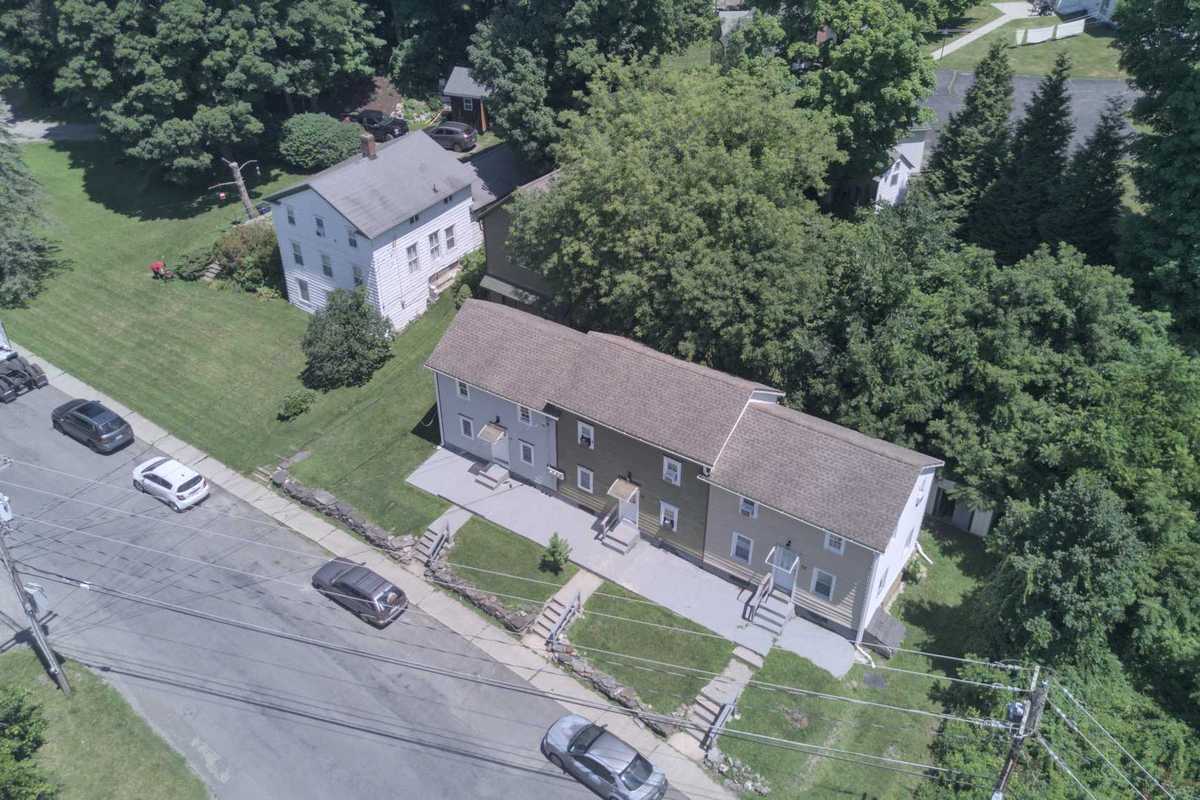
Apartment buildings at 26-32 S. Center St. currently host four housing units. Owners are seeking to renovate a fifth at the property.
Photo By Nathan Miller
MILLERTON — Owners of a South Center Street apartment building can now move forward with a special permit application after the Zoning Board of Appeals granted a variance for parking at the property.
The Village of Millerton Zoning Board of Appeals granted a parking variance to the owners of 26-32 South Center St. on Tuesday, Aug. 4, allowing the property to be non-compliant with village parking laws.
Following a public hearing on Aug. 4, the board approved the variance sought by owner Alex Magalhaes for an exemption to the village’s minimum onsite parking requirements. Under village zoning code, residences must have space on the property for at least 1.5 cars per housing unit. Magalhaes is seeking to restore a fifth apartment on the property, bringing his total parking burden to 7.5 spaces.
The property has onsite parking for up to four cars, Magalhaes said in a July ZBA meeting, but no additional off-street parking exists on that parcel or neighboring parcels.
Board members said the variance will allow for more housing in the area, a key issue in the community. Because the space has operated as an apartment for many years without issue, the board concluded that parking conditions could continue as previously established.
Jenn Najdek, resident of 33-35 S. Center St. and Mayor of the village, expressed support for the proposed parking solution and parking on the street. Najdek’s grandparents and brother previously owned the property before it was purchased by Magalhaes.
“With Millerton not having a lot of housing, I can’t see the renovation of an existing apartment creating any more adverse driving or parking conditions than already exist,” Najdek said. “It wouldn’t affect me at all.”
Catherine Fenn, a Millerton Resident, also expressed support for the project.
“Seems pretty simple, the building has always had that many apartments,” Fenn said. “It sounds like a moot question.”
Following the public hearing, Magalhaes can now go back to the Planning Board for the special use permit he requested in June to renovate the fifth apartment.
“We’re not changing any layout inside, we’re keeping everything the same,” Magahlhaes said. “The building permit is for me to bring life to the unit.”
Keep ReadingShow less
Lakeville Journal Street Fair brings together nonprofits for day of local fun
Patrick L. Sullivan
Aug 11, 2026

Luiza, 6; Cecilia, 4; Nathan, 4; and Aria, 6, show off their face paint and balloon animals during the fifth annual Lakeville Journal Street Fair on Aug. 8.
Photo by Aly Morrissey
SALISBURY, Conn. — Live music, lobster rolls, face painting and a mix of local nonprofit organizations filled Academy Street in downtown Salisbury on Saturday, Aug. 8, for the fifth annual street fair hosted by The Lakeville Journal.
Audrey Cole of the Western Connecticut Area Agency on Aging (WCAAA) was on site with information on the often-bewildering subject of Medicare.
Cole, who lives in Sharon, said the WCAAA is a nonprofit serving 41 towns in Western Connecticut with Medicare counseling, Alzheimer’s care, caregiver support, meals, transportation, chore assistance and more.
Medicare is always a hot topic, she said, in part because figuring out which program to choose — and when to sign up — can be difficult.
“There are lots of deadlines, lots of programs,” she said.
The advantage in asking WCAAA for help, Cole said, is its independence.
“We work for the taxpayers. We don’t steer anyone in any direction.”
Cole said the two big questions someone new to Medicare needs to answer are “How is your overall health?” and “What is your financial situation?”
Nearby, Danny Tieger was tuning his guitar in anticipation of a crowd of youngsters eager to hear live music. When they appeared, he had them brainstorm about what kind of animal they’d like to hear a song about. As the children pitched ideas, Tieger drew rapidly on a sketchpad propped up on an easel for everyone to see.
The children came up with a combination of a lion, a bird and an alligator.
Some people might find that melange a little daunting, but Tieger immediately launched into a song, made up on the spot.
“What’s our alligator-bird-lion’s name?” he asked.
“Chomps,” said a little boy.
“Chomps it is,” Tieger replied.
In the parking lot of Johnnycake Books, Linda Ciano, director of community engagement for Project SAGE, greeted visitors beneath a large tent.
The Lakeville-based nonprofit domestic violence agency has two fundraisers currently underway.
“The Bling’s the Thing” offers jewelry donated by supporters at bargain prices, while a five-dollar bill gets shoppers an extra sturdy, large blue Project SAGE tote bag.
Project SAGE is also sponsoring a community art project and inviting anyone to participate — no artistic skills required. The results will be displayed at an event at the Scoville Memorial Library on Sunday, Sept. 13.
At the Salisbury Association, Lou Bucceri held forth on a range of local history, from Salisbury’s iron industry and the role of its cannons in the American Revolution to the Holley knife collection and Ethan Allen’s insistence on being inoculated against smallpox by his friend Dr. Thomas Young of Amenia Union.
The idea of deliberately injecting a healthy person with a small amount of a disease was very new and, to many, seemed unwise if not downright evil. So Allen got his smallpox inoculation on the steps on the Congregational Church on a Sunday, for maximum publicity.
“And he was hauled into court on a charge of blasphemy,” Bucceri said.
Allen subsequently beat the charge.
Around 1 p.m. John Keilty of Litchfield took over the live music duties. He set up a Bo Diddley beat on one note, turning it into a repeating motif recorded electronically. He then soloed over it, soaring off in unexpected directions before bringing it back to the riff.
Keilty said his primary job is running a guitar repair business. He plays in a couple of bands, including Shake the Dust out of Litchfield.
“We call ourselves the Farm Band, because we always seem to play events held at farms,” he said.
Keep ReadingShow less
Dover High School’s Guitar Club prepares for Community Day performance
Lucia Iandolo
Aug 11, 2026

Members of the Dover Guitar Club prepare for a performance.
Photo Provided
DOVER PLAINS — Members of Dover High School’s Guitar Club are tuning up for another community performance as they prepare to take the stage at Dover Community Day on Sept. 19.
Since 2019, the club has given students a place to learn guitar, perform live and build confidence while giving back to the community. Led by Dover High School social studies teacher Eric Anderson, students meet after school to learn new music, rehearse and perform at school and community events.
What began as a club where students played guitar and watched music documentaries quickly evolved into a regular rehearsal group focused on learning songs and performing for audiences. Their first concert, scheduled for March 13, 2020, was postponed by the COVID-19 pandemic, but the students eventually made a name for themselves by performing in the community when many live music events had been canceled.
The club’s mission is rooted in community service, and members have performed at multiple fundraising events for residents and members of the school district
“A lot of our biggest acts and the things that we spend a lot of the year preparing for are these bigger events that support the community,” Anderson said.
Some of the students in Guitar Club have even started their own band and written original music. The band, Due Date, consists of Guitar Club members who now write and produce their own music. Due Date has performed as a group through Guitar Club, but additionally put on performances in the community at quinceañeras and the Dover Legacy Racing Cars & Guitars show.
Aiden Austin is a rising senior at Dover High School and a member of Due Date. He said Guitar Club had an impact on the group’s overall confidence and aided in preparation efforts for shows.
“The ability for me to even play at a show when I was a freshman is insane,” Austin said, “That’s why I am super grateful for Guitar Club.”
Keep ReadingShow less
Want more of our stories on Google? Click here to make us a Preferred Source.
loading