Dutchess County tax auction scheduled for Oct. 22

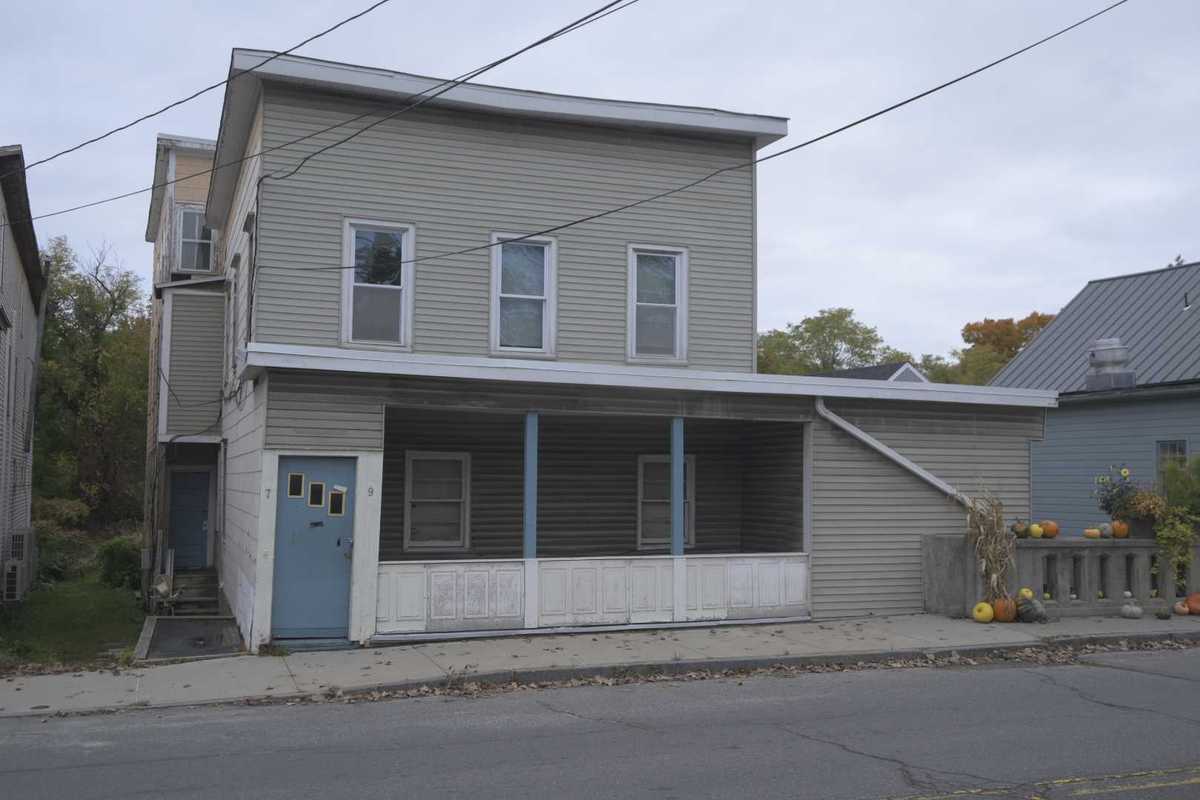
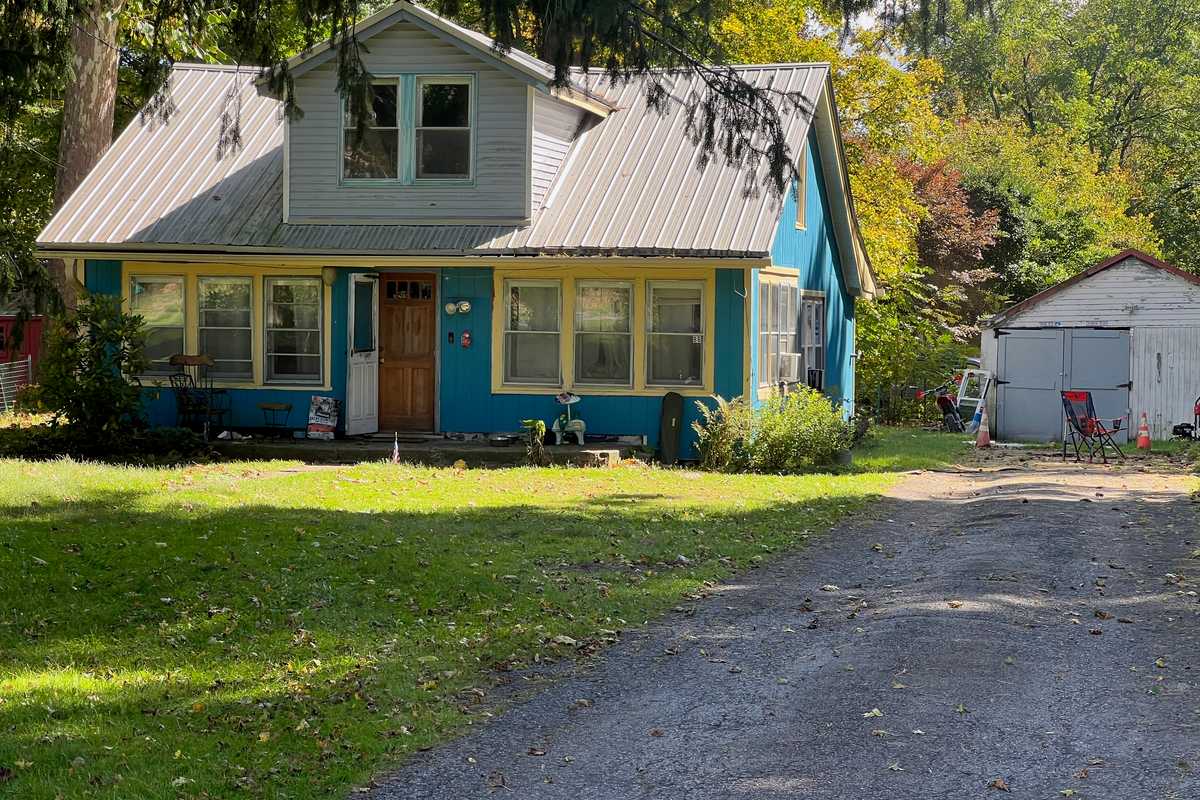
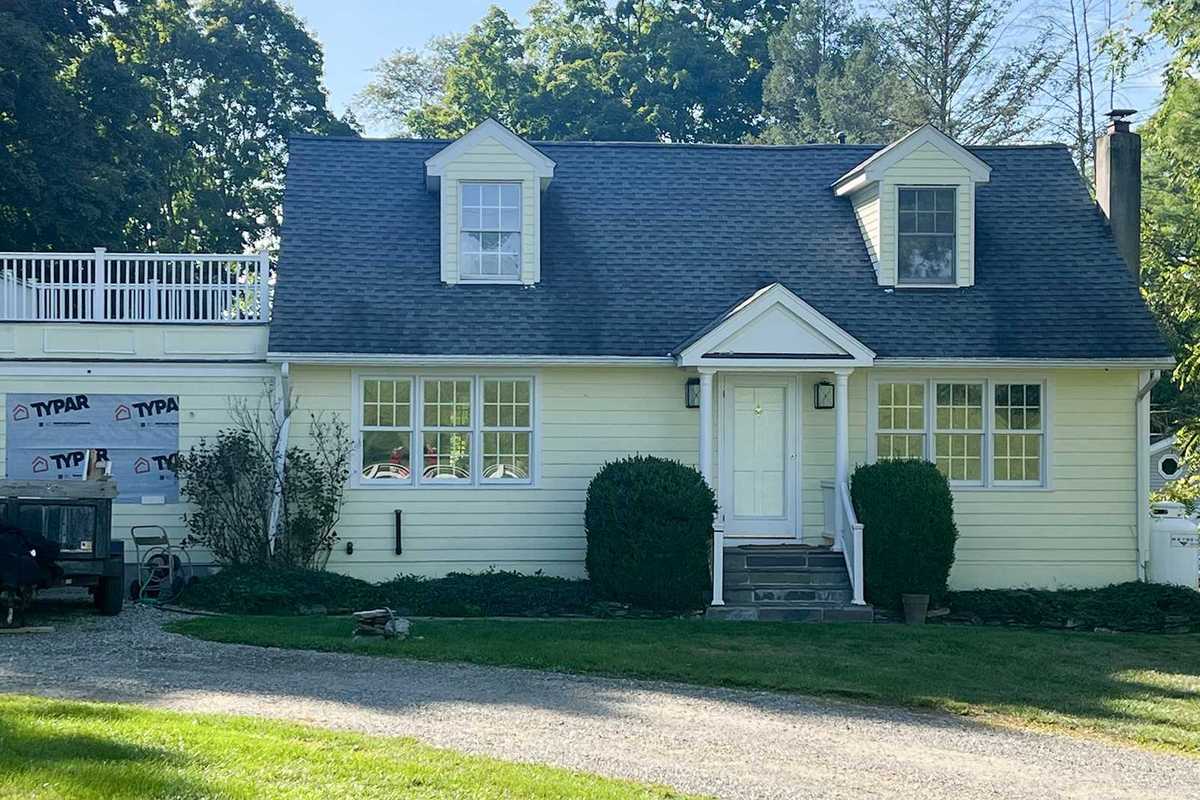
Tax foreclosed properties available in the upcoming Oct. 22 auction can be found at www.aarauctions.com
Photo by Christine Bates


Tax foreclosed properties available in the upcoming Oct. 22 auction can be found at www.aarauctions.com
Across all of New York State, county tax auctions permit towns to recover unpaid property taxes while giving buyers a chance to purchase real estate at potentially discounted prices.
Each year counties hold auctions where properties with long-overdue tax bills are sold to the highest bidder. These auctions usually include a mix of residential homes, vacant land, commercial buildings, and even waterfront parcels.
The process begins when property owners fall behind on their tax payments for an extended period, usually two to three years depending on the county.
Once a year — usually in October — Dutchess County contracts with Absolute Auction and Realty to conduct a sale of all delinquent properties. Absolute Auction publishes an online brochure which lists all the properties and puts up distinctive yellow signs in front of the properties for sale.
This year the Dutchess County sale of over 100 parcels will take place on ZOOM on Oct. 22 at 10 a.m. Properties are listed by town with information on the type, style, size, building date, acreage and school district.Most importantly, the full market value based on the property’s assessment and the minimum bid consisting of delinquent taxes, interest and penalties are included.
Owners have until Oct. 21 at 5 p.m., the day before the auction, to avoid having their property sold to the highest bidder.
Interested buyers should check the properties removed from the auction on the auctioneers’ website, aarauctions.com which is updated daily. Any unsold properties are held over until the next auction. Interested buyers must register, place a deposit, and be prepared to pay the balance quickly if they win.
Potential buyers should do thorough research on the properties and understand the risks. Properties are sold “as is,” with no guarantees about condition, title issues, or outstanding liens beyond taxes. Some of these distressed properties can be inaccessible back lots, too small to build on or even underwater, while others can be bargains.
Successful bidders take full responsibility for repairs, legal complications, or eviction of occupants. Ray D. Simmons bought 139 Rudd Pond Road in Millerton on .44 acres for $11,000 at one of the last county auctions held live in Poughkeepsie in 2019. Then he had to invest another $20,000 to tear down the deteriorated house, remove 95 tires and fill a 30-yard dumpster before he could start construction on a new house. Online bidding platforms like Absolute Auctions and Realty have made these auctions more accessible with live-streamed sales and digital registration replacing the County Court house steps attracting investors, first-time buyers and local residents alike.
In the upcoming sale in our area the one property listed in Amenia at 85 Bella Vista Road had been removed when the owner paid the back due taxes. Two parcels of vacant land are still available in Stanford and one 7.75-acre lot in the Town of Washington. In the Village of Millerton there is a .19 acre residential lot at 68 Barton Street which may or may not be large enough to build on with a minimum bid of $2,897.54.
Tax auctions benefit the county by collecting overdue taxes and returning properties to the tax rolls which eases the tax burden on other taxpayers. For communities, the auctions can spark neighborhood revitalization when abandoned or neglected buildings gain new owners willing to invest in repairs, upkeep and taxes.
Graham Corrigan & Nathan Miller
Ryan Courtien disappeared from his Wingdale home at 9:30 a.m. Sunday, July 12, wearing tan pants and a black shirt. He has now been located and is currently being evaluated in a local hospital.
DOVER PLAINS — New York State Police said missing former Dover Town Supervisor Ryan Courtien was located and taken to a local hospital Friday evening, July 17.
Dutchess County Sheriff's Deputies received a tip on Friday just before 6 p.m. that Courtien had been spotted at the Wingdale train station about a mile away from his home on 32 Waldo Road.
New York State Police said in a release Friday just after 8 p.m. that Courtien had been taken to a local hospital for evaluation.
Courtien — a 49-year-old father of two, Dover Planning Board chair and volunteer firefighter — disappeared from his Waldo Road home in Wingdale shortly after leaving the house at 9:30 a.m. Sunday, July 12.

Police conducted a four-day-long search that largely focused on his home and the surrounding woods. Authorities ended the search on Wednesday, July 15.
On Friday afternoon, New York State Police released surveillance camera footage showing Courtien leaving Grand Central Terminal in Manhattan just three hours after his reported disappearance on Sunday morning.
His whereabouts between Sunday morning and Friday evening are currently unknown. Authorities have not released any further information at this time.
Graham Corrigan & Nathan Miller
Fire crews douse the smoldering remains of an equipment shed at 357 Hunns Lake Road in Stanford after a fire and propane tank explosions destoryed the structure and farm machinery housed inside on Friday, July 17.
STANFORDVILLE — A fire destroyed a farm equipment shed in Stanford Friday, July 17.
Richie Ahlf, who lives at 357 Hunns Lake Road, was alerted to the blaze on his property when a landscaper working nearby noticed smoke and flames and ran into Ahlf's yard.
Ahlf reported the fire just before 1 p.m. The structure, an equipment shed that housed a tractor, a lawnmower and other farm machinery, was about 50 years old. The fire completely destroyed the shed and equipment stored inside, but caused no injuries.
"Nothing important, compared to a life," Ahlf said of the destruction. "Now I get to see how good my insurance is."
The fire had been brought under control by about 1:30 p.m. Fire crews continued to tamp out latent hot spots into the afternoon.
The mutual aid response drew fire crews from Stanford, Pine Plains, Ancram and North East.
A fire company official with the Stanford Fire Department said propane tanks exploded in the blaze, but was unsure if that was the cause of the fire or a secondary effect.
Nathan Miller
Ryan Courtien disappeared from his Waldo Road home in Wingdale on Sunday morning, July 12. Authorities concluded the search of the landscape surrounding his home after four days of scouring the woods at 4 p.m. Wednesday, July 15.
DOVER PLAINS — The search for former Dover Town Supervisor Ryan Courtien has concluded after four days of scouring the area surrounding his Wingdale home, but authorities say the investigation is ongoing.
New York State Police announced the end of the search for the 49-year-old Wingdale resident and current Dover Planning Board chair at roughly 4:45 p.m. Wednesday, July 15. Courtien disappeared from the yard in front of his Waldo Road home in Wingdale shortly after leaving the house at 9:30 a.m. Sunday, July 12, to work in his yard.
The State Police's Bureau of Criminal Investigation is continuing to investigate the disappearance and pursue additional leads, the statement said.
No further information is available at this time. State Police Public Information Officer Krystal Paolicelli was unavailable for comment immediately following the release's publication.
Courtien has been missing for four days. State Police conducted a search of the area surrounding his Wingdale home assisted by Dutchess County Sheriff's deputies, New York State Fire crews, New York State Forest Rangers and local volunteer fire departments from across northeast Dutchess County and western Connecticut.

Want more of our stories on Google? Click here to make us a Preferred Source.
Aly Morrissey
If you’ve driven down Main Street in Millerton, you’ve passed the former home and shop of one of the village’s earliest female entrepreneurs. At a time when most businesses were owned by men, Mary Kisselbrack made a name for herself in the late 1800s as a well-respected milliner and dressmaker.
On April 11, 1891, train conductor George Kisselbrack purchased a 124-by-232-foot vacant lot at 54 Main St. and hired locally renowned builders Beers and Trafford to design what would become their home and Mary’s business.
In a historical document, “A Beckon Call to a Village,” the house was referred to as “one of the handsomest, architecturally, in the village.” With gables, pointed roof lines and delicate shades of colors on its exterior ornamentation, the document noted that “no stranger passes it without an admiring glance.”
Today, the home still stands, and recently operated as a restaurant called Manna Dew Cafe, which closed its doors in 2023.
Mary Kisselbrack operated her business out of the west side of her home and developed a reputation for her skill, style, and business acumen.
“Mrs. Kisselbrack spares no pains in satisfying her patrons,” an 1890s Telegram article, the village’s newspaper at the time, said.
Kisselbrack’s reputation earned her customers from different parts of the country — some as far away as Florida — in addition to regular clients from Salisbury, Lakeville, Sharon, Amenia, Pine Plains, Copake and Hillsdale.
“With a woman of the long experience and exquisite taste of Mrs. Kisselbrack at the head of the millinery and dressmaking business, we may be sure that our wives and daughters will be reasonably supplied with the most stylish bonnets and dresses,” the article said.
In her 1905 obituary, Kisselbrack was described as a “self-made woman” who possessed “more than ordinary ability.”
On Oct. 5, 1905 — just over two months shy of her 56th birthday — Kisselbrack died following a severe, three-week illness. According to an obituary that appeared in the Millerton Telegram, she suffered a fibrous tumor and peritonitis.
“While she was not afraid to die, she lamented leaving home and loved ones,” the obituary said. “She talked of dying and of her funeral arrangements as calmly as if going away on a visit.”
Nathan Miller
Millerton’s business community will soon see the completion of a public wastewater system, addressing what local officials and business owners have called a major constraint on commercial development in the community for decades.
The $13.8 million project, which is expected to serve the core of the Village of Millerton and a commercial stretch of the Town of North East along U.S. Route 44, represents one of the largest infrastructure investments in the community in decades, and brings an end to calls for a sewer system that stretch back to World War II. Officials say the system will safeguard local waterways while creating a foundation for long-term economic stability.
Millerton trustee Matt Soleau, who has been working closely on the wastewater project and also operates a local full-service custom building firm, said in February that both residents and businesses are constrained by outdated septic systems, particularly on smaller lots where upgrades cannot meet modern health standards.
The proposed wastewater district aims to serve the core of the village, including its business district, as well as the commercial section of the Town of North East along Route 44 extending from Cumberland Farms to the New York-Connecticut border. Properties within the proposed service area currently rely on individual septic systems, including tanks with leach fields, and outdated systems like seepage pits, cesspools and holding tanks.
Village officials said many properties are limited not by zoning alone, but by septic constraints.
“As a result, many homes cannot legally add bedrooms, create accessory dwelling units or convert existing structures,” Soleau said.
Under the proposed system, most properties would retain their existing septic tanks if they are code-compliant and in good working condition. If a tank does not meet current standards, a new one would be installed as part of the project.
The existing tanks will still be used to collect solid waste, but liquid waste will travel through the municipal system to a treatment center. Treated wastewater will then be returned to Webatuck Creek.
Existing leach fields would be taken out of service and left in place, allowing property owners to reclaim that land for landscaping, driveways or ADUs.
For businesses, many commercial properties rely on old septic systems that are already maxed out, which makes it difficult or impossible to open water-heavy businesses like restaurants, cafes, salons or fitness studios.
Officials also emphasize the environmental benefits. A modern, up-to-date wastewater system will protect the natural environment, including the Webatuck Creek that flows right through the village.
Village officials say the construction phase will aim to limit disruption throughout the village and town, proceeding in targeted segments, with defined areas opened for installation, restored, and then closed before crews move on. The goal, Soleau said, is to allow normal activity to continue as much as possible throughout the process.
“Protecting the safety of our residents and visitors, preserving continuity of local businesses, maintaining access, and retaining residents’ quality of life throughout construction are non-negotiable priorities,” Soleau added.
The project hit major milestones this year, with village officials securing needed funding from a congressionally-directed spending grant of just under $4 million announced in February. That additional federal funding represented the last chunk of money needed to move the project forward.
Officials expect to begin construction on the system next year, with a tentative completion date targeting 2028.
Additional reporting provided by Aly Morrissey.
Graham Corrigan
Wooden beams made from tree trunks comprise the load-bearing structure under Millerton’s Moviehouse.
There are a handful of buildings that have stood the test of time over Millerton’s 175-year history. But if there’s one that stands out as a singular representation of the town, it’s the Millerton Moviehouse and its iconic clock tower.
Built in 1903 as a grange hall, it was soon converted into a movie theater with a second-floor ballroom. It was one of a handful of buildings that came to define the town in the following decades, standing tall across the street from the Episcopal Church and Millerton Inn, next to Terni’s, and up the hill from Millerton’s train station.
When a fire destroyed the local department store and other storefronts on the north side of Main Street in 1955, the Moviehouse became a landmark that represented the village’s early history.
It fell into disrepair in the 1970s and was briefly run as an adult theater. Marian and Carr Ferguson bought the theater in 1974, hoping to revive its status as a first-run theater and remove the pornographic element. Their four teenage daughters ran the theater for two years before the Fergusons sold the Moviehouse to Carol and Robert Sadlon in 1978.
“It was a single theater with 300 seats. There was no heat, no air conditioning,” said Carol Sadlon when asked about the state of the theater when she and her husband purchased it.
The Sadlons worked hard to improve the facilities over their nearly 50-year tenure. They added heat, air conditioning, and a second screening room. In 2012, they replaced the 35mm projection systems with a digital system.
But when COVID hit in 2020, the Moviehouse was an early casualty. By November 2020, the property was on the market, and the whole concept of movie theaters was in question.
Vaccines arrived in early 2021 — and a buyer for the Moviehouse followed soon after. The new co-chairs, David Maltby and Chelsea Altman, made the purchase in February 2021 and reopened the theater as a non-profit.
Its new non-profit status allowed the Moviehouse’s operators to seek grant funding. They initiated a massive renovation campaign that included redesigning both floors and adding an elevator. They also replaced the signage, and upgraded the seating this past April.
This past month, the Moviehouse received $99,000 as part of a grant provided by the New York State Council on the Arts that will pay to renovate and stabilize the 120-year-old building.
Looking forward, general manager Jeremy Boviard has big plans for the Moviehouse’s future. “What excites me about the possibilities looking forward is that we continue our positive trajectory as a regional arts center,” Boviard said. “We want to reach a wide variety of demographics, and continue to grow in lockstep with the needs of our community.”

Want more of our stories on Google? Click here to make us a Preferred Source.

Want more of our stories on Google? Click here to make us a Preferred Source.