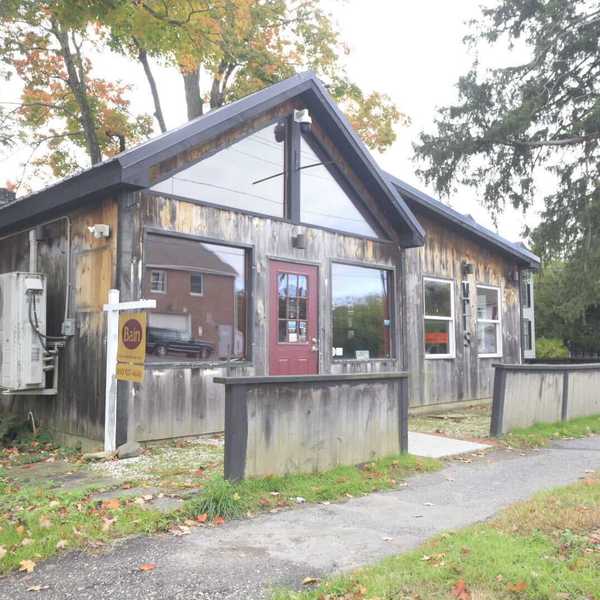
PINE PLAINS — The Hudson Valley Project (formerly known as the Durst Project) appeared before the Pine Plains Planning Board at a special meeting on Wednesday, June 23, when the board declared itself lead agency for the project’s review process.
Project details
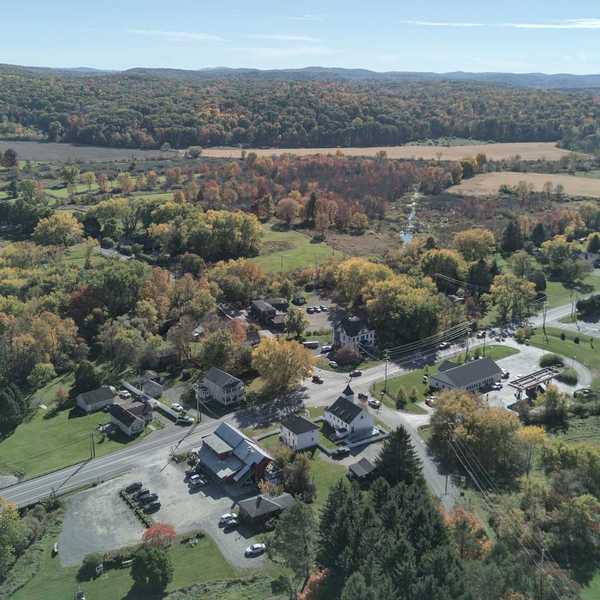
The Durst Organization submitted an application to the Planning Board in April proposing a 237-lot conservation subdivision on its 2,655-acre property west of the main hamlet, at the former Carvel Country Club (once owned by the late ice-cream magnate Thomas Carvel). There will also be 51 residential lots in Milan. The site fronts both sides of Route 199 and also borders the Taconic State Parkway. Of the total 3,100-acres, 2,655 acres will be in Pine Plains, with the remaining 445 acres located in Milan.
Planning strategies
The board adopted a positive declaration during the State Environmental Quality Review Act (SEQRA) process (meaning it perceives potential significant adverse environment impacts could result from the project) and scheduled scoping sessions for the project in July.
Scoping, explained planner Sarah Yackel from BFJ Planning, which is advising the Planning Board, refers to developing a document that outlines the environmental impact of a proposed action.
Lead Agency status
On the 23rd, Yackel told the board BFJ Planning received a letter from the New York State Department of Environmental Conservation (DEC) signing off on the Planning Board acting as lead agency. She added the board was at a point to make a negative or positive declaration.
BFJ Planning prepared Parts 2 and 3 of the Environmental Assessment Form (EAF) for the board to review. As the applicant, Durst was responsible for preparing Part 1 of the EAF, which was submitted in April.
Based on Parts 2 and 3 of the EAF, Yackel said BFJ assumed the board would adopt a positive declaration, which would direct Durst to prepare a Draft Environmental Impact Statement (DEIS).
Scoping sessions
Yackel next scheduled scoping sessions; she advised holding two.
The first will be Wednesday, July 21, with a formal scoping session at 7:30 p.m. with an opportunity to view maps and graphics concerning the project at 6:30 p.m.
The second will be Saturday, July 31, and will begin with an opportunity to view project maps and graphics from 9 to 10 a.m. and follow with a formal scoping session at 10 a.m.
Both sessions will be held at Stissing Mountain Junior/Senior High School at 2829 Church St. (Route 199), in the auditorium.
Following the July 31 session, the scoping process will remain open for an additional 10 days. Written comments will be accepted until Tuesday, Aug. 10, at 4 p.m., so the public can review the scope and make comments in-person, in writing or via email.
Comments may be sent to Planning Board Secretary Tricia Devine, Pine Plains Town Hall, 3284 Route 199, Pine Plains, NY 12567; or emailed to planningboard@pineplains-ny.gov. For more details, call Devine at 518-398-7155, ext. 204.
BFJ Planning will then take all comments and put them into a final scoping document for the Planning Board to review.
EAF forms
Yackel walked the board through Parts 2 and 3 of the EAF form, highlighting SEQRA standards for declaring a positive impact and the various impacts to be examined, such as those on land, groundwater, plants and animals, aesthetic resources and so forth.
She also touched upon the impacts that will be studied in the DEIS, such as potential impacts on human health.
Planning Board Chairman Michael Stabile asked Yackel to explain the significance of a box not checked off on the EAF. Yackel said if an item is checked as having “small to no” impact versus “large to moderate” impact, it doesn’t necessarily mean the issue won’t be studied during the scoping process.
Likewise, if a comment is raised, new information is brought to light or if the project description changes in any way, she said it will be studied.
She added the planners anticipate there may be additional issues raised during the scoping process that weren’t included in the EAF. However, Yackel said it wouldn’t bind the Planning Board to any specific course of study, but rather set a framework for what will go into the scoping process.
Self-contained
Planner Stuart Mesinger from engineering firm, The Chazen Companies, said the project’s infrastructure is entirely self-contained.
“We’re not creating any infrastructure that would service other development, so any other development would have to develop its own infrastructure,” he said. “There’s nothing that could piggyback on this and thus cause other development to happen.”
After further discussion, the Planning Board passed a resolution declaring itself lead agency for the Hudson Valley Project.
“We appreciate the Planning Board’s continuing diligence and hard work and look forward to working with all stakeholders on the next phase of the project,” said Chief Development Officer of The Durst Organization Alexander Durst in a press release issued on Friday, June 25.
The Draft Scope submitted to the Planning Board is available to view at www.pineplains-ny.gov.





 Pay Bill for Robin Starr’s service in the Continental Army.Courtesy the Alex Breanne Corporation
 John Mills speaking at Quinnipiac University.Courtesy the Alex Breanne Corporation
 Stephanie Saetta,with her rescue dog George and Blue (left), a shepherd mix awaiting his forever home.Madi Long