Thank you!
Your support is sustaining the future of local news in our communities.

Pine Plains solar hearing canceled

PINE PLAINS — The New York State Supreme Court judge in charge of the lawsuit brought by residents opposed to the Tier 3 solar project at Pulvers Corners canceled a Tuesday, March 19, court hearing.

Judge Anthony R. Molé of Putnam Supreme Court issued the cancellation order Tuesday, March 12.

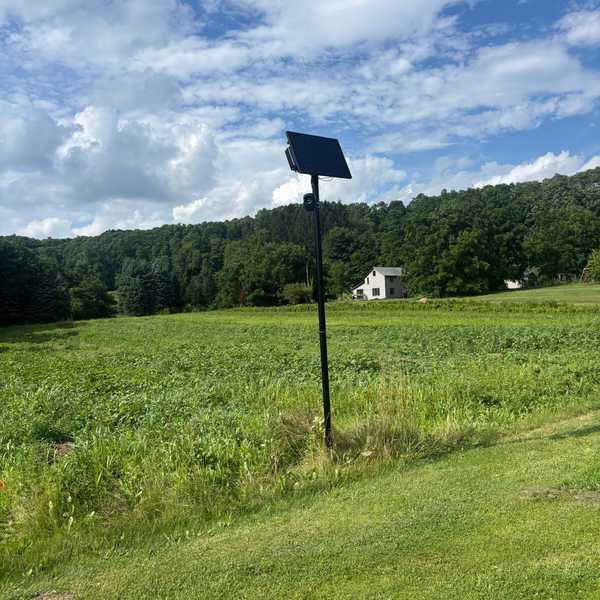
The resident group, known as Preserve Pine Plains, is seeking an injunction against the solar farm project, proposed by Carson Power LLC of New York City. It filed an Article 78 action against the Pine Plains Planning Board and developers of the project, which envisions a 10MW complex consisting of 24,000 solar panels on farmland at 454 Bean River Road.

Article 78 proceedings put the action of an official or agency under review by a court.

This case was recently assigned to Judge Molé after several other justices recused themselves from the case for various reasons. Justice Gina Capone, who previously had been assigned the case, had scheduled the oral arguments.

“The attorneys are advised that the Court will review the fully submitted motion papers and determine if oral argument is necessary for disposition of the motion,”
Judge Mole wrote in a court notice. The judge also indicated that conducting an oral argument “is discretionary” and added, “should it deem oral argument necessary, the Court shall fix an appropriate date and time with advance notice.”

Since the petition was filed by Preserve Pine Plains Dec. 27, 2023, more than 120 documents have been submitted by sets of attorneys representing both sides of the case.

Mindy Zoghlin of the Zoghlin Group LLC in Rochester represents Preserve Pine Plains.

The town is represented by Warren S. Replansky. Alicia R. Legland, an attorney with Hodgson Russ LLP, represents the developers named in the case: Pulvers Corner Solar 1 LLC, Pulvers Corners Solar 2 LLC, Nexamp Inc., SolaREIT 1-A LLC and Carson Power.

Others named are: Carol Giardino, Diane Weck, Lucie M. Giardino and John Does.

The group claims the Town Board failed to take a “hard look” at “significant adverse impacts” with respect to community character and town planning documents. It also claims the Planning Board failed to take a “hard look” at the project’s impacts on plants and animals and on aesthetic resources and “ignored identified areas of environmental concerns.”

The town and the project say in responses filed with the court that the “ Planning Board fully considered the potential impacts on forested lands and potential for property value impacts prior to making its State Environmental Quality Review Act (SEQRA), Special Use Permit, and Site Plan determinations for the proposed solar energy facility.”

The defendants further say that there is no evidence of negative impacts on property values as claimed by the resident group.

Latest News

Ancram’s rural character fuels demand for a tight supply of homes

297 Wiltsie Bridge Road is currently listed for sale at $1,450,000, one of 15 homes currently on the market in Ancram.

Photo by Dave Hall

One of the most sought-after towns in the Hudson Valley is Ancram, in the southeast corner of Columbia County. With a blend of open fields, wooded mountains, quiet roads, and thousands of acres of conserved land, Ancram has been showing up on home buyers’ radar for a number of years. Once a purely agricultural community, the town still has a number of working farms, from traditional dairy operations to organic vegetable, grain and grass-fed meat options.

Ancram’s housing stock includes estates, charming farmhouses, modest ranches, quaint hamlet one- and two-families and a couple of affordable homes built by Habitat for Humanity. Comprised of two hamlets, Ancram and Ancramdale, each with a post office and an eatery, plus the Boston Corners neighborhood on the Massachusetts border, Ancram offers many choices for those looking for a quiet Hudson Valley home.

Keep ReadingShow less
‘So Little to Do,’ so much to discover at James Barron Art

Curator Deborah Goodman Davis reads the Emily Dickinson poem “The Grass So Little Has to Do.” Spencer Finch’s “Following Three Bees (Zinnias)” buzzes in the background.

Photo by Natalia Zukerman

“The Grass Has So Little to Do,” on view at James Barron Art in Kent, takes its title from Emily Dickinson’s poem “The Grass So Little Has to Do,” written in 1862:

“The Grass so little has to do—
A Sphere of simple Green—
With only Butterflies to brood
And Bees to entertain—”

Keep ReadingShow less
Marina Kotchoubey is taking care of business

Marina Kotchoubey at the Ian Ingersoll Cabinetmakers showroom in West Cornwall.

Photo by D.H. Callahan

After 40-something years navigating the world of custom fine furniture, Ian Ingersoll was getting ready to retire. Starting off with a little dovetail stool that he sold at a shop in West Cornwall in the 1970s, he’d grown his skill and his business into something he — and the whole town — could be proud of. Shutting down that business was not an option.

Ingersoll built Ian Ingersoll Cabinetmakers, which produced mainly classical Shaker furniture, on passion: the passion he had to make a living through creative challenges and the passion of his employees, who all seem deeply in love with their craft.

Keep ReadingShow less
google preferred source

Want more of our stories on Google? Click here to make us a Preferred Source.

A legacy of giving at Norfolk Chamber Music Festival

One hundred and twenty years ago, Carl and Ellen Stoeckel commissioned New York architect E.K. Rossiter to design The Music Shed in Norfolk, Connecticut. After nearly a decade of entertaining their friends and neighbors with the finest music of the day, they built a permanent home for their beloved Litchfield County Choral Union.

The commission and full funding of the construction was not unheard of in an era when great fortunes led to public enrichment. Railroad tycoon John D. Rockefeller was instrumental in funding institutes of higher education. Steel baron Andrew Carnegie was building libraries all over the country, and famously said that a man who dies rich is a disgrace, challenging his peers to give their fortunes back to the people.

Keep ReadingShow less
Two unique exhibitions at Geary Gallery

Henry Klimowicz with his sculpture, “Partial Pillar 1”

Photo by D.H. Callahan

On Saturday, Aug. 1, Geary Gallery opened its doors in Salisbury for two unique shows in its first- and second-floor gallery spaces. Art lovers flooded both floors over the course of the afternoon, giving the events a vibrant feeling that enhanced the importance of the art.

On the first floor is a show by Chicago-born, Colorado-based photographer Summers Moore, titled “Lobitos: Pueblo Fantasma,” or “Lobitos: Ghost Town.” The work centers around her daughter’s current hometown in Peru. Moore herself found a home away from home in Colorado in the mid-1980s and encouraged her children to seek out new places outside of their comfort zones.

Keep ReadingShow less

Writer’s retreat in the woods

Writer’s retreat in the woods

Participants in a 2024 Great Mountain Forest Woodland Academy workshop at Yale Camp.

Photo by Mike Zarfos

Great Mountain Forest (GMF) will host its first Nature Writing Retreat at the historic Yale Camp in Falls Village from Aug. 7-9, 2026. Writers of all levels are invited to draw inspiration from one of New England’s most notable forest landscapes. GMF envisions the retreat becoming an annual event celebrating writing, conservation and the relationship between people and forests.

This immersive three-day retreat reflects on the legacy of Hal Borland, the American writer and New York Times nature columnist whose work was deeply connected to this landscape. The retreat explores how wilderness shapes language, strengthens close observation and fosters environmental consciousness.

Keep ReadingShow less
google preferred source

Want more of our stories on Google? Click here to make us a Preferred Source.

google preferred source

Want more of our stories on Google? Click here to make us a Preferred Source.