PINE PLAINS — Dyan Wapnick, president of the Little Nine Partners Historical Society, is reluctant to call herself a playwright, but after penning Widow’s Weeds — a compelling and true story about a Revolutionary War widow — she’s embracing the creative process and watching her words come to life on stage.
The play will be performed for one-day only at the Stissing Center on Saturday, Sept. 6 at 4 p.m.
Widow’s Weeds is based on the true story of Mary Ingalls, an 84-year-old Revolutionary War widow who, in 1842, fought to receive her late husband’s military pension using only her memories and oral testimony.
Wapnick was inspired to write Widow’s Weeds after a descendant of Mary and Elihu Ingalls, who were married in Pine Plains in the late 1700s, donated family research to the historical society. When the opportunity to apply for a Dutchess County Department of History grant arose, she saw a chance to bring their little-known story to life on stage.
After extensive research and conversations with descendants of Mary and Elihu Ingalls, Wapnick says telling their story carries a sense of vindication. “These widows went through so much just to be recognized,” she says. “As a widow myself, I could relate to Mary — there was a real kinship.” Wapnick believes the play is important not only for the Ingalls family, but also “to highlight a forgotten segment of history.”
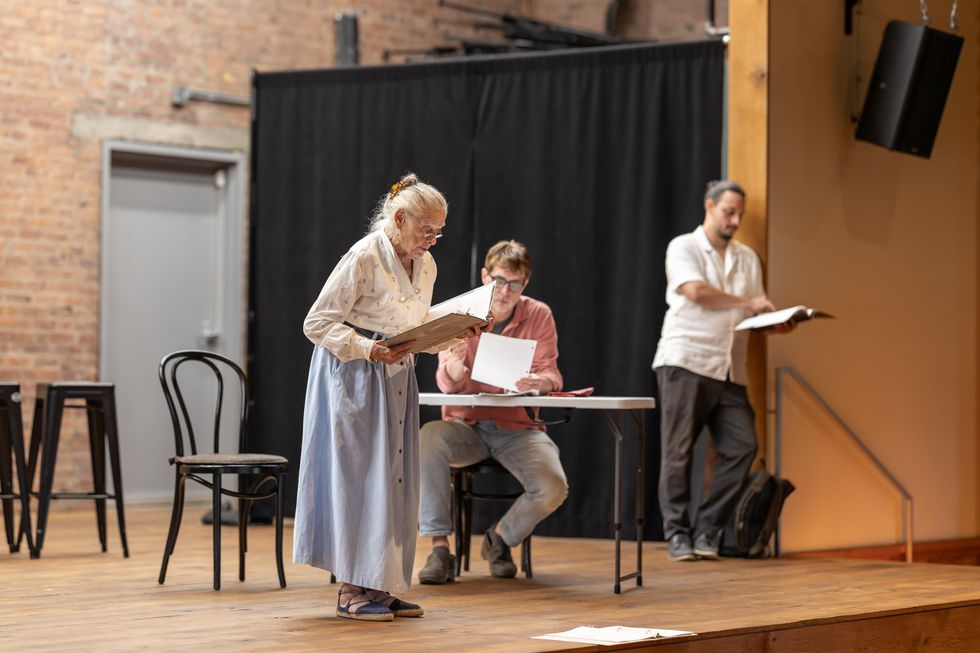 Grace Dietrich, left, Dean Temple, and James Elvin, right, running lines on stage at the Stissing Center on Thursday, Aug. 28. Widow’s Weeds is being directed by Robert C. Lyons.Photo by Aly Morrissey
As a historian, Wapnick says “it was important to keep the story as accurate as possible.” She says it was a unique challenge to stay true to the facts while crafting a narrative compelling enough for the stage. There are moments where she allowed creative choices to take the lead, stepping slightly away from strict historical accuracy in service of the story.
For example, though she had access to the depositions from the late 1800s, the language was “dry, rambling and dated.” Wapnick says she edited the dialogue to add color and modernize it, while keeping the original essence.
Additionally, a funeral scene is styled like a medieval wake. “The inspiration is drawn from a different historical time period,” Wapnick says, “but the mood just felt right.”
Though Widow’s Weeds is her first play, Wapnick is no stranger to writing. She researches and pens the monologues for Pine Plains’ annual cemetery tours and even has an unpublished novel. “But a play is exciting in a completely different way,” she says.
With rehearsals well underway, Wapnick credits New York City playwright and director Robert C. Lyons with bringing the production to life on stage. A Pine Plains resident and seasoned director, Lyons has included Wapnick in the creative process throughout rehearsals. “Robert is a fantastic director — he keeps things moving and has brought this so far in a short time,” says Wapnick.
Widow’s Weeds was made possible in part by a $9,475 grant from the Dutchess County Department of History. The Rev250 grant — a $100,000 initiative funded by the Dutchess County Legislature — supports public programming that explores the enduring impact of the American Revolution on local communities, in honor of its 250th anniversary.
Rooted in history and guided by Wapnick’s pen, a love story, a ghost story, and a fight for women’s rights intertwine in this remarkable true account. The performance is free and open to the public, though reservations are required through the Stissing Center website.





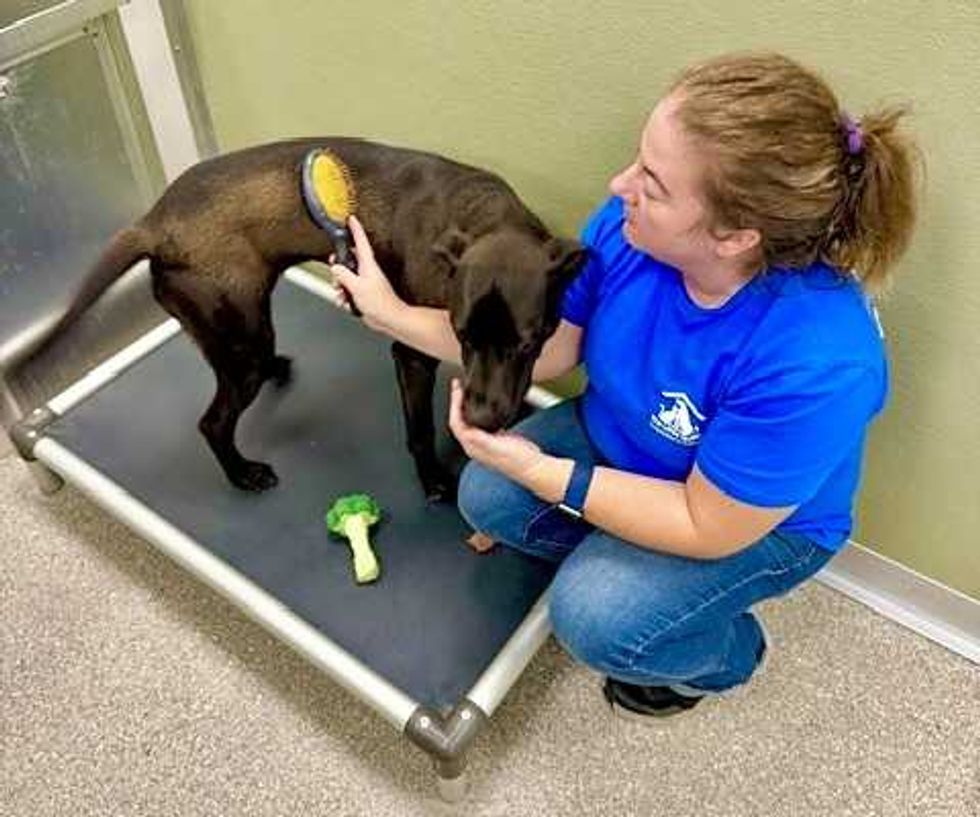 Tiffany Lemelin, shelter manager, brushing Marsala upon arrival.Provided
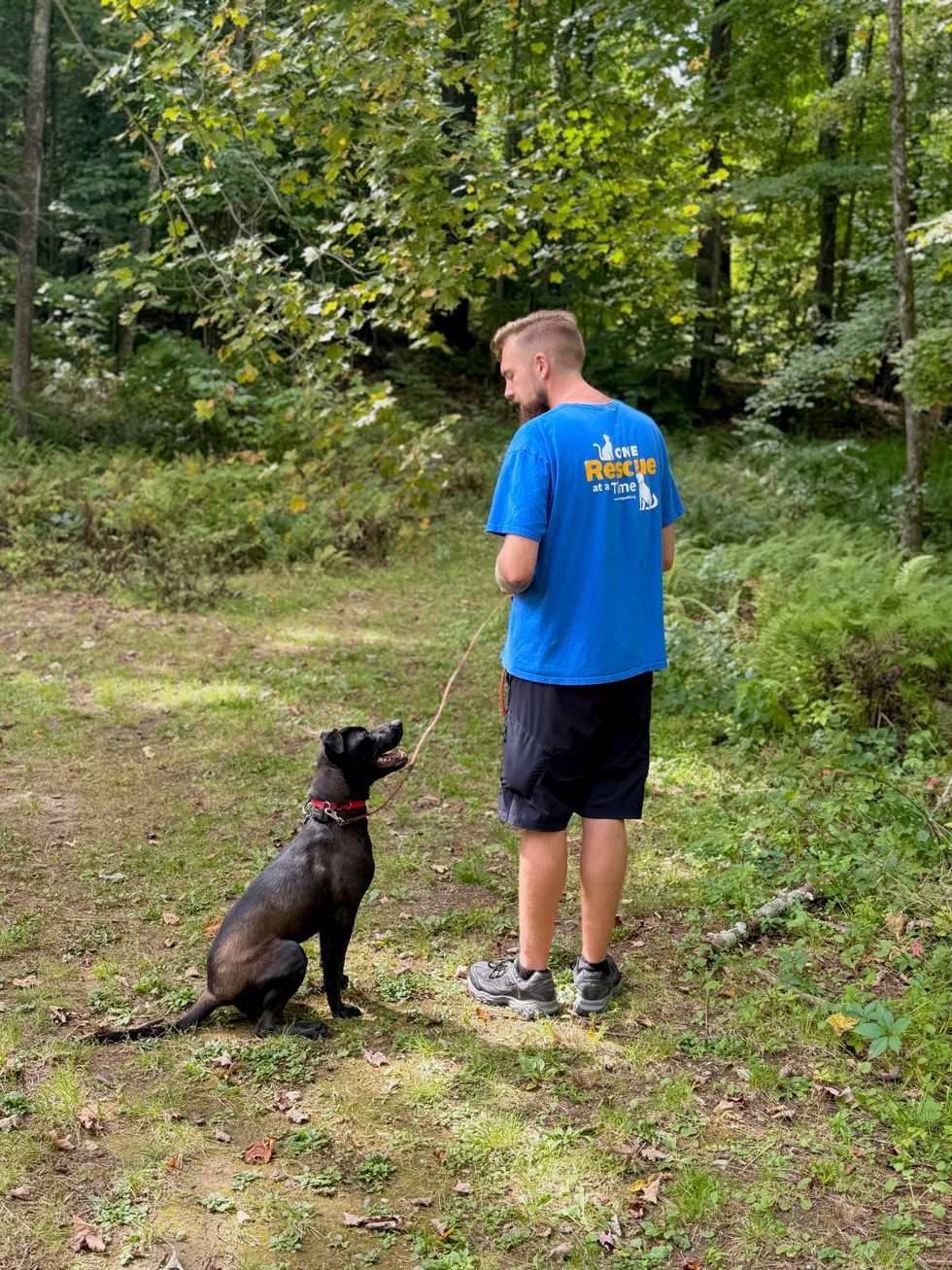 Michael DeBarba, certified dog trainer working with Marsala.Jennifer Almquist
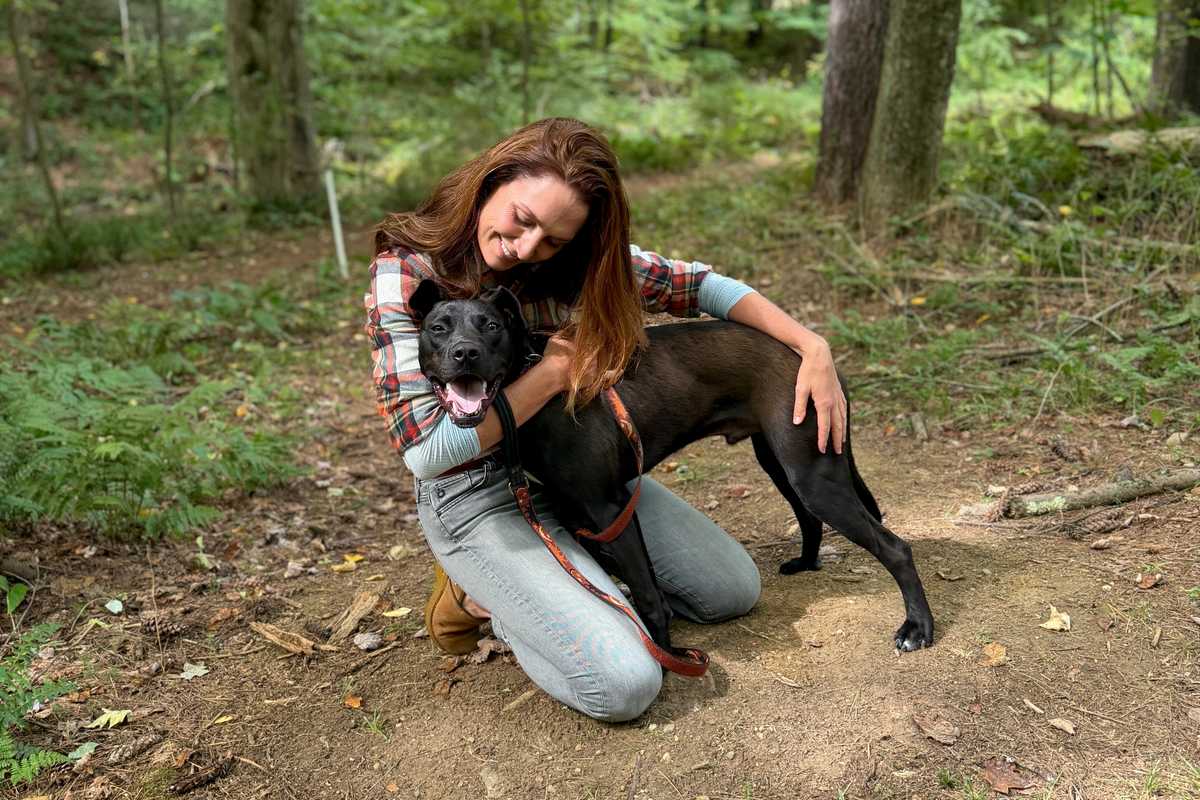 Marsala wins a heart.Jennifer Almquist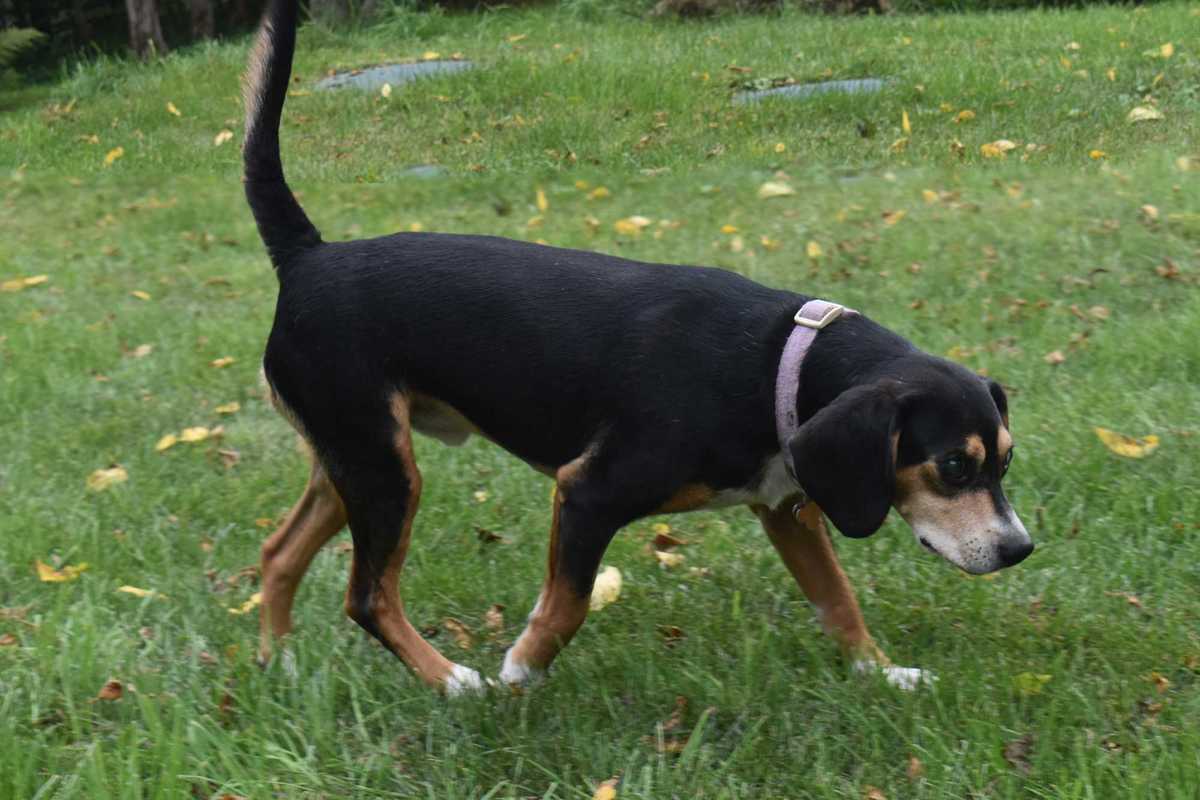
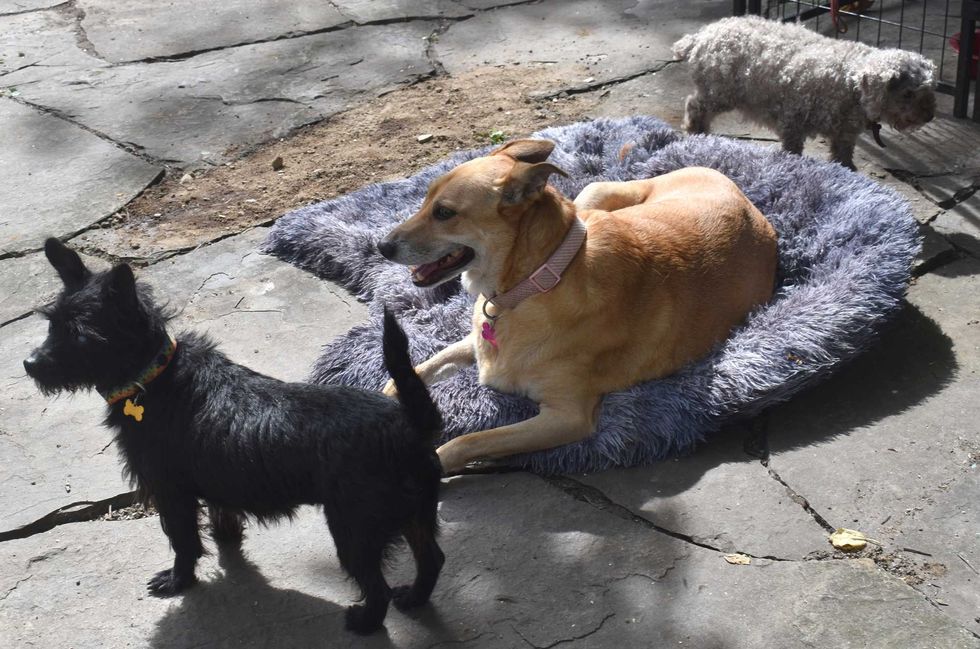 Sadie, center, a Carolina dog, plays with her friend Negra, a terrier mix. Bella Linda, the small poodle, has since been adopted.L. Tomaino
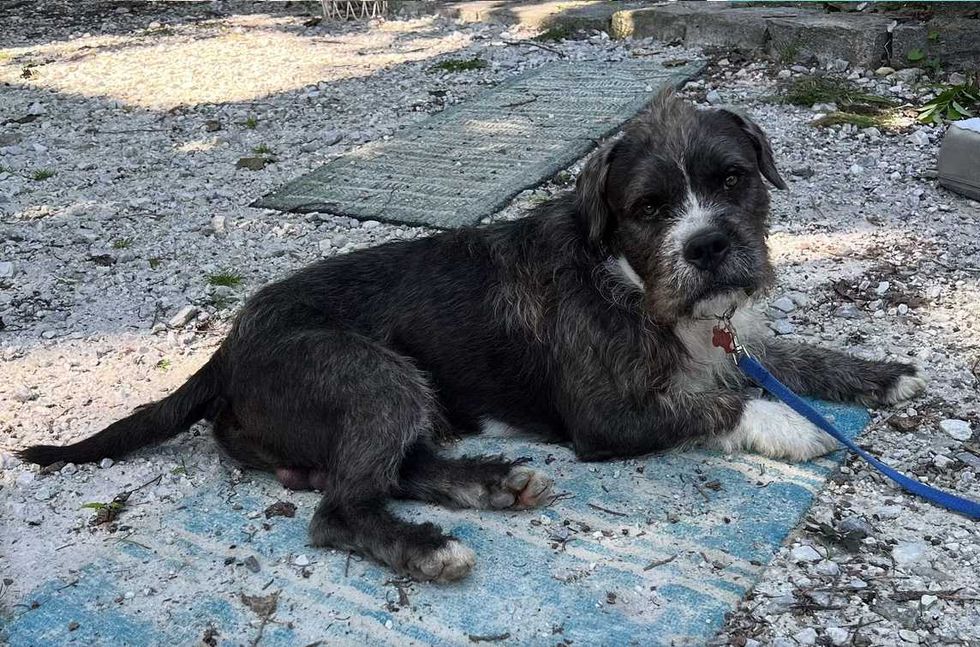 Wesley, a young, exuberant mix, is looking for an active home.L. Tomaino
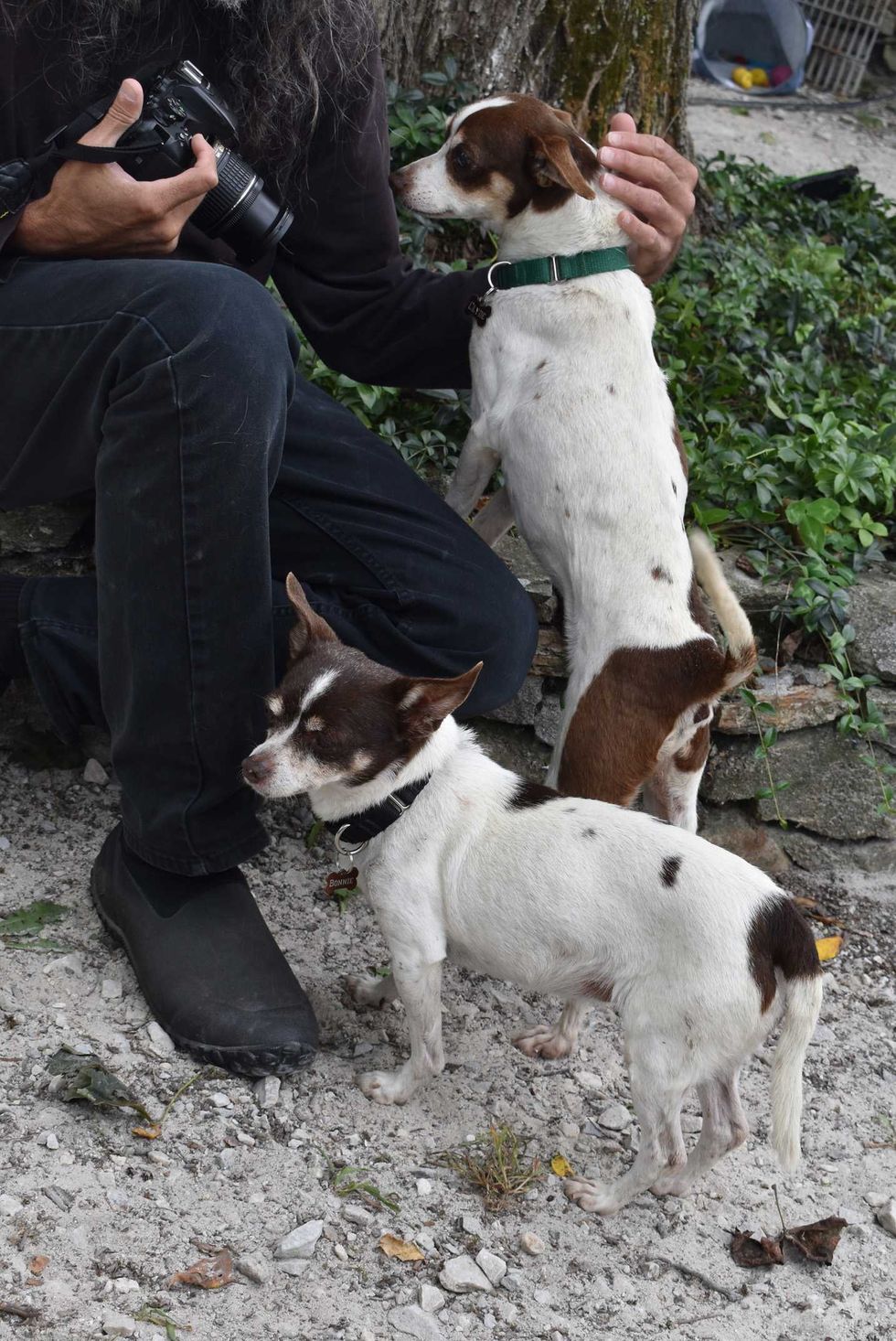 Bonnie and Clyde, an affectionate terrier pair.L. Tomaino