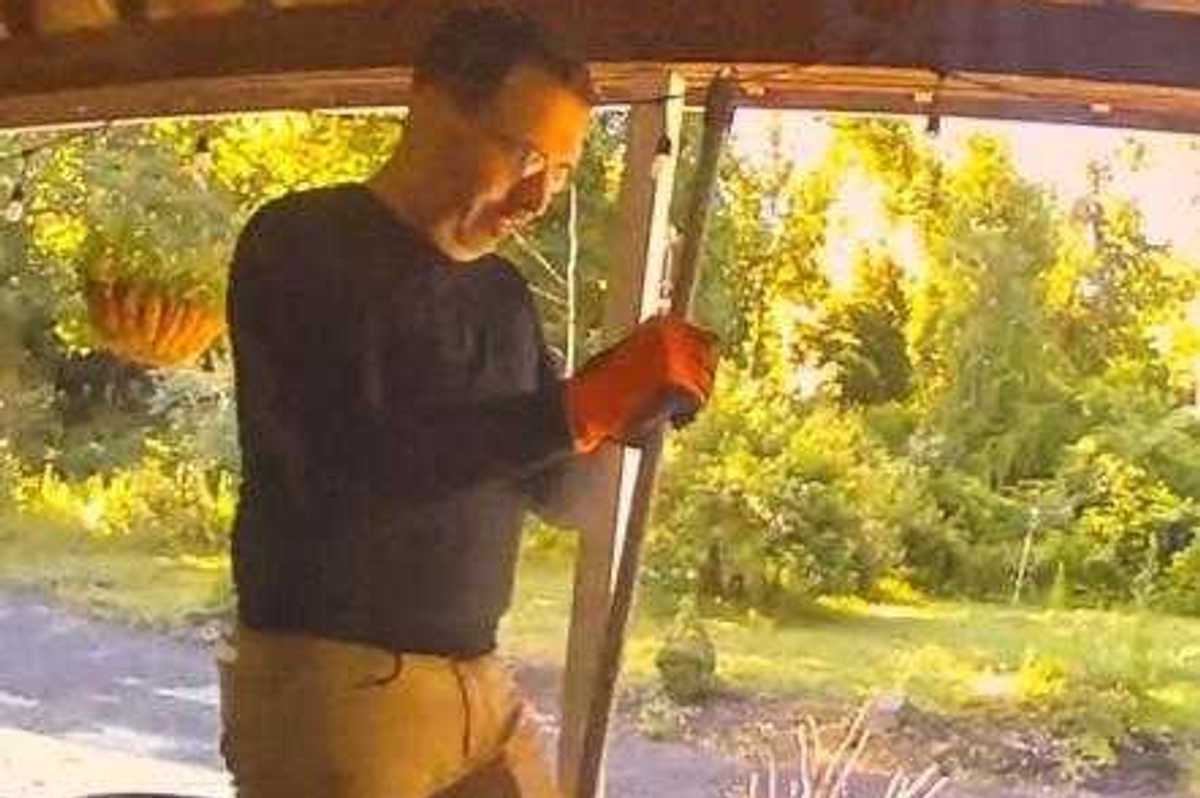
Pieter A. Van Why


NORFOLK —Pieter A. Van Why of Norfolk, passed away in Greenfield, Massachusetts , on 11 April 2026, at 20:31:471 after a long illness.
Pete was born in April of 1943 to John B. Van Why and Priscilla M. Van Why, in Winthrop, Massachusetts, while his father was stationed on Long Island, in Boston Harbor, during WWII. The family later moved to Winsted, then finally to Norfolk,
Pete grew up during a time of strife in the country, sandwiched between WWII and the Vietnam war. In 1964, as the war raged and young men were being drafted to fight in jungles far from home, Pete had the wisdom to enlist in the Air Force instead of becoming cannon fodder in the army. He would end up working his way up to being Chief Master Sargeant, or an E9, the highest level an enlisted man could attain. Along the way, he garnered such commendations as the Presidential Unit Citation, the Republic of Vietnam Gallantry Cross, and many more. As was typical with Pete, he never once talked about these accomplishments. When I asked him about these, he told me, “I just did what I had to do.”
And he would continue to do just that.
After 21-1/2 years in the Air Force, Pete retired in Feb. of 1985 and moved back to Norfolk, where the family had settled in 1959. Pete choose to give himself a demarcation line between the military and civilian life by embarking on a 5-month long through hike of the Appalachian Trail. This initial through hike would be the start of a lifelong love affair with long distance hiking and the AT in particular. It was during this hike when he got his trail name of ‘The Cheshire Cat.’
When Pete was forced by illness to give up hiking in 2020, he had logged over 18,0002 miles. While many would consider that an incredible number of miles, he still mourned the fact he wasn’t able to complete the Pacific Crest trail nor accrue the staggering amounts of miles many of the people he looked up to had done, some topping 45,000 miles.
We used to say we told him to go take a hike one day and he left for five months.
Throughout his life, Pete would remain goal oriented. Upon his retirement from the Air Force and subsequent hike, he enrolled in college for a few years He would accrue several degrees over those years of schooling, degrees that eventually landed him in his second career, this one with Sieman’s Measurement Systems Business (later becoming Pratt & Whitney Measurement Systems) as a Senior Product Specialist. In this role, one he would hold for 25 years, he would travel the world calibrating high tech laser guided machines. Given his penchant for accuracy (we used to tell him, ‘Have a precise day!’) this role was right in his wheelhouse.
There’s so much more we could tell you about his accomplishments, such as pilot, flight instructor, world-wide travels, awards from the military and more, but that isn’t talking about the man. And he was a man that a lot of people didn’t understand at first.
His energy level was high, and his mind was keen and active, usually running several lengths ahead of whomever he may have been talking to. This at times led to him ending his side of the conversation first because his mind was already on to the next thing.
He never slowed down.
But, in 2018 he would receive a diagnosis of Atypical Parkinson’s, a condition caused by exposure to hazardous materials, something he was around for over 20 years while in the Air Force.
In 2020, as Covid 19 stilled the world, Pete retired from Pratt & Whitney and embarked on his next chapter. I would end up spending more time with him from 2020 to 2026 than I ever did in the previous decades. And as we worked together, I discovered the man that often moved so quickly most people never truly met him.
As I packed boxes, I found writings of his that were introspective and thoughtful. He had a skill with the written word that extended past his usual footnote laden Christmas letters.3 And as I began to travel to Norfolk every weekend, I found he had slowed down to where he could and would enjoy sitting and having coffee and conversations. And during these conversations I found a man who had a quiet modesty about him, who was loyal to his friends and family, and who seemed genuinely surprised when I expressed thanks to him for all he had done for both the family and in service.
To Pete, his greatest achievement in life wasn’t the accolades or the degrees – it was the hiking he had done and the friends he made along the way. Pete valued those friendships, those connections deeply. The first 1985 through hike (he would go on to complete the Appalachian Trail three more times, in section hikes) would leave a lasting impact on him.
He wrote about what was a pensive time for him as he hiked through ‘the longest spring of my life.’ As the miles passed beneath his feet he thought about what he had done and what he had to do next. This may have been the first time in his life where he had the ability to slow the world down and focus internally. This time spent on the AT would help shape the rest of his life.
In 2020, he left Norfolk, and eventually ended up in Greenfield, Massachusetts near the home of his sister and brother-in-law. The Parkinson’s progressed in an inexorable march, eventually claiming him in the end. Much like his trail-namesake, the Cheshire Cat, he slowly faded away until only the grin was left. He retained his humor to the last, still managing to smile even as he drifted away.
I leave you with some quotes from Pete’s work – he wrote a 17-page paper about the Appalachian Trail upon his retirement from hiking the AT in 2016, when the Parkinson’s made it impossible to continue.
A few summers ago, I’d just completed a 400-mile multiple-trail hike at the Canadian border, northern terminus of Vermont’s Long Trail. The next day – dreary and rainy – as I was road-walking through North Troy towards Newport for the bus ride home, I saw an old woman in an adjacent house watching me pass. For the remainder of the day, I couldn’t shake that image. I wondered if she had ever thought about going end-to-end on the Long Trail or thru-hiking the Appalachian Trail earlier in life and, if so, did she?4
Why do this?
How to adequately convey a feeling with mere words? I’ll make a feeble attempt. Perhaps there’s too much materialism in our society and we occasionally need some decompression. What motivates apparently sane people to undertake such a journey? Certainly, couch potatoes need not apply. Make no mistake, it’s work, hard work, but to many it’s one of the most rewarding, even intoxicating, things we’ve ever done. But why? During the waning weeks of his life Paul Fink, the last living founder of the ATC , wrote from his convalescent hospital “I sit in this room with never a hope of getting out, with thoughts running through my mind of how delightful it would be to be lying by a trailside under a big balsam tree with no sounds unless it be the twittering of the birds and the rustle of the breeze in the tree branches above.”
Much like his closing quote, there’s too much to convey about Pete with mere words. He was a kind man who loved animals, a highly intelligent and funny man, a loyal son, brother and friend to many. His passing will leave a hole in many lives.
It’s a life well lived when people mourn your absence.
Pete was predeceased by his parents John and Priscilla Van Why and his brother-in-law Jack Petersen. He is survived and dearly missed by sister Karen Petersen (Jack) of West Hartford, Connecticut, brother John Van Why (Denise) of Ravena, New York, sister Sue Anne Van Why of Winsted, and Sue’s son Jesse Van Why of Connecticut. He is also survived by and deeply missed by sister Stephanie Funk and her husband Edward Funk, of Greenfield, who were honored to be able to be with him throughout the final years of his life. Those last few years spent in his company will be cherished memories forever.
We would like to thank the staff at Charlene Manor Extended Care for their kindness and love toward Pete as his last chapter played out. We appreciate it, and I know he did as well. We would also like to thank both Compassus Hospice and Pioneer Valley Hospice for the care they showed to him and us throughout these last four years.
There will be no calling hours or a formal funeral. In lieu of flowers, the family requests donations in Pieter’s honor be made to the Appalachian Trail Conservancy. Info can be found at Appalachiantrail.org. There will be a celebration of life to be held on August 22, 2026, at Norbrook Farm Brewery, 204 Stillman Hill Rd, Colebrook, CT from 1:00 p.m. until evening.5
Godspeed, Pete. May the trails always be smooth and the sun shine upon you forever. We love you.
1 If you ever met Pete, you would completely understand why this was written this way.
2 The number of miles hiked is 18,715, not including ancillary mileage ~ Pieter A. Van Why /‘Thru-hiking The Appalachian Trail’/ v2016, /P1
3 We are going to miss those footnote laden Christmas letters.
4 Pieter A. Van Why /‘Thru-Hiking the Appalachian Trail/ v2016/ P1
5 Because this wouldn’t be a proper missive about Pete without footnotes. There will be light refreshments served, and of course plenty of beers to toast his memory with. They are a Harvest Host member for those who may want to camp.
Aly Morrissey
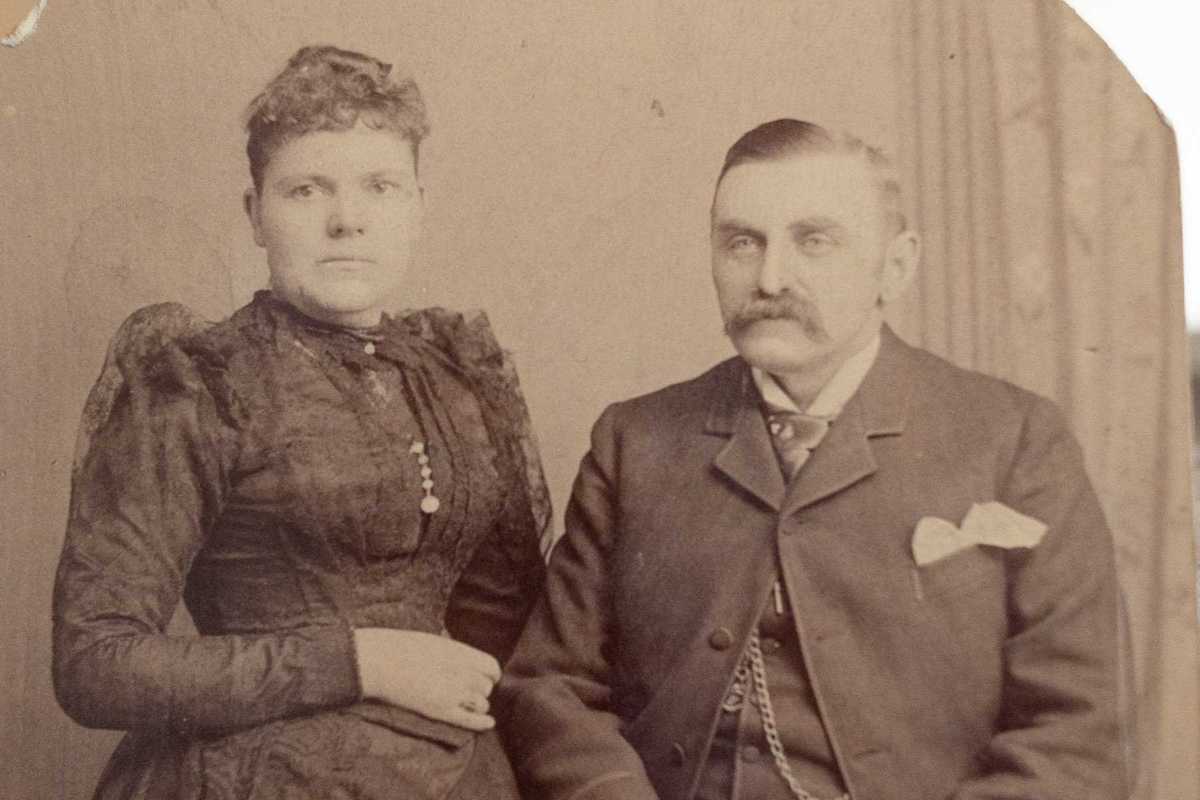
If you’ve driven down Main Street in Millerton, you’ve passed the former home and shop of one of the village’s earliest female entrepreneurs. At a time when most businesses were owned by men, Mary Kisselbrack made a name for herself in the late 1800s as a well-respected milliner and dressmaker.
On April 11, 1891, train conductor George Kisselbrack purchased a 124-by-232-foot vacant lot at 54 Main St. and hired locally renowned builders Beers and Trafford to design what would become their home and Mary’s business.
In a historical document, “A Beckon Call to a Village,” the house was referred to as “one of the handsomest, architecturally, in the village.” With gables, pointed roof lines and delicate shades of colors on its exterior ornamentation, the document noted that “no stranger passes it without an admiring glance.”
Today, the home still stands, and recently operated as a restaurant called Manna Dew Cafe, which closed its doors in 2023.
Mary Kisselbrack operated her business out of the west side of her home and developed a reputation for her skill, style, and business acumen.
“Mrs. Kisselbrack spares no pains in satisfying her patrons,” an 1890s Telegram article, the village’s newspaper at the time, said.
Kisselbrack’s reputation earned her customers from different parts of the country — some as far away as Florida — in addition to regular clients from Salisbury, Lakeville, Sharon, Amenia, Pine Plains, Copake and Hillsdale.
“With a woman of the long experience and exquisite taste of Mrs. Kisselbrack at the head of the millinery and dressmaking business, we may be sure that our wives and daughters will be reasonably supplied with the most stylish bonnets and dresses,” the article said.
In her 1905 obituary, Kisselbrack was described as a “self-made woman” who possessed “more than ordinary ability.”
On Oct. 5, 1905 — just over two months shy of her 56th birthday — Kisselbrack died following a severe, three-week illness. According to an obituary that appeared in the Millerton Telegram, she suffered a fibrous tumor and peritonitis.
“While she was not afraid to die, she lamented leaving home and loved ones,” the obituary said. “She talked of dying and of her funeral arrangements as calmly as if going away on a visit.”
Nathan Miller
Millerton’s business community will soon see the completion of a public wastewater system, addressing what local officials and business owners have called a major constraint on commercial development in the community for decades.
The $13.8 million project, which is expected to serve the core of the Village of Millerton and a commercial stretch of the Town of North East along U.S. Route 44, represents one of the largest infrastructure investments in the community in decades, and brings an end to calls for a sewer system that stretch back to World War II. Officials say the system will safeguard local waterways while creating a foundation for long-term economic stability.
Millerton trustee Matt Soleau, who has been working closely on the wastewater project and also operates a local full-service custom building firm, said in February that both residents and businesses are constrained by outdated septic systems, particularly on smaller lots where upgrades cannot meet modern health standards.
The proposed wastewater district aims to serve the core of the village, including its business district, as well as the commercial section of the Town of North East along Route 44 extending from Cumberland Farms to the New York-Connecticut border. Properties within the proposed service area currently rely on individual septic systems, including tanks with leach fields, and outdated systems like seepage pits, cesspools and holding tanks.
Village officials said many properties are limited not by zoning alone, but by septic constraints.
“As a result, many homes cannot legally add bedrooms, create accessory dwelling units or convert existing structures,” Soleau said.
Under the proposed system, most properties would retain their existing septic tanks if they are code-compliant and in good working condition. If a tank does not meet current standards, a new one would be installed as part of the project.
The existing tanks will still be used to collect solid waste, but liquid waste will travel through the municipal system to a treatment center. Treated wastewater will then be returned to Webatuck Creek.
Existing leach fields would be taken out of service and left in place, allowing property owners to reclaim that land for landscaping, driveways or ADUs.
For businesses, many commercial properties rely on old septic systems that are already maxed out, which makes it difficult or impossible to open water-heavy businesses like restaurants, cafes, salons or fitness studios.
Officials also emphasize the environmental benefits. A modern, up-to-date wastewater system will protect the natural environment, including the Webatuck Creek that flows right through the village.
Village officials say the construction phase will aim to limit disruption throughout the village and town, proceeding in targeted segments, with defined areas opened for installation, restored, and then closed before crews move on. The goal, Soleau said, is to allow normal activity to continue as much as possible throughout the process.
“Protecting the safety of our residents and visitors, preserving continuity of local businesses, maintaining access, and retaining residents’ quality of life throughout construction are non-negotiable priorities,” Soleau added.
The project hit major milestones this year, with village officials securing needed funding from a congressionally-directed spending grant of just under $4 million announced in February. That additional federal funding represented the last chunk of money needed to move the project forward.
Officials expect to begin construction on the system next year, with a tentative completion date targeting 2028.
Additional reporting provided by Aly Morrissey.
Graham Corrigan
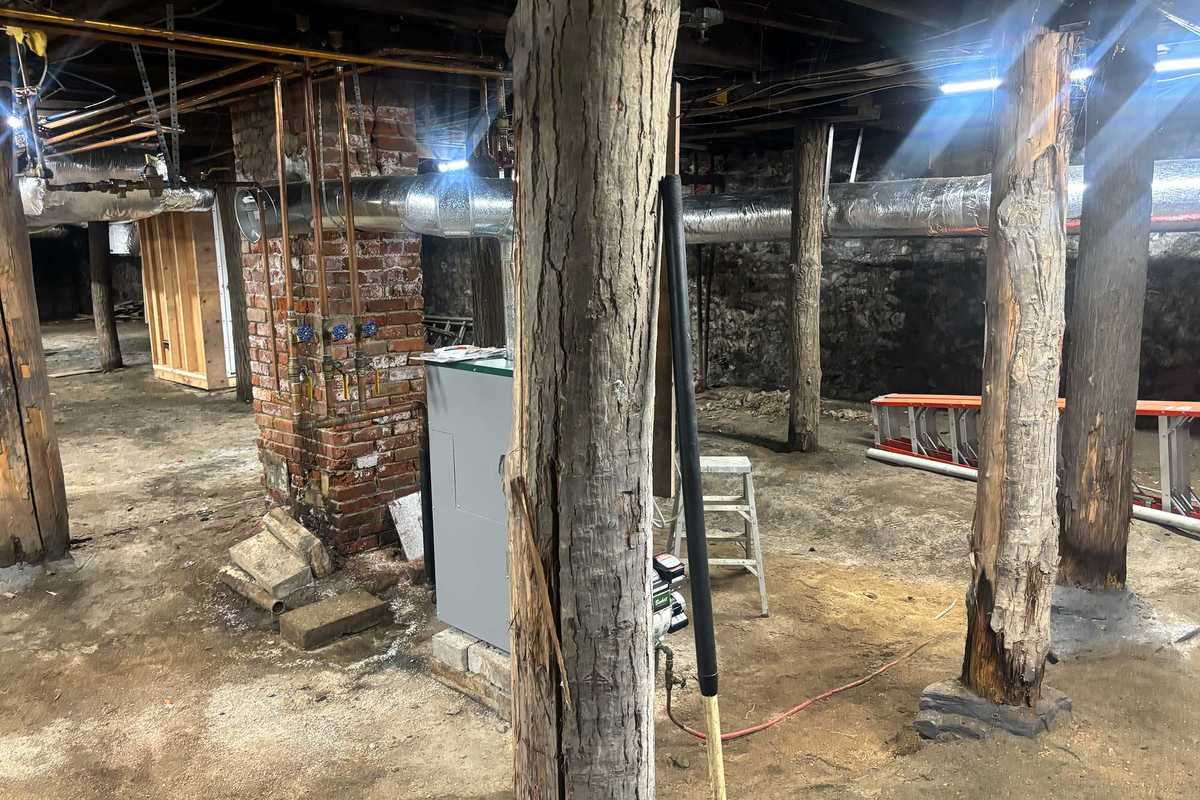
Wooden beams made from tree trunks comprise the load-bearing structure under Millerton’s Moviehouse.
There are a handful of buildings that have stood the test of time over Millerton’s 175-year history. But if there’s one that stands out as a singular representation of the town, it’s the Millerton Moviehouse and its iconic clock tower.
Built in 1903 as a grange hall, it was soon converted into a movie theater with a second-floor ballroom. It was one of a handful of buildings that came to define the town in the following decades, standing tall across the street from the Episcopal Church and Millerton Inn, next to Terni’s, and up the hill from Millerton’s train station.
When a fire destroyed the local department store and other storefronts on the north side of Main Street in 1955, the Moviehouse became a landmark that represented the village’s early history.
It fell into disrepair in the 1970s and was briefly run as an adult theater. Marian and Carr Ferguson bought the theater in 1974, hoping to revive its status as a first-run theater and remove the pornographic element. Their four teenage daughters ran the theater for two years before the Fergusons sold the Moviehouse to Carol and Robert Sadlon in 1978.
“It was a single theater with 300 seats. There was no heat, no air conditioning,” said Carol Sadlon when asked about the state of the theater when she and her husband purchased it.
The Sadlons worked hard to improve the facilities over their nearly 50-year tenure. They added heat, air conditioning, and a second screening room. In 2012, they replaced the 35mm projection systems with a digital system.
But when COVID hit in 2020, the Moviehouse was an early casualty. By November 2020, the property was on the market, and the whole concept of movie theaters was in question.
Vaccines arrived in early 2021 — and a buyer for the Moviehouse followed soon after. The new co-chairs, David Maltby and Chelsea Altman, made the purchase in February 2021 and reopened the theater as a non-profit.
Its new non-profit status allowed the Moviehouse’s operators to seek grant funding. They initiated a massive renovation campaign that included redesigning both floors and adding an elevator. They also replaced the signage, and upgraded the seating this past April.
This past month, the Moviehouse received $99,000 as part of a grant provided by the New York State Council on the Arts that will pay to renovate and stabilize the 120-year-old building.
Looking forward, general manager Jeremy Boviard has big plans for the Moviehouse’s future. “What excites me about the possibilities looking forward is that we continue our positive trajectory as a regional arts center,” Boviard said. “We want to reach a wide variety of demographics, and continue to grow in lockstep with the needs of our community.”

Want more of our stories on Google? Click here to make us a Preferred Source.
Aly Morrissey

Ralph Fedele sits at a desk in the historic Irondale Schoolhouse, which he led the effort to relocate to downtown Millerton.
“It was in dire straits. Right on the road, but beautiful. I remember thinking, ‘Wouldn’t that be a great building to move into the village?’” —Ralph Fedele
A one-room schoolhouse sits on Main Street along the Harlem Valley Rail Trail, offering an opportunity for locals and visitors to step inside a piece of living history.
The Irondale Schoolhouse that now sits in downtown Millerton was not originally located on Main Street. The building was first constructed in 1858 along what is now Route 22 in the Irondale section of town, defined by Irondale road and the Old Mill that still sits along Webatuck Creek. At the time, the schoolhouse was one of 14 that served the Town of North East’s children.
Starting in 2015, the building was disassembled and moved — piece-by-piece — thanks to the efforts of a local organization called the Friends of the Irondale Schoolhouse and a Millerton resident that has dedicated much of his life to the community and preserving local landmarks.
That man is Ralph Fedele, a revered figure in the community both for his efforts to restore, maintain and educate people about the former schoolhouse and for more than a decade serving on the North East Town Board.
Fedele moved to Millerton from New York City 37 years ago, in 1988, and has since worn many hats – volunteer, historian, advocate, elected official – yet he still doesn’t believe he’s earned that title.
“I’m a transplant,” he said matter of factly. “I’m from the city.”
Years after settling in Millerton full time, Fedele was driving north on Route 22 when he spotted an old, classic building and couldn’t stop thinking about it.
“It was in dire straits,” he recalled. “Right on the road, but beautiful. I remember thinking, ‘Wouldn’t that be a great building to move into the village?’”
That moment would eventually turn into Fedele’s lasting legacy.
Fedele joked that people may have thought he was crazy during the lengthy restoration. “I was a tyrant,” he said with a laugh. “I really made sure that we were able to get it done.” The effort required coordination with the state, the county, village and town officials, and his newly assembled nonprofit board.
As a self-proclaimed history buff, Fedele didn’t stop at the restoration. He found a list of students in old records and did what any determined historian would do. He opened the telephone book and started making calls.
Eventually, he tracked down one of the schoolhouse’s original students – Mary (Mechare) Leitch – who, at the age of 101, returned to the building after renovations were complete.
“It was a marvelous time,” smiled Fedele. “I was so happy to see her.”
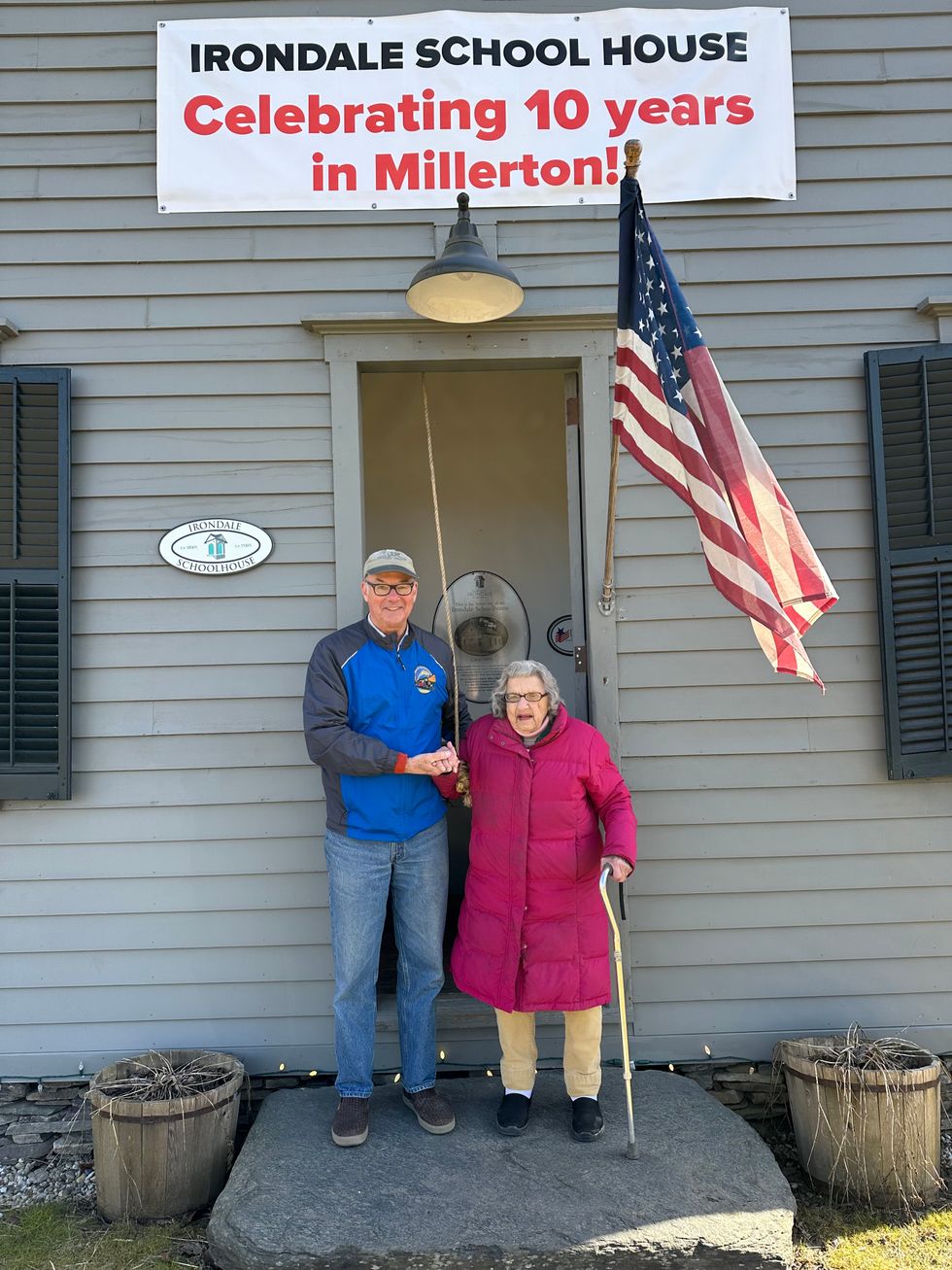 North East Town Supervisor Chris Kennan, left, and Mary Leitch, who was the last living Irondale Schoolhouse student until her death in 2025.Provided
Leitch died on Dec. 24, 2025, at the age of 103.
Leitch was born in Millerton in 1922 and grew up on Winchell Mountain in the hamlet of Irondale. Her early schooling was at Irondale’s 1858 one-room schoolhouse until it closed in 1930. She was proud of having been the last person to attend the school. From the third grade onward, she attended school in the Millerton school district.
“If you sit still, you will rust,” was a favorite Leitch saying, perhaps inspired by the Irondale district and the area’s iron industry.
Leitch delighted in the outdoors and in the company of animals and people, caring for many dogs—especially Jack Russells—and cherishing the horses that were part of her long, vibrant life. An avid sportswoman, she enjoyed deer hunting and fishing, keeping her licenses current right up until her passing. She was a longtime member of both the Jack Russell Club of America and the Dutchess County Professional Horsemen’s Association.
In 1958, she married William “Billy” Leitch of Millbrook, a professional horseman, sharing a love of the sporting life and enjoying active membership in the Millbrook Hunt Club. Billy pre-deceased her in 2015.
Nathan Miller
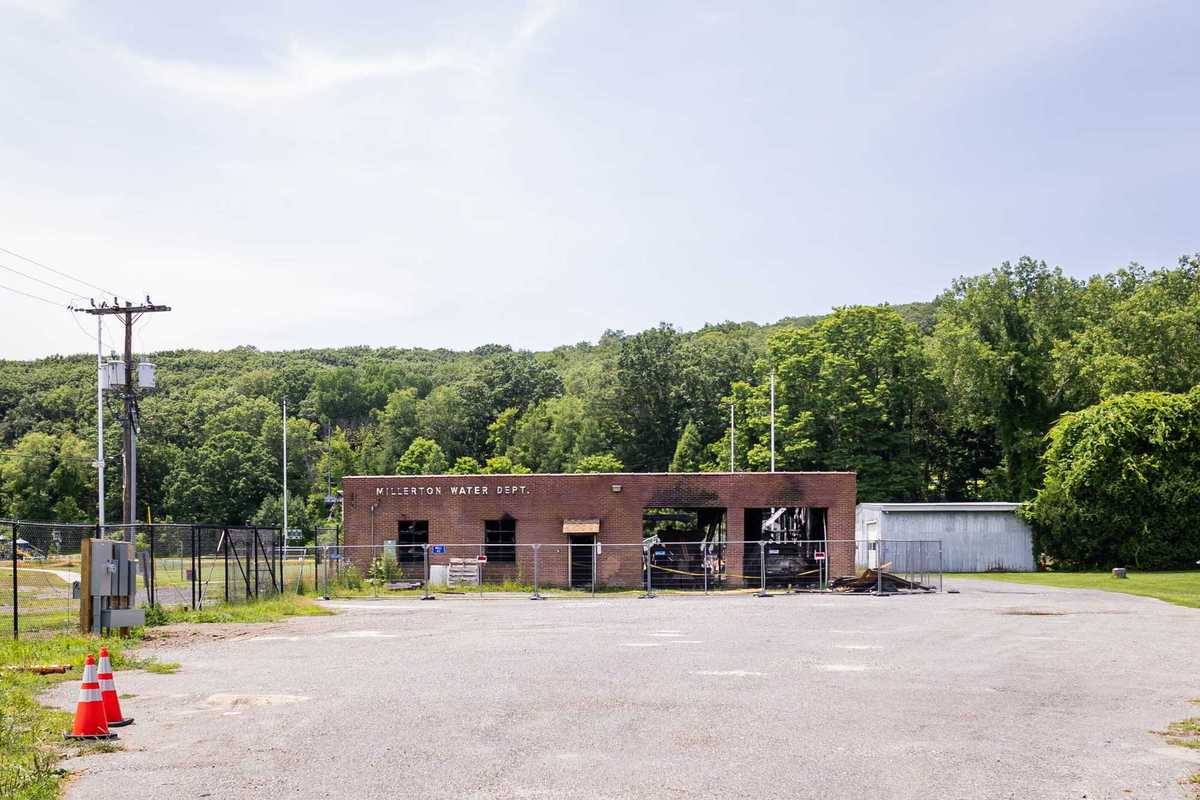
Millerton’s former Water Department building, ravaged by fire, as it awaited demolition in summer 2025.
Nearly 18 months after a fire destroyed Millerton’s Public Works building, which housed the Highway Department and Water Department, construction is expected to begin within weeks on a new Water Department facility and pumphouse.
The new building would restore the village’s full water pumping capacity and allow officials to end the state of emergency declared after the fire. Village officials are also planning a separate Highway garage, with details of that project still being finalized.
Fire project manager Caroline Farr-Killmer has been in charge of replacing the building since the fire destroyed it. In June, she said construction could begin on the new Water Department and pumphouse once the plan is approved by the Dutchess County Department of Health.
Millerton Mayor Jenn Najdek said she expects construction to start as soon as the designs get approval from the health department.
Officials described the new Water Department building as an urgent need. Farr-Killmer explained the village’s water system has been functioning with just one operational well, causing concerns about potential water shortages at that wellhead and its longevity. The village cannot operate the second well until it is enclosed in a structure, Farr-Killmer said.
Najdek originally expected Board of Health approval to come in early June, but as of Thursday, July 9, the plans are stalled as health officials deliberate the plans.
Despite the stall, Najdek doesn’t expect the project to affect Millerton’s plans for the week-long celebration of Millerton’s 175th birthday set for July 11 to 19.
Since the fire last winter, property restoration firm BELFOR has been working to clear and prep the site for a brand new set of buildings.
Farr-Killmer explained the Water Department building, which will house one of Millerton’s municipal wells, must now be a separate structure from the Highway Department building due to environmental and health regulations. Municipal wells require up to a 200-foot buffer from other structures to prevent drinking water contamination.
In the weeks after the fire, Farr-Killmer visited the charred building almost daily and documented damage to the structure and inventory. She said the fire itself was only the beginning, and pointed out that navigating insurance, rebuilding plans and deadlines have been hidden challenges.
Graham Corrigan
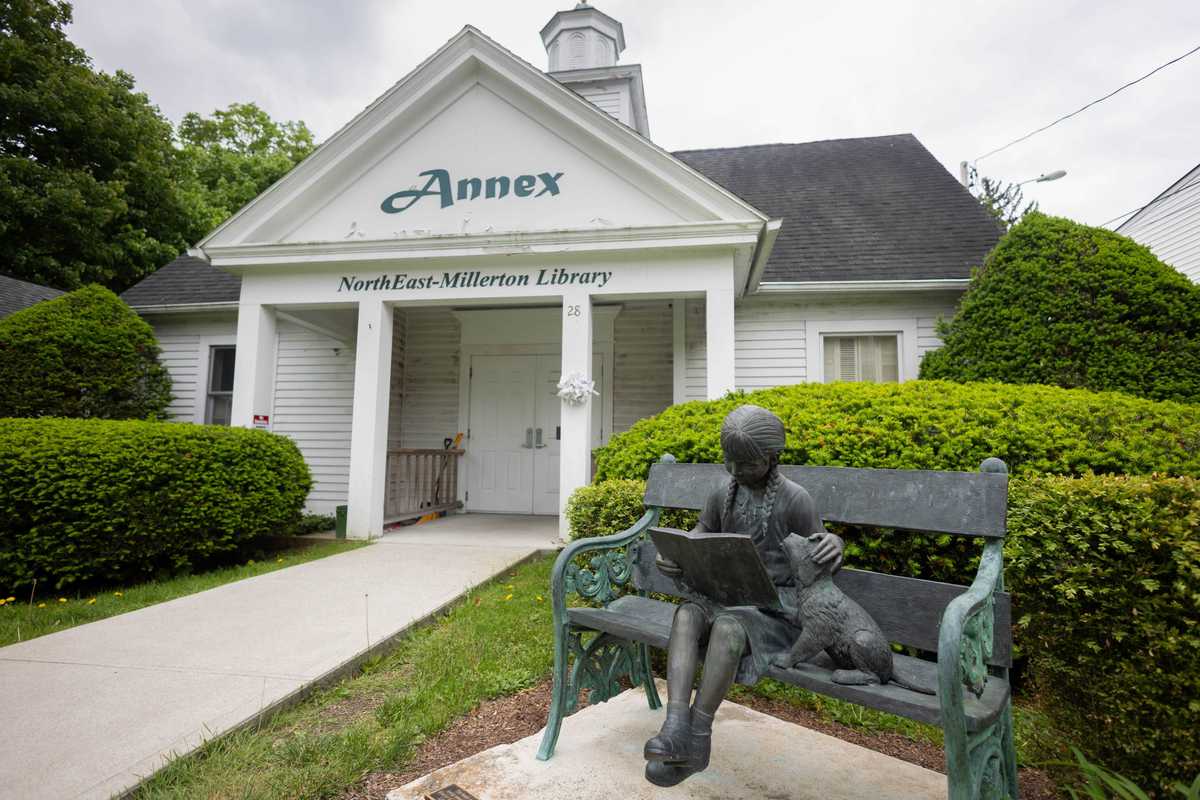
NorthEast-Millerton Library
A new initiative at the NorthEast-Millerton Library aims to digitize a collection of photographs, newspapers and other historical materials documenting the community’s early history.
Once completed, the collection will be available online and will include photographs, yearbooks, newspaper microfilm and slides reflecting the area’s past. The materials come from personal collections as well as archives from the Millerton News and its predecessor, the Millerton Telegraph.
Library Director Rhiannon Leo-Jameson has been overseeing the project. “It’s fascinating to see what makes it in,” she said. “There’s lots of landscapes and scenery, and little moments from town, like children jumping rope. Those sometimes have a hand-written caption, like, ‘having fun on the first nice day of the year.’”
Momentous occasions are also included — politician Robert Moses pops up during a campaign tour through the region, and Hudson Valley native Franklin Delano Roosevelt is a recurring figure. A member of his security detail was from Millerton.
The selection of what is being posted online involves a process that still relies on the discernment of the human eye. “I was surprised at how manual it still is,” Leo-Jameson said. “They spot check a reel to determine the image quality and aperture, then they scan the whole reel, then they send it to a second company who will manually segment the news articles.
Once the images are fully digitized, they’ll be available on the Hudson River Valley Heritage website at hrvh.org. Yearbooks dating back to 1951 from Webutuck School District and Millerton Union Free High School are already available. “There are so many names I know from working in the community,” said Leo-Jameson, “and it’s amazing to see how young they were.”
Want more of our stories on Google? Click here to make us a Preferred Source.
Want more of our stories on Google? Click here to make us a Preferred Source.