North East opens bids for highway garage for new fencing to surround facility

The new North East town garage on Route 22, built to replace the old garage on South Center Street in Millerton.
Archive photo

The new North East town garage on Route 22, built to replace the old garage on South Center Street in Millerton.
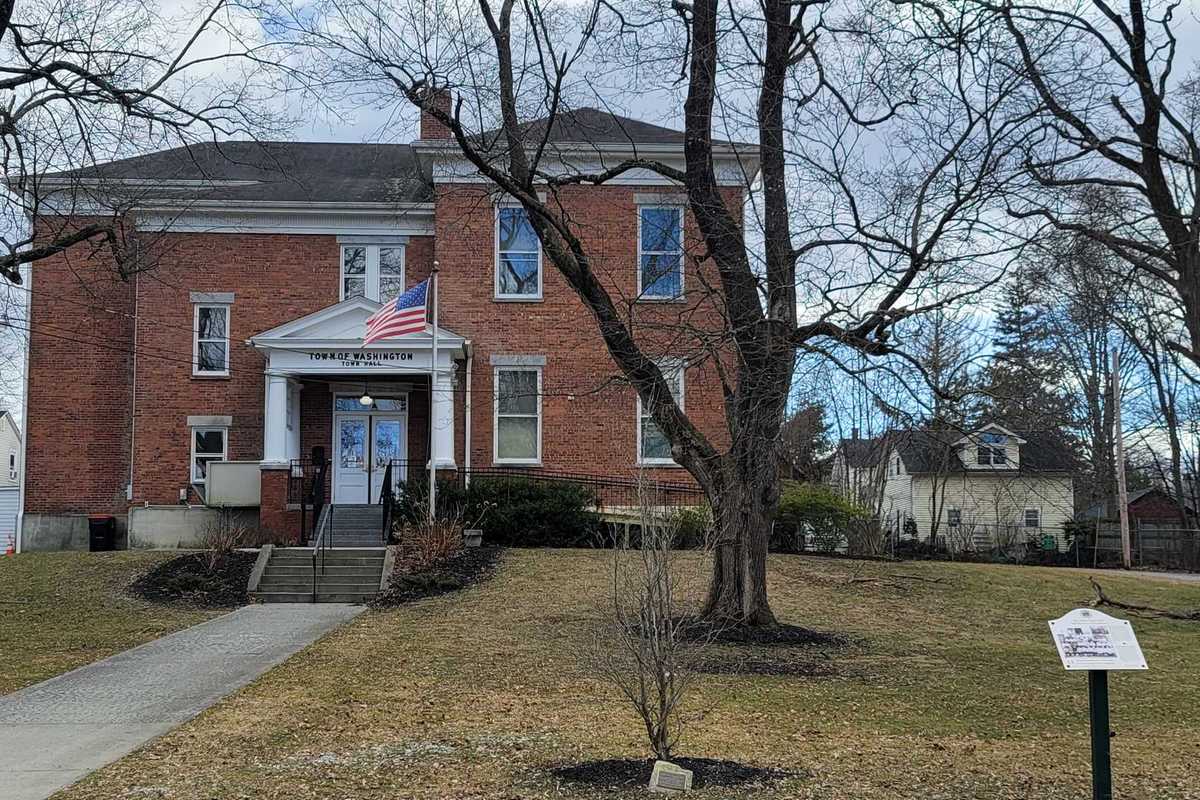
MILLERTON — On Thursday, Jan. 16, the Town of North East opened bids for the Highway garage’s fencing installation.
The town received bids from eight different potential candidates with the ranging costs of $166,000 to $328,676.
Currently, the town’s highway garage only has one side of the fencing completed and is looking to hire a company to install the other three sides. “The next step is we actually do a little research on the company that wins the bid, and we check the references … make sure that they can do what they say they’re going to be able to do. Then the board has to accept their bid,” Supervisor Chris Kennan said. “Just because bids have been submitted and somebody has the lowest bid doesn’t mean they have the job.”
The process of building the new highway garage began in 2022 with most of the construction happening during 2023. The final touches were wrapped up at the beginning of 2024. The new garage is now 12,720 square feet, which allows for more equipment to be stored and worked on — if needed — unlike the previous garage.
Nathan Miller
The scorched remnants of a Ford Econoline van that erupted into flames on Sharon Station Road near the intersection with Route 343 in Amenia just after 11 a.m. on Friday, April 10. Amenia Fire Chief Chris Howard said high winds spread the flames to brush along the road soon after the van fire broke out.
AMENIA — A fire that started with a van spread to brush along Sharon Station Road near the intersection with Route 343 in Amenia Friday, April 10.
The fire broke out just after 11 a.m., nearby residents who reported the fire to authorities said.
Fire Chief Chris Howard said crews from Amenia and Wassaic had contained and extinguished the fire by 11:50 a.m. The exact cause of the van fire was unknown and Howard said it was unlikely that investigators would be able to determine the cause due to heavy damage to the vehicle.
Howard said no one was injured in the fire, but one person was taken to the hospital as a precaution in case they experienced smoke inhalation.

After the van erupted into flame, wind spread the fire to brush along the north side of the road, Howard said.
James Morse, who lives on Sharon Station Road near where the fire erupted, said he called 911 after he witnessed the van turn the corner from Route 343 onto the road just after 11 a.m. The vehicle was making a loud hissing noise, he said, and then erupted into flame just after the driver exited the vehicle.
"All the flames were up and billowing black smoke was pouring out," Morse said.
Fire crews were wrapping up and packing up their hoses by noon.
"They did a good job today," Howard said of the volunteer firefighters.

Nathan Miller
The Town of North East’s Boulevard District — a stretch of Route 44 between Millerton and the New York State border — is the town’s largest commercial zone. The adopted zoning rewrite will allow mixed-use buildings with residential apartments above ground-floor retail.
MILLERTON — North East Town Board members unanimously approved an overhaul of the town's commercial zoning code, bringing a more than four-year process to close.
The Town Board voted to pass Local Law no. 1 of 2026 at its regular meeting on Thursday, April 9, officially adopting a 181-page zoning code rewrite that allows for mixed use development along Route 44, updates definitions across the town's code and creates new permitted land-use tables for improved readability.
Town Supervisor Chris Kennan, board members and attorney Warren Replansky praised the work and the volunteers on the town's Zoning Review Committee for their commitment to the years-long process. Kennan called out to two members of the review committee that attended Thursday's meeting — Chair Edie Greenwood and Bill Kish — to thank them and their fellow volunteers for years of work on the zoning rewrite.
"On behalf of the board, we want to say thank you," Kennan said. "We hope that you are pleased to see something come to a stopping point."
Thursday's approval clears the way for further revisions to the zoning code expected to focus on residential land use. Kennan said that process may begin soon with the formation of a new Zoning Review Committee, but could not yet provide a clear timeline.
The approved commercial zoning overhaul modernizes regulations that have remained largely unchanged since their adoption in the '70s, aligning them with the town’s 2019 Comprehensive Plan and current economic and housing needs. The revisions place a strong emphasis on encouraging reinvestment in commercial districts, expanding housing options — including multifamily, mixed-use and affordable housing — and updating standards to reflect modern land uses and technologies.
Town officials have said the goal is to support local businesses, streamline approvals, and provide clearer, more predictable rules, while preserving neighborhood character and quality of life.
The code also includes language for a Zoning Enforcement Officer, intended to provide more power for the town in enforcing and regulating land use in the town.
A full version of the adopted zoning code will be available online at townofnortheastny.gov.
The new code put an emphasis on housing options in the town's commercial center, encouraging developers to construct apartments above commercial spaces by allowing larger building footprints and lot coverage.
Since January, board members have revised the draft to allow additional retail uses in the Boulevard West district, which includes parcels from the eastern border of the village along Route 44 to Kelsey Brook, a tributary of Webatuck Creek. The additional retail uses will allow sales of pre-fabricated sheds and playground equipment after a request from property owner Rob Cooper.
Among the more substantive revisions was the decision to impose an overall size cap on accessory dwelling units. The board voted to limit ADUs to a maximum of 1,200 square feet and specified that they must be accessible from an existing driveway on the property. Board members also discussed adding language to clarify how ownership through an LLC or trust would comply with the requirement that the property owner reside in the principal dwelling.
Other adopted changes to the code include breaking up long sentences in some definitions to improve clarity. Board members also opted to require new parking lots to construct at least 10% of spaces with electric vehicle-ready equipment for later installation of EV chargers, and to require marked pedestrian infrastructure and lighting in all parking lots.
One proposal — which would have allowed retail businesses and restaurants in the so-called Irondale District, a small commercial area encompassing seven parcels along Route 22 near Winchell Mountain Road and Irondale Road — was withdrawn at the board's March 20 meeting after sharp criticism from the town’s Zoning Review Committee, residents and the Village of Millerton’s Board of Trustees.
That decision continued to draw debate into the final public hearing Thursday night, with North East resident Rob Cooper submitting a written comment to the board expressing his support of expanded commercial uses in Irondale. Cooper's comment was the sole comment provided at the final public hearing — which the board rejected.
The draft zoning code drew controversy late last year after North East resident Tyler Graham launched a website, savemillerton.org, where he published accusations that the Town Board was attempting to push the zoning changes through without proper oversight or community involvement. Graham’s criticism marked the sharpest opposition to the proposal, contrasting with broader public comment that was largely supportive of the effort.
Zoning Review Committee Chair Edie Greenwood expressed pride in her committee members in a brief comment following the Thursday night meeting. Bill Kish said he was glad the process had come to an end.
"I'm looking forward to doing the next one, if I get on the committee," Kish said.
Additional reporting from Aly Morrissey
Millerton News
The annual Millerton Fire Company Easter egg hunt returned to Eddie Collins Memorial Park on Saturday, April 4.


Want more of our stories on Google? Click here to make us a Preferred Source.
Nathan Miller
Bob Stevens, right, enjoys the swinging sounds of country and western music during a trip to Nashville, Tennessee, with his son, Robert Stevens Jr., not pictured.
MILLERTON — North East Highway Superintendent Bob Stevens died Monday, March 30, after 20 years in the role and nearly four decades with the town’s road crew.
The sudden death shocked road crew members and town officials, who said they had been speaking with the 63-year-old Millerton native the day he died and he hadn’t shown signs of illness. Town officials said a search for a replacement will start as soon as possible.
Stevens’s only son, 39-year-old Robert Stevens Jr., along with employees at the town garage and others in the community, remembered Stevens as a dedicated man with a singular passion for highway maintenance.
“It was an absolutely huge part of his life,” Robert said.
Robert Jr. said Stevens was as supportive as a father as he was dedicated to his work for the town. He recalled a week-long BMX biking trip to Camp Woodward in Pennsylvania that his father drove him to and from, making the round trip twice without a complaint.
“It didn’t matter how little or how far we were going,” Robert said. “If it was to support me, he was on. Always.”
Road crew foreman Shawn Morrison said that supportive nature extended to Stevens’s role as Highway Superintendent, where he prioritized the safety of workers and drivers above all else.
“He always said to me, ‘If you don’t feel safe doing it, then we’re not going to do it,’” Morrison said.
Morrison praised Stevens’s dedication to his post, saying he often worked long hours and weekends out of a love for the job. Winter was a favorite season, as Morrison said he was obsessive about clearing the town’s roads during snowstorms.
“A lot of people had nicknames out there for him — calling him ‘Bare-road Bob,’” Morrison said. “He was anal about his roads in the winter.”
Stevens rarely missed a day of work, for sickness or for pleasure, road crew employees and Town Supervisor Chris Kennan said. Joshua Schultz, a road crew member and Stevens’s godson, said he could remember one notable absence. “He took his son to Nashville,” Schultz said.

Robert Jr. said he and his father traveled twice to Nashville, Tennessee — among the few trips they took together — but a third visit was canceled due to the COVID-19 pandemic. Other travel opportunities often depended on Stevens’s work at the town garage. “If it was wintertime, he’s here,” Robert said. “He’s taking care of the town.”
Sickness didn’t keep Stevens at home either. Morrison said he would work from his well-known orange pickup truck to keep from spreading colds to people.
The orange pick-up truck was a fixture around town, Supervisor Chris Kennan said. Stevens was often spotted inspecting roads across town in the recognizable truck, when it wasn’t parked at the town garage while he worked in his office.
Kennan said the town will begin a search for a new Highway Superintendent, with a committee expected to form at the Thursday, April 9, Town board meeting. He also expects the board to install a plaque at the town garage on Route 22 honoring Stevens’s service.
Kennan proposed the plaque at a special meeting of the Town Board on April 1, saying a modest display would respect Stevens’s private nature.
“I’m excited that we’re going to put a plaque on that building,” Kennan said. “It’s appropriate that there be some reflection of what he put into it.”
Debra A. Aleksinas
Packets of Blue Razz botanical extracts in pill form are among herbal remedies offered as an alternative to kratom at The Smoking Ape in North Canaan and Torrington.
MILLERTON — A new Connecticut ban on kratom — a substance with opioid-like effects linked to dependence and withdrawal — is reshaping border behavior, with some residents crossing into New York to obtain it.
Derived from a Southeast Asian tree, kratom has been marketed across the country as a natural remedy for pain, anxiety and opioid withdrawal. But officials warn it can act like an opioid at higher doses, prompting Connecticut to classify it as a Schedule I controlled substance.
Some officials are also raising concerns about 7-hydroxymitragynine, or 7-OH, a more potent compound derived from kratom that can also act like an opioid.
At gas stations and smoke shops in New York, kratom remains on shelves, drawing customers from Connecticut’s Northwest Corner.
Since the ban took effect March 25, retailers in Millerton and nearby Amenia report a noticeable uptick in cross-border traffic from towns where the once-common substance is now illegal.
The shift has created a stark divide: Connecticut classifies kratom as a Schedule I controlled substance, banning its sale and possession, while New York continues to allow regulated adult sales.
“It’s illegal,” said Connecticut Attorney General William Tong in announcing the ruling and warning of strict enforcement. “You can’t buy it, you can’t sell it or possess it because it’s dangerous, unregulated and unsafe.”
Along Route 44 in Dutchess County, the change is subtle but visible.
Employees at Smokes 4 Less in Amenia and Cumberland Farms in Millerton said they have seen increased traffic from Connecticut customers, though none could estimate by how much.
For some residents of Connecticut’s Northwest Corner, the nearest New York retailer is just minutes away — a convenience now shaping behavior.
A similar dynamic is emerging to the north in Sheffield, Mass., where kratom also remains legal and available.
Empty shelves
in Connecticut
In Connecticut’s Northwest Corner, the ban’s impact was immediate.
At Smoker’s Choice and The Smoking Ape, two smoke shops located about a mile apart in the center of North Canaan, kratom has disappeared entirely from shelves. A once-stocked wall now sits bare.
“You can see the empty shelves,” a worker at Smoker’s Choice said, declining further comment.
At The Smoking Ape, owner Omar Nasser said the financial hit was significant at his two locations, including Torrington.
“I sold what I could,” Nasser said. The remainder of stock, he noted, was returned to his distributor at a loss.
In the days leading up to the ban, he said, demand surged as customers stocked up.
Withdrawal
concerns emerge
Clinicians say the early days following the ban represent a critical window.
New data from Mountainside Treatment Center in North Canaan shows kratom-related admissions have nearly tripled over the past year.
“With the ban taking effect, we are deeply concerned about what happens next,” said Jana Wu, director of clinical integration.
“Withdrawal symptoms can include anxiety, insomnia, nausea and intense cravings,” she said. “When access disappears overnight, people may find themselves in crisis.”
Now, medical providers warn, some users may seek riskier alternatives.
Since the ban, Nasser said customers continue to seek replacements.
“They’re looking for something,” to ease the withdrawal, he said. His stores now offer botanical extracts in pill form, but he said the results are limited.
“I don’t think it does the same job as kratom. Not even close,” he said, describing withdrawal as “very serious.”
He fears some customers will turn elsewhere, to more powerful remedies.
“I think people will be going definitely to hardcore drugs.”
A national moment
At Mountainside, Wu said calls are rising — from Connecticut and beyond.
“People are getting nervous,” she said.
Connecticut is now the eighth state to enact a full kratom ban.
“We are being watched. All eyes are on Connecticut,” Wu said. “It’s a bold move — and a divisive move.”
Patients are asking what comes next.
Clinicians are responding with counseling and medications such as naltrexone and Vivitrol — even as cross-border purchasing becomes part of the conversation.
“People are definitely going into New York to buy kratom,” Wu said.
Before the ban, kratom was widely available across the Northwest Corner.
Now, access depends on geography.
In Connecticut, kratom is fully banned. In New York, it is legal for adults over the age of 21, and in Massachusetts, while there is no statewide ban, legislation is under consideration.
The result is a regional patchwork — one that places border towns like Millerton at the center of shifting consumer patterns.
Some users have asked whether online purchases offer a workaround.
Under Connecticut law, the ban applies to possession — meaning even out-of-state shipments could carry legal risk.
“It doesn’t matter where it comes from,” Nasser said. “It’s illegal here now.”
Nathan Miller
MILLERTON — The Board of Trustees approved the coming year’s budget Monday, April 6, following no public comment.
The village’s expenses increased 15.8% over last year’s adopted budget. Board members attributed those increased costs to unavoidable spikes in health insurance rates and retirement payments.
Mayor Jenn Najdek said property assessments are slated to increase, which would provide the village with additional revenue. Najdek estimated tax increases of about $11.48 per $250,000 of assessed property value.
Tentative budget documents available on the village’s website reflect that wage increases and newly filled staffing positions further drove increases to the budget. Expenses for the Clerk and Treasurer’s office, along with the building department, each increased by more than 40% over last year. Deputy Mayor Matt Hartzog emphasized the board’s desire to provide raises to village staff.
“We have not given ourselves a raise,” Hartzog said. “But we would like to give all of our employees a raise, so that they can keep up with inflation.”
Hartzog called attention to rising medical insurance rates. Medical insurance expenses rose 15% to $38,300, representing roughly 4% of the total budget.
“Health insurance has just gone through the roof,” he said. “Nobody’s going to be happy about that.”
The Village Clerk budget increased by more than $21,000, driven by the separation of the Clerk and Treasurer line items, with both receiving hikes. The 15.9% rise, bringing the total to $70,240, represents the largest share of this year’s overall budget increase.
A similar additional line item in the Building Department expenses drove the 44% increase in that department’s budget. In addition to the “Building sec salary” line receiving a small increase, a “Building sec” line lists $11,700, contributing much of the total $11,852 increase to that department’s overall budget.
Police salaries increased by a total of $5,000. Highway crew salaries increased by $4,210 total.
Overall, the village expects to spend $975,156 this year, an increase of $132,836 over last year’s budgeted expenses.
Increases to expenses are partially offset by a $70,000 increase in expected non-tax revenue. That’s 22% higher than in 2025, but not quite enough to make up for the increased costs.

Want more of our stories on Google? Click here to make us a Preferred Source.

Want more of our stories on Google? Click here to make us a Preferred Source.