Millerton’s Demitasse shutters Main Street storefront, goes digital

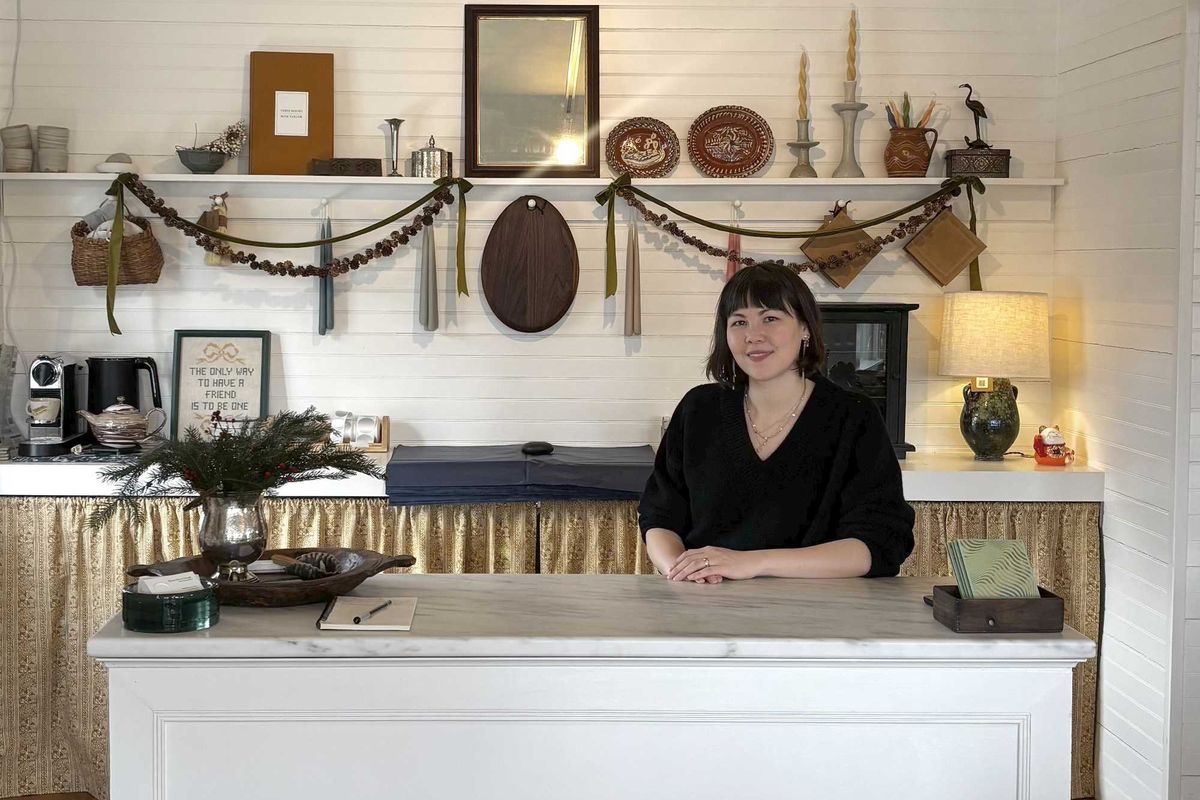
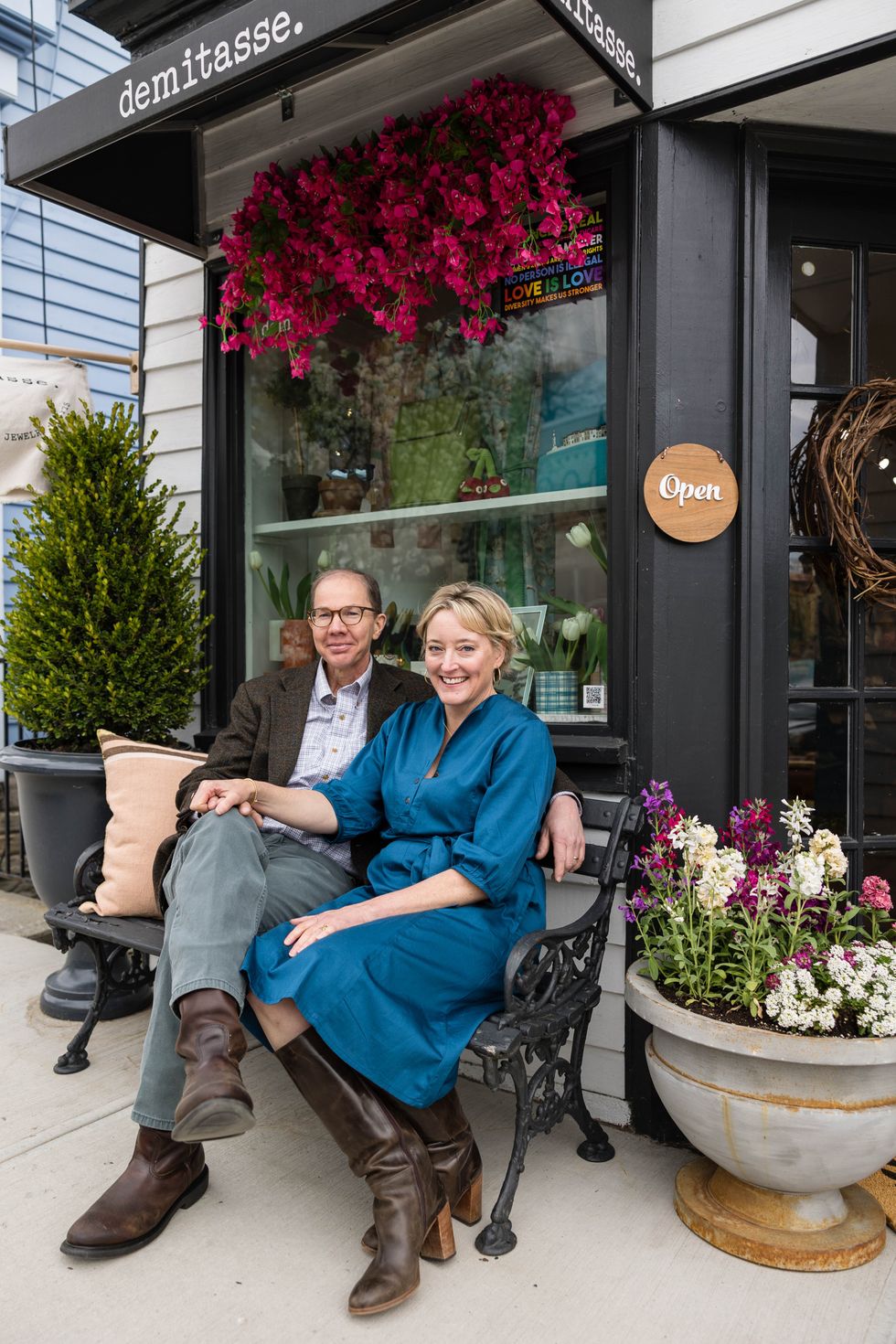
Demitasse owner Hayden McIntosh Geer said she is excited by the shift to online sales.
Photo by Hayden McIntosh Geer

Demitasse owner Hayden McIntosh Geer said she is excited by the shift to online sales.
MILLERTON — Some might have argued that launching an in-person retail business during the height of the COVID-19 pandemic wasn’t advisable. But against all odds, Demitasse in Millerton managed not only to build a thriving, mission-based brand in a small storefront on Main Street, it developed a loyal customer base and provided a welcoming space for visitors. Last week, Demitasse announced it is closing-up shop and moving fully online.
“We are excited,” said owner Hayden McIntosh Geer, who opened Demitasse with her husband, Richard, in 2020. “Though we will miss our customers and the camaraderie on Main Street, it feels right and there was no second guessing.”
The building that houses Demitasse and neighboring Candy-O’s is on the market, leaving the future uncertain. Geer said she and Richard will continue supporting their favorite Millerton spots, now with more time to enjoy local businesses and neighbors.
Known for its carefully selected gifts and home goods, Demitasse has received frequent praise for its curation. Yet Geer is quick to deflect. “I didn’t know I was creative until I opened the store,” she joked. “When anyone talks about the curation I just point to the makers. They are the ones who create the beautiful items that hold purpose and intention. That’s what made our place special.”
The decision to open a gift shop was never part of a master plan, Geer said. “We found our way as we went along and it happened very organically.” But from day one, she knew she wanted to support marginalized artists and makers.
For example, Sidai Designs, which makes beaded jewelry in Africa, provides work for 120 Maasai women and helps support their communities. Maison d’Haiti, which produces handcrafted goods in Haiti, employs nearly 100 women at fair-trade wages, giving them a reliable income through sales in the U.S. and Haiti.
One of the highlights of having a storefront — and a true testament to what she and her husband had created — came when the editor of a major culture and lifestyle magazine told Geer how much she loved shopping at Demitasse for its quality and mission-driven products.
“I could have quit right there,” Geer joked, reflecting on the highs and lows of the last five years.
Just as thoughtfully as the products were curated, every element of the store reflected care and craftsmanship. Hayden and Richard incorporated their tastes and skills into every nook and cranny, including shelving made from reclaimed wood from their home. Some of those shelves now have a new life at The Beehive, a boutique in Mount Kisco, New York.
Today, their digital shelves continue to highlight a diverse range of makers, with biographical details available on each product listing. The website carries the same aesthetic found in-store, maintaining the mission to support LGBTQ+ makers, environmentally friendly products, and Black- and women-owned businesses.
Looking ahead, Geer says, “We want people to know that if they enjoyed shopping in our store, they’ll love our website.” Shoppers can still expect beautiful gift wrapping and flexible exchange policies, and Geer is offering personal deliveries within driving distance on a limited basis.
Above all, Geer says her heart is full of gratitude for her customers. “They came in, shared life stories and became friends. We love Millerton, and I hope people will remain in touch.”
Leila Hawken
AMENIA — Community members are invited to answer the question "How do you play?" at a community engagement session at Amenia Town Hall on Saturday, March 14, from 10 a.m. to 1 p.m.
Town officials are creating a Parks and Recreation Master Plan to guide improvements to parks, programs and recreational areas. A similar engagement session was held in June 2025 supporting the goal of updating the town’s Comprehensive Plan.
The March 14 session aims to collect feedback and ideas from residents regarding Parks and Recreation activities in an interactive format. Adults, children and families are urged to attend. Registration is required to allow for childcare planning for the youngest children, ages 1-7, and activities for all children. Refreshments and snacks will be provided.
Recreation Commission Chair Judy Moran remembered residents calling for "better recreation activities" during the lead-up to the 2025 elections.
“We are trying to find out exactly what activities people would like to see the Recreation
department provide,” Moran said. “So we can better serve our seniors, children and all
residents."
The session will begin at 10 a.m. with a half-hour overview of the planning process, followed by two hours of break-out sessions for adults and children, site explorations, and guided activities. The final half-hour will summarize findings and outline next steps in the planning process.
To register or for more information, go to www.engagingamenia.com.
Nathan Miller
Pine Plains Councilwoman Jeanine Sisco displays a photograph of flashing lights used to alert drivers to pedestrians in crosswalks in Millerton during a public forum at Pine Plains Town Hall on Tuesday, March 3. Sisco outlined plans to repair sidewalks and install two new crosswalks in downtown Pine Plains as a first phase in sidewalk repairs across the town.
PINE PLAINS — Town Board members unveiled plans for sidewalk renovations in downtown Pine Plains as they prepare to apply for a federal grant to fund the first phase of the project.
Councilwoman Jeanine Sisco described the first phase of the sidewalk project at a public forum at Pine Plains Town Hall on Tuesday, March 3.
The first phase calls for repairing sidewalks along Church Street and Main Street and the crosswalks where those streets meet. Two new crosswalks are planned — one on Church Street at the intersection with Academy Street and another on Main Street that will connect the sidewalk on the east side of the street to the Pine Plains Free Library and Community Center.
Town Board members said they intend to apply for a Transportation Alternatives Program grant. The federal funds are administered through the New York State Department of Transportation to finance projects that promote walkability and lessen dependence on cars in a community. The application deadline is March 12, 2026.
Discussion at the public forum centered around crosswalk safety and the inclusion of flashing yellow lights on signposts for pedestrians to activate when they cross. Sisco said it's unclear whether flashing lights will be required at the crosswalks.
She showed pictures of crosswalks in Pleasant Valley, New York, across Route 44, that do not have flashing lights, which she said indicated the lights may not be required in Pine Plains. Sisco also showed pictures of the crosswalks in downtown Millerton that feature lights that would be similar to installations in Pine Plains if required.
Residents were divided on the issue, with opponents raising aesthetic concerns and supporters citing research that flashing lights improve driver awareness and safety at crosswalks.
Pine Plains resident Torey Soracco said she opposed flashing lights at the crosswalks and questioned prior Town Board statements that indicated the lights may be required under grant stipulations.
Soracco asked about the lights' effectiveness, and whether alternative safety measures had been considered. She supported a police presence at the crosswalks to deter unsafe driving.
"I want to make sure we're doing the best way we can," Soracco said. "We already know a way to do that. The fastest way is to give people tickets."
Michael Stabile, who serves as Chair of the Pine Plains Planning Board, spoke in support of flashing lights. He said Federal Highway Administration (FHWA) studies show flashing lights at crosswalks improve driver awareness.
The lights, officially known as "rectangular rapid flashing beacons," reduce pedestrian crashes by up to 47% according to data from the FHWA. Figures on the FHWA's website also state that driver yield rates increase up to 98% at crosswalks with flashing lights.
"I worry about putting sidewalks in that don't have enough safety features," Stabile said.
Sisco said town officials are budgeting for flashing lights in the event they are required, but current plans are to avoid the lights if possible.
Town Supervisor Brian Walsh laid out the timeline of the project. He said the grant process and design work for the first phase would likely take the rest of this year and continue through 2027. He added that the current timeline indicates the first phase of repairs will be complete in late 2028.
After that first phase, Walsh said the project would expand outward from the town center to repair damaged sidewalks and install new paths.
Those plans have not been laid out yet, with no clear timeline given at the public forum. Board members acknowledged the project will be a lengthy process.

Want more of our stories on Google? Click here to make us a Preferred Source.
D.H. Callahan
Contemporary chamber musicians, HUB, performing at The Clark.
Northwestern Massachusetts may sometimes feel remote, but last weekend it felt like the center of the contemporary art world.
Within 15 miles of each other, MASS MoCA in North Adams and the Clark Art Institute in Williamstown showcased not only their renowned historic collections, but an impressive range of living artists pushing boundaries in technology, identity and sound.
MASS MoCA is known for its 20th-century holdings spread throughout a sprawling complex of industrial brick buildings. Installations by Sol LeWitt and James Turrell have permanent homes there. Just down the road in Williamstown, the Clark features masterworks by Winslow Homer, Frederic Remington, John Singer Sargent and Claude Monet.
But what visitors might not immediately associate with those established names is how deeply both institutions invest in art happening right now.
On Saturday afternoon, a panel of young artists discussed their relationships with art, identity and technology as part of MASS MoCA’s “Technologies of Relation” exhibition, which opened that evening. The artists represented a broad range of cultural backgrounds, drawing on ancestry while exploring the future of art and technology.
The work itself ran the gamut: wax relief paintings, stained glass, interactive video and sculptural installations. One immersive piece automated the traditional Armenian practice of reading fortunes from coffee grounds. Particularly striking were Roopa Vasudevan’s hand-drawn QR codes and Taeyoon Choi’s large-scale weavings of binary code.
Opening the same night was Zora J. Murff’s “RACE/HUSTLE.” Through photographs, paintings and installations, Murff explores the wide-ranging and sometimes violent implications of being Black in America today. Each piece — whether confronting the rise of white supremacy or examining stereotypes imposed on Black communities — carries razor-sharp visual commentary designed to unsettle.

On Sunday, the Clark continued the contemporary thread. A small exhibition of work by Raffaella della Olga, titled “Typescript,” features intricate patterns created using a typewriter on varied paper surfaces. The effect seems almost impossible until viewers watch a video of della Olga loading her typewriter with 140-grit sandpaper and typing in a hypnotic rhythm. Though the typewriter is considered obsolete technology, she continues to find new applications for it, completing some of the works in recent months.
Next door in the Clark auditorium, HUB New Music performed works written specifically for its unusual instrumentation: violin, cello, clarinet and flute. While that combination may not stand out to casual listeners, relatively little classical repertoire exists for it. The ensemble regularly commissions composers to expand the possibilities.
The results were striking. From the opening notes of Francisco del Pino’s “Passacaglia,” the quartet’s command and layered repetition pulled unexpected emotion from the audience.
After three pieces came the world premiere of Daniel Wohl’s “Mirage,” a roughly 25-minute work accompanied by digital blips, static and electronic textures evoking radio transmissions and UFO lore. Hearing four virtuoso musicians extract entirely new sounds from traditional instruments echoed the weekend’s larger theme: old tools made new again.
Like della Olga’s typewriter, Vasudevan’s QR codes or Murff’s charged imagery, the performances demonstrated that contemporary art often grows from familiar materials — reimagined.
The old masters will always draw visitors to these institutions. But when living artists command equal attention, this quiet corner of the Berkshires feels less like the middle of nowhere and more like a creative epicenter.
D.H. Callahan is a voice actor, creative director and trail steward. He lives with his artist wife in West Cornwall, Connecticut.
Aly Morrissey
Francesca Donner, founder and editor of The Persistent. Subscribe at thepersistent.com.
Francesca Donner pours a cup of tea in the cozy library of Troutbeck’s Manor House in Amenia, likely a habit she picked up during her formative years in the United Kingdom. Flanked by old books and a roaring fire, Donner feels at home in the quiet room, where she spends much of her time working as founder, editor and CEO of The Persistent, a journalism platform created to amplify women’s voices.
Although her parents are American and she spent her earliest years in New York City and Litchfield County — even attending Washington Montessori School as a preschooler — Donner moved to England at around five years old and completed most of her education there. Her accent still bears the imprint of what she describes as a traditional English schooling.
Today, she and her family call Sharon, Connecticut, home. While she still travels frequently to Manhattan, she embraces the contrast between city and countryside.
“For me, it’s all about the contrast,” she said, adding that she is friendly and curious about people here in a way that doesn’t feel natural in the city. “I want to know who you are, what you do, and why you’re here. You end up meeting these really interesting people.”
As a longtime editor in newsrooms like The Wall Street Journal, The New York Times and Forbes, Donner said she began to notice something unsettling about how stories were framed, and whose voices were missing.
“It’s just the way news is done,” she said. “It’s the DNA of what we deem newsworthy and important in mainstream media.”
The problem, she explained, isn’t that women aren’t covered at all. It’s that when women are covered, it’s often in a stereotyped way. Women are frequently framed through familiar narratives – the gender pay gap, unpaid labor, caregiving – important issues that persist, she said, but are often treated as repetitive or secondary. Meanwhile, the stories deemed front-page worthy tend to revolve around power, economics, war and politics — and men.
“If we don’t make a deliberate effort to cover women, women won’t be covered,” Donner said.
The issue isn’t unique to any outlet, she stressed. “It’s just the way news is done.”
But that DNA — who gets quoted and whose experiences are centered — has consequences.
And for Donner, that realization demanded a response.
Enter The Persistent.
Founded in 2024, The Persistent was built around what Donner calls a simple but deliberate premise.
“Women don’t get covered in the same way men get covered,” she said.
The goal isn’t to exclude men or create a siloed “women’s section.” Instead, Donner said, it’s about correcting an imbalance by putting women at the center of the story.
Describing the approach as a reframe, this means expanding who is quoted as an expert. It means spotlighting women in business, politics, culture and global affairs. It also means examining major news stories through a lens that mainstream outlets often overlook.
“What we can add,” she said of The Persistent, “is perspective.”
Now approaching its second year — a milestone that will be celebrated next month — the publication operates with an all-women team of writers, editors and illustrators based across the world. The team meets regularly over Google Meet.
“They’re awesome,” Donner said of the editorial meetings. Some of her staff are mothers, some are not. All bring lived experiences to the table. Donner has intentionally created a newsroom culture that balances rigor with support.
“If your writing doesn’t measure up, I’m going to tell you,” she said plainly. “But it’s not a battle. It’s a partnership.”
Beyond publishing stories that matter, Donner wants contributors to be seen.
“I don’t just want people to read the story and forget who wrote it,” she said. “We can do a lot better if we amplify each other.”
As a woman, Donner rejects the idea that success is finite. She wants everyone to have a slice of the pie.
“Just make the pie bigger,” she said. “Bring more seats to the table. Make it richer.”
Donner credits her “mum” for articulating what would become her professional identity.
“You are what you can’t help doing,” her mother used to say.
Today, without hesitation, Donner said she can’t help being an editor.“My identity as an editor is very strong,” she said. Editing, she explained, is less about correcting typos and more about building and shaping ideas.
“Sometimes I imagine this physical movement of cracking something open,” she gestured.
That instinct traces back to childhood. She recalls sitting in a classroom around age 10, listening to a classmate read a short story aloud. For Donner, that moment crystallized something fundamental.
“Someone else’s words made me just sit up straight in my chair and think, wow, that is so good.”
Today, whether she’s in a historic manor house in Amenia or on a Google Meet with her team across the globe, that instinct remains the same: crack the story open, elevate the unheard voice and reframe the narrative.
Natalia Zukerman
On March 7, Berkshire Opera Festival will bring “Winterreise” to Studio E at Tanglewood’s Linde Center for Music and Learning, with baritone Jarrett Porter and BOF Artistic Director and pianist Brian Garman performing Franz Schubert’s haunting 24-song setting of poems by Wilhelm Müller.
A rejected lover. A frozen landscape. A mind unraveling in real time. Nearly 200 years after its premiere, “Winterreise” remains unnervingly current in its psychological portrait of isolation, heartbreak and existential drift.
Porter, praised by Opera News for his “imposing baritone” and “manifest honesty,” has built his career on major European opera stages, including Oper Frankfurt. But recital work, he says, is closest to his heart.
“I love to recital. If I were to pick my career, I would be doing some opera and mostly recital,” he said. “I think there can be difficulty with grabbing an audience in a recital, but this is one of the greatest pieces to do so because it is so psychological, so powerful, so universally moving.”
Unlike opera, there are no sets in a recital, no costumes or lighting cues to lean on. “The singer with no sets or costumes is left to create a kind of one-man show,” Porter said. His solution is internal. “The way that I process learning something like this and having the responsibility to hold an audience without set or costumes or lights or props is to stage it in my mind. Each song has an identity.”
Schubert’s writing, Porter insists, needs no adornment. “Schubert does an amazing job at setting the scene, and for me, you don’t need anything else. I feel like anything added to it would be almost subtracting. I’d rather just see the singer and the pianist the way that Schubert intended it to be.”
At the center of “Winterreise” is the wanderer, an unnamed figure moving through snow and memory after a failed love affair. For Porter, the character is both specific and universal. “There’s so much ambiguity in the piece,” he said. “We don’t know all of the answers in the first song. We don’t really know who this person is. There are tidbits of information dropped throughout each song. And I think the tendency is to put a narrative on that and to try to connect the dots rather than embracing what it is. The ambiguity is actually where the beauty is.”
That ambiguity extends to the cycle’s ending and the encounter with the eerie hurdy-gurdy player in “Der Leiermann.” Does the protagonist die? “I think one could make that argument,” Porter said. But he resists a neat conclusion. “Death is right in front of him. Death is actually the most peaceful answer to his problem and it’s not given to him. There’s something more, a deeper level.”
Rather than a literal death scene, Porter sees a reckoning. “For me, he’s not granted the easy way out. He has to sort of come to terms with being nothing and having no real skill as a songster or a poet or a wanderer.” The winter landscape, he suggests, mirrors the psyche: “The winter is sort of the mirror of his heart.”
In shaping the emotional arc across all 24 songs, Porter leans into uncertainty rather than resolution. “What I relate to in this piece is that in life, you don’t know what’s going to happen. And you don’t know the next day. Even in tragedy—especially in tragedy—there’s so much question.”
Porter performed Gounod’s “Faust” at BOF in 2024 with Garman conducting but this will be the first time the two will be collaborating with Garman at his instrument. “I love making music with Brian,” said Porter. “I’m a huge fan of his musicianship. I think we’re sort of bitten by the same bug that Schubert is, and so I was super honored that he asked me to do this with him.”
For tickets, visit berkshireoperafestival.org

Want more of our stories on Google? Click here to make us a Preferred Source.

Want more of our stories on Google? Click here to make us a Preferred Source.