Protesting in Peace

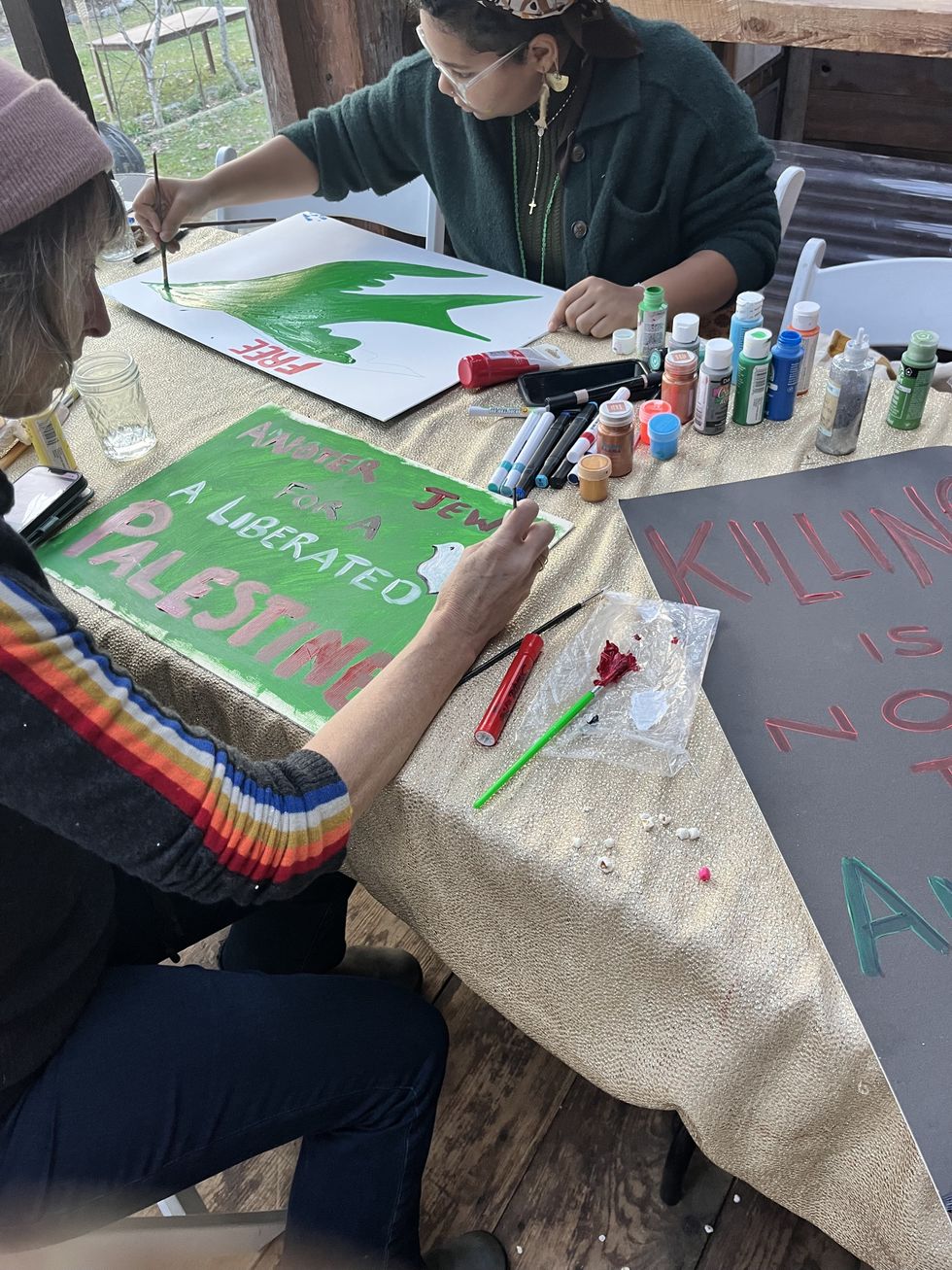
Photo by Sunder Ashni

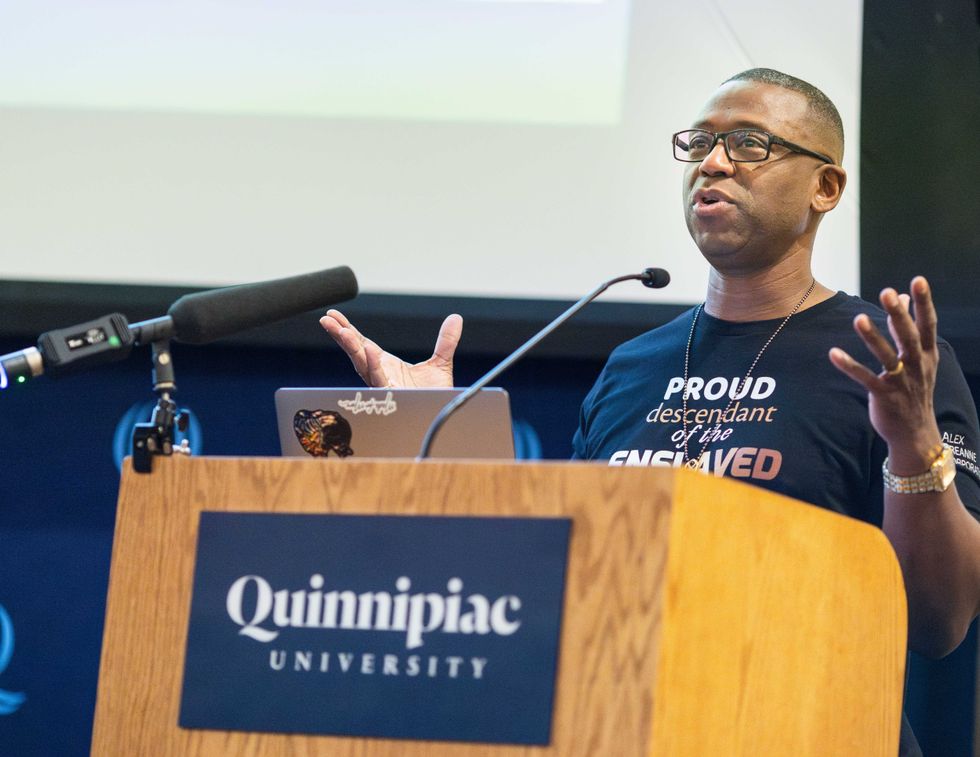
On Thursday, Nov. 2, a group organized by Millerton-based nonprofit The Watershed Center gathered together at Race Brook Lodge in Sheffield, Mass., for a peaceful sign making event in preparation for a protest in Washington, D.C., and a rally in Great Barrington, Mass. Both events took place on Saturday, Nov. 4.
Eloise Pickering
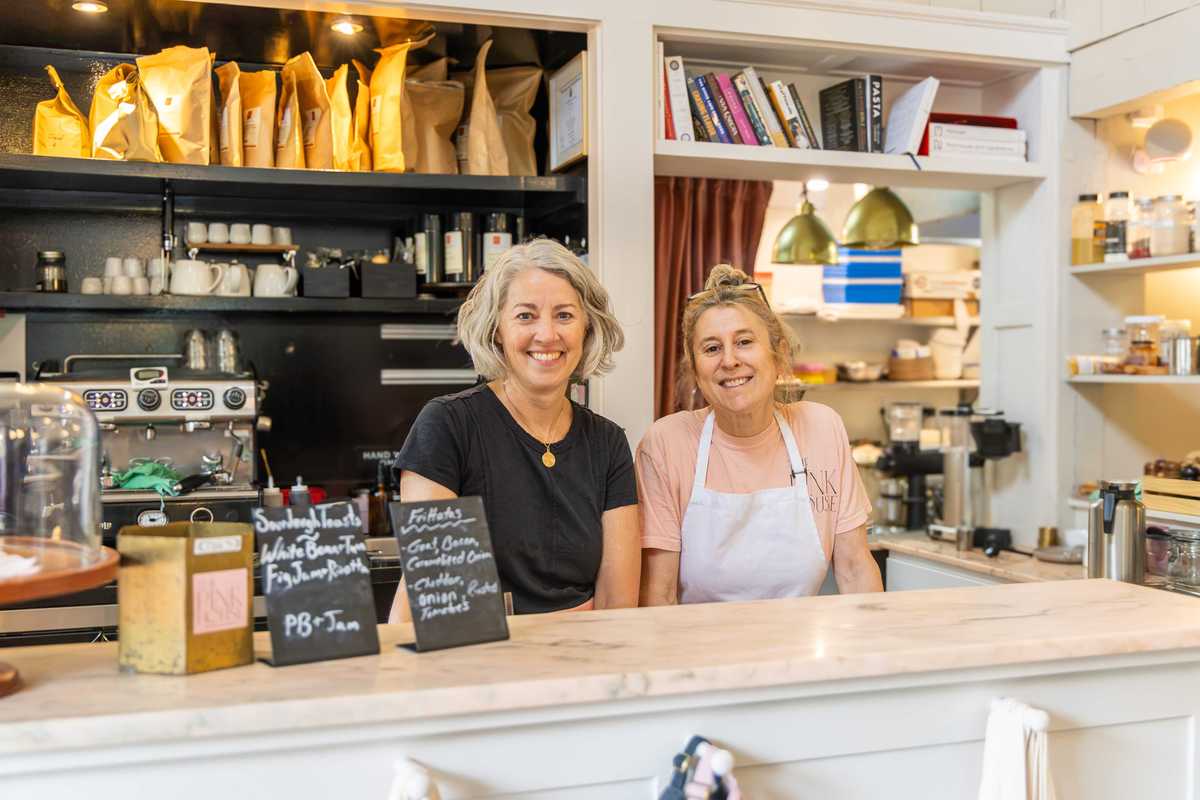
MILLBROOK — After two decades of ownership, Jeff and Thelma Zwirn are selling the Millbrook Antiques Mall as they look to retire and focus on spending time with their family.
The couple purchased the Franklin Avenue antique mall in 2005 after deciding to leave New York City in the years following the Sept. 11 terrorist attacks. Now, they have listed the business and its three-story, 5,000-square-foot building for $1,495,000 and are looking for a buyer who will continue operating it as an antique mall.
Established in 1979, the Millbrook Antiques Mall is home to more than 20 vendors spread across 40 rooms. The business generates revenue through vendor rentals, sales commissions, consignments and the owners’ own antique booth. The mall also serves as a retail outlet for Made In Cookware products.
According to Jeff Zwirn, the couple is already in advanced discussions with a prospective buyer.
“We have a few interested buyers, and one is pretty far along,” he said. “He has a vision for growing the business while keeping it an antique mall.”
Jeff Zwirn describes himself as the passive investor, while Thelma has overseen the day-to-day operation of the business from the beginning.
“My wife is on site several times during the week, so she manages the shop. She provides guidance to the dealers, she interacts with the customers. She’s just a wonderful CEO,” Jeff Zwirn said.
Their decision to leave New York City and purchase the business was shaped by the events of Sept. 11, 2001.Jeff Zwirn worked for Keefe, Bruyette & Woods, an investment banking firm whose offices occupied the 88th and 89th floors of the South Tower of the World Trade Center. The firm lost 67 employees in the terrorist attacks.“After attending so many funerals, we decided to shuffle the deck regarding our goals and objectives,” Jeff Zwirn said.
Looking for a slower pace of life, the couple relocated to Millbrook and purchased the Millbrook Antiques Mall. Before the move, Thelma Zwirn worked in New York City as an artist and teacher.
Wendy Maitland, founder of Atelier and the property’s listing broker, said the Zwirns have carefully maintained both the building and the business during their ownership.
“We have a very special property and owners who have a high level of pride of ownership and have taken incredible care of this building throughout their stewardship,” Maitland said. “I feel very lucky to be representing this property and these particular owners.”
Maitland said preserving the business itself will be just as important as selling the real estate.
“The property is most valuable to someone who will continue their legacy because they’ve built up a tremendous following, great reputation and tremendous goodwill throughout the community and beyond,” Maitland said.
As they prepare for retirement, the Zwirns said they are looking forward to spending more time with their children and grandchildren.
“This is the right time for us to focus on other priorities, including more time with the family, the grandchildren, with our own kids,” Jeff Zwirn said.
Millerton News
New York has approved legislation for the Medical Aid in Dying Act, which will allow certain terminally ill adults to request medication to end their lives. Supporters say it offers dignity and relief from suffering, while opponents worry about moral concerns and protections for vulnerable people.
What are your thoughts on the law and why?
Send your responses to social@lakevillejournal.com by Monday, Aug. 10 at 10 a.m. or comment on Facebook or Instagram.
We’ll publish a selection in next week’s paper.
What’s your favorite hidden gem in our community, and why should others check it out?
“Innisfree Garden in Millbrook, NY. You can walk around the lake at your own pace, enjoy a picnic, or relax in the chairs.”
— Darryl Gangloff, Millerton
“The lattes at Tri Corner and the seed library at NorthEast-Millerton Library! (They also have tons of resources you can use with a library card and others you don’t need a library card for)”
— KT McClune
“The Oakhurst for starters, food never disappoints. Then I’d head to The Elephants Tusk across the street because they have great consignment finds. And I get my nails done at Amore nails by Herringtons, Grace and Alex are amazing humans and deserve your support!!”
— Susie Q’s Homemade Sourdough Co.
“Rosemary Rose Finery on Main Street!! It’s a magical shop filled with one of a kind jewelry, from breathtaking estate pieces to turquoise and silver pieces sourced directly from the Southwest and cool funky treasures like brooches and earrings from decades past! You can also find herbal and local goods alike! Both the space and the owner are beautiful, warm and welcoming. It’s a place you have to stop in, you never know what treasures you will find @rosemaryrosefinery!”
— Danidogsjm
“Speaking strictly of commercial “hidden gems” I’d have to say it is in my opinion that the absolute best baker in the *entire* region can be found at the Millerton Farmer’s Market. The Baker’s Wife has a lot of strong competition against their breads but none top them. As for non commercial hidden gems there are multitudes, but I’d be loath to divulge them as they would cease to be hidden gems then wouldn’t they?”
— Andres Vialpando, Millerton

Want more of our stories on Google? Click here to make us a Preferred Source.
Olivia Montoya
A thank you to our community
As our Village’s 175th Anniversary Celebration comes to a close, I would like to extend my heartfelt thanks to everyone who helped make this milestone such a memorable success.
Thank you to the members of the 175th Anniversary Committee for the many hours of planning and dedication, to our generous sponsors whose support made so many events possible, to our local businesses, community organizations, and civic groups that participated, and to the many volunteers who gave their time and talents throughout the week. I would also like to thank our Village staff, DPW, emergency services, and everyone who worked behind the scenes to help keep the events running smoothly and safely.
Most of all, thank you to everyone who came out to celebrate. Seeing our parks, streets, and downtown filled with friends, neighbors, and visitors enjoying everything our Village has to offer was the greatest reminder of what makes Millerton such a special place. I hope this week gave all of us a chance to celebrate our rich history, make new memories, and look forward to an exciting future together.
This celebration was especially meaningful to me. Having grown up in Millerton and having the privilege of serving this community, I couldn’t help but reflect on how much our Village has changed over the years while still holding on to the small-town spirit that makes it so special. It’s also a reminder that each generation has the opportunity to leave Millerton a little better than they found it, and I look forward to seeing that tradition continue for many years to come.
Thank you again to everyone who played a part in making our 175th Anniversary a celebration to remember. Together, we’ve honored our past, celebrated our present, and look forward to a bright future for the Village we all proudly call home.
Jenn Najdek
Mayor, Village of Millerton
Lakeville Journal
Greg Arent of Clinton Corners tours Stanford’s Haunted Fortress, inspecting the attraction for needed maintenance and upkeep.
STANFORDVILLE — Throughout August and September, in the woods off Creamery Road in Stanfordville, volunteers are needed to cut back overgrowth, repair sets, and prepare the Haunted Fortress for its October opening.
Greg Arent, a Clinton Corners resident who serves as the leader of the haunted attraction’s volunteers, is spending weekends in the latter half of the summer prepping for the coming fall. Volunteers are encouraged to join through August and September on Sundays from 10 a.m. to 3 p.m.
In the summer, Stanfordville’s Haunted Fortress nearly disappears into the landscape. There are no lights, no actors, no sounds aside from birds and insects. Pathways vanish behind trees and structures sag under vines. What will become a carefully orchestrated maze of fear feels, instead, like something abandoned.
“We let Mother Nature take care of everything,” Arent said, gesturing toward the overgrowth. There is no mowing, weeding, or pruning in the summer. “By October this will all be dead.”
As he steps onto the swamp walk — the winding path visitors take before entering the Fortress — it’s quiet enough to hear his footsteps.
Arent, the head of operations for the Haunted Fortress, brings a background in set-building to the role. “I know some people don’t love Halloween,” he said with a shrug. “But to us, it’s just different.”
The Fortress unfolds as a series of spaces stitched together along a winding path — houses, yards, tunnels, and rooms that shift in theme but share the same handmade, slightly off-kilter feel. In October, visitors move through it piece by piece. In summer, it reads more like a landscape of remnants.
And, at the beginning of the tour, sits the pirate ship — one of the last structures built by Peter Wing.
Wing, who died in 2014, created the Haunted Fortress, originally called Frankenstein’s Fortress, in Millbrook in the 1990s before eventually moving it to Stanford. His vision, Arent understands, was less about jump scares and more about atmosphere — “the psychological spooky thing.”
Arent never met Wing, but the Fortress is still full of his presence.
“One of my favorite things Pete Wing did is reclaim and reuse material,” Arent said. Much of what stands here was not bought new, but salvaged and repurposed. It’s a philosophy that continues. “Guys who work at dumps set things aside for me,” Arent said. The Fortress is not polished. It resists symmetry. “There are no straight lines or right angles,” Arent said.
In October, that work becomes visible.
On the best nights, the Fortress runs with 50 or more volunteer actors. There is no audition process; roles — zombies, witches, ghouls, vampires — are assigned. Esther Evans, known locally as the “queen of costumes,” outfits actors with pieces she designs or refurbishes.
Funding comes through the town’s recreation department, but the operation is entirely volunteer-driven. In August and September, volunteers meet on Sundays — workdays dedicated to maintenance, repair, and small-scale construction. The tasks range from the mundane to the complex: roofing, landscaping, rewiring lights, repairing props.
“We definitely need more help,” Arent said. “We’re always looking for volunteers with carpentry skills. But also just whatever people are interested in or curious learning about.”
The work never really stops — planning, building, rehearsing, then performance. This October will include 13 nighttime shows and two sensory-friendly daytime walkthroughs. Then comes cleanup, reflection, and the cycle begins again.
“It is always Fortress season,” Arent said through laughs.
Despite the scale of the operation, much of the Fortress remains structurally unchanged from Wing’s original vision. When Wing’s family visited, years after his death, “they were just happy that we were maintaining his vision,” Arent says.
That vision isn’t always named. Many newer volunteers don’t know Wing’s story. What remains instead are fragments — techniques, structures, even phrases passed down informally. Before the attraction opens each night, Arent reminds actors: “Silence is creepy.” It’s the kind of note that feels less like instruction and more like inheritance.
Why do people keep coming back? Arent laughs at the question. “That’s a question for a psychiatrist.”
But then he answers it anyway. Some come for a scare. Others for the chance to build, to act, to create. One volunteer described it simply: “This is free therapy.”
Families return year after year. Children come as visitors and grow into actors. Others arrive by accident: one year, three women from New York City came as guests, learned it was volunteer-run, and showed up the next night to perform as witches. “They were some of the best witches we had,” Arent laughed.
In the end, the Haunted Fortress is not just a place to be scared. It is a place maintained and reimagined by people who choose, repeatedly, to return to it.
What Wing would recognize if he walked through today is impossible to say. But the materials are still rough, salvaged. The lines still crooked. The atmosphere still built more on suggestion than shock. “We don’t do jump scares,” Arent reminds me.
And the work — the steady, often invisible work of maintaining it — continues.
Volunteers can join the maintenance effort on Sundays through August and September from 10 a.m. to 3 p.m. on the following dates:
— Aug. 9
— Aug. 23
— Sept. 13
— Sept. 20
— Sept. 27
The Haunted Fortress is located at 11 Creamery Road in Stanfordville. Email hauntedfortress@stanfordny.gov if interested in volunteering.

Want more of our stories on Google? Click here to make us a Preferred Source.

Want more of our stories on Google? Click here to make us a Preferred Source.
How hospice pioneers transformed end-of-life care in the Northwest Corner
Millerton News
On a winter day in the early 1970s, Peter Warner, a young man dying of leukemia, lay in bed at Sharon Hospital, waiting in agony for his next dose of pain medication. Hospital rules insisted he could have it only every four hours. Not a moment sooner.
His mother, Claudia Warner, watched the minutes tick by while her son suffered. She realized that medical care was failing him, not because it couldn’t cure him but because it couldn’t, or wouldn’t, ease his pain.
Spurred by her grief and frustration—and having glimpsed at Yale New Haven Hospital what a new approach called hospice could offer—Warner began to push for drastic change in how dying patients were treated in our region. Together with two Sharon Hospital nurses, Louisa Lafontan and Donna DiMartino, she pioneered hospice care in the Northwest Corner.
Lafontan, who had helped build Sharon Hospital’s intensive-care unit, mentored DiMartino, and the two became lifelong friends. Inspired by Florence Wald, then dean of the Yale School of Nursing, who had brought hospice care to Connecticut from England, both nurses saw how medicine’s relentless focus on cure overlooked something equally important. “Sometimes people [could not] be cured,” says DiMartino. “They just wanted to be cared for.”
“When Louisa came back and began to talk about hospice, my ears went up,” DiMartino recalls. “All of us as nurses began to see there was a need, and it was right in front of us.”
Claudia Warner created a steering committee on hospice care in the Northwest Corner and recruited Lafontan to lead it.
Change nevertheless unfolded slowly. Like the rest of the hospital staff, the nurses had been trained according to the traditional ethos of Western medicine: save lives, extend them, restart them if possible. “Death didn’t happen in hospitals,” DiMartino says. “It was not an accepted part of life back then.”
As education in hospice care spread—Lafontan led much of the training in the Northwest Corner—health care providers began to understand the importance of treating pain aggressively. “We learned that dosage and timing needed to be for the patient experience,” says DiMartino. At the end of life, addiction to pain medication is not the primary concern; pain management and well-being are.
Medical personnel and volunteers spoke with families, pharmacists, and clergy, toured funeral homes, and learned that dying involves communities as much as medicine.
Medicare’s hospice benefit, enacted in 1983, expanded access but also transformed hospice from a grassroots movement into a more institutionalized system. Lafontan continued training nurses and volunteers and helped bring hospice into long-term care facilities. DiMartino eventually became hospice director at the Salisbury Visiting Nurses Association (now part of the Visiting Nurse and Hospice of Litchfield County), where she trained younger nurses.
Most end-of-life care still happens at home, where family members become the default caregivers. Yet while most people hope to avoid dying in a hospital, not every family can provide round-the-clock care. For decades, Lafontan and DiMartino imagined a place to fill that gap—for their patients and themselves, when the time comes.
In September 2025, East Mountain House (EMH) opened in Lakeville, Connecticut, bringing that vision to life. Housed in a private residence, EMH allows residents to receive hospice support while trained caregivers provide the daily physical care families often struggle to manage alone.
When the two nurses toured the facility together, they were struck by how closely it matched what they had imagined. “We couldn’t have imagined a better place,” says DiMartino. “There are rooms for families to stay, and staff who provide the care, which is monumental.” Nurses from Visiting Nurse and Hospice of Litchfield County check in regularly.
After retiring from nursing, Lafontan and DiMartino became hospice volunteers themselves, sitting with patients, listening to their stories, and giving families a chance to rest.
Both women recall a man dying at home who had a photo of an aircraft carrier on his wall. When they first met him, “he was sort of shrunken up, sitting there in a chair,” recalls DiMartino. By coaxing him to talk about the image, she learned that he had been a pilot whose job was training others to land on the carrier. “I watched his body change into a man who had this great story to tell.”
“When you’re really present with a patient, you [see] them in the whole breadth of their life,” says DiMartino of the human connection intrinsic to hospice care. “The end is part of life, and we’ll all get there. But every person’s life has meaning. You just have to [listen] and you’ll find it.”
To learn more about the origins of hospice in our region and hear an oral history with Louisa Lafontan and Donna DiMartino, visit
eastmountainhouse.org/history-of-hospice/