Millerton wastewater project targets 2027 start date

Millerton wastewater project targets 2027 start date

A map showing the planned wastewater service are within the Village of Millerton. Shaded parcels will be receiving wastewater installation in phase one of the project.

Map courtesy of the Village of Millerton and Tighe & Bond

MILLERTON — Construction on Millerton’s long-awaited wastewater system could begin in early 2027 and wrap up by the spring of 2028, according to an update delivered at the Village Board’s Sept. 9 workshop meeting.

The presentation — led by Erin Moore of Tighe & Bond, an engineering and environmental consulting firm — outlined the timeline, design, and costs of the project, which is a joint initiative with the Town of North East.

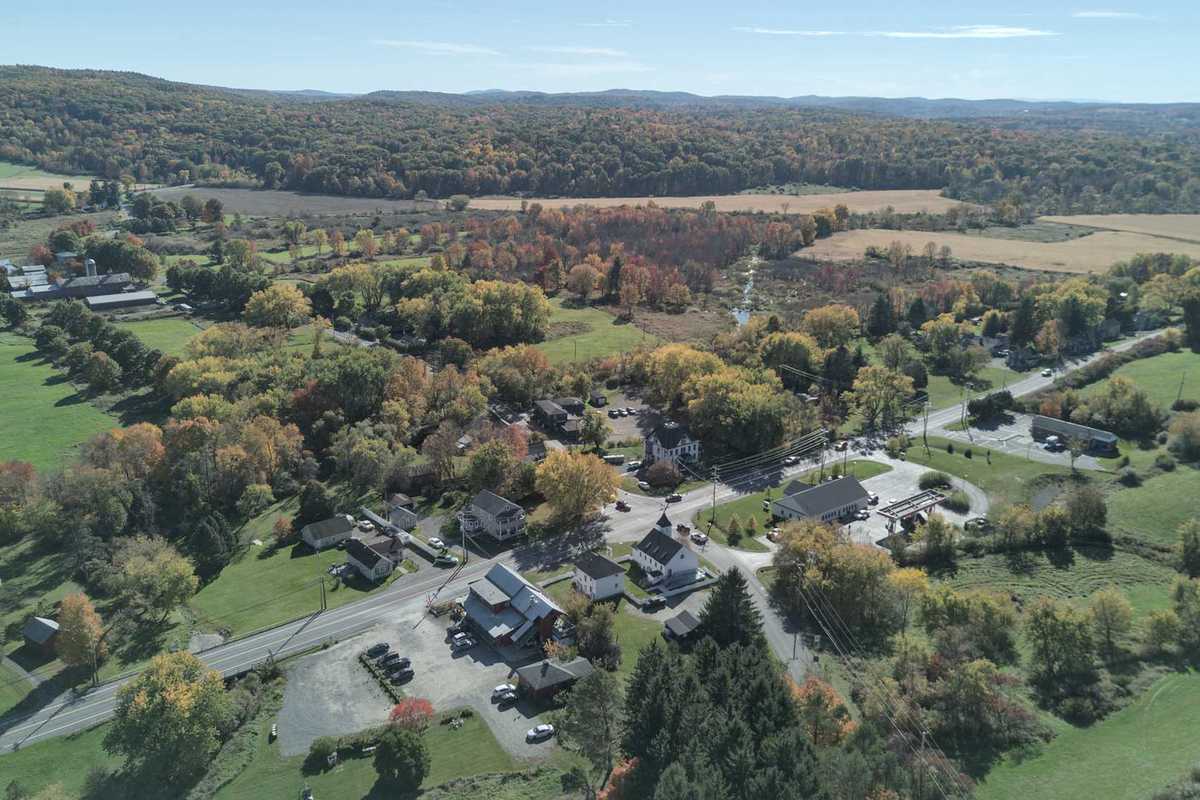
For the town, the service area will include the Boulevard, an area officials see as key to future development. For the village, the system will serve multiple parcels stretching from Main Street up to Century Boulevard and including side streets down to South Center Street.

“There has been a lot happening, and it’s really exciting,” Moore said as she detailed how the system would function, what it would cost and how it would be paid for.

The plan calls for a step-system, which uses small septic tanks and pumps to carry wastewater from individual homes and businesses to a new treatment plant on a village-owned parcel off Mill Street.

While homeowners will pay the electricity to run the pumps, which Moore describes as an “incredibly efficient system and operates infrequently,” the village will be responsible for installing and maintaining the equipment through permanent easements. An added benefit for residents, Moore noted, is that replacing traditional septic fields could free up outdoor space, potentially allowing for development on previously protected leach fields.

The total project cost is estimated at $13 million, which includes construction, engineering, contingency and legal fees.

The village’s share is about $10.8 million, with annual operations and maintenance projected at $144,000.

Funding to date includes $200,000 from a Dutchess County Municipal Investment Grant, nearly $960,000 from the Environmental Protection Agency secured through Congressman Pat Ryan, and just over $5 million from the New York Environmental Facilities Corporation.

A zero-percent interest loan through the Clean Water State Revolving Fund will cover about 30% of the remaining balance, leaving roughly $5.7 million still to be secured.

Moore said the next step is for trustees to finalize and sign the engineering contract, which will unlock the remaining EPA funding. Board members have been asked to submit final questions within the week so the contract can move forward. The NYSEFC funding also requires a short list of outstanding items before it can be closed.

Over the past two years, house-to-house investigations and individual conversations with residents have taken place, surveys have gone out, and geotechnical testing have been completed across the service area.

Moore said that once the final authorization is given — conservatively estimated by January 2026 — the design should be finished within a year, and construction within a year after that.

“We have a great team that is really excited and ready,” she said.

In addition to the existing grants, the village and town are preparing to pursue new funding opportunities. As announced at a recent Town of North East board meeting, the municipalities are in talks to apply jointly for the state’s New York Forward program, a competitive grant which offers two $4.5 million awards for small communities. Town Supervisor Chris Kennan and Village Mayor Jenn Najdek said the wastewater project would be the focus of their application, which is due next month.

Latest News

Officials divided on allowing restaurants along Route 22

The Irondale district, currently known as Highway Business District III, is comprised of just six parcels along Route 22 that are currently occupied by light industrial businesses.

Photo by Nathan Miller

MILLERTON — Though the Irondale District lies just outside of the Village of Millerton, it has become the center of a divisive conversation as the Town of North East continues to review a significant overhaul of its commercial zoning code.

Irondale, officially known as the Highway Business district under current town code, is a small stretch along Route 22 south of the village that some officials and residents believe could support additional businesses, while others argue development there could undermine efforts to boost Millerton’s existing downtown.

Keep ReadingShow less
Robin Wall Kimmerer urges gratitude, reciprocity in talk at Cary Institute

Robin Wall Kimmerer inspired the audience with her grassroots initiative “Plant, Baby, Plant,” encouraging restoration, native planting and care for ecosystems.

Aly Morrissey

Robin Wall Kimmerer, the bestselling author of “Braiding Sweetgrass” and a member of the Citizen Potawatomi Nation, urged a sold-out audience at the Cary Institute of Ecosystem Studies on Friday, March 13, to rethink humanity’s relationship with the natural world through gratitude, reciprocity and responsibility.

Introduced by Cary Institute President Joshua Ginsberg, Kimmerer opened the evening by greeting the audience in Potawatomi, the native language of her ancestors, and grounding the talk in a practice of gratitude.

Keep ReadingShow less
google preferred source

Want more of our stories on Google? Click here to make us a Preferred Source.

Melissa Gamwell’s handmade touch

Melissa Gamwell’s handmade touch
Melissa Gamwell, hand lettering with precision and care.
Kevin Greenberg
"There is no better feeling than working through something with your own brain and your own hands." —Melissa Gamwell

In an age of automation, Melissa Gamwell is keeping the human hand alive.

The Cornwall, Connecticut-based calligrapher is practicing an art form that’s been under attack by machines for nearly 400 years, and people are noticing. For proof, look no further than the line leading to her candle-lit table at the Stissing House Craft Feast each winter. In her first year there, she scribed around 1,200 gift tags, cards, and hand drawn ornaments.

Keep ReadingShow less
Regional 7 students bring ‘The Addams Family’ to the stage

The cast of “The Addams Family” from Northwest Regional School District No. 7 with Principal Kelly Carroll from Ann Antolini Elementary School in New Hartford.

Monique Jaramillo

Nearly 50 students from across the region are helping bring the delightfully macabre world of “The Addams Family” to life in Northwestern Regional School District No. 7’s upcoming production. The student cast and crew, representing the towns of Barkhamsted, Colebrook, New Hartford and Norfolk, will stage the musical March 27 and 28 at 7 p.m., with a 2 p.m. matinee on March 29 in the school’s auditorium in Winsted.

Based on the iconic characters created by Charles Addams, the musical follows Wednesday Addams, who shocks her famously eccentric family by falling in love with a perfectly “normal” young man. When his parents come to dinner at the Addams’ mansion, two very different families collide, leading to an evening of secrets, surprises and unexpected revelations about love and belonging.

Keep ReadingShow less
‘Quilts of Many Colors’ opens at Hunt Library

Garth Kobel, Art Wall Chair, Mary Randolph, Frank Halden, Ruth Giumarro, Project Chair, Maria Bulson, Barbara Lobdell, Sherry Newman, Elizabeth Frey-Thomas, Donna Heinz around “The Green Man.”

Robin Roraback

In honor of National Quilt Day, a tradition established in 1991, Hunt Library’s second annual quilt show, “Quilts of Many Colors,” will open Saturday, March 21, with a reception from 5 to 7 p.m. The quilts, made by members of the Hunt Library Quilters, will be displayed through April 17. All quilts will be for sale, and a portion of each sale goes to the library.

At the center of the exhibit is a quilt the Hunt Library Quilters collaborated on called the “Quilt of Many Colors,” inspired by Dolly Parton’s song”Coat of Many Colors.” Each member of the Hunt Library Quilters made two to four 10-inch squares for the twin-size quilt, with Gail Allyn embroidering “The Green Man” for the center square. The Green Man, a symbol of rebirth, is also a symbol of the library, seen carved in stone at the library’s entrance. One hundred percent of the sale of this quilt benefits the library.

Keep ReadingShow less
google preferred source

Want more of our stories on Google? Click here to make us a Preferred Source.

google preferred source

Want more of our stories on Google? Click here to make us a Preferred Source.