A place to play reopens in time for summer

Photo by Kaitlin Lyle

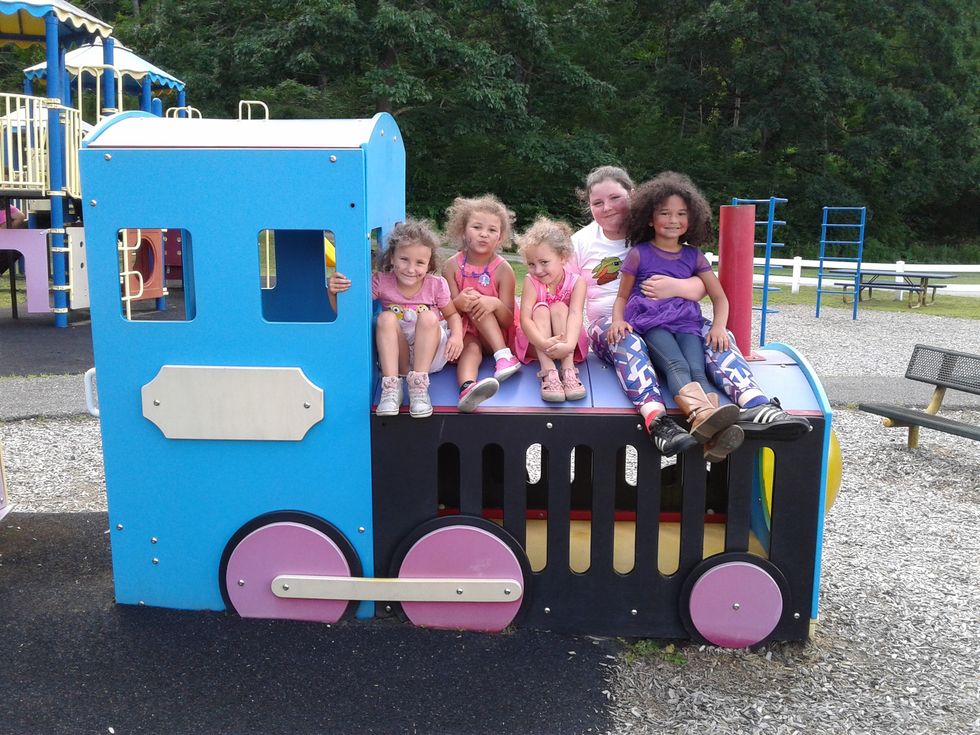
MILLERTON — Between the sound of children’s laughter and the sight of families coming out to enjoy a sunny day at the park, the playground at Eddie Collins Memorial Field, located at 5991 Route 22, recently opened after being closed these last few months due to the COVID-19 pandemic.
Starting Monday, July 13, the village of Millerton opened the park and its playground to the public. Although the baseball fields are currently open and ready for use, the basketball courts will remain closed until further notice.
All visitors must practice social distancing and wear a face mask while at the park to help prevent the spread of the coronavirus.
— Kaitlin Lyle
Aly Morrissey
Meg Musgrove, left, and Jessica Rose Lee set to open May 1.
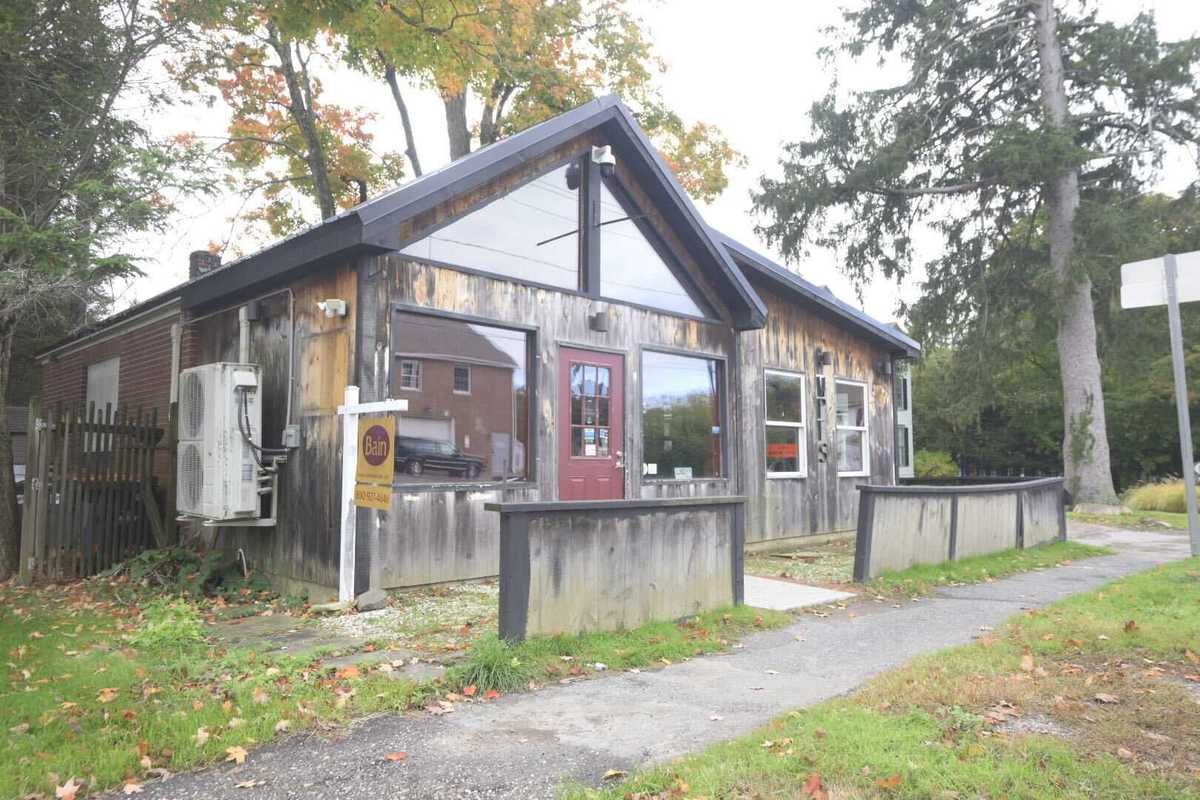
MILLERTON — A new chapter is coming to the former BES retail space on Main Street, where vintage jewelry dealer and herbalist Jessica Rose Lee will open Rosemary Rose Finery this spring after spending the last several years with a storefront in Salisbury, Connecticut.
Set to open May 1, the new shop will bring together Lee’s curated collection of vintage and estate jewelry, apothecary and wellness goods, and a continued lineup of craft workshops led by artist and screen printer Meg Musgrove, who built a following through classes she led at BES.
The partnership grew out of Rural Co-Lab, a women’s business group connecting entrepreneurs across the tri-corner region. Though Lee and Musgrove did not know each other well before, both said the collaboration came together quickly — and felt right.
“I really didn’t have much intention of looking for another space,” Lee said. “But it just felt cosmically aligned. Millerton felt right to me, the space felt right, and having Meg here to continue the classes felt right.”
For Musgrove, the chance to preserve the workshop side of the former BES space was important. The classes had begun building a loyal following, she said, and she hated the idea of losing that creative community.
“It just felt like an unfinished dream,” Musgrove said. “We were really starting to have people come back and I would have hated to lose that.”
Together, the two women said they hope to create more than a retail shop. They envision a welcoming, eclectic space centered on beauty, creativity and connection.
“It’s not a time to be a lone wolf,” Lee said. “It’s a time to be in community and be with one another.”
Musgrove’s workshops will remain a key part of that vision. In addition to coordinating classes, she plans to offer a small selection of art materials, kits, textiles and locally made goods that were previously available at BES.
One of the unexpected joys of the workshops, Musgrove said, has been the way they bring together women and girls across generations.
“Sometimes there are teenagers and people in their 70s in the same class,” she said. “That kind of intergenerational chatter is just magical.”
An herbalist by training, Lee said she often incorporates plant-based products, candles and cleaning practices into the atmosphere of her store, where she wants customers to feel both inspired and at ease.
“Everything holds energy,” she said. “With jewelry, if it holds a certain person’s energy, it’s really important to clean it. I want it to feel high-vibrational.”
Lee said she is drawn to old things not only for their craftsmanship, but for the stories and spirit they carry. Her inventory includes estate and vintage pieces, fine jewelry, and select items sourced through travel and long-standing relationships, including regular trips to New Mexico and the United Kingdom.
Lee, who also operates out of an old VW bus-turned studio on her property when not in her store, said her heart is in vintage pieces.
“I just really enjoy being around them and want to bring them new life and give them a new home.”
The larger Millerton space will also allow Lee to expand into custom design, repair services, and herbal education workshops — something she had limited room for in Salisbury, where she said classes were squeezed into the middle of the jewelry store.
Now, she said, Rosemary Rose Finery will have room to grow into a bigger version of itself.
A grand opening celebration is planned for opening weekend, with food, drinks and an open invitation to the community.
For Lee and Musgrove, the new shop is not only a business venture, but an experiment in shared space and mutual support — an idea they believe feels especially timely.
“The possibilities feel endless,” Lee said. “It feels like we can create whatever we want here.”
Elena Spellman
Dan Baker, left, and Daniel Latzman at Barrington Hall in Great Barrington.
Barrington Hall in Great Barrington has hosted generations of weddings, proms and community gatherings. When Dan Baker and Daniel Latzman took over the venue last summer, they stepped into that history with a plan not just to preserve it, but to reshape how the space serves the community today.
Barrington Hall is designed for gathering, for shared experience, for the simple act of being together. At a time when connection is often filtered through screens and distraction, their vision is grounded in something simple and increasingly rare: real human connection.
The partnership behind Barrington Hall began long before the building itself. Both Baker and Latzman grew up on Long Island, spent more than a decade in New York City, and eventually found their way to the Berkshires, drawn by the desire for something different. What they didn’t realize at first was just how closely their lives had already mirrored one another.
They were born in the same hospital, a year apart. Their families had distant connections. They even played on the same soccer team — never meeting, but moving through the same spaces. It wasn’t until they became neighbors in Egremont about five years ago that those parallels came into focus.
“In hindsight, it feels inevitable,” Latzman said. “But it was actually extremely random that we ended up here.”
From the beginning, Barrington Hall was meant to be a place people return to, not for any one event, but for the experience of being there. On any given week, the space might host a jazz performance, a dance party, a songwriter circle or a children’s event. Some nights bring in touring acts. Others highlight local creatives. The variety is intentional and so is the atmosphere.
“It’s about people,” Baker said. “It’s about being present.”

Baker and Latzman are keenly aware of the world outside with its constant barrage of information, political conflicts, a culture that pulls people deeper into their screens. Barrington Hall offers a way out of that noise.
“A little bit of a bubble,” Latzman said. “A place to step away from everything else.”
During a recent event, they noticed something telling: a full room of people dancing, talking, engaged — and almost no one on their phone.
“That’s when you know something is working,” Baker said.
Taking over a beloved local space comes with responsibility, one Baker and Latzman have met by honoring the building’s traditions while also expanding them.
“We didn’t feel obligated,” Latzman said. “We felt honored.”
Part of what makes the space distinct is its versatility. Large enough to host more than 250 people, yet intimate enough to feel personal, it fills a gap in the local landscape, serving a wide range of people and bringing different groups together in the same space.
“We want people to feel like, if something’s happening here, it’s worth checking out,” Latzman said.
They are carefully balancing community access with the realities of running a business, with an eye toward the long term.
“We want this to be here in 20 years,” Latzman said.

That vision extends beyond the building itself — future collaborations, expanded programming, a growing role in shaping the cultural life of the Berkshires. But at its core, the mission remains simple: to create a place where people can gather, a place that feels alive.
And perhaps most importantly, to create a place where, if only for a few hours, people can step away from the noise of the world and enjoy being together.
When asked who they’re most excited to host next, their answer was immediate: The Mammals on April 10 and Lee Ross, a one-man party band from Massachusetts, scheduled to perform on May 1.
For more information and tickets, visit
barringtonhallgb.com
Aly Morrissey
Paley’s Farm Market, located near the New York–Connecticut border on Amenia Road in Sharon, Conn.
SHARON, Conn. — For many local residents, spring doesn’t truly begin until Paley’s Farm Market opens its doors, and customers turned out in force for its 44th season opening on Saturday, March 28.
Located on Amenia Road in Sharon, Paley’s is a seasonal destination for residents of New York and Connecticut and, over the past four decades, has evolved from a locally grown produce center into a full-scale garden center, farm market and fine food market.
Despite a chilly start to the day, the opening drew a steady crowd, with a full parking lot and early signs of the busy season ahead.
“It’s been going really well,” said owner Sarah Coon, who purchased the business from her brother in 2019. “It’s chilly, but we’ve had a nice turnout. The sun’s out, and that always helps.”
Mimi Harson of Sharon and Anette Cantilli of Millbrook shared an outing together to purchase flowers and plants for their deck pots.
“It’s exciting, we love Paley’s,” Cantilli said of the opening day as she filled her car trunk with pansies.
Behind the scenes, opening day is the culmination of months of preparation – much of it beginning long before winter has fully loosened its grip.
“We open our first greenhouse in early February, and that’s when the fun begins,” Coon said. “We start planting pansies then, and once you open that greenhouse, you’re committed. It’s like having a bunch of babies out there – you have to make sure nothing goes wrong.
This year’s opening comes after a particularly snowy winter that, just weeks ago, left the property covered in large mounds of snow.
“I looked around and thought, ‘I don’t know if we’re going to be able to open on time,’” Coon said. “There was snow everywhere. It was hard to even imagine. But here we are.”
Early spring offerings include rows of colorful pansies grown from seed, along with cold-tolerant vegetable starts, herbs and Easter-ready planters designed for patios and entryways. Bulbs such as daffodils and tulips are also available, along with seeds, soil and gardening supplies.
“It’s not too early,” she said of the growing season. “You can start seeds indoors now, even just on a windowsill. And if it doesn’t work, you can always come back and getplants.”
While the market’s popular prepared foods and grocery offerings will arrive later in the season, the early weeks focus on planting and preparation. Dry goods are expected in the coming weeks, followed by a gradual buildout of the full market.
New this year, Paley’s has partnered with Homegrown National Park, a national initiative promoting the use of native plants. The collaboration will help customers more easily identify native species to incorporate into their gardens.
“We think it’s going to be good for our staff and our customers,” she said. “It makes it easier for people to mix native plants into what they’re already doing.
Paley’s typically operates through mid-October, employing up to a dozen staff members at the height of the season, along with part-time and retired workers who assist with planting and maintenance.
For many, the opening marks more than just the start of a business cycle – it’s a seasonal ritual.
“We all need a little color right now,” Coon said. “And a little warmth. It’s coming.”

Want more of our stories on Google? Click here to make us a Preferred Source.
Natalia Zukerman
Gail Rothschild with her painting “Dead Sea Linen III (73 x 58 inches, 2024, acrylic on canvas.
There is a moment, looking at a painting by Gail Rothschild, when you realize you are not looking at a painting so much as a map of time. Threads become brushstrokes; fragments become fields of color; something once held in the hand becomes something you stand in front of, both still and in a constant process of changing.
“Textiles connect people,” Rothschild said. “Textiles are something that we’re all intimately involved with, but we take it for granted.”
Her work begins, often, with something small: a scrap of linen from the Judean desert, dating “to a time before the notion of ‘Israel’ or ‘Palestine;’” a fragment so diminished it barely registers as an object; or a rare indigo-dyed child’s head cloth from Tutankhamen’s tomb.
“I call them portraits of ancient linen,” she said.
Rothschild grew up in Greenwich and studied drawing and painting at Yale University. “That was kind of my first love,” she said. But she quickly veered toward something more collective, working with Peter Schumann at the Bread and Puppet Theater, building papier-mâché puppets and participating in a kind of performance-based activism that blurred art and politics.
“After Yale, I got out of school and thought‘Wait a second. I don’t want to paint anymore. I need to work with people in communities and make things.’”
She moved to Brooklyn and began working in public schools, developing projects rooted in collaboration and local history. The projects were ambitious, research-driven, and often confrontational. At the University of Massachusetts, she recalled asking students: “Did you know that Amherst was named for Jeffrey Amherst, who was responsible for giving blankets infected with smallpox to Native Americans? Why don’t we look into that?’”
There were sculptures, letters to watchdog groups, installations. She worked on four such projects a year, she said, until the pace became unsustainable. “At some point I just said, ‘I’m exhausted. I’m going back to the studio.’”
What brought her back was a book, “Prehistoric Textiles ” by Elizabeth Wayland Barber. Inside, she encountered an image of a 7,000-year-old textile, unraveling.
“It said to me, ‘this could be a great big abstract painting’,” she said. “What does it mean that this textile, this thing that used to be a Cartesian grid and over time has gone back to nature?”
That question became a kind of axis for her work. “There is this cusp between nature and culture,” she said. Early on, she avoided textiles with imagery, drawn instead to the raw language of fiber itself. But eventually, even that boundary softened. A project with the Godwin-Ternbach Museum introduced her to Egyptian textiles — Christian, pagan, Greek, Roman influences colliding in woven form.

What followed was a deepening relationship with museums and, crucially, with conservators. Institutions like The Metropolitan Museum of Art and collections in Berlin and Paris began sending her images of textile fragments, sometimes pieces she has still never seen in person.
“It’s almost easier for me to transform it when I haven’t seen it,” she said.
Her process is both precise and intuitive. She grids the canvas and the source image, drawing freehand to “honor what the object is.” For a time, she works closely from the photograph. Then something shifts. “At some point I’ll say, ‘It’s a painting. It’s got to talk to itself,’ and then I stop looking at the photograph.”
What emerges is layered, luminous and muscular. “Sometimes people say, ‘Do you miss making sculpture?’ and I say, ‘I never stopped.’”
You feel that in the surfaces: the tension of threads pulling apart, the sense that something is both forming and dissolving at once. Even the backgrounds — often ambiguous, atmospheric — are not neutral. “It’s really more about feeling the space around the object,” she said, especially as she considers how ancient fragments are mounted on modern fabrics. “I get to invent an entirely other language.”
Some of her most arresting work is on the monumental textiles of The Met Cloisters, where medieval tapestries, some towering more than a dozen feet, are slowly, painstakingly conserved. It’s in the conservation labs that Rothschild has observed the physical reality of these works: their own weight pulling them apart, threads breaking under centuries of strain. Conservators insert new threads to stabilize them and Rothschild documents this process. “There’s a kind of poignancy to their work,” Rothschild said, “because as hard as we work to conserve the objects of our past, in the greater cosmic scheme of time, it’s only temporary. There’s something beautiful about that.”
Time operates on multiple levels in Rothschild’s work. There is the time of the object —thousands of years, in some cases — and the time of the painting, which unfolds over months. “Once I start working on something, I can’t stop,” she said. “But then it’ll rest for a while and I may change it, add layers.”
And then there is the time of attention itself, the way looking can tip into obsession, into pattern-seeking that doesn’t quite turn off. Rothschild is aware of that edge.
“I have to make myself stop or I just see patterns everywhere and I can’t stop, really,” she laughed. “That’s why I’ve built in other things I need to do in my life like take the dogs for a hike or, you know, volunteer at the Sharon Land Trust… otherwise I go a little nuts. And it wouldn’t be good painting either.”
A painting session, for her, has its own its own arc. “There’s kind of a trajectory for every work session. I might be repeating something and suddenly it looks linear. The language I started painting with may change by the end and I think, ‘Oh God, I’m gonna have to go back and repaint that.’”
But then, she said, there is a pause.
“I kind of step back and say, ‘No, this painting can hold both. That’s part of its history. There’s the history of the object but then there’s the history of the painting.’”
Richard Feiner And Annette Stover
Cast of “Laughter on the 23rd Floor” from left to right. Tara Vega, Steve Zerilli, Bob Cady (Standing) Seated at the table: Andrew Blanchard, Jon Barker, Colin McLoone, Chris Bird, Rebecca Annalise, Adam Battlestein
For a century, the Sherman Players have turned a former 19th-century church into a stage where neighbors become castmates, volunteers power productions and community is the main attraction. The company marks its 100th season with a lineup that blends classic works, new writing and homegrown talent.
New England has a long history of community theater and its role in strengthening civic life. The Sherman Players remain a vital example, mounting intimate, noncommercial productions that draw on local participation and speak to the current cultural moment.
Sherman Players President Missy Alexander is an enthusiastic champion of the group’s history and collaborative spirit, which engages amateurs and professionals alike “to see what fun we can have” in bringing theater to all audiences. Everyone pitches in — from sets and costumes to administrative work — to bring each production to life. She calls it the “extra special sparkle” that has defined the company since its first performances in their historic church home in 1926.
The season opens in April with Neil Simon’s “Laughter on the 23rd Floor,” a comedy set in the 1950s television writers’ room during the McCarthy era. In June, the company will present a production (with live music) of the classic Broadway musical “Bye, Bye Birdie!” one of the first shows that highlighted the Baby Boomer generation and our “Kids are King” culture.
In July, The Sherman Players will debut “Restored to Reason,” a new work by local writer Elizabeth Young about Mary Todd Lincoln. Developed through the theater’s Cold Lemonade reading series, the work marks the first time the company has taken a piece from staged reading to full production, a memorable milestone in the group’s historic mission.
September brings a timely revival of the historic American courtroom drama, “Inherit the Wind.” The Sherman Players last presented this riveting account of the infamous Scopes “monkey trial” in 1966. The season concludes with a special holiday presentation of “An American Christmas Carol,” an original adaptation of the Dickens classic, written by Artistic Director Robin Frome, directed by Jane Farnol.
Alexander is quick to acknowledge that The Sherman Players is committed to supporting the broader regional arts community. “We’re closer than you think, and we all draw on the same talents and resources,” she said. “We all see and support each other’s work.”
This dedication is helping to enrich the theater-going experience for everyone, from long-established generational Sherman Players patrons to new, younger audiences looking for community connection.
The Sherman Playhouse is located at 5 Route 39 N, Sherman, Connecticut. For tickets, subscriptions and more information, visit shermanplayers.org.
Graham Corrigan
Stage director Geoffrey Larson signs autographs for some of the kids after a family performance.
For those curious about opera but unsure where to begin, the Mahaiwe Theater in Great Barrington will offer an accessible entry point with “Once Upon an Opera,” a free, family-friendly program on Sunday, April 12, at 2 p.m. The event is designed for opera newcomers and aficionados alike and will include selections from some of opera’s most beloved works.
Luca Antonucci, artistic coordinator, assistant conductor and chorus master for the Berkshire Opera Festival, said the idea first materialized three years ago.
“This production is one of the highlights of the off-season,” he said.
“Opera is all about telling stories through music, which makes the concert a hit with people of all ages,” he added. “Every story has something to tell us about the human experience.” He pointed to the range of material covered in the program. “From the beautiful ornamentation of Baroque operas to the majesty of Mozart, to the gripping emotions of Verdi and Puccini … up to the modern-day stories of today’s operas by composers like Huang Ruo, Missy Mazzoli and so many others.”
The event features three singers from the Berkshire Opera Festival: soprano Juliet Schlefer, mezzo-soprano Abbegael Greene and tenor Maximillian Jansen. All three are still early in their careers, a class of rising vocal talent carrying the torch for the next generation. They will be accompanied by pianist Charles Tsui.
“I think that opera is especially exciting for families and young children precisely because it is all about storytelling,” Antonucci said. “Adding costumes, sets, props and the incredible power of operatic voices to the mix makes it one of the few types of experiences where all the arts come together.”
This year, the production reimagines some of those legendary stories in present-day Massachusetts. As always, “Once Upon an Opera” promises to be an interactive affair, encouraging audience participation throughout its hourlong runtime. While the event is free, reservations are encouraged due to limited seating.
Tickets are available at berkshireoperafestival.org/onceuponanopera.

Want more of our stories on Google? Click here to make us a Preferred Source.

Want more of our stories on Google? Click here to make us a Preferred Source.