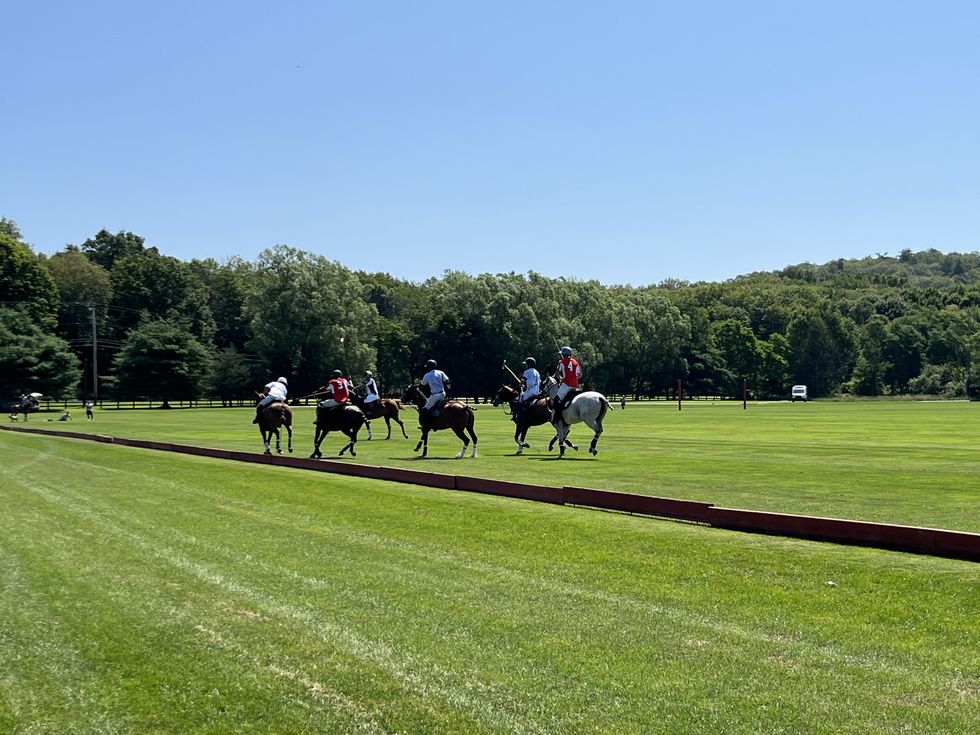
PINE PLAINS — Along with other activities such as fox hunting and show jumping, polo is a staple of the Hudson Valley equestrian scene. Every weekend from the end of May through September, players and spectators gather at the Mashomack Polo Club.
The club, which is located on Briarcliff Road next to Mashomack Fish and Game Preserve Club, is open to the public, and matches are free to attend.
A game of polo, played on horseback, consists of two teams with four players each. A player scores for their team by hitting the ball, which remains on the ground, into a goal. There are a number of safety-related rules, and players who break them receive fouls.
The game is divided into several seven-and-a-half minute segments, called chukkers, with a half-time pause in between. Two umpires, also on horseback, observe play and call goals and fouls. A “third man,” positioned on the sidelines, is responsible for settling any dispute between the two umpires. Players also switch out their ponies partway through the match, often multiple times.
In order to keep things even, each player is assigned a handicap. The most novice players have a handicap of -1, while the most expert players have a handicap of 10. Tournaments are typically assigned a maximum handicap sum. For example, in an eight-goal tournament such as Mashomack’s Eddie Moore Cup, the handicaps of each team may add up to no more than eight.
According to Mashomack Polo Club President John Klopp, the club is one of the most active clubs in the United States and the most active in the Northeast. They have seven polo fields and their polo barns have stalls for 250 ponies.
In addition to its facilities, Klopp also praised the club’s manager and players. “We have the best manager, Juan Olivera, [and] we have very good people who love being here,” Klopp said.
For Klopp, much of the joy of Polo comes from the team camaraderie. He said that he grew up playing football, so he has always enjoyed team sports.
He is also thrilled that all three of his children play: “When I have a chance to play with my two sons and my daughter, that’s the absolute best.”
Klopp has been playing polo for approximately 25 years. He started when a friend organized a beginner clinic and invited him to join. “I took the clinic, I hit the ball once, and I’ve been playing ever since,” Klopp said.
He encourages other people who are interested in playing to take a polo lesson at the club: “People can come and take a first lesson, walking around and then you start to hit the ball and then you start to gallop the horse.”
He noted that there is a coaching league that meets every Saturday and Sunday for new players who have taken a few lessons.
“It’s easy,” Klopp said. “Go to the website, follow us on Instagram, sign up for a lesson and get started.”







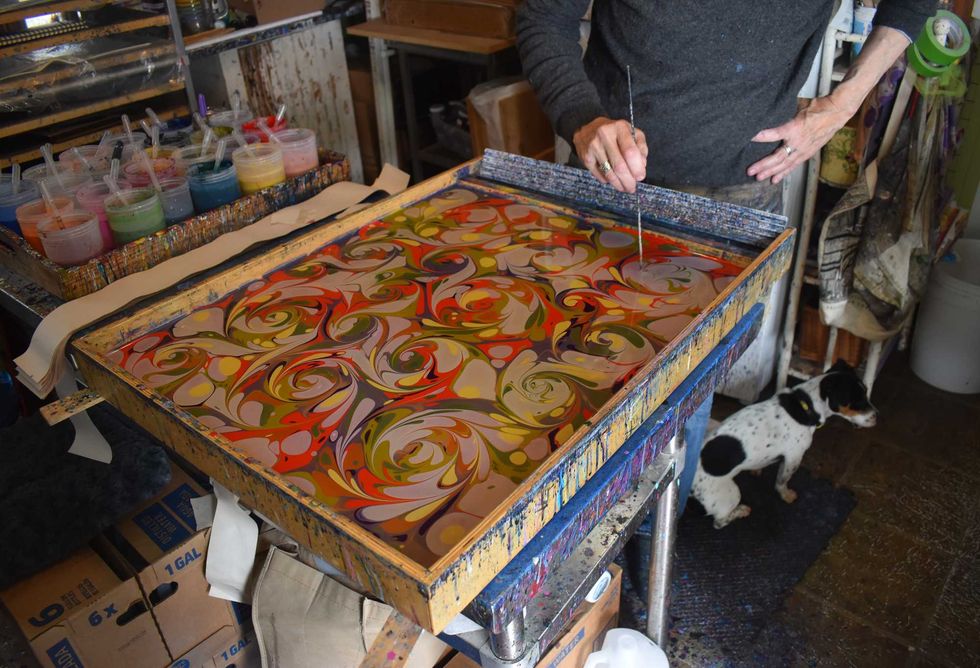 Susan Schneider, owner of Shandell’s, creates a variety of products with marbleized surfaces in her Ashley Falls studio.L. Tomaino


 Roger McKee naming the winners with the first place entry over his left shoulder. Patrick L. Sullivan
 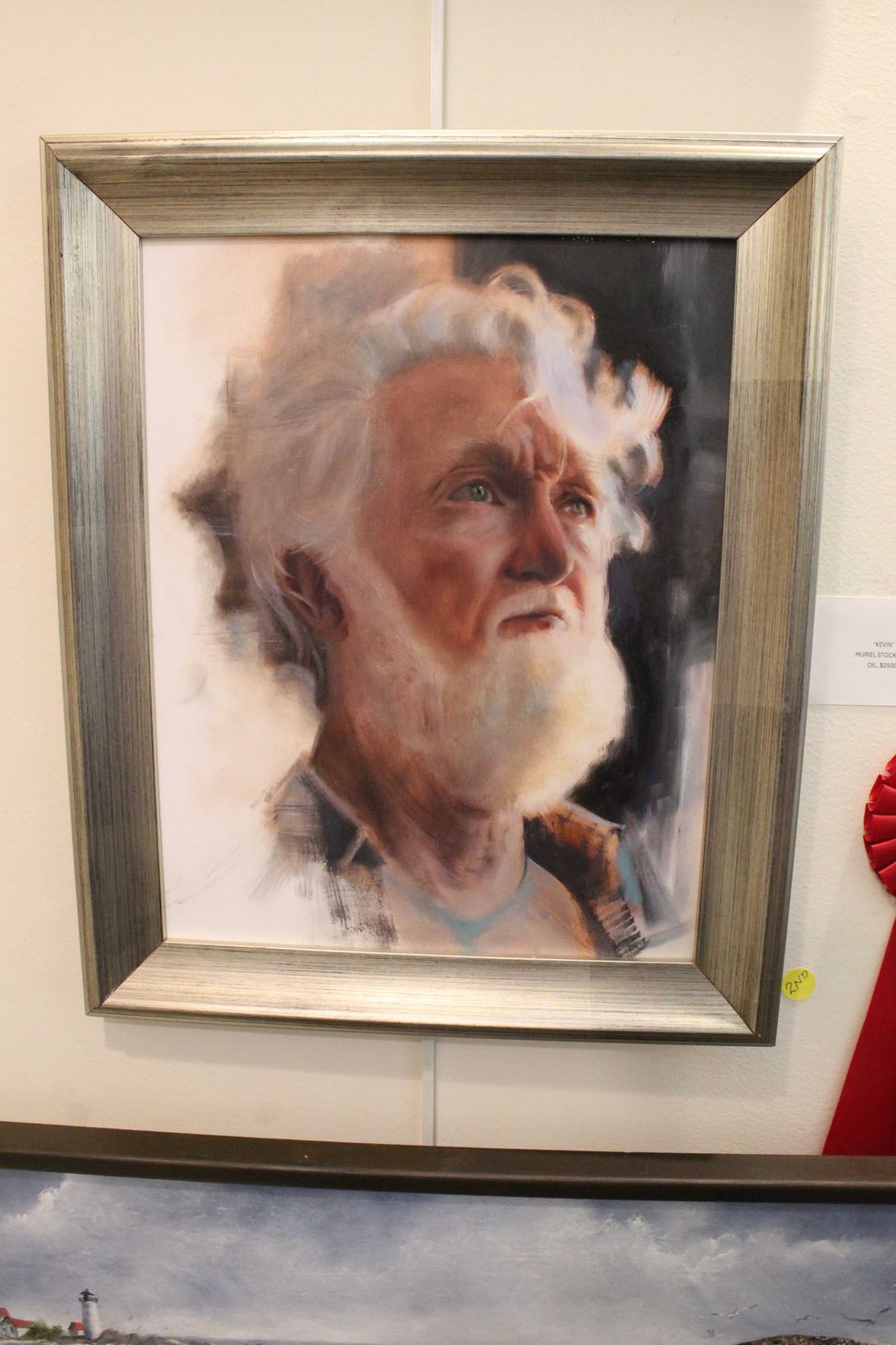 Muriel Stockdale’s “Kevin” took second place in the juried art show at Trinity Episcopal Church.Patrick L. Sullivan