Thank you!
Your support is sustaining the future of local news in our communities.

CIA report on a paranoid psychopath

Many Americans do not understand the CIA. The primary role of the CIA is to gather information, conduct analysis and evaluation, and, always, provide leaders with background information necessary to govern around the world. If you go to the CIA web site, you can find incredible, de-classified, reams of reports on everything from the economy of distant countries or cities, to the availability of water in desert regions, to maps of sea lanes.

In the middle of World War II, the Office of Strategic Services (OSS – that was renamed the CIA after the war), ordered respected psychologists from Harvard, the New School, and the N.Y. Psychoanalytic Institute to study and report on the psychological profile of Adolf Hitler. So-called the Langer Report, a copy was found in the dusty library of Cornell long after it was declassified in 1968.

In 1943, it was critical that the U.S. study Adolf Hitler’s personality to try to predict his behavior. In the eventual 229-page report, Hitler was described as a paranoid “utter wreck” who was “incapable of normal human relationships.” Part of the conclusion was, “It is forever impossible to hope for any mercy or humane treatment from him.” Prophetic words considering what we learned subsequently of the Holocaust and Nazi atrocities.

What is interesting, is that the fascist movement in Europe relied on these same traits to further their aims, aiding and abetting Hitler to achieve goals they wanted, especially wealth and power. The OSS report evaluated the enemy’s leader, stating that Hitler’s tactics (and behavior) were to never admit wrongdoing, never concede that anyone other than himself was good in any way, never accept blame for any of his actions only claim credit for any such actions, never allow the public acclaim or idolatry to cool off, and use big lies rather than small ones and repeat those frequently because more people will believe big lies more than small ones. The report further stated that such a person treads a path towards ideological immortality, eventually, when the tide turns, will seek the greatest vengeance on a world he despises if it doesn’t worship him. For Hitler, the carnage of the last two years of a failing war saw him authorize and demand extermination camps and atrocities in increasing numbers.

As you read the above, a brief history lesson, remember that history has a way of repeating. The very deeply troubled state of Hitler’s mind can be seen repeated in today’s world all too often. Look for traits and be wary, very wary of allowing appeasement for those who may not be capable of any normal traits or behavior and for the ongoing damage they are psychotically compelled to mete out, whilst their supporters still seek to manipulate for personal advantage.


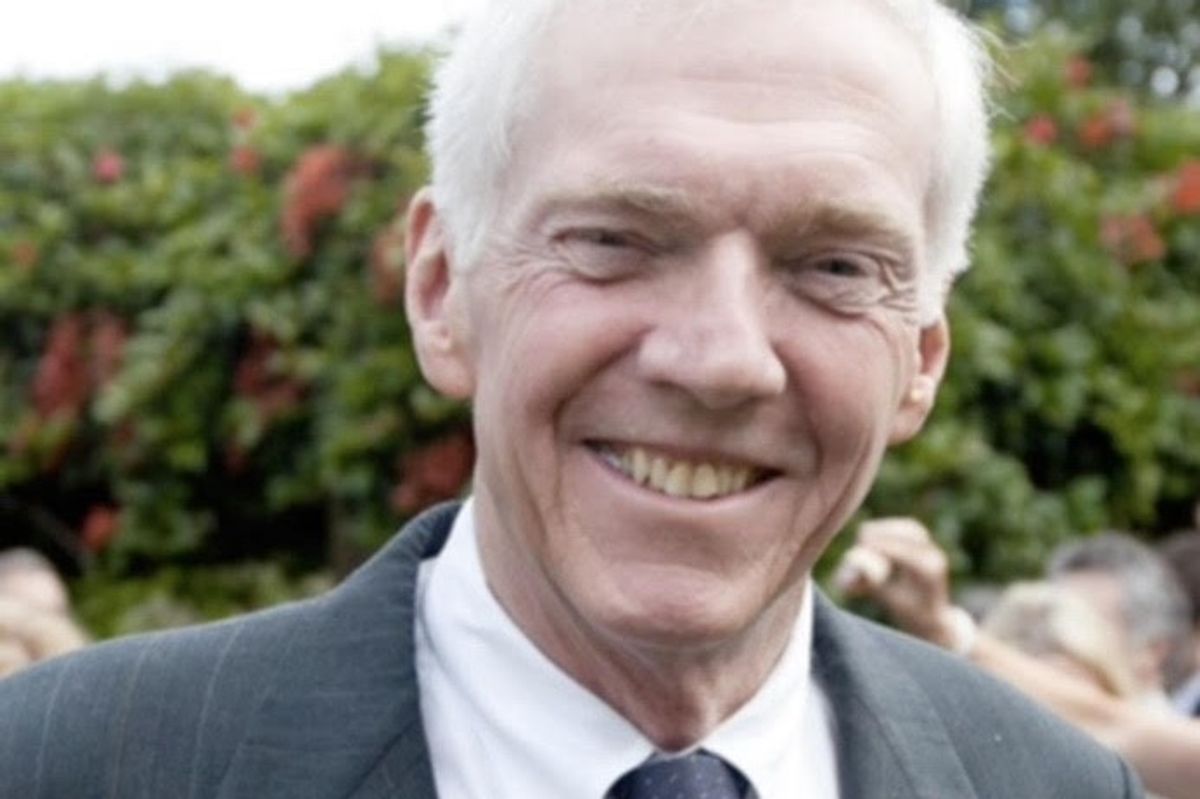
Peter Riva, a former resident of Amenia Union, now lives in New Mexico.
The views expressed here are not necessarily those of The Millerton News and The News does not support or oppose candidates for public office.

Latest News

A life reshaped by clay in “Matin”

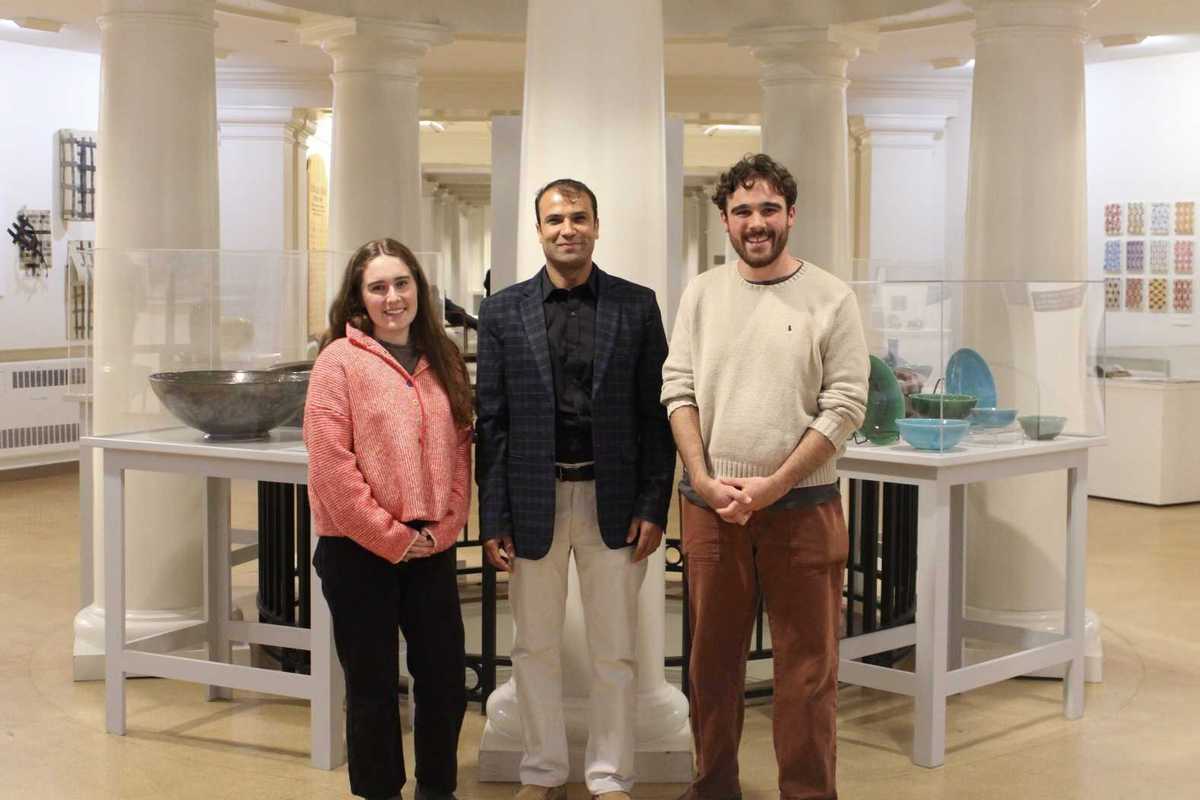
Left to right: Hannah Wheeler, Matin Malikzada and Yonah Sadeh.

D.H. Callahan

On Monday, Oct. 26, a group of students, teachers and local residents gathered at the Hotchkiss School in Lakeville for a screening of the new short documentary “Matin.” The film tells the story of Matin Malikzada, a seventh-generation Afghani potter making a new life in New Milford, Connecticut. The film was made by local filmmaker Yonah Sadeh, creator of the Video Wall at the David M. Hunt Library, and Berkshires-based potter Hannah Wheeler, who were both present for the screening, along with Malikzada himself.

As a member of the seventh generation of his family to master the art of pottery, Malikzada had done things the way his family had for over a century. Istalif, the village where his family has lived for generations, was known throughout Afghanistan for its pottery, with wares sent across the country for use as everyday cups, bowls, plates and other vessels. The pottery-making families of Istalif gathered clay from the same mountain, about 30 to 45 minutes away by donkey. Every July, they would head north toward the Uzbekistan border to gather ishkar, a plant they processed by hand to make their signature glazes.

Keep ReadingShow less
google preferred source

Want more of our stories on Google? Click here to make us a Preferred Source.

Meg Sher finds her calling among the stacks

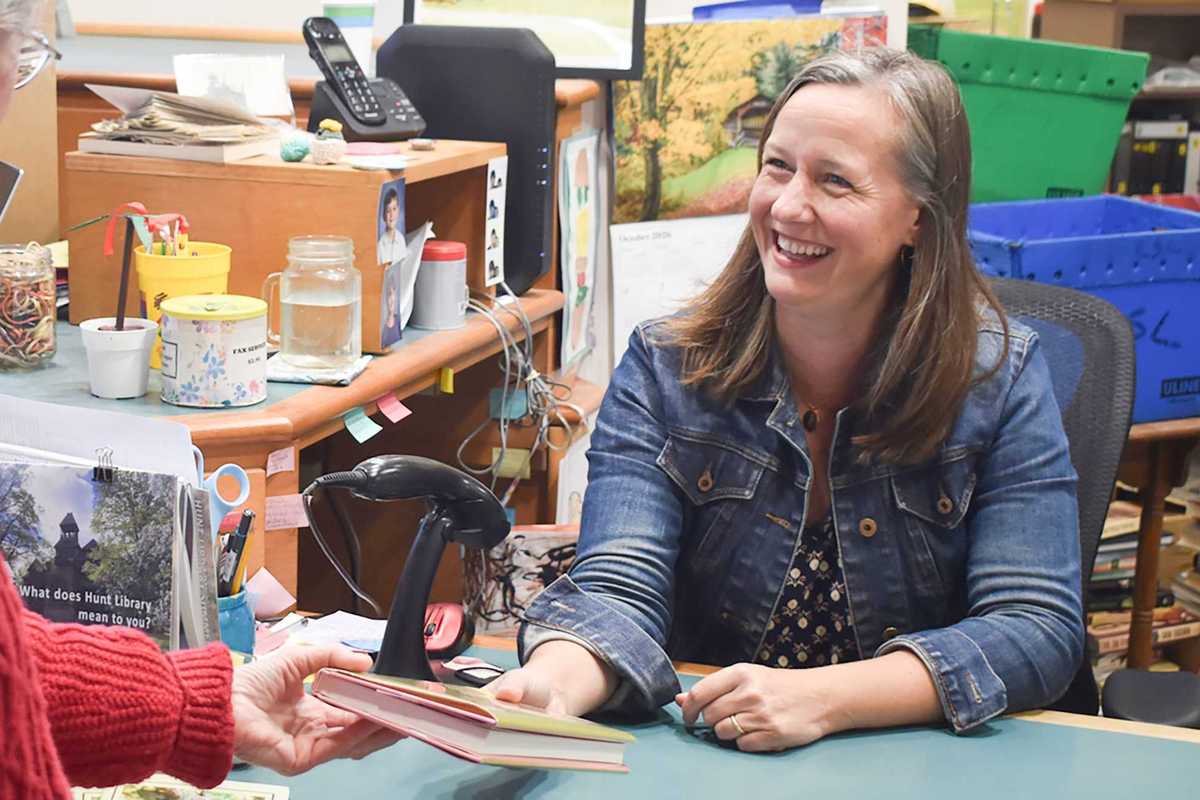
Meg Sher, executive director of the David M. Hunt Library in Falls Village.

L. Tomaino

When Meg Sher came to Falls Village in 2006 from Old Lyme, Connecticut, where she grew up, she never imagined she’d someday be the executive director of the David M. Hunt Library.

Although, in hindsight, perhaps it makes sense.

Keep ReadingShow less
Crescendo’s 23rd season speaks to the heart and mind

Christine Gevert, founding artistic director of Crescendo, conducts the audience at a performance.

Steve Potter

For Christine Gevert, founding artistic director of Crescendo, music from centuries past is anything but a relic. It is a living, breathing art form, full of drama, emotional complexity and, occasionally, surprises. As the regional choral and period-instrument ensemble launches its 23rd season, Gevert is once again bringing forgotten masterpieces into the present.

“Early Music has been my lifelong passion and the focus of my specialization in Europe and South America,” Gevert said. “Bringing this repertoire to our audiences in a nuanced way that does justice to its incredible depth, intensity, and beauty is deeply important to me.”

Keep ReadingShow less
Close Encounters with Music celebrates 35 years of musical discovery

Close Encounters with Music’s 35th season opens with “Saluting the Clarinet” featuring clarinetist Alexander Fiterstein.

Provided

For 35 years, cellist Yehuda Hanani has been inviting audiences to experience classical music in unexpected ways. As founder and artistic director of Close Encounters with Music, Hanani has built a concert series that goes beyond the music itself, exploring connections to literature, history, politics and the human experience.

This year, Close Encounters celebrates its 35th season with “Celebration & Discovery,” a seven-concert series that opens Sunday, Nov. 1, at the Mahaiwe Performing Arts Center in Great Barrington.

Keep ReadingShow less
google preferred source

Want more of our stories on Google? Click here to make us a Preferred Source.

google preferred source

Want more of our stories on Google? Click here to make us a Preferred Source.