Thank you!
Your gift keeps The Millerton News in our towns.

Another way to help the planet survive climate change

When you see large corporations trying new carbon dioxide (CO2) technology — even if that technology industry is in a start up phase — you can be sure people are working, hard, to find new ways to make money and, hopefully, solve some of the environmental issues. Such is the case with Air Company of New York, “We’re creating products from CO2 to extend life on Earth.”

Like distilled water, which is impurity free, Air Company is grabbing CO2 from the air around us and converting it into clean, pure, products. Okay, they have a few gimmicks. Take their AIR Eau de Parfum which is, sensibly, only a limited release product (and hardly viable at $220 a bottle). On the other hand, their AIR Vodka at $75 a bottle has had some rave reviews for its clean taste.

Now, you may ask, who cares? Well, those two gimmicks above are based on alcohols, formula C2H6O, that they make using captured CO2 pollutants with a little free atmospheric hydrogen thrown in. And, you guessed it, they can – and do! - go a step further and make kerosene C12H26C15H32.

Kerosene is what aircraft burn for jet travel. JetBlue has recently signed up with Air Company and hopes to be carbon neutral within five years. Yes, just five years. Going beyond the new goals for “Sustainable Aviation Fuel” (offsetting fuel pollution by planting trees and adding reclaimed oil product) now being attempted by all the major airlines,... no, by recapturing CO2 from the polluted air around us and grabbing some of the atmosphere’s abundant hydrogen, these new engineers can make everything from methane, to kerosene, to gasoline.

Okay, nothing is ever free. It takes energy to run their processes and they need heavy industrial investment. But there’s a double-edged, built in, benefit here that even electric and hydrogen planes and cars cannot match: By taking the CO2 and hydrogen from the free polluted air all around us, they can sell a product that has no supply shortage and whose ingredients are free.

And to top that off, they can offer airlines to be carbon neutral because what they burn to fly was already removed from the atmosphere and can be recaptured again. Airlines looking at public opinion forming against jet planes’ pollution can, instead, claim to be carbon neutral. Air Company is not alone. Econic Technologies, Newlight Technologies, Carbon Engineering, Sunfire, Avantium, Agora, Prometheus, Caphenia, Synhelion, and Fixing CO2 are all getting into the game. And why wouldn’t they? The raw product they refine is free and capturing excess CO2 is beneficial for the planet. That’s a whole lot better than the oil industry’s supply cost for crude oil — oh, and it breaks OPEC’s stranglehold.


Peter Riva, a former resident of Amenia Union, now lives in New Mexico.
The views expressed here are not necessarily those of The Millerton News and The News does not support or oppose candidates for public office.

Latest News

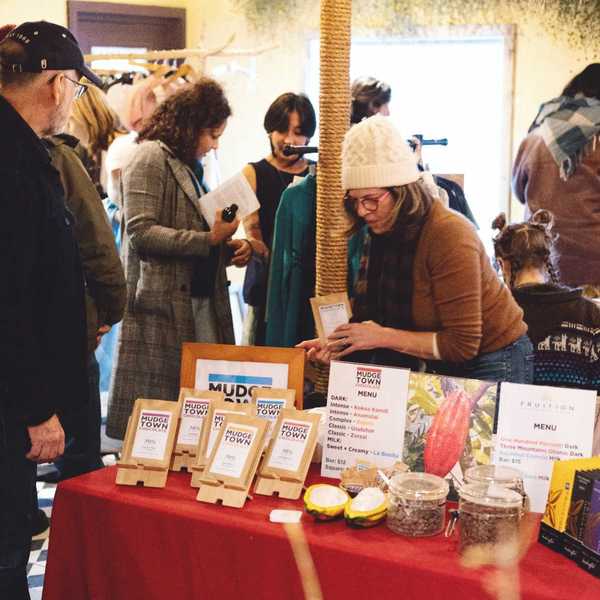
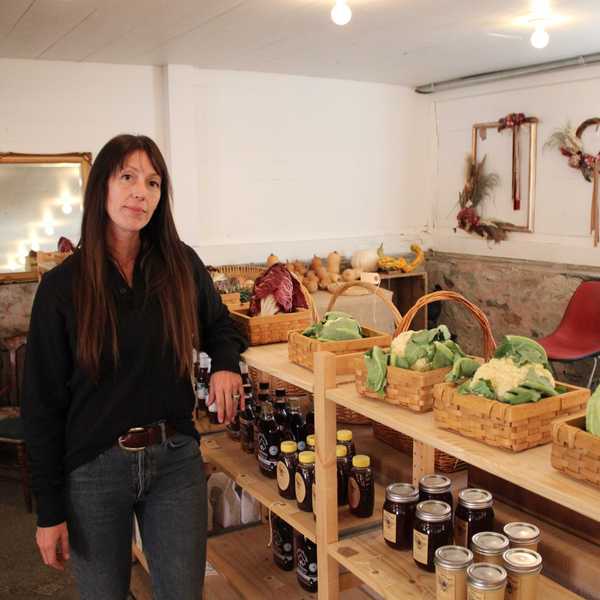
Farm & Friends: a holiday market that gives back

The Farm & Friends holiday market returns Nov. 21 and 22, featuring local makers, food producers and seasonal gifts.

Provided

According to PBS, “More than 5 million people have lost their Supplemental Nutrition Assistance Program, or SNAP, benefits since President Trump’s so-called One Big Beautiful Bill passed last year.” Combined with rising costs and new eligibility requirements, these cuts have placed additional pressure on families struggling to make ends meet. As more people turn to food banks and pantries for assistance, local farms are playing an increasingly important role in meeting that need. Hungry Reaper Farm in Morris, for example, supplies food and CSA shares to a variety of nonprofit organizations and schools.

In Dutchess County, The Webatuck Valley Farm Collaborative is working to strengthen the pipeline from farms to foodbanks. Led by Rock Steady Farm, Sweet Freedom Farm and Wildseed Community Farm and Healing Village, the collaborative hopes to double the infrastructure capacity for at least 15 local farms. This will allow them to increase supplies for food pantries and regional schools while expanding the farms’ reach to industrial buyers and distributors. By their estimation, the food hub “will supply and impact 9 school districts, 13 food pantries, and partner with 6 institutional buyers and 8 aggregators and distributors.”

Keep ReadingShow less
google preferred source

Want more of our stories on Google? Click here to make us a Preferred Source.

Under the big top at Full Circus Farm

Under the big top at Full Circus Farm

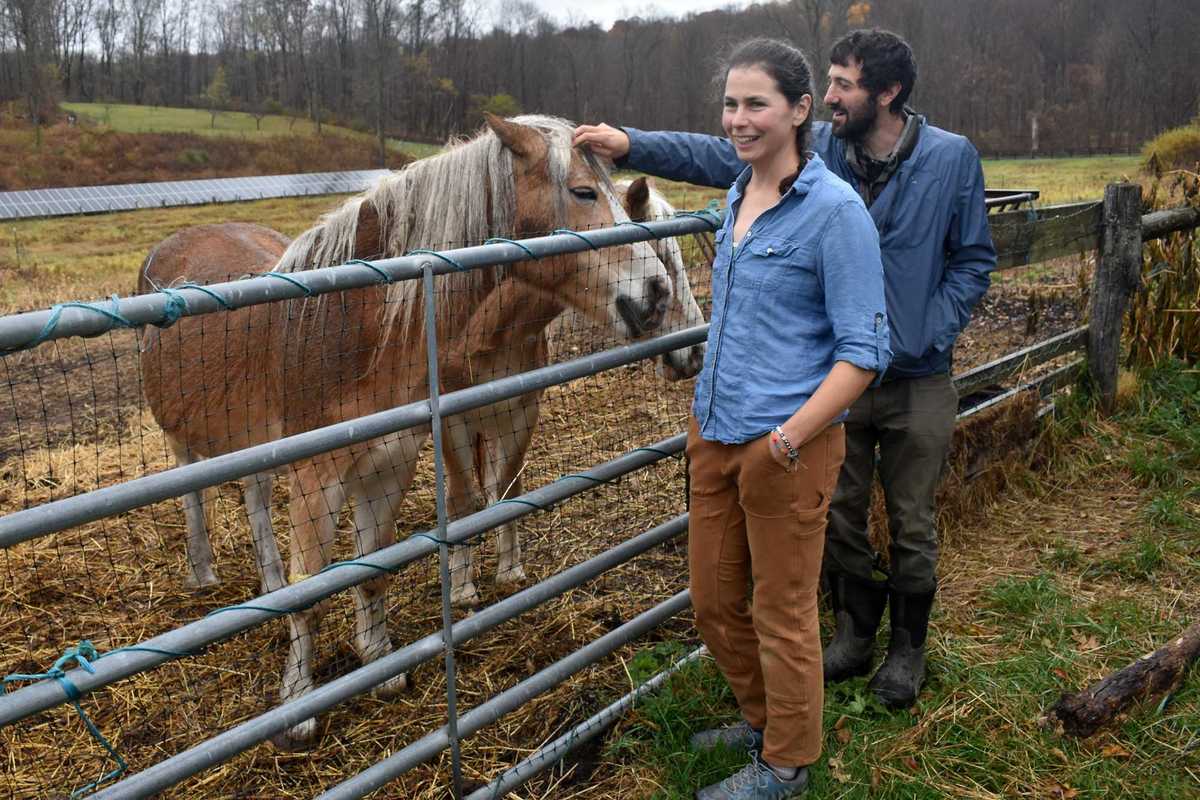
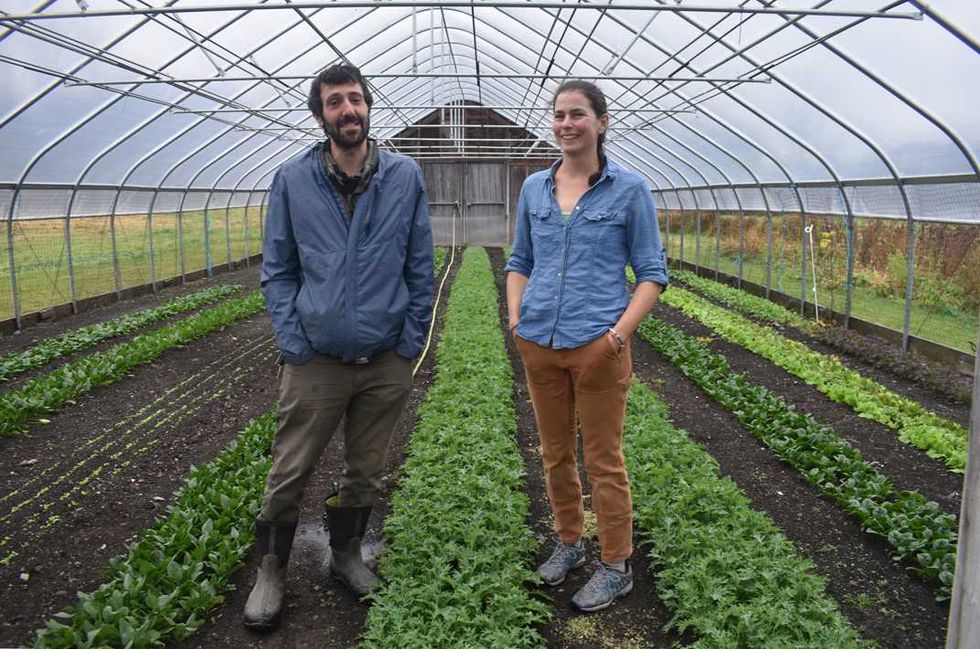
Miriam Goler and Mark Stonehill with their Haflinger horses, Sunshine and Sandy, at Full Circus Farm in Pine Plains.

L. Tomaino
We share this farm with such amazing human and nonhuman neighbors.
— Mark Stonehill

For Mark Stonehill and Miriam Stonehill Goler, the founder of Full Circus Farm in Pine Plains, farming has always been about more than what comes out of the ground.

“From the very beginning, we’ve envisioned the farm as a place not only for food production, but also merriment and community,” they said.

Keep ReadingShow less
At Ancram Center, community takes center stage
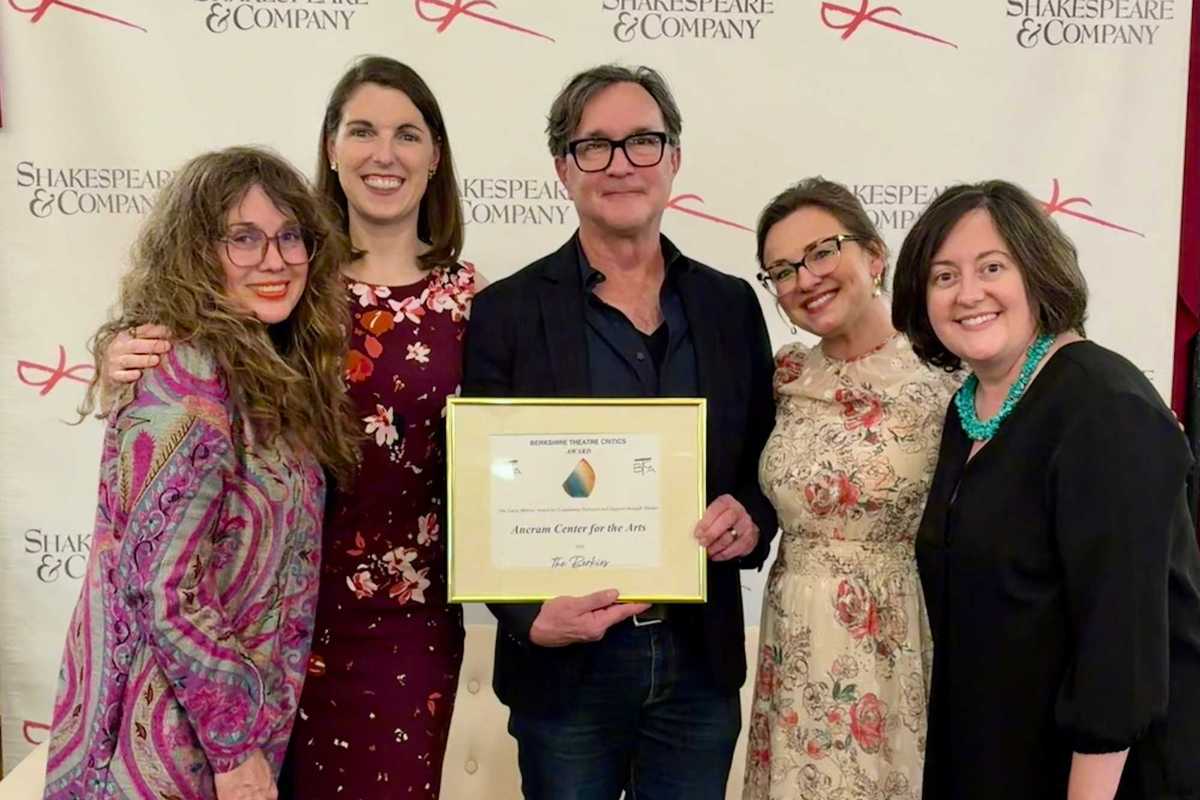
Ancram Center staff and teaching artists after the ceremony.From left to right,Simone Stevens, Sarah Katan, Jeffrey Mousseau, Erin Krom and Chris McCoy.
Provided

At the Ancram Center for the Arts, the stage has been host to numerous award winning professional actors, but it also often belongs to a neighbor with a story to tell. Other times, the performance moves out of the theater altogether, transforming a pond, a field or a corner of town into a stage.

That commitment to bringing theater into the community — and the community into the theater — has earned the Ancram Center the Larry Murray Award for Community Outreach and Support through Theater, one of the Berkshire Theatre Critics Association’s annual Berkie Awards.

Keep ReadingShow less

Social justice songwriting fall retreat

Social justice songwriting fall retreat

Singer, songwriter and activist Taína Asili leads a social justice songwriting retreat Nov. 20-23 at Soul Fire Farm in Petersburgh, N.Y.

Provided

Music has long been a powerful tool for protest, solidarity and social change. From civil rights anthems to contemporary songs of resistance, songwriting has helped give voice to movements and inspire collective action. Singer, composer and activist Taína Asili will explore that tradition during a four-day Social Justice Songwriting Retreat, Nov. 20 to 23, at Soul Fire Farm in Petersburgh, New York.

The retreat comes amid a renewed interest in collective singing as a form of activism. Organizations such as Singing Resistance are bringing people together across the country to use songs as tools for solidarity, nonviolent resistance and community building. The movement draws on the long history of music in social justice struggles, emphasizing the power of singing together to overcome fear, strengthen connections and inspire collective action.

Keep ReadingShow less
google preferred source

Want more of our stories on Google? Click here to make us a Preferred Source.

google preferred source

Want more of our stories on Google? Click here to make us a Preferred Source.