Rarely does a single issue so inspire this newspaper to pen an editorial about everyday citizens moved to take action for a cause near and dear to their hearts as the one you are about to read here now.
Yet last week a news story broke in a matter of hours that caused us to re-examine how powerfully local residents are sometimes impacted by the events in their own communities — circumstances that can occur just miles from their homes — when the places they cherish, places integral to their lives and daily routines, are disrupted and jeopardized.
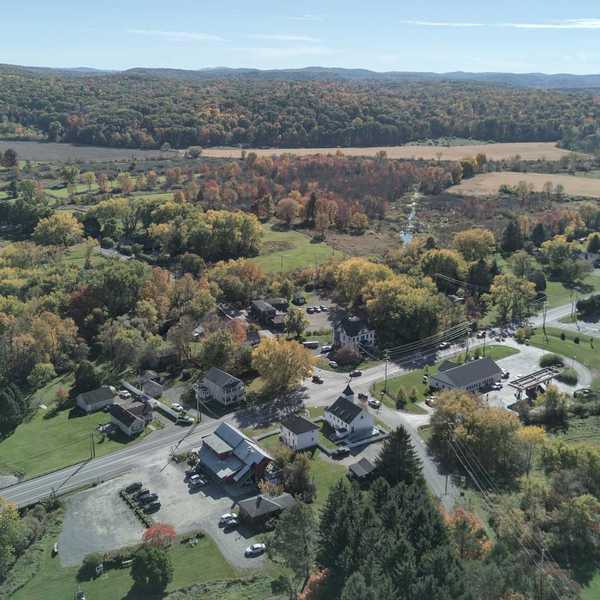
Such is the case with the sudden installation of four semi-permanent tents that the national tent-renting company, Tentrr, put up at Iron Mine Pond in Millerton last week, about one mile from Rudd Pond at Taconic State Park.
Millerton resident Andres Vialpando noticed the hefty looking structures set up on concrete blocks on Wednesday, April 28, while out for his daily constitutional with his two Welsh Corgi dogs at the ore pond. He said he was dismayed to see the tents blocking the trail that loops around the ore bed, obstructing views of the park and even of majestic Bash Bish Falls.
Vialpando headed home extremely disturbed, and called the parks department to get some answers.
He spoke to Christopher Rickard, park manager of Taconic State Park, who explained that Tentrr has an agreement with the state’s Office of Parks, Recreation and Historic Preservation (OPRHP) to help bring in some much-needed revenue.
Last winter, Rickard and the parks commission apparently went to see where the tents could be set up — not the best time to scout land as snow might have been on the ground and conditions are usually less than ideal. Yet that’s when it was done, and clearly poor choices were made.
Vialpando decided to put together a petition, his very first, and post it, well, everywhere. He took to social media and within 24 hours was able to garner an amazing 558 signatures. He captured the attention of area residents and local leaders, as well as the parks department and of Tentrr, both of which were immediately responsive, offering to relocate the tents elsewhere in Taconic State Park to appease locals and create peace within the community.
This was not only the perfect example of a citizen seeing something he thought was detrimental to the community and taking action, it was also a wonderful instance of the state — piggybacked by private enterprise — responding in turn.
In his petition, Vialpando wrote, “We see this as an intrusion of our shared public space… their presence is an attack upon the serenity and natural beauty of the Iron Mine Pond.”
As North East town Supervisor Chris Kennan simply said, “the idea of putting these tents up there really was not well thought through.”
In his petition, Vialpando clearly made a well-stated appeal that spoke directly to the hearts of his fellow citizens, because within a day he persuaded 558 people to sign on with their support.
He had “urged” the parks department to investigate and try to reverse the situation, which it did at break-neck speed. For that, the state deserves a lot of credit.
As of Tuesday, May 4, the governor appeared poised to have the state parks department begin a new partnership with Tentrr to entice New Yorkers to go camping this spring and summer in their own backyard. We’ll be sure to report about that breaking news once more is learned from the OPRHP.
As far as the second petition that was started by fellow Millerton native Kara Panzer on her Instagram account, in which roughly 133 signatures were collected by Saturday afternoon, May 1, at which time her petition was still posted, that was also encouraging to witness. Another great effort by another Millertonite. It’s encouraging to see citizens get involved in their community’s welfare in matters large and small.
This was Vialpando’s first attempt at a petition drive. We say mission accomplished! On Saturday, May 1, he posted an update for his followers with the simple heading of “Success,” followed by a brief explanation thanking those who signed the petition. Below is a brief excerpt.
“Due to the quick and firm pressure from the local citizenry it was decided by the morning of the 30th of April to remove the Tentrr sites from the Iron Mine Pond area, thus restoring the integrity of the place as a sanctuary for all… The existing tents are expected to be dismantled and removed by the end of the first week of May. Thank you all once again. It is incredibly heartening to see the people of the community come together over this shared value.”
Now one of Millerton’s perhaps lesser known but still critically important natural and recreational resources has been preserved. To read more about the petition, be sure to check out this week’s front page.





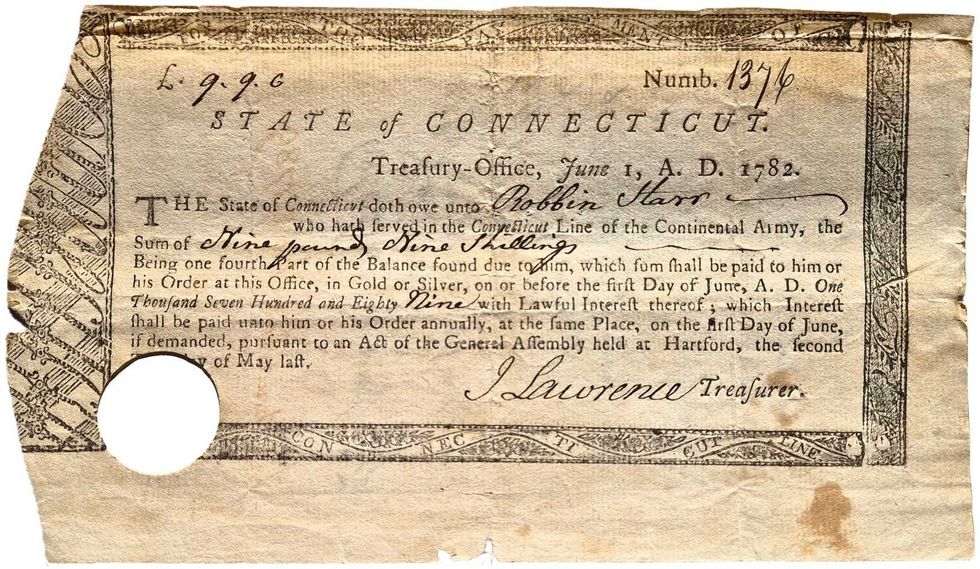 Pay Bill for Robin Starr’s service in the Continental Army.Courtesy the Alex Breanne Corporation
 John Mills speaking at Quinnipiac University.Courtesy the Alex Breanne Corporation
 Stephanie Saetta,with her rescue dog George and Blue (left), a shepherd mix awaiting his forever home.Madi Long