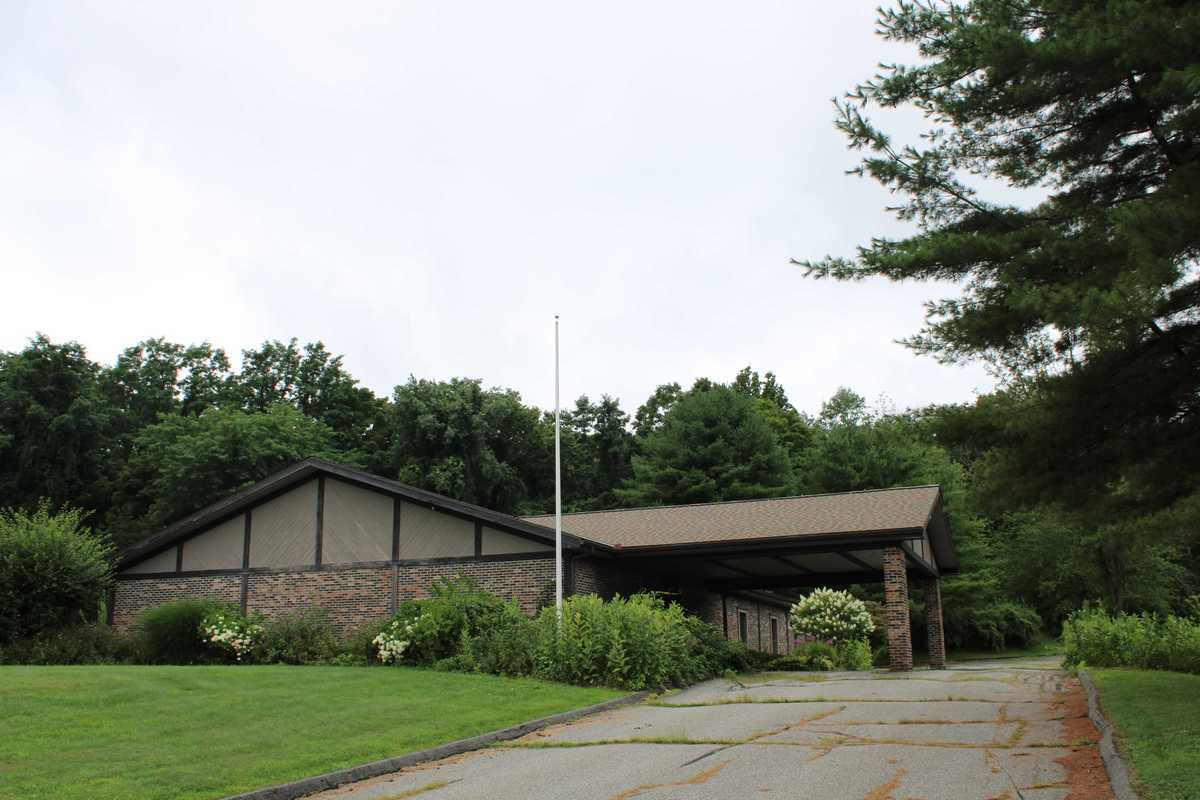
This week we report on a sad state of affairs in Millerton — after more than 174 years, the Millerton Presbyterian Church, fondly known to many as The Brown Church due to its dark-colored facade, announced that come Sunday, Jan. 23, it will give its final service and close its doors for good.
Like so many religious institutions, the Millerton Presbyterian Church just hasn’t been able to sustain itself throughout the coronavirus crisis. Right after COVID-19 was declared a pandemic, New Yorkers were among the millions being kept from attending their houses of worship around the globe, all in an effort to stay safe.
While the powers that be in the medical field and in our government were doing their best to protect us — unquestionably the right move — what they didn’t realize was that when they padlocked the pews our already dwindling church, temple and mosque populations were forced to come up with creative ways to maintain their masses.
Some institutions quickly turned to virtual services, a reasonable and ready approach to try to keep their members interested and involved in whatever programs they were offering. For some localities, this turned out to be successful, and for that we are grateful.
Many in our Harlem Valley community have continued with their online services, either adding them to their now returned to in-person programs or continuing with only virtual services for the time being, depending on their local COVID situation and comfort level at the moment.
Yet some others were either not able to pivot to online services during the pandemic or could not adjust successfully afterward, unfortunately. Many, already dealing with the challenge of dwindling membership during the past few years, lost even more congregants during the health crisis.
Some, like the Millerton Presbyterian Church, which did go virtual during the pandemic and continues to do so even now, took steps to draw additional community members at more convenient times, like on Saturday evenings. It also kept its sanctuary open to the community, but neither approach seemed to attract more members.
Of course, the church offered the traditional sermons and Sunday school, as well as Vacation Bible School (which had zero campers register this year), with the popular Pastor Zora Cheatham to draw in the crowds. Yet the response has grown more tepid as time passed, and as societal interests have changed.
The church has also offered multiple resources to Millerton residents for many years — many that may have gone unnoticed — but certainly not unappreciated. It hosted monthly community dinners for residents in need of either extra support or extra company; it was home to the Millerton Food Pantry for years; it housed the Medical Equipment Loan Closet; it offered free English as a Second Language classes; it held Spanish services for non-English speaking residents; it held Vacation Bible School; it housed a thrift store; it hosted Alcoholics Anonymous (AA) meetings for many years; and it offered countless other community services during its nearly 175 years of existence.
We hope another church or organization, perhaps the North East Community Center (NECC), will pick up on some of these essential social services in the village.
With The Brown Church soon gone, like far too many places of worship in our world — including right here in Millerton (remember St. Patrick’s Catholic Church, a mission church of Immaculate Conception in Amenia, founded in 1867; it closed in 2017 due to low attendance), the Millerton Presbyterian Church will sadly become another page in our history books before long.
This is all happening in a time when people are proving they need the positive support of their religion, or at least of humanity and how to treat one another, more than ever. We seem to be dealing with so much trauma these days — death and dying and personal loss — and are losing touch with ways to stay grounded.
If it can be done safely, people should be flocking to their houses of worship, to feel connected to a higher power who can bring them peace and positivity. Sadly, though, the trend has been that such places are closing.
The United Presbyterian Church of Amenia, a Civil War-era church that started construction in 1861 and was completed by 1865, had to face a similar fate in 2015, when its congregation dropped to only six active members.
Its sister church, the charming Gridley Chapel in Wassaic, a Gothic Revival-style chapel built in 1873, also struggled to exist. No longer in use, for many years it mainly served as a place of worship for special holiday services, weddings and baptisms — as have so many of our churches — as synagogues have for their holiday services, weddings, bar and bat mitzvahs and other celebrations.
With such low attendance and increasing operation and maintenance costs proving to be the same problem for the Millerton Presbyterian Church, the United Presbyterian Church of Amenia ultimately had to close after more than 250 years of serving the community. The Route 22 property, across from the popular Four Brothers Drive In Theatre, ultimately reverted back to the Hudson River Presbytery and is now home to the Silo Ridge Field Club offices. The building has been repaired and modernized by Silo Ridge, though the church structure remains as an homage to its long history in Amenia.
Hopefully, when COVID-19 is contained and the virus cured, congregations will return to support their houses of worship. Maybe one day, even the Millerton Presbyterian Church will be able to reopen its doors to the village it nurtured and loved since 1847.
We know many, including those of us as this newspaper, are going to miss The Brown Church dearly when it rings its church bells for the final time.



 Firefighters and other uniformed first responders stand alongside flag bearers during Stanford’s ceremony marking the 25th anniversary of the Sept. 11 terrorist attacks. Nearly 3,000 American flags covered the hillside at Stanford Recreation Park.Photo by Graham Corrigan
 Bean Bank Coffee is now open at Freshtown Plaza, offering drive-through service with a selection of pastries, coffee and tea.Photo by Leila Hawken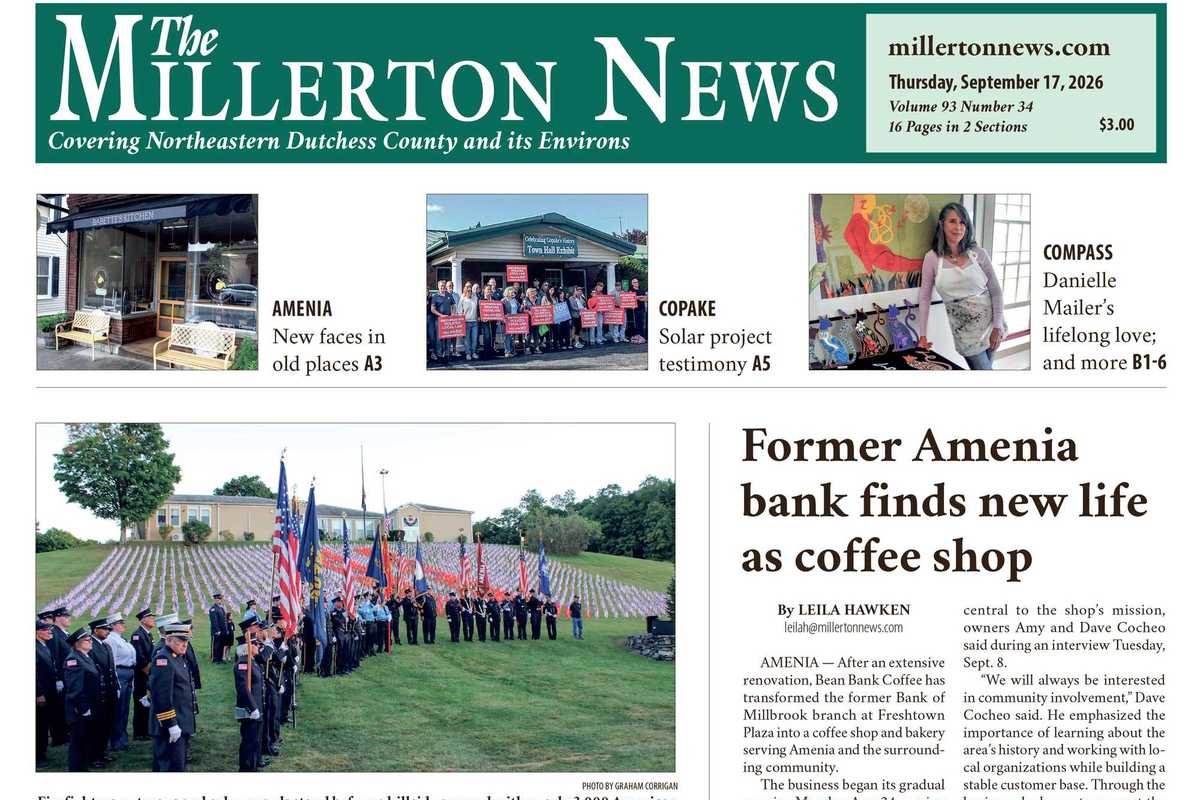




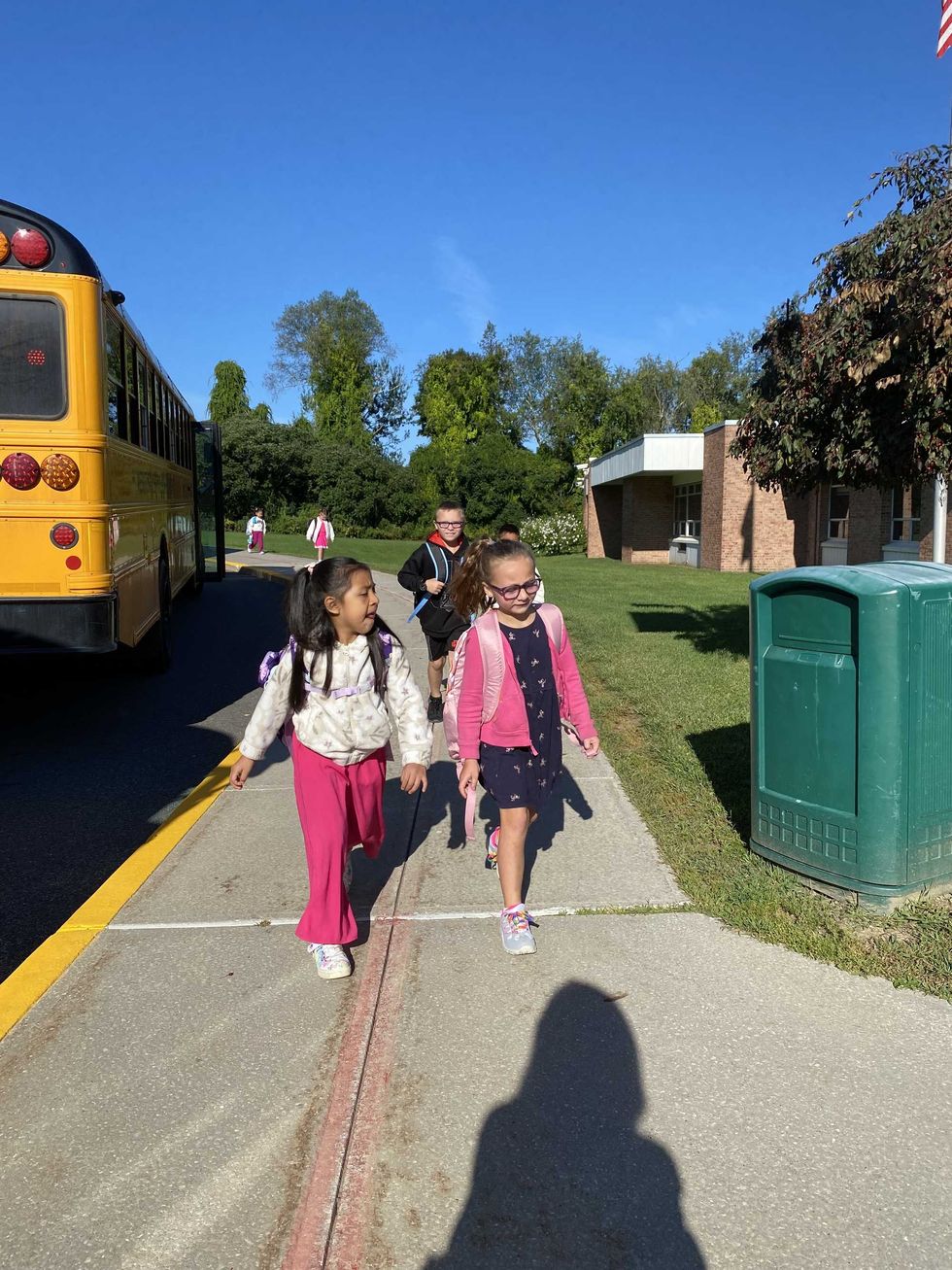 The early September sun greeted students as they stepped off their buses at Webutuck Elementary School for the first day of classes Tuesday, Sept. 8.Photo by Leila Hawken