MILLBROOK — With spring just around the corner, this might be a fine time to explain to the children of Millbrook the story of Persephone and why we have seasons, according to Greek mythology.
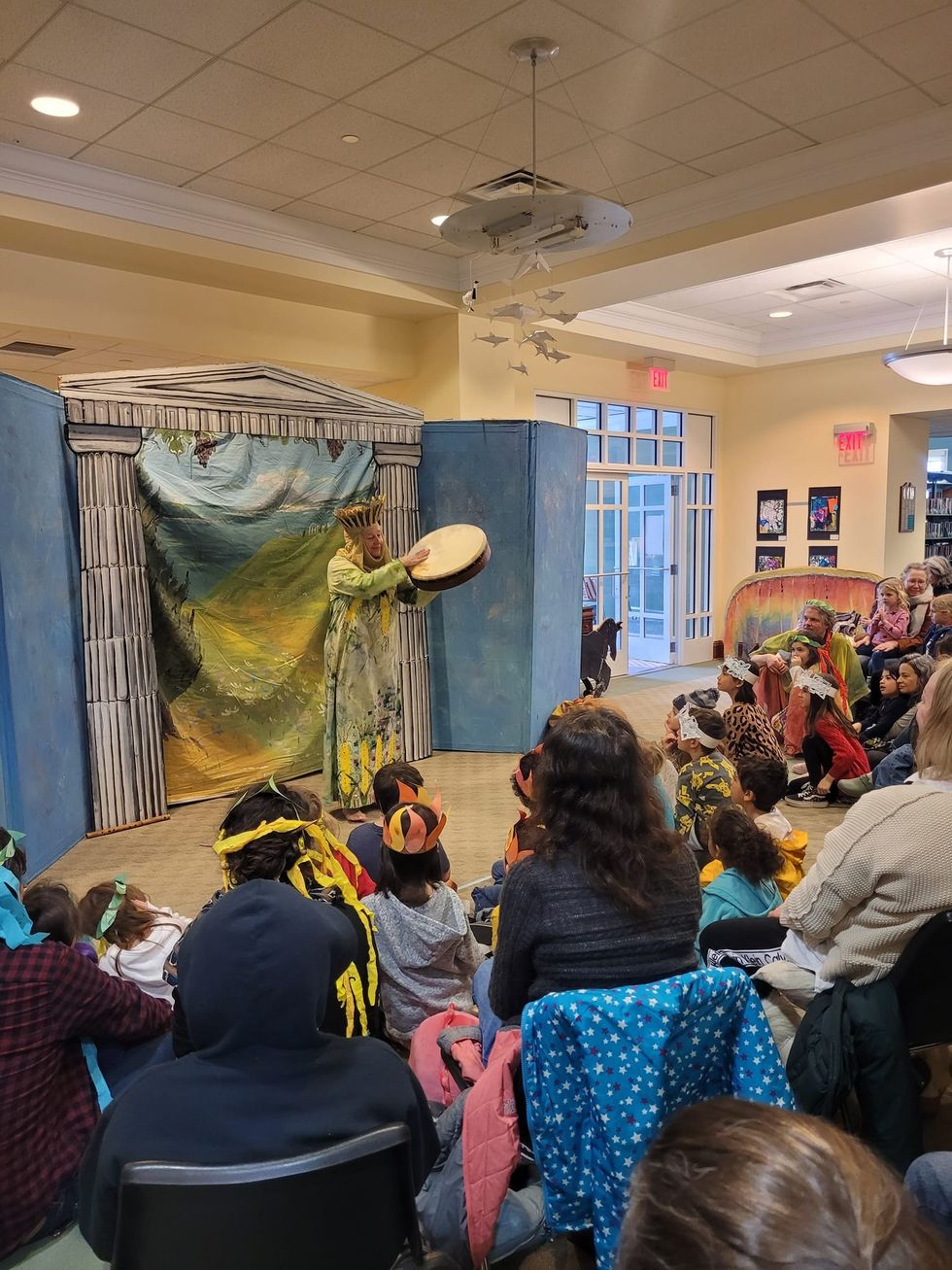
The Millbrook Arts Group (MAG) sponsored a presentation of the Grumbling Gryphons Traveling Children’s Theater.
With a workshop before the show, “The Myth of Persephone: The Greek Myth of How the Seasons Came to Be” utilized American Sign Language (ASL), costumes, props, music and movement to tell the tale, with children taking active roles in the performance.
The story centered on Persephone, daughter of Demeter, who was kidnapped by Pluto and brought to Hades, the underworld. Because she had eaten while there, she could never return to Earth. But Zeus took mercy on Demeter because, in her sadness at losing her daughter, she had let her duties as goddess fail; Earth began to suffer with dying crops, barren animals, and cold and lifeless land. Zeus decreed that Persephone would spend six months in Hades and six months on Earth.
Thus, we have the beginning of how the seasons change and why, according to the tale, we have spring and summer, and then winter and fall. Further complications with Persephone later break the seasons down even more.
Performers included director and actress Leslie Elias and Vanessa Roe, who co-founded the troupe in 1980 and also co-authored the play. Actor and singer Daniel Saeed was also featured, as was Brian Bender, who played keyboard and trombone for live musical accompaniment. Costumes and masks were created by Ellen Moon and Robert Flanagan; Moon also created the scenery.
Eighty-two people attended the performance. Some of the children took on roles, and maybe one or two will find they love the theater, the music and the dramatic renderings of stories.


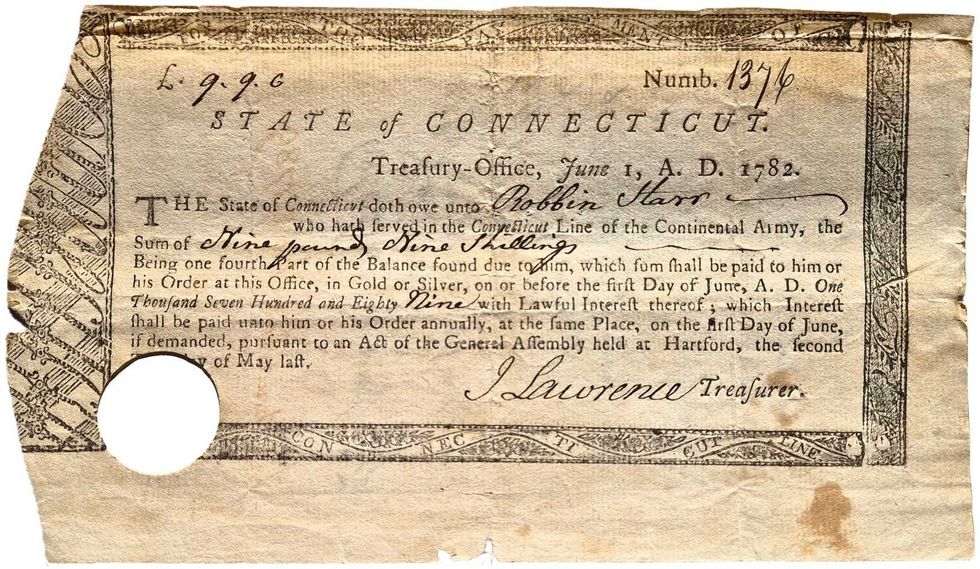 Pay Bill for Robin Starr’s service in the Continental Army.Courtesy the Alex Breanne Corporation
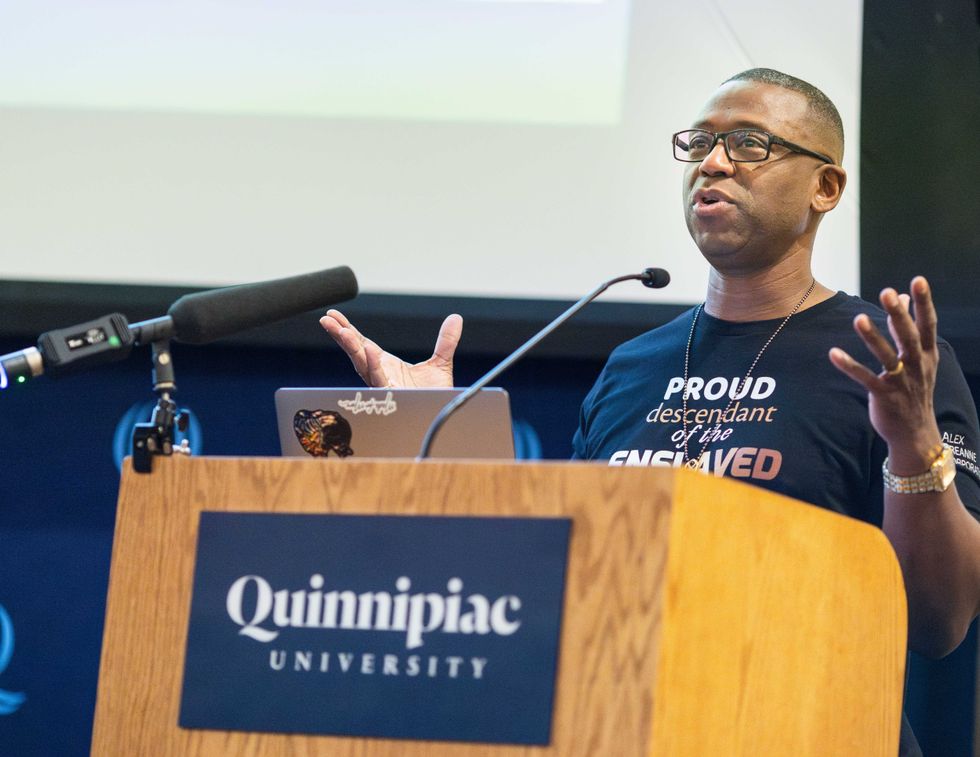 John Mills speaking at Quinnipiac University.Courtesy the Alex Breanne Corporation
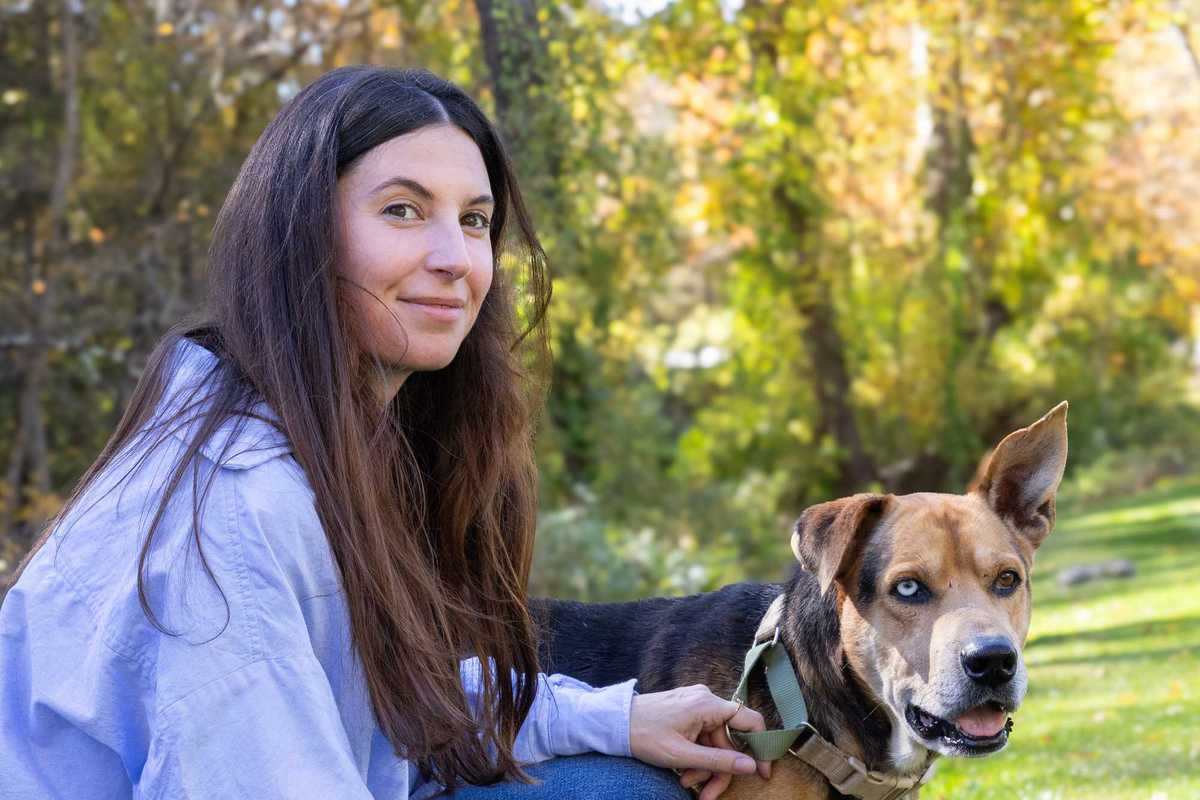
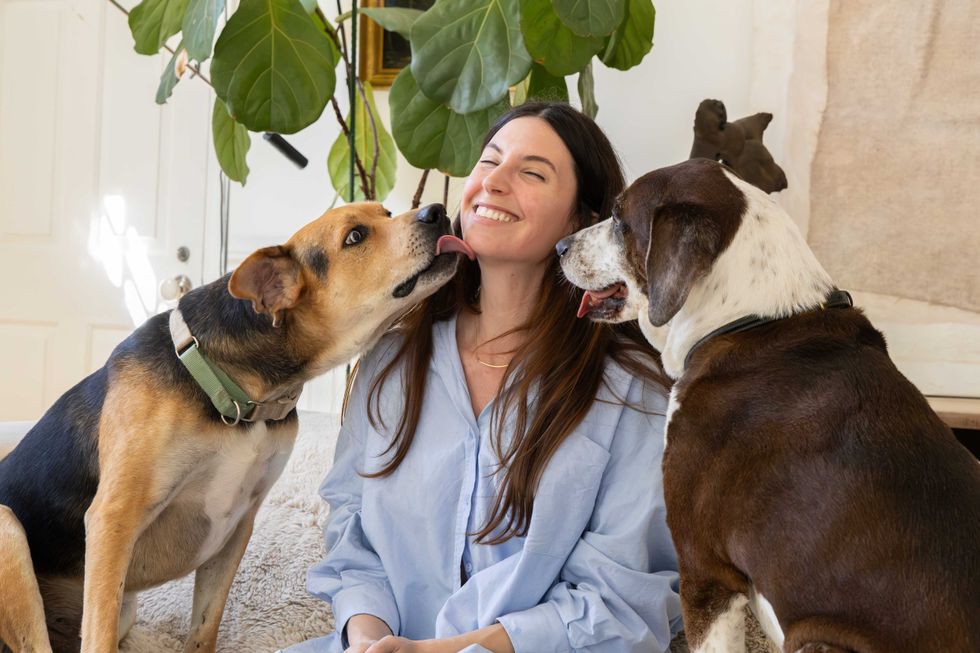 Stephanie Saetta,with her rescue dog George and Blue (left), a shepherd mix awaiting his forever home.Madi Long