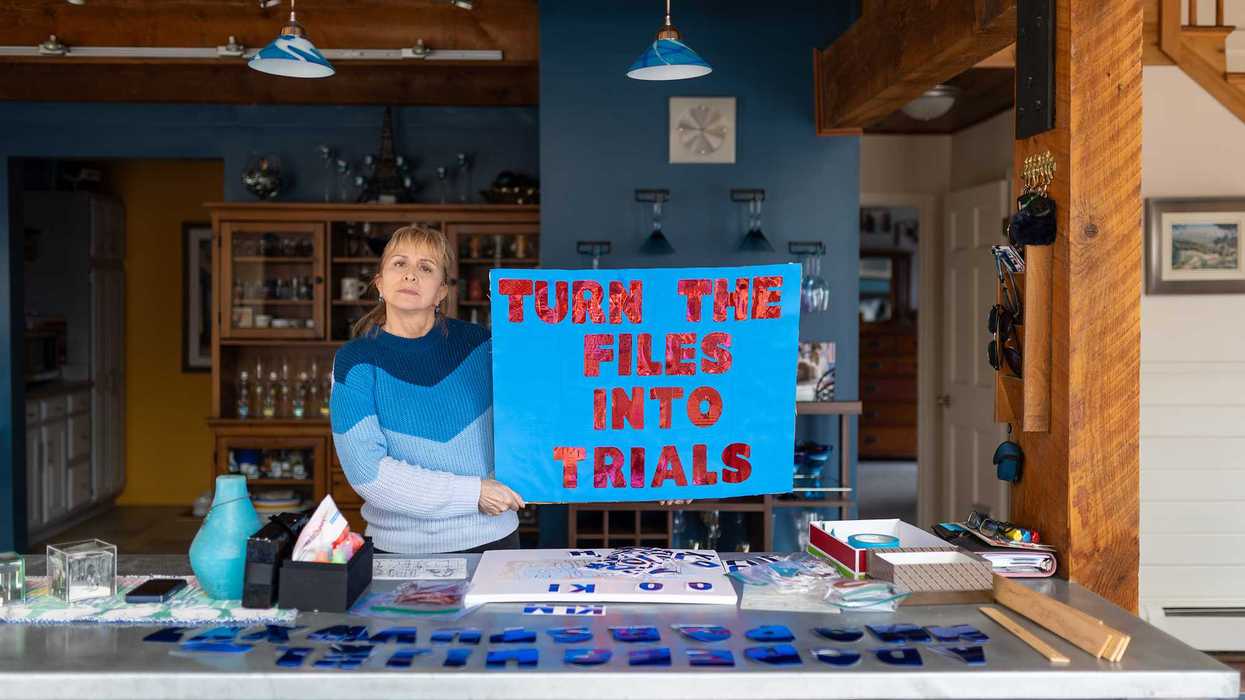
AMENIA — Kim Travis has been flipped off, honked at, and even received death threats during her weekly “No Kings” protests in Fountain Square since last summer — reactions Travis says she’s willing to endure in order to fight for her First Amendment rights.
“I wasn’t going to let them stop me,” Travis said of an incident she said got so escalated she had to call the police. “I was there the next day, and I’ve been there ever since.”
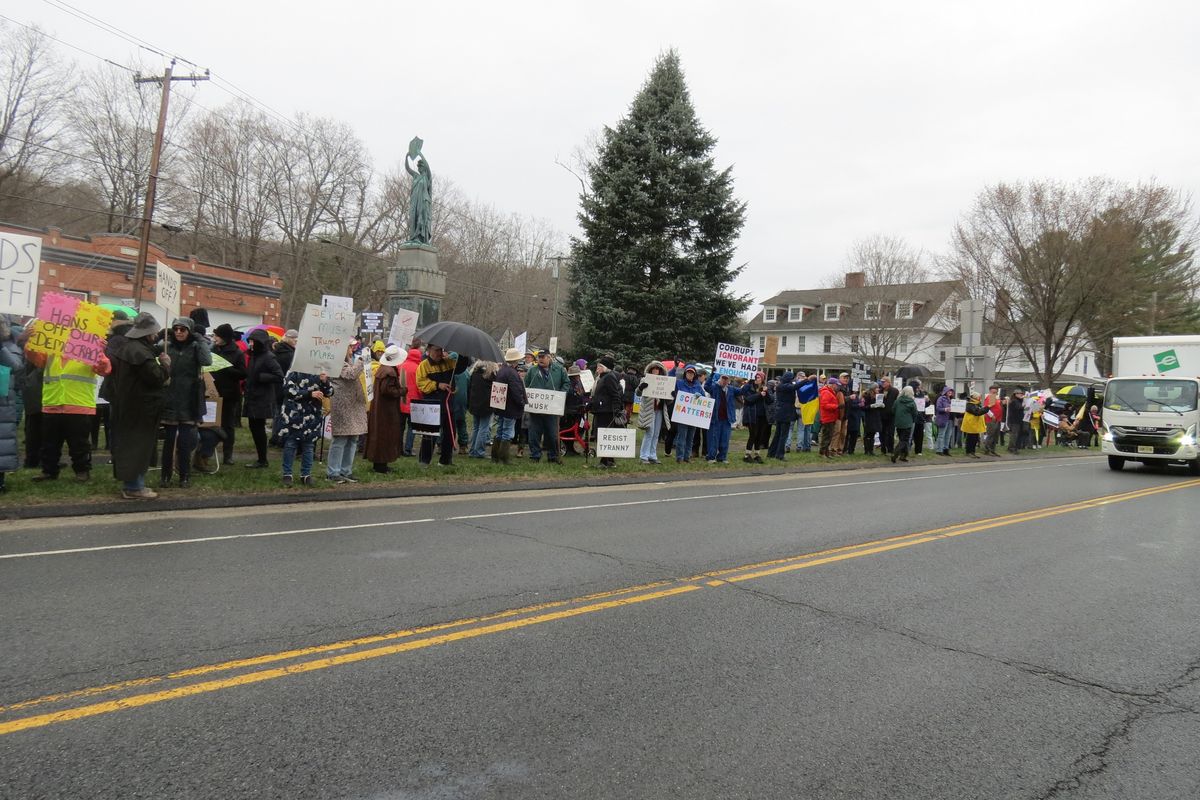
Travis, a 68-year-old Amenia resident, began protesting alone several days a week at the busy intersection and has since helped build a small but growing local movement. Fountain Square will be one of several area gathering points as part of this weekend’s nationwide day of protest.
“It’s just so nice to have company now, because I was alone for so long,” Travis said, noting that she has spent a lifetime protesting since the Vietnam War.
Local organizers are preparing to participate in a coordinated “No Kings” demonstration on Saturday, March 28 — part of a national effort that organizers say could become the largest single-day peaceful protest in U.S. history. A previous demonstration in October drew an estimated 7 million participants, and organizers say the March rally could bring that number up to 12 million people.
The movement, which began in June 2025, has drawn millions across multiple national days of action and continues to take shape at the local level. In Dutchess County and northwest Connecticut, small but steady groups have kept up weekly demonstrations, gathering in Amenia’s Fountain Square and at the White Hart lawn in Salisbury, Connecticut. Organizers say those efforts have helped build momentum for the March rally, where they expect larger than usual crowds.
Organizers with the national No Kings Coalition say the phrase “No Kings” is more than a slogan and that more than 3,000 events are planned nationwide for March 28.
“Born in the streets, shouted by millions, carried on posters and chants, it echoes from city blocks to rural town squares, uniting people across this country to fight dictatorship together,” the coalition states on its website.
Inside Travis’s garage, dozens of brightly colored protest signs — some carefully lettered, others layered with glue and found materials — line the walls and lean in stacks. She has been making them steadily since last June, refining her process over time.
“It’s truly an art form,” she said, “You learn as you go, making signs.” Travis described the process as both a creative outlet and a coping mechanism.
Gregory Swinehart, a Millerton resident, said he joined the “No Kings” movement after driving by the gatherings in Amenia and Salisbury, despite having no prior history of protesting.
“Everything changed when President Trump was elected for a second term, and I became very concerned,” Swinehart said. “I was always empathetic toward protesters, but I never felt a personal reason to join — until now.”
Swinehart said he made signs, attended his first protest and kept showing up. He has since taken on a more active role, working to recruit friends and family and helping to promote the March 28 rally.
At any given demonstration, a mix of colorful signs reflects a wide range of concerns among participants.
“It’s like a kaleidoscope,” Swinehart said. “Different people see different things going wrong, and they each bring their own reason to protest.”
While Swinehart has realistic expectations about the outcome, he hopes the demonstrations will resonate over time.
“If people see us out there week after week — in the cold, in the rain — it might make them stop and ask questions,” he said.
Travis echoed that sentiment, noting the shift she has seen over time.
“Now I’d say 90 to 95 percent of the reactions are positive,” she said. “People honk, give a thumbs up, yell encouragement,” she said. “People say thank you and tell us to keep going.”
With a data-driven mindset, Swinehart pointed to the “3.5 percent rule,” a theory developed by Harvard political scientist Erica Chenoweth, which suggests that sustained participation by 3.5 percent of a population can lead to meaningful societal change.
“I keep that as my North Star,” Swinehart said.
Based on RSVP data from the “No Kings” website, organizers estimate that up to 12 million people could participate in demonstrations nationwide — a figure that would approach 3.5% of the U.S. population.
Regardless of the turnout, Swinehart said the sense of community is palpable at the protests.
“People who are concerned come together,” he said, adding that many participants see the demonstrations as a way to exercise their First Amendment rights and stand up for others in their communities.
For Travis, that sense of connection is what keeps her coming back.
“We’re out there together, expressing our rights,” she said. “We’ve got music playing, we’re blowing whistles, we’re dancing, we’re holding our signs. And we’re not going anywhere.”
Local demonstrations will be held at the White Hart lawn in Salisbury, Connecticut from 11 a.m. to 12:30 p.m.; at Fountain Square in Amenia from 12 p.m. to 1 p.m.; in Kent, Connecticut from 2 p.m. to 3:30 p.m.; and at Lions Minipark in Rhinebeck from 10 a.m. to noon.



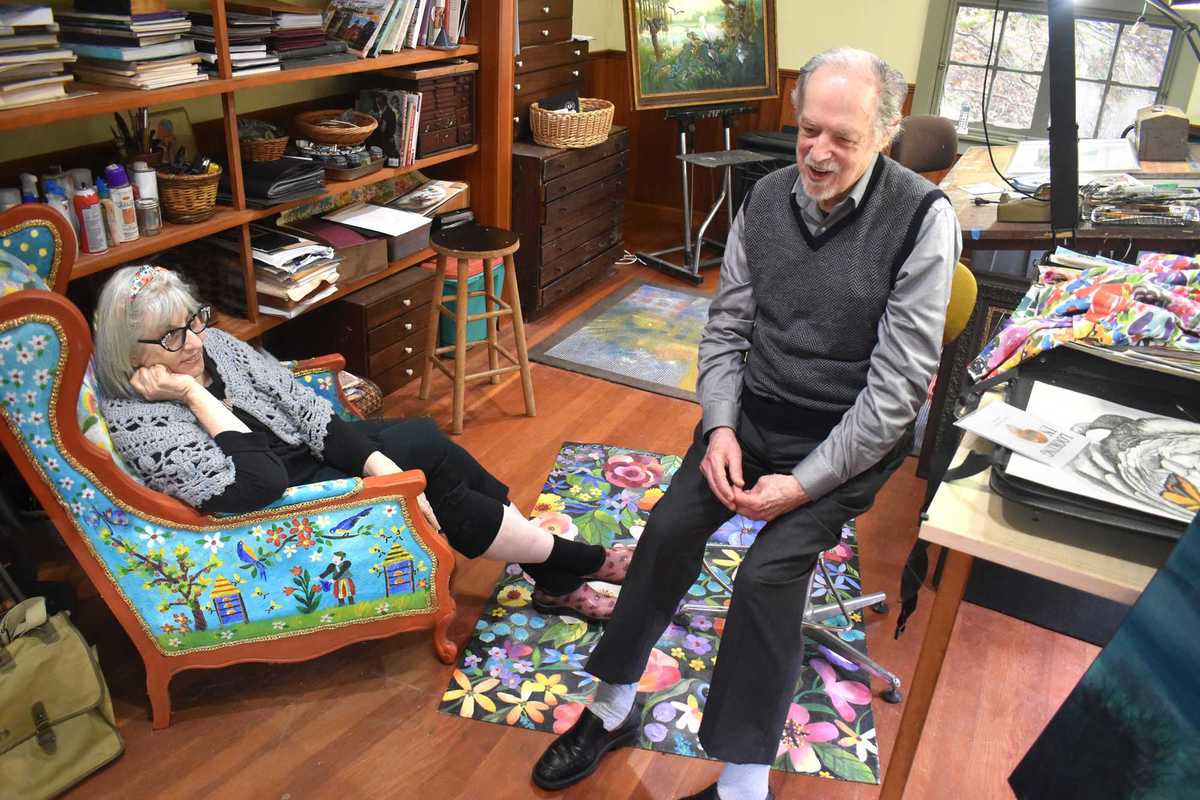
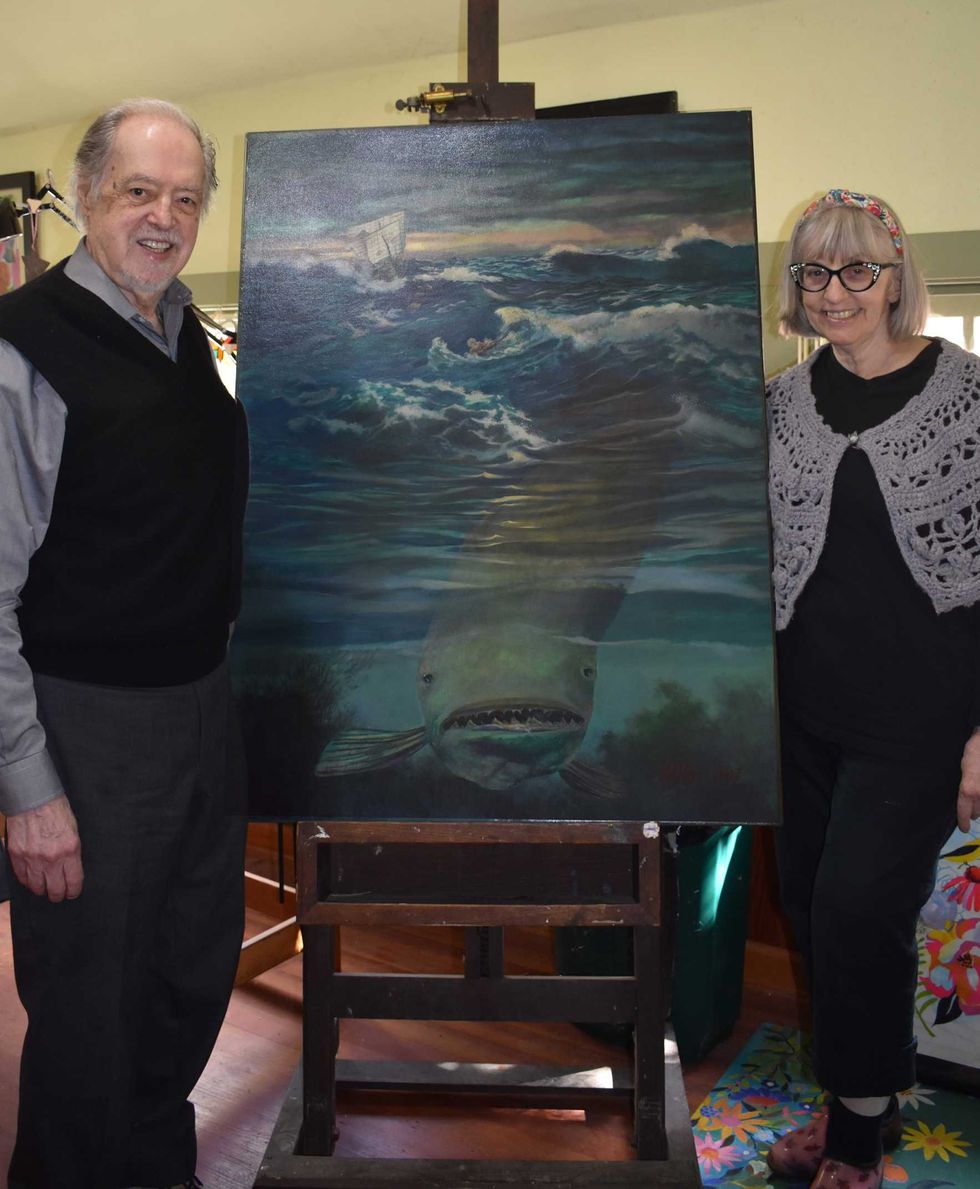 Justine and Victor Valla in their studio with a painting of Victor’s,”Jonah and the Whale.” Robin Roraback

 A ceramic vase by Kathleen Heidemann.Provided
 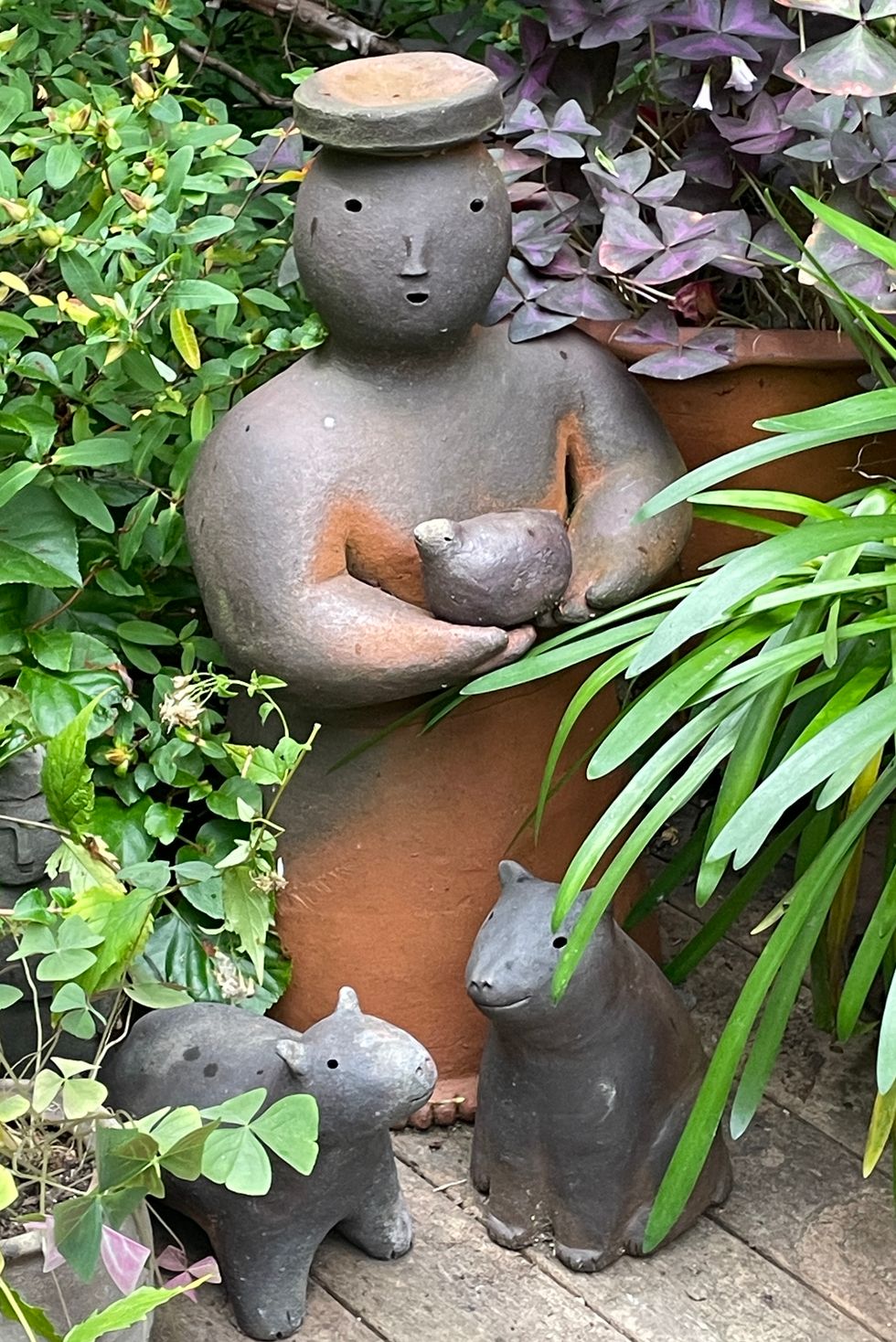 Joy Brown’s delightful ceramic sculptures.Provided