New monumental installations by Liz Nielsen and akeylah wellington at the Wassaic Project were celebrated Saturday, Oct. 3, with an artist talk moderated by independent curator Katie Hood Morgan, followed by a reception on the lawn of the Gridley Chapel. Though dramatically different in material and method, the installations share an interest in how we perceive what we cannot fully see or understand — and what happens when something unimaginably vast is made physical.
Opening the talk, Wassaic Project co-executive director Eve Biddle noted that both projects received funding from the National Endowment for the Arts, with Nielsen’s project receiving additional support from the Jacques and Natasha Gelman Foundation. At a time of uncertainty for arts organizations and federal arts funding, Biddle called the support especially meaningful.
“In this sort of chaotic moment in our world,” she said, “Wassaic Project is the recipient of two National Endowment for the Arts awards for two really extraordinary, really radical artists working at the edge of their mediums and pushing us forward into the next generation of artists.”
wellington’s two 9-by-10-foot tapestries shimmered outside in the bright autumn day. Her “nineties resolving power” and “aughts resolving power” draw on Hubble Space Telescope images recorded between 1990 and 2009: supernovae, gas rings, binary star systems, globular star clusters and other distant phenomena. These cosmic phenomena are translated into pixels and then into hundreds of thousands of plastic pony beads, an ornament familiar from braided hairstyles, turning images of deep space into something tactile, domestic and culturally specific.
wellington said she became fascinated by the language used to describe Hubble, particularly its “resolving power” — its ability to render distant objects with what was touted as unprecedented clarity.
“Hubble is a time machine,” she said, describing how the telescope captures light that has traveled for millions of years. But when she began looking closely at the images offered as evidence of technological progress, she noticed something amusing: “A lot of those images were pixelated.”
That contradiction became fertile ground for the questions surrounding her work.
Inside the Gridley Chapel, Nielsen’s “Crystalline Resonance” approaches the cosmos from another direction. Twelve transparent photograms installed in the chapel windows turn Nielsen’s camera-less photographic process into a kind of stained glass. Circles, triangles, squares and other elemental forms assemble themselves into what Nielsen calls “dimensional beings,” while sunlight continually redraws the work across the chapel walls and floor.
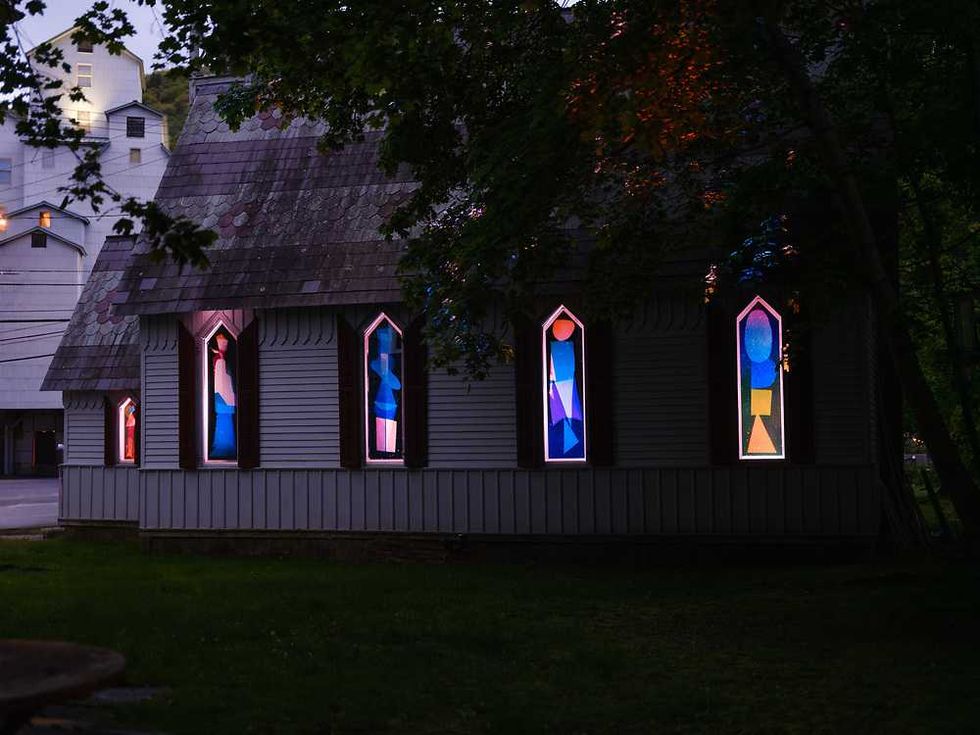 Liz Nielsen’s “Crystalline Resonance” at Gridley Chapel. Jeff Barnett-Winsby
Nielsen described light as both material and mystery — “something that’s tangible and intangible,” behaving as both wave and particle.
“I’m coming from an immaterial world, bringing it into a material world, and then dematerializing it again,” she said.
That transformation is especially potent in the former chapel. Nielsen noted that stained glass historically was not simply about the glass itself, but about “the presence of the divine coming through” as sunlight became colored light.
“I’m not particularly religious myself,” she said, but spaces like the chapel have long been places for “meditation, community gatherings” and other forms of interior experience.
Her figures offer no prescribed theology. Some resemble guardians or guides; one looks like a mermaid, another a queen, another a baseball-capped figure. Nielsen wants the encounter to come before the explanation.
“Something resonates with you before you understand it,” she said.
Both artists take something difficult to grasp — ancient light, distant stars, invisible forces, deep time — and give it a body. Nielsen does it with transparent photographic film and sunlight; wellington does it with plastic beads and thread.
And both complicate the idea that technology necessarily brings us closer to certainty.
There is humor in that for wellington, whose work frequently uses the word in its less familiar sense: not simply comedy, but the act of enduring or tolerating something. There is something “kind of funny,” she said, about spending hundreds of hours reproducing an image of something she will never actually see — just as there is something funny about spending billions of dollars to produce an image of the cosmos that still arrives as pixels.
“Funny like ‘the milk is off’ funny,” she explained.
Asked about seeing her work outside, wellington reflected that her plastic tapestries create an intentional collision between the technological and natural worlds. Leaves, sky, buildings and passing trains remain visible around and through them.
Nielsen, meanwhile, has been searching for ways to move photography off the wall and into lived space. At Wassaic, the landscape itself completes her images as viewers look through them.
“What if the photograph is something that you’re moving through,” she asked, “not just looking at?”
For Nielsen, light itself may be the perfect vehicle for an experience that asks the viewer to slow down. She has spent years studying its behavior, how to manipulate it and, as she put it, “how to almost emote it.”
“Light is like love,” she said. “We know both, but we can’t hold either.”

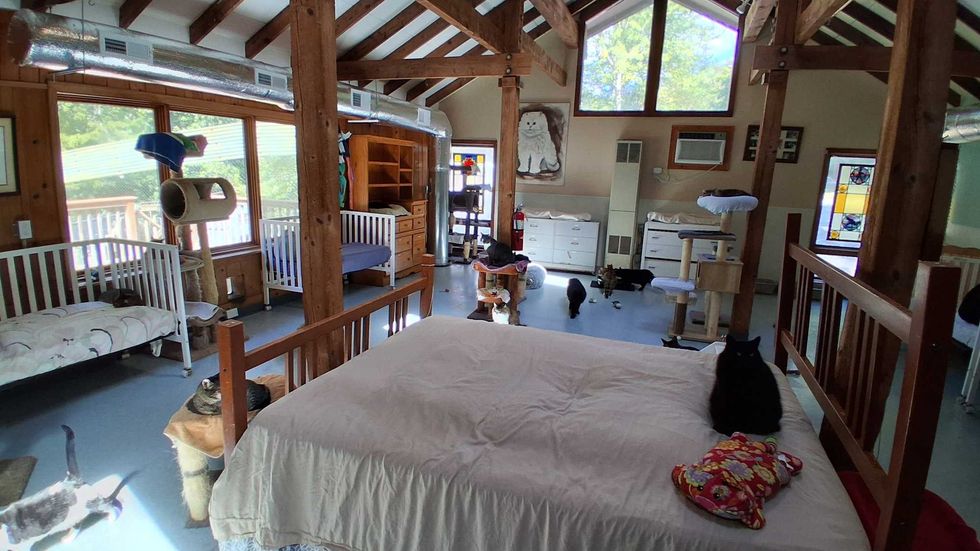 The Last Post in Falls Village is home to about 144 cats.Patrick L. Sullivan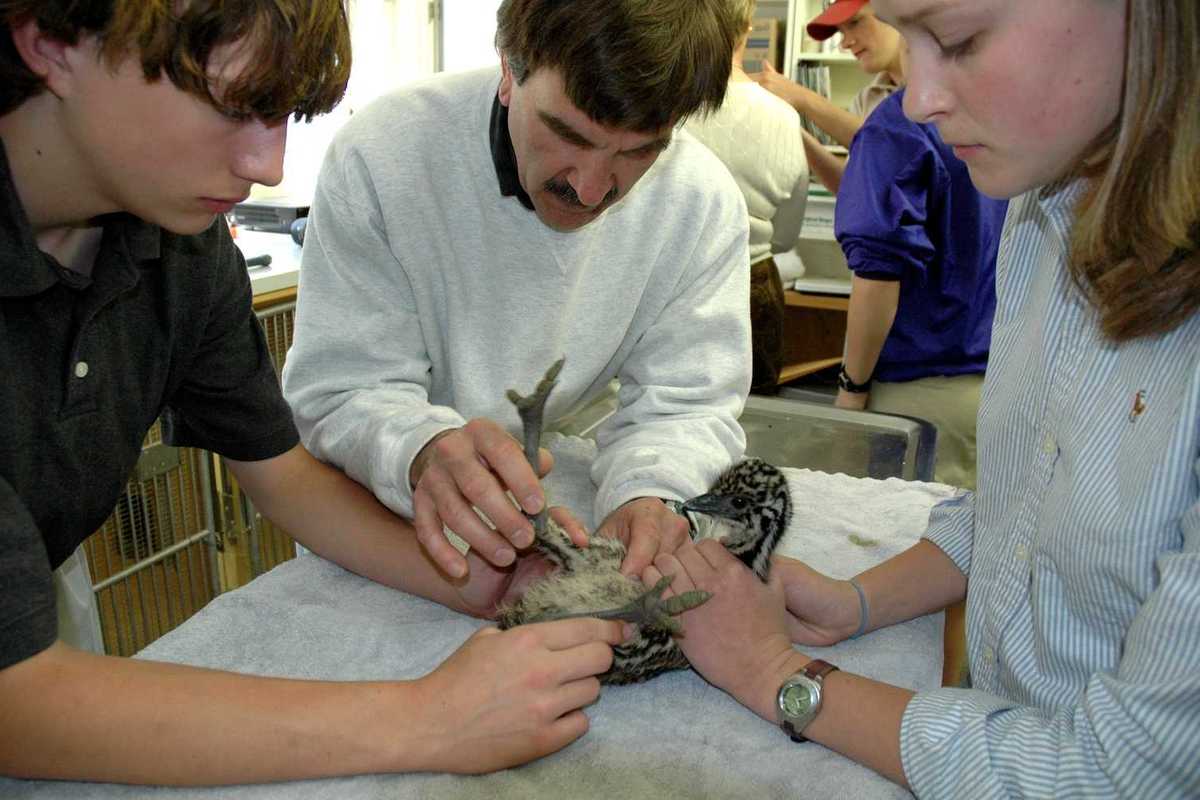
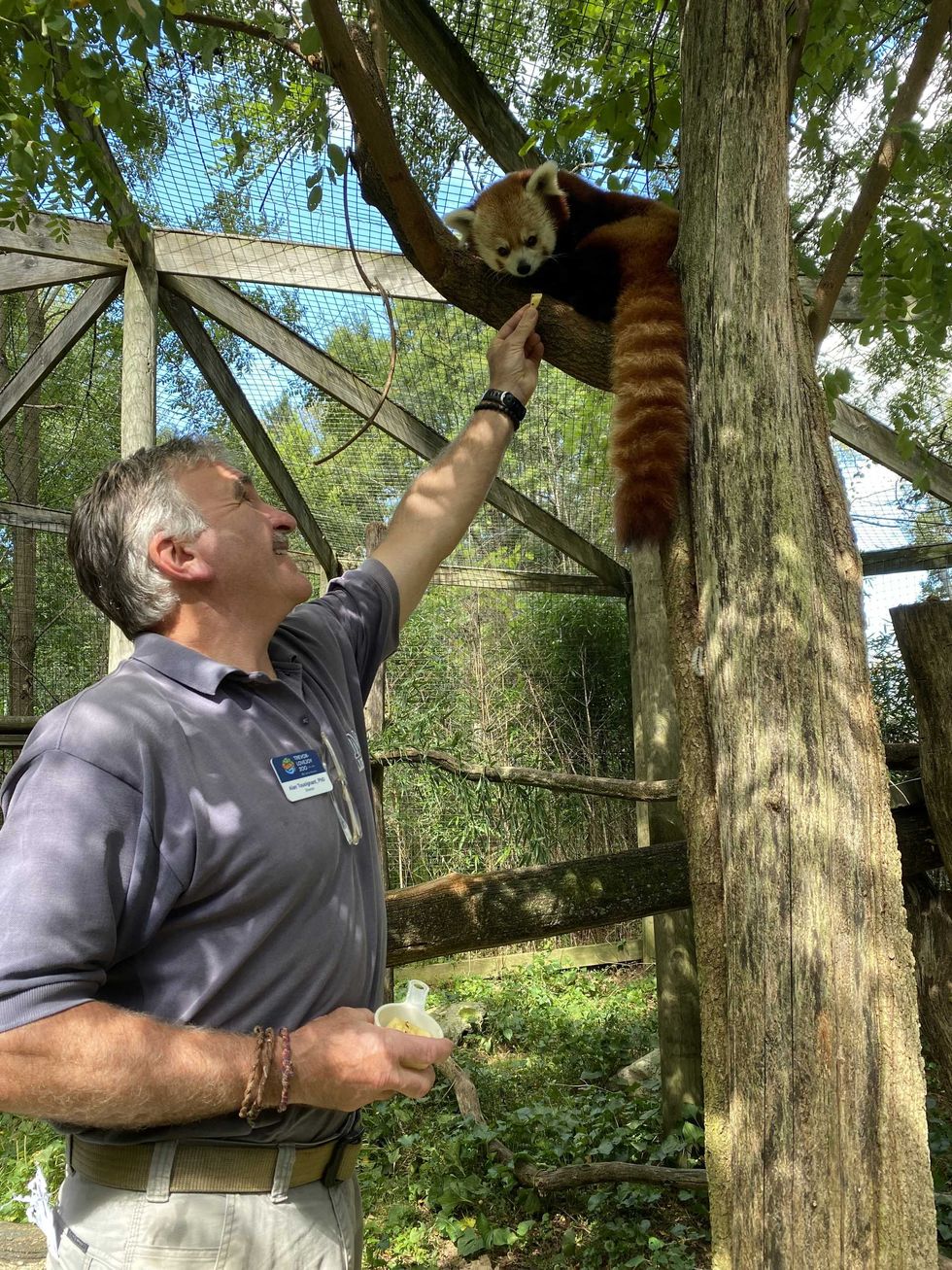 Trevor-Lovejoy Zoo Director Alan Tousignant offers a treat to one of the zoo’s pair of Red Pandas.Leila Hawken
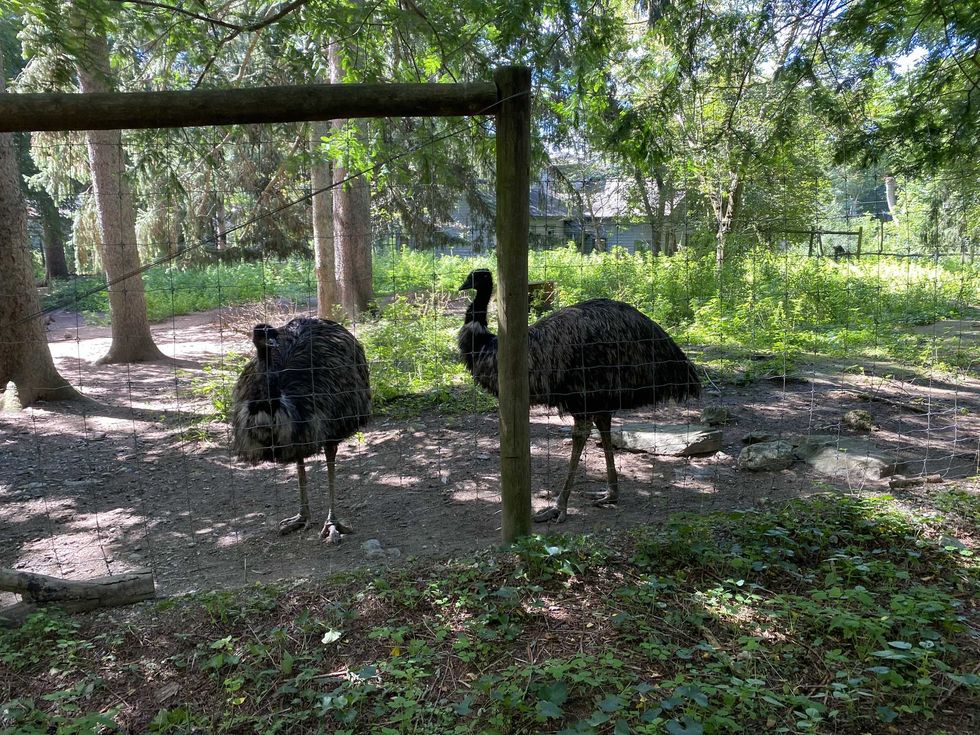 A pair of Emus enjoy some shade in one of the enclosures at the Trevor-Lovejoy Zoo at The Millbrook School.Leila Hawken



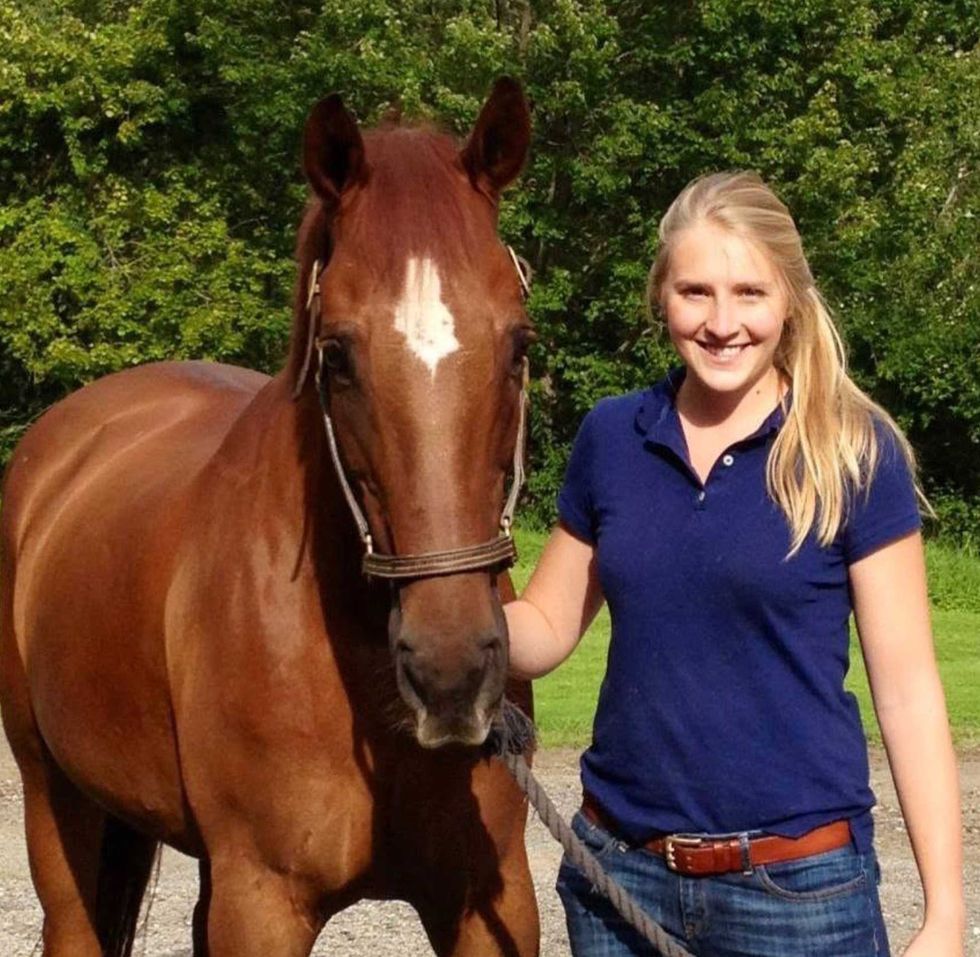 Bronwen Childs, at 13, with Monty.Provided